





























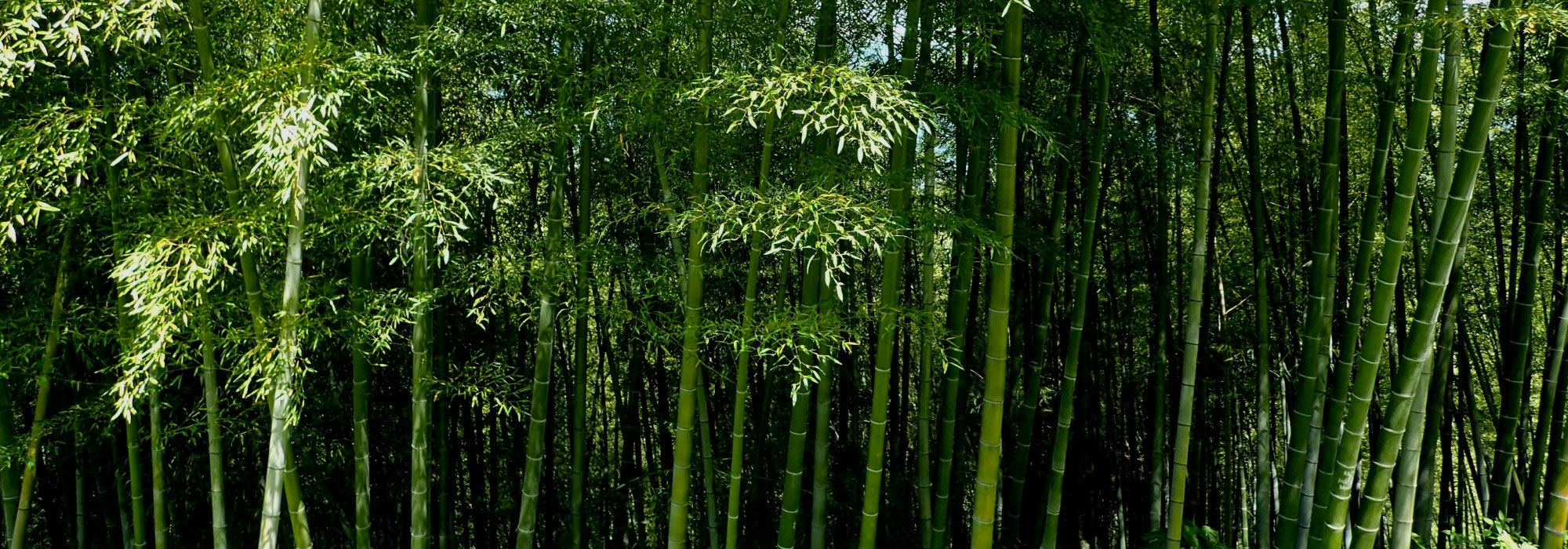
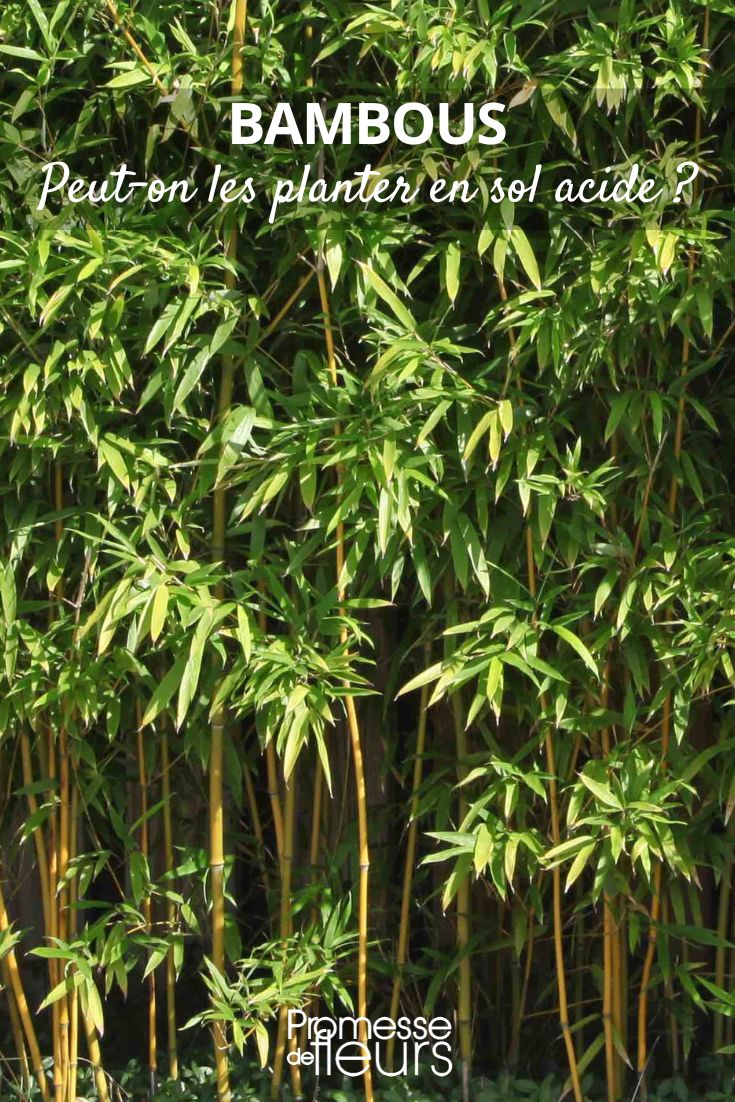
Can bamboo be planted in acidic soil?
All our tips, with the varieties best suited to this type of soil.
Contents
Bamboos are highly valued in the garden for their long erect culms, very decorative, and their evergreen, graphic foliage, which rustles in the wind. They grow rapidly and are perfect for bringing an exotic atmosphere to the garden. There are countless species and varieties, which differ in the colour of their culms and foliage (some bamboos are even variegated!), their height, whether they are running or not, etc. Find out whether it is possible to plant bamboos in acid soil, which varieties are most suitable for this, and some tips on how to pair them!
For everything you need to know about bamboos and their cultivation, see our comprehensive guide: “Bamboos: Planting, pruning and maintenance”

What type of soil is suitable for bamboo?
Most bamboos prefer slightly acidic soil (pH between 6.5 and 7), but they also grow very well in neutral soil. They are, however, sensitive to excess lime. They also need the soil to be fairly rich, cool and well-drained. It should ideally remain cool in summer but not be waterlogged in winter. Most of them prefer partial shade but will also tolerate sun.
Very acidic soils can limit the availability of certain essential nutrients, slow the growth of plants and reduce their vigor, making them more susceptible to diseases. Very acidic soils typically contain fewer earthworms and underground micro-organisms, and are often less fertile. It may therefore be worthwhile to carry out a soil pH test before planting and, if necessary, take steps to adjust the pH, for example by adding lime to reduce acidity.
If your garden soil is very acidic and you still want to grow bamboos, we would advise planting them in pots, in a mix of potting compost and garden soil. You may also optionally amend to slightly reduce the soil acidity and raise the pH (dolomite additions, wood ash, agricultural lime, crushed limestone… to be applied in autumn or early winter and to be incorporated into the soil with a light raking). You can also add well-decomposed compost.
Read also
What is soil pH?Which bamboos are best suited to acidic soils?
Although most bamboos have very similar pH requirements, some species are better suited to acidic soils. Here are a few varieties that can tolerate soil with higher acidity:
- Sasa veitchii: It is a dwarf bamboo with variegated foliage, not very spreading and very hardy. It does not exceed 1.20 m in height and forms dark green leaves, which in winter, under cold temperatures, take on cream margins. It enjoys cool, moist soils, and is perfect along the edge of a water feature.
- Phyllostachys edulis: also known as Phyllostachys pubescens, this bamboo is a giant, whose culms can reach 15–20 m in height. It forms large green-blue culms. Like all Phyllostachys, it is running, and will therefore need to be limited with the help of a rhizome barrier. Its young shoots are edible!
- Semiarundinaria fastuosa: It is a bamboo with a compact columnar habit, whose culms can reach up to 7 m in height. It is not very spreading and proves to be very hardy, tolerating temperatures around -20°C.
- Fargesia murielae: It forms dense clumps, with slender green culms that are dusted with a powdery bloom when young. With time it takes on a trailing, umbrella-like habit. It comes in many varieties, and it has the advantage of being non-spreading. It can reach 2–4.5 m in height at maturity, depending on the variety chosen.
- Phyllostachys bissetii: It is a medium-sized bamboo, reaching about 6 m tall at maturity. It forms large culms, 2–3 cm in diameter, bearing dense foliage, fresh green on the upper side and blue-green on the reverse. It can be grown in a pot, and is perfect for forming impenetrable hedges. It is very hardy and thus adapts to the harshest climates.
- Bambusa multiplex: Relatively rare in cultivation, this bamboo forms dense clumps with handsome feathery foliage, soft green. It is not running, but shows limited hardiness, down to -5 to -7°C. In the coldest regions, it should therefore be grown in a pot and stored away in a frost-free shelter.
Conversely, Phyllostachys flexuosa and Phyllostachys viridis have a preference for calcareous soils.
For optimum growth in acidic conditions, it is recommended to prepare the soil by incorporating organic matter, such as compost, which can help stabilise the pH and improve soil structure.
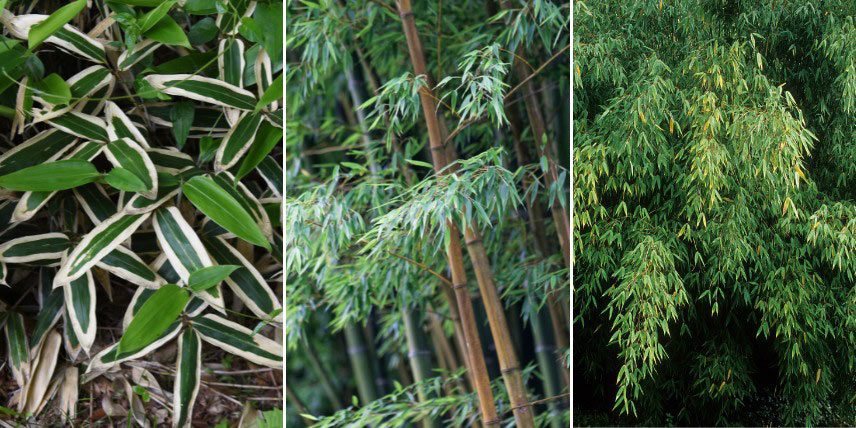
Sasa veitchii, Phyllostachys edulis and Fargesia murielae
Some ideas for companion planting
If you plant bamboos in fairly acidic soil, you can create beautiful combinations with ericaceous plants. Pair them, for example, with azaleas and rhododendrons, with camellias, Pieris japonica, Leucothoe, magnolias, Skimmia, Sarcococcas, Kalmia, Daphnes, Hydrangea macrophylla… Bamboos will also pair wonderfully with the architectural form of Japanese maples. Also discover Enkianthus campanulatus, also known as campanulate Andromeda, an unusual bush that offers flowers in small pale pink and white bells.
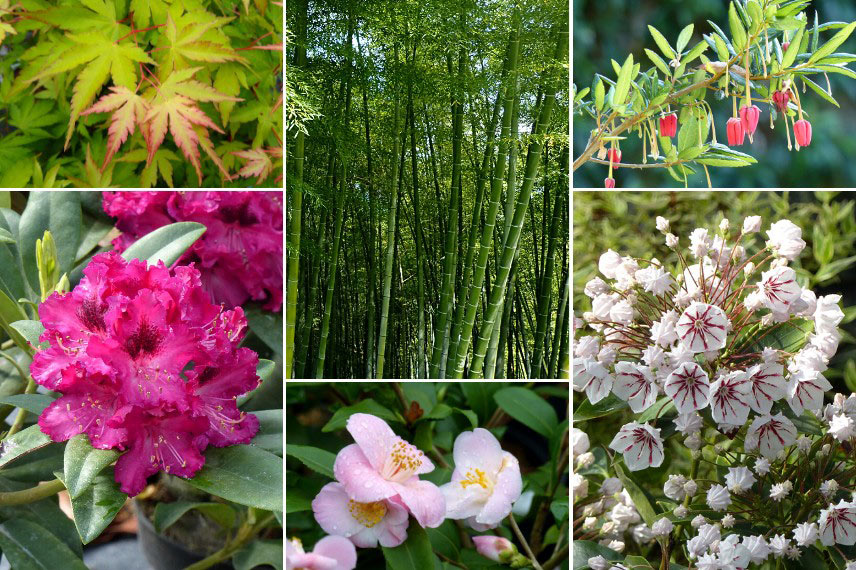
You can pair bamboos with ericaceous shrubs. Acer palmatum ‘Sangokaku’, Phyllostachys edulis, Crinodendron hookerianum, Rhododendron ‘Nova Zembla’, Camellia ‘Cinnamon Scentsation’ and Kalmia latifolia ‘Peppermint’
You can also compose with them a Japanese-style garden or a Zen garden. Build a backdrop with tall bamboos, then pair them with highly graphic, architectural shrubs such as the Cornus controversa ‘Variegata’ or Cornus kousa, pines and junipers pruned into clouds (niwaki), a Viburnum plicatum ‘Mariesii’, Japanese maples… Also think of Nandina domestica. Plant at their feet groundcovers, such as Helxine or Sagina subulata, which will form a superb green carpet following the contours of the soil. You can also incorporate ferns such as Coniogramme emeiensis or the Athyrium niponicum.
- Subscribe!
- Contents
Comments