





























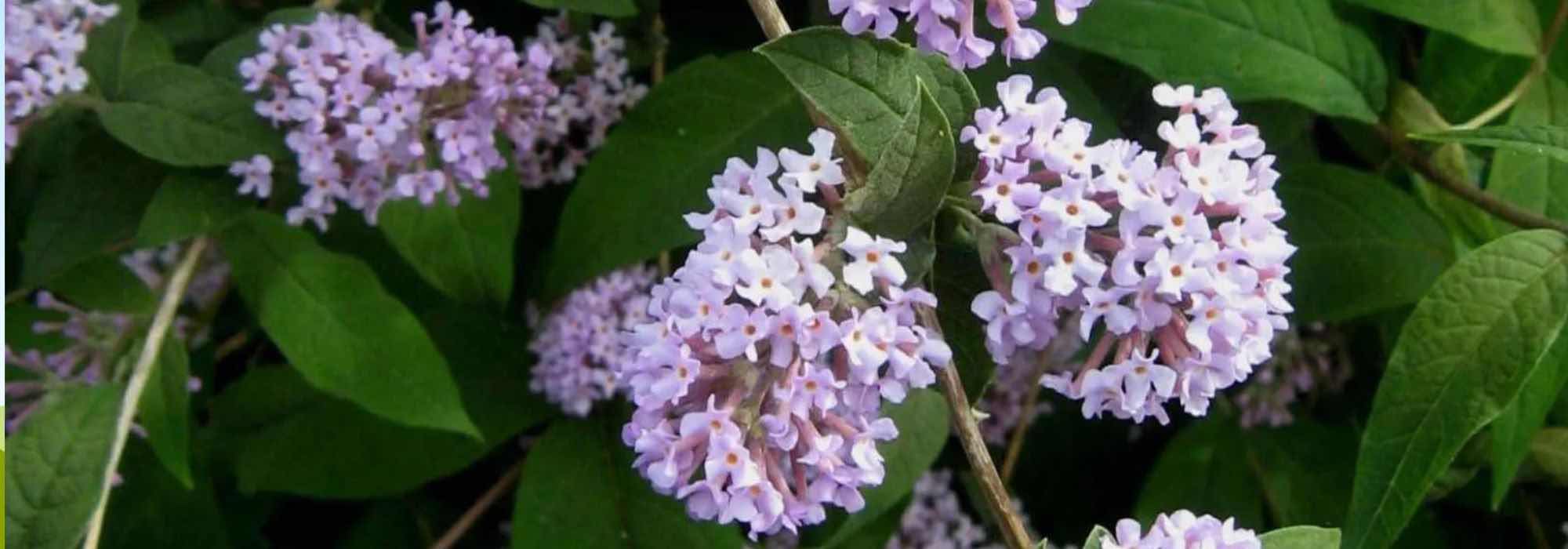
Botanical butterfly bushes to discover
Everything you need to know about these butterfly-attracting trees.
Contents
Buddleias or butterfly trees are among the popular plants in gardens, due to their beautiful summer flowering in spikes. These butterfly trees are mainly represented by the Buddleja davidii and its descendants, but there are other less well-known and less widespread species. This is the case for botanical species, these wild Buddleias which nevertheless have plenty of qualities.
So, let’s look at their characteristics and which species to grow in the garden.
In addition, for everything you need to know about growing and caring for Buddleias, discover our guide: Buddleia: the complete guide to growing the butterfly tree
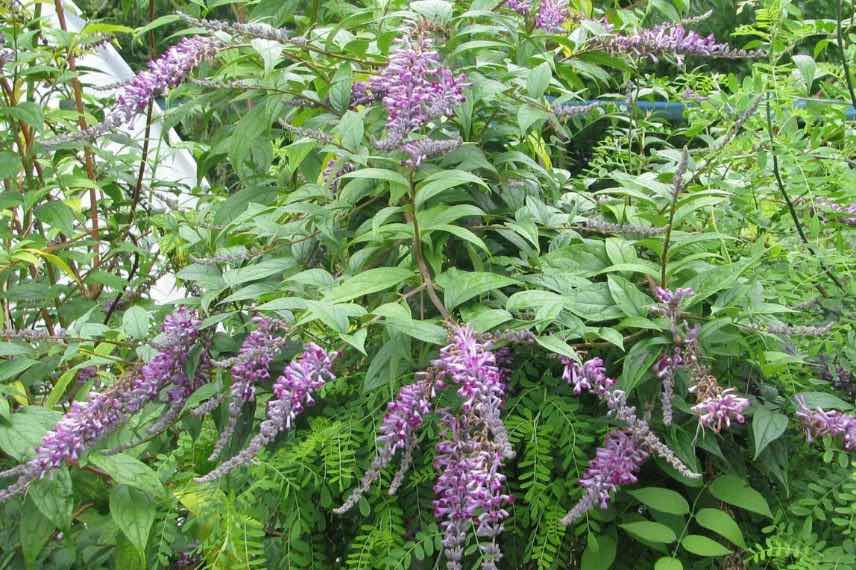
Buddleja lindleyana

What is Buddleia botany?
Let us begin with a brief semantic reminder. Hybridization is the result of cross-breeding between two parents of different species or genera. It can be natural (spontaneous cross-breeding in the environment) or the result of human intervention. In that case, it is referred to as a ‘cultivar’.
Humans have, over time, artificially created new plant varieties. These horticultural plants are intended for cultivation. For this, various methods have been used: hybridization, but also selection or mutation. Hybrid plants are propagated vegetatively (by propagation by cuttings or grafting) and not by sowing, to ensure that they retain their genetic characteristics.
These cultivars, used in both ornamental gardens and in orchards or kitchen gardens, generally meet targeted objectives: they are in fact created to meet certain needs and offset the characteristics that may be regarded as ‘weaknesses’. For example, they will allow you to obtain:
- a plant smaller than the original species, suitable for pot culture (for example Buddleja davidii ‘Blue Chip’)
- a plant with more abundant flowering;
- a sterile plant, which does not reproduce by seed, and thus proves less invasive (this is the case with all cultivars derived from Buddleja davidii);
- a plant easier to grow, because more disease-resistant;
- etc.
For their part, botanical plants are species that occur naturally on our planet. These are native plants, which develop without human intervention, in complete autonomy. Their reproduction occurs by sowing. They are often rarer in gardens than the species specifically bred for cultivation. It is therefore on these aspects that hybrid Buddleias differ from the botanical Buddleias.
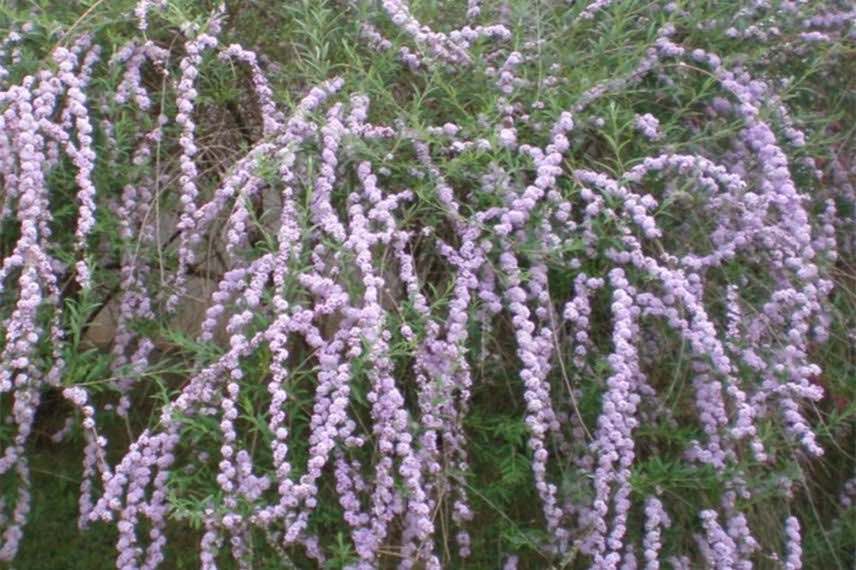
Buddleja alternifolia
Benefits of botanical species
Botanical species form part of a natural ecosystem. In their native medium, they therefore play their own role and contribute to balance, just like other living beings. The flowering of Buddlejas attracts numerous pollinating insects, essential to the multiplication of many other plants. They are wild plants adapted to their medium (soil, climate…), but also to other species living in the medium. Of course, these botanical species have travelled and are now cultivated in new territories, far from their native territory.
In an ecological garden that promotes biodiversity, richness is essential. Botanical species there will be just as important to grow as hybrid species. Note that, on the same principle, a rich and varied garden will give pride of place to native plants, but may also include more exotic vegetation.
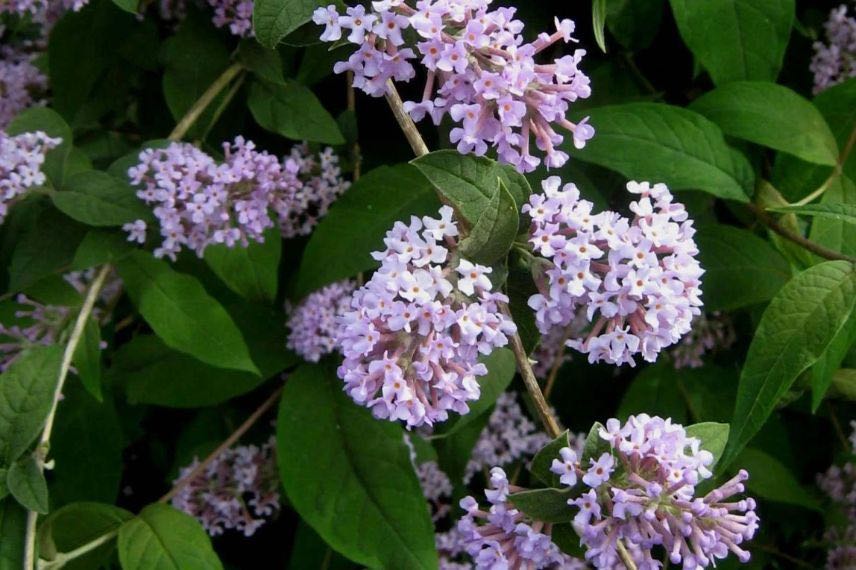
Buddleja delavayi
Some examples of botanical butterfly trees.
The Buddleja alternifolia
This alternate-leaved butterfly tree is one of the hardiest and easiest to grow. This species native to China stands out from other Buddlejas by its weeping silhouette, made up of flexible, arching branches. It is a particularly elegant botanical species, which will bring lightness to the garden, swaying gracefully in the breeze. It will reach about 3 metres in height with a 4-metre spread at maturity, after only 4-5 years.
Between June and July, this Buddleja produces large panicles of 25 cm in length. These are made up of small flowers in a very pale lilac pink, which further transforms the shrub into a true cascade of greenery. Nectariferous, this lightly scented flowering attracts many insects.
The deciduous foliage consists of small lanceolate leaves, arranged alternately on the branches (which explains the species name). They are green, shaded with a silvery-grey.
On cultivation, this Buddleia is moderately hardy (to around -9°C), but easy to live. It appreciates light soils, even poor, but imperatively well-drained (water must not stagnate). Plant it in sun or in partial shade, in rather cool soil (which never dries out completely), even if it can tolerate occasional drought. Plan an maintenance pruning after the summer flowering, as well as a more severe pruning every 2-3 years to keep it compact.
The colour and silhouette of the Buddleia alternifolia make it a perfect candidate for romantic-style gardens. Plant it in a bed next to old roses with mauve or white flowers. To add a graphic touch, add Alliums in the same colour tones.
The Buddleja lindleyana
The Lindley’s butterfly tree is a Buddleja with a spreading habit, composed of arching branches. It reaches 2-3 metres in height and 1-2 metres in spread at maturity. It will over time take on an increasingly arched silhouette, particularly ornamental. These modest dimensions will allow cultivation both in the ground and in a large pot, to brighten a terrace, balcony or small sunny courtyard.
From July to September, it produces panicles of 20 cm in length. The colour of the flowers is silvery-grey on the outside and a pretty purple-blue at the heart of the corollas. This flowering gives off a light spicy fragrance and pleases pollinating insects, especially butterflies.
The foliage is dark green, lighter on the reverse. It is deciduous in harsh winters, but may remain on the plant in regions that experience only light sporadic frosts.
Particularly hardy, the Buddleja lindleyana can withstand frosts down to -20°C, due to its origins: it can indeed grow at elevations above 2,000 metres. Tolerant, it will thrive in soils even poor and calcareous, provided they are deep enough and well-drained. In its natural habitat in China, it grows near rivers or on the edge of woodland. It will therefore appreciate cool soils, but will tolerate occasional drought. Plant it in sun or partial shade, but remember to protect it from prevailing winds.
On maintenance, simply plan a substantial pruning at the end of winter, to keep the vegetation tidier and optimise flowering.
This botanical Buddleia will easily create natural and wild scenes. In a summer border, pair it with other flowering shrubs, such as Abelia or the Lagerstroemia.
The Buddleja delavayi
The Buddleja delavayi is a botanical species that is rarely encountered in the garden. It is particularly interesting for the fragrance of its flowers. Its flowering indeed exudes gourmand notes of honey and rose. Of course, it pleases insects and will allow you to enjoy a true ballet of butterflies. The panicles of about 15 cm in length are composed of rose-lilac flowers, highlighted by an orange throat. They can be observed twice a year if conditions are favourable (mild winter): first more discreetly in mid-spring, in April–May; then, in mid-summer, in July.
The foliage, green with a blue-silvery tint, perfectly showcases this flowering.
Less hardy than some of its congeners, this Buddleja will still tolerate frosts down to around -10°C. But its modest silhouette (2.5 m in height by 2 m in spread) will easily permit pot cultivation, kept in shelter in regions with harsh winters.
The Buddleja delavayi will appreciate sunny exposures, in ordinary, well-drained soil. A bit more demanding than other Buddlejas botanicals, it will not enjoy soils that are too dry, nor soils that are too poor. Pruning is not essential. If needed, do it at the end of flowering.
Place this Buddleia beside a Hibiscus syriacus and cottage-garden perennials, such as Gauras.
The Buddleja macrostachya
The Buddleja macrostachya stands out as an exceptional deciduous shrub, uncommon in gardens. Its long glossy leaves on the top and soft on the undersides captivate the eye. Its flowering, which varies between spring and summer depending on the climatic conditions, appears as pendulous panicles with a captivating fragrance. The small flowers, delicate and pale yellow with an orange throat, add a touch of sweetness to the landscape.
Adapted to sunny conditions and well-drained soils, this shrub prefers mild climates. Its long scented panicles, honey-like, attract pollinators and offer a prolonged visual and olfactory display, sometimes until the first frosts. In winter, its peculiar bark, peeling in gray and brown strips, adds extra interest.
Low maintenance, the Buddleja macrostachya is a marvel to include in any garden seeking a botanical touch unique and attractive whether solitary, in hedge, or at the back of a border of herbaceous plants. Suitable for container culture, it also brightens terraces. Its flowering extends from spring to autumn, pairing with other flowering shrubs. It combines easily with different Buddleia varieties, from hardy ones such as Buddleja officinalis, to hybrids of B. x weyeriana and dwarf varieties. It can flower in a greenhouse as early as February.
The Buddleja colvilei
If the Buddleja colvilei impresses us, it is by the size of its flowers, which are the largest in the genus. They resemble those of Weigelas, with their bell-shaped form. Their deep pink colour is lightened by a white heart. The flowers are gathered in long drooping spikes and reveal themselves for almost 3 weeks, between June and September.
This flowering is perfectly enhanced by luxuriant foliage, borne on a single trunk. The purplish-tinted branches carry large elliptical leaves, which can reach 25 cm in length.
This impressive species, native to the Himalayas, will quickly reach 4 metres in all directions, but can exceed 10 metres in its natural habitat.
Hardiness is limited to -9°C. It will appreciate cool soils in summer, fairly rich and always well-drained.
Plant it in sun, in a free hedge, alongside a Cotinus with dark foliage and a Cotoneaster.
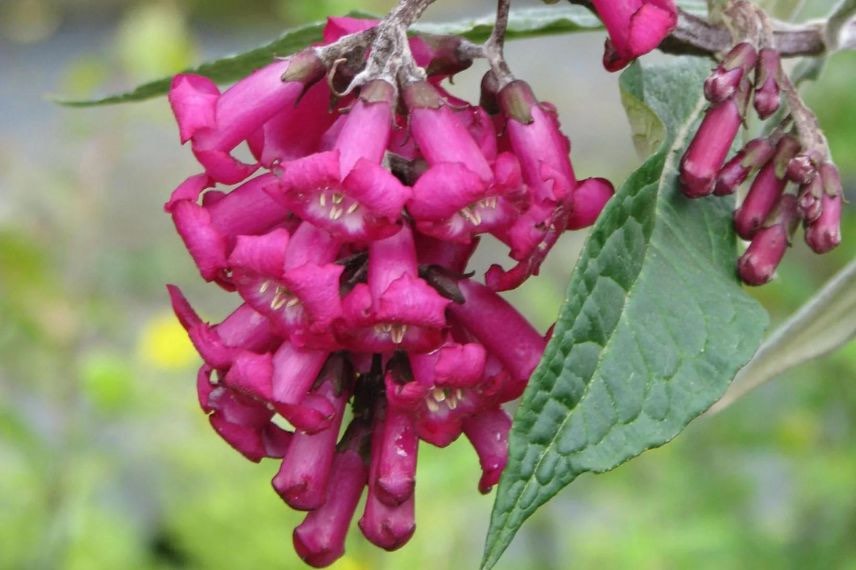
Buddleja colvilei
- Subscribe!
- Contents
Comments