





























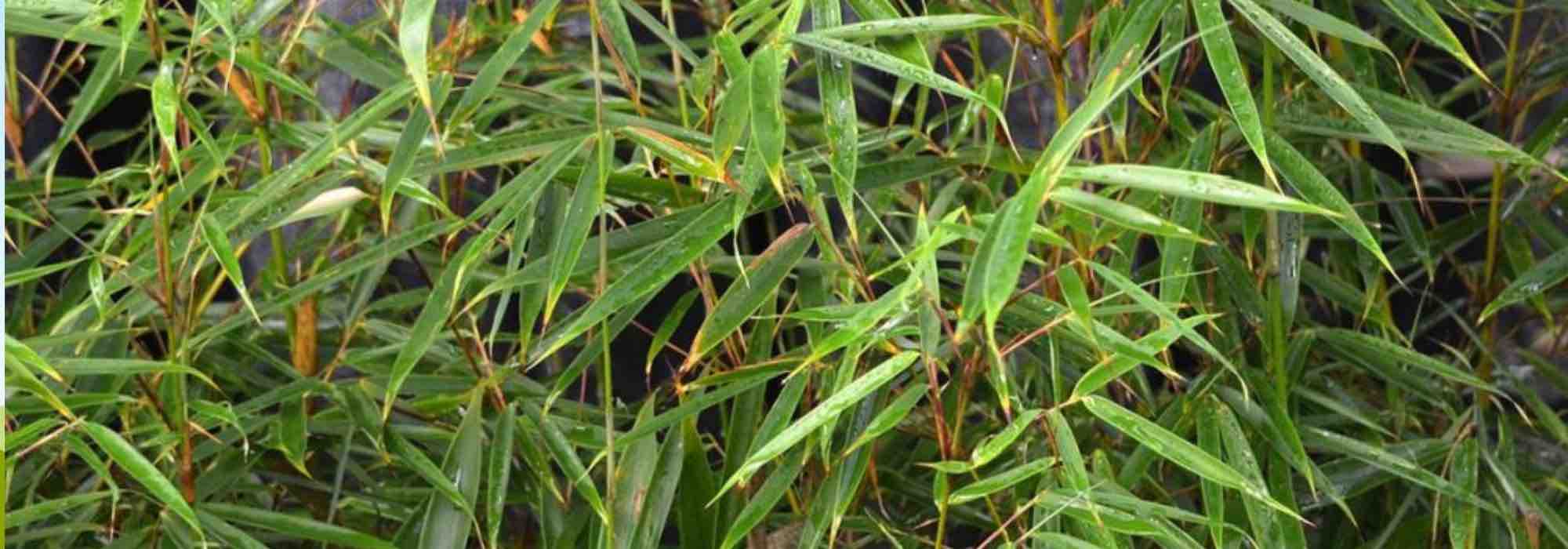
The best shrubs to capture CO₂
Natural carbon sinks to tackle climate change.
Contents
We regularly highlight that plants can play an important role in tackling the consequences of climate change. They help increase humidity, provide shade, stabilise soils at risk of erosion or flooding, etc.
But trees and bushes also have the ability to absorb carbon dioxide, one of the greenhouse gases responsible for climate change. This is possible thanks to photosynthesis, which enables them, through their foliage or needles, to produce the nutrients and oxygen they need. Some of the carbon can then remain trapped in the roots, trunks or branches of the plants, while the remainder is released back into the atmosphere.
On average, a tree stores between 10 and 40 kg of CO2 over its lifetime, which is why some forests, like the oceans, are known as carbon sinks. The uptake capacity depends on several criteria: the species involved, the age of the plants (the older they are, the more CO2 they trap) or their growing conditions.
Discover in this article our selection of bushes renowned for their high carbon-absorption capacity.

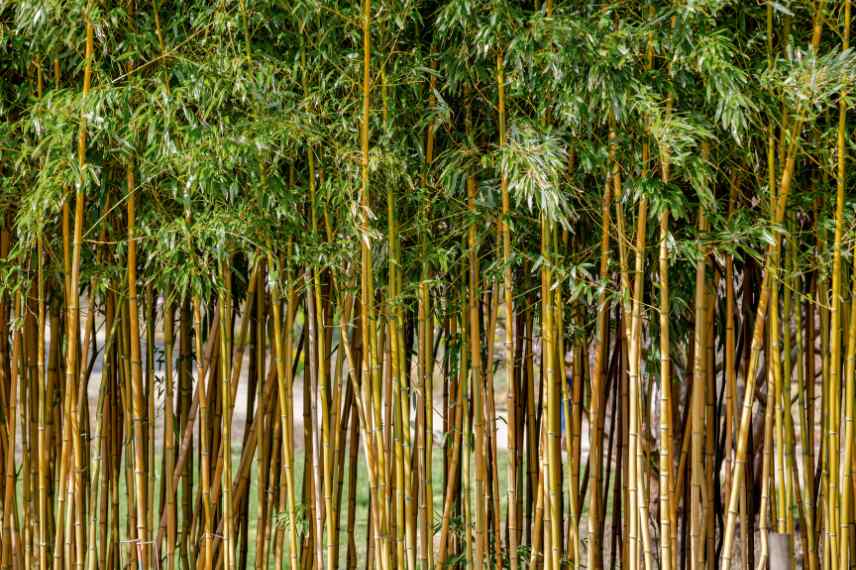
Bamboos
Under optimal growing conditions, bamboos could absorb more CO2 per unit volume than an equivalent volume of trees of other species. First and foremost, it is their rapid growth that is an asset for carbon capture.
Bamboos are the perfect candidates for adding an exotic touch to the garden. We like them for their evergreen foliage, which “sings” in the wind, creating a very zen ambience. The different species, from the smallest to the giants, offer many uses: in pots, as a privacy or windbreak hedge, or in a bed. They are easy to grow, hardy and resilient.
On cultivation, bamboos generally prefer sunny or semi-shaded exposures, in moist and fairly rich soil. But they also have a reputation for being invasive, due to their running rhizomes. If you do not want to install a root barrier in advance, you can opt for non-spreading bamboos, such as Fargesia.
Bamboos are plants that are commonly found in gardens with Asian-inspired styling. They will accompany, among others, a Japanese maple, an Hakonechloa macra ‘Aureola’, rhododendrons and azaleas. Their vertical habit and natural form will also be perfect for creating a contemporary ambience, for example on a terrace in large containers.
For more information: Bamboos: planting, pruning, maintenance
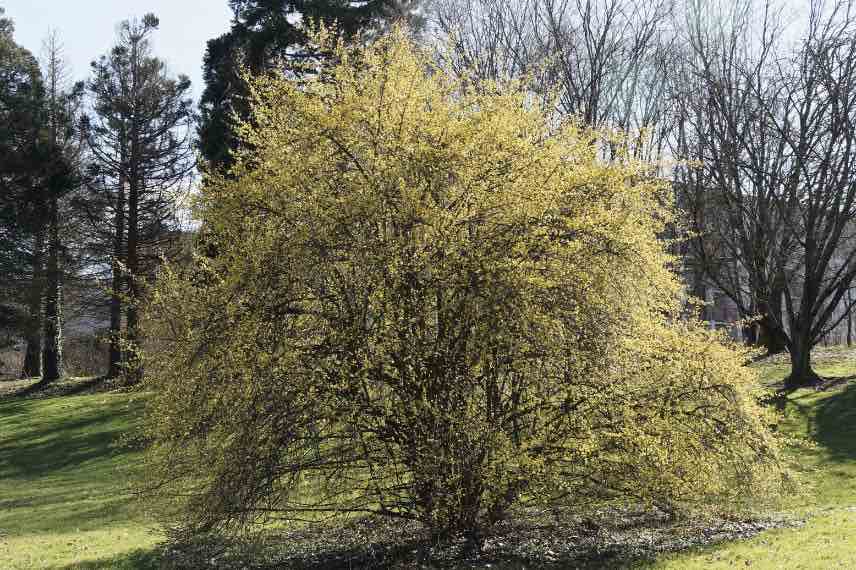
Male cornel - Cornus mas
The male Cornus mas is one of those bushes renowned for their ability to absorb carbon dioxide. It is a native species originating from Western Europe, which adapts very easily to our gardens. This dogwood is as hardy as it is resistant.
Its flowering comes early, as early as February, when the garden is still often dormant. Sun-loving, the Cornus mas produces small umbels of bright yellow flowers, reminiscent of mimosa. This fragrant and melliferous flowering attracts insects. After flowering, edible red fruits (the cornels) appear, which will delight birds if they are not eaten by the gardener. Its green foliage also provides autumn colour before dropping, taking on beautiful red and purple hues. At maturity, this bush reaches 2–5 metres in height and spread. The Cornus mas tolerates all soil types: calcareous, slightly acidic, poor soils, or occasionally dry. It will be perfect in a sunny, free-standing hedge with winter flowering, alongside a ornamental cherry and a Forsythia.
For more information: Flowering dogwoods: planting, pruning and maintenance
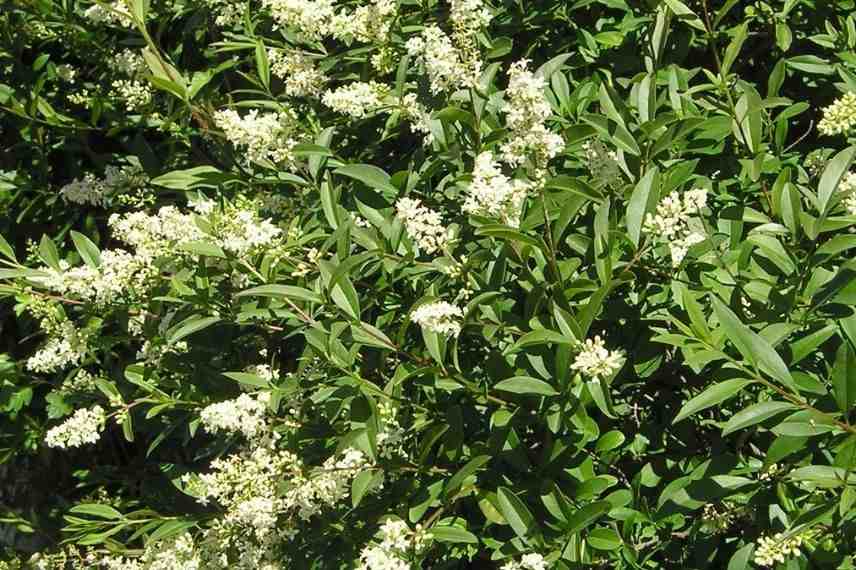
Privet - Ligustrum vulgare
The common privet or European privet is a hardy and easy-to-grow shrub. It grows in all soil types not too dry and in all exposures. This shrub grows quickly, tolerates pruning well and proves very hardy.
If it is among the good candidates for carbon capture, we also admire it for its ornamental qualities. In early summer, it produces panicles of pretty cream-white flowers, which are fragrant and attract pollinating insects. The flowering is followed by fruiting in the form of black berries, which remain decorative even through part of the winter. The fruits are a treat for birds. The common privet therefore forms part of these bushes useful for the environment and ecosystems.
Its densely leafy foliage can persist in mild winters (light, intermittent frosts).
Its bushy habit reaches 3 to 4 metres in height with a 2 to 3 metre spread.
This shrub is very common in hedges. We recommend mixing it with other plants to break up monotony and promote biodiversity. In a multi-species hedge, it will thus form an effective vegetative screen alongside the evergreen foliage of a Mexican orange blossom, a Photinia, a Viburnum or an Eleagnus.
For more information: Privet, Ligustrum: Planting, Pruning and Maintenance
Read also
Naturally air-purifying plantsStrawberry tree – Arbutus unedo
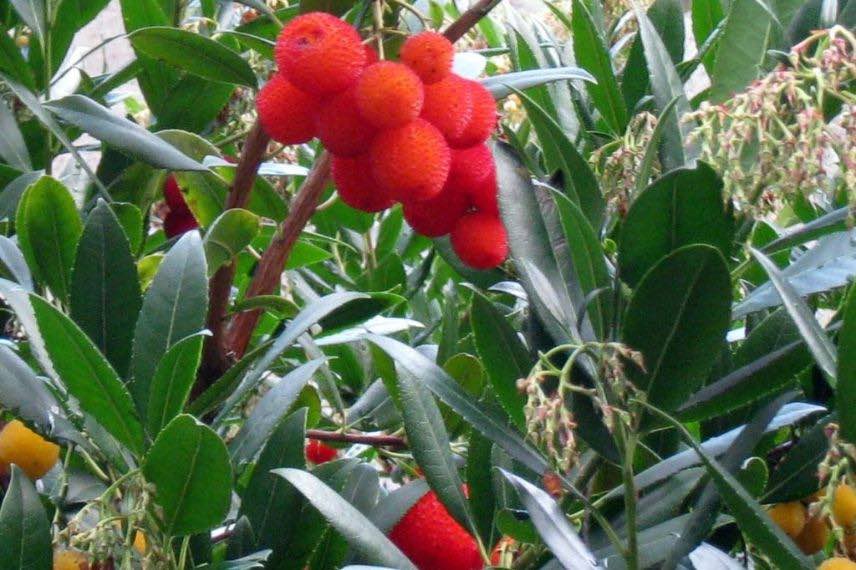
The strawberry tree is a large bush or small tree with a feature that makes it highly ornamental: flowering and fruiting occur at the same time. The fruits take about a year to mature, which means they remain on the twigs at the time of the new flowering, which occurs from late summer to early winter. This flowering consists of adorable little white or pink bells, reminiscent of lily of the valley. They are very melliferous, beneficial to pollinating insects. The round fruits display vibrant colours, ranging from yellow to red, through orange. They have a gritty texture and are edible, even if their distinctive flavour makes them particularly interesting in the form of jams or jellies.
The evergreen foliage is dark and glossy, decorative all year round. The bark peels away in reddish ribbons over time.
Beyond its strong CO2-absorption capacity, it is therefore a bush as interesting for biodiversity as for its ornamental qualities. It enlivens the garden during a period when other plants begin to lose their lushness.
At maturity, expect 5 metres in height and a 3-metre spread.
Native to the Mediterranean, the strawberry tree nonetheless has good hardiness down to -15°C in well-drained soil. It tolerates drought well, sunny exposures and acidic soils. In a flowering hedge during autumn, it will border, for example Camellia sasanqua and winter heathers.
For more information: Strawberry tree, Arbutus: planting, pruning and maintenance tips
Basket willow - Salix viminalis
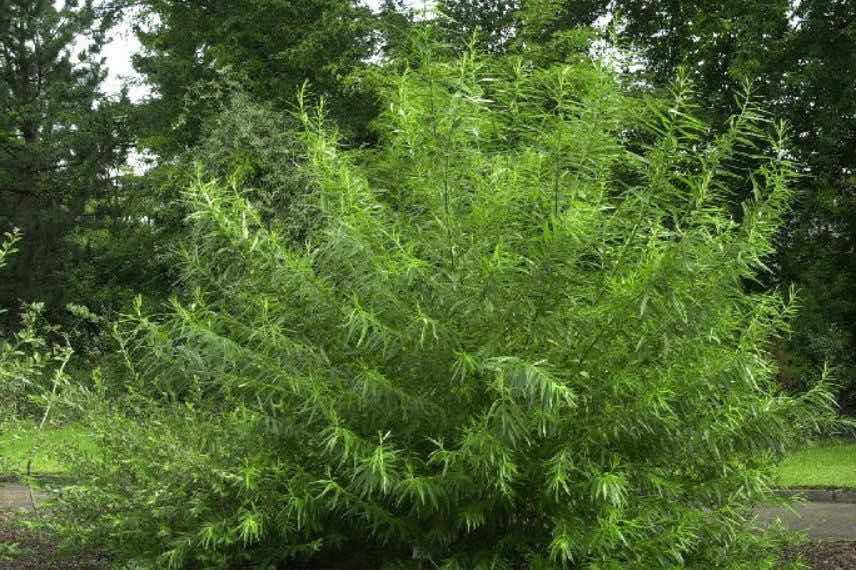
The basket willow is one of the best-known species. Its supple and pliant shoots are indeed used in basketry and for the construction of living woven hedges. These shoots are decorative in winter, thanks to their fluffy texture and their yellow-green colouring, turning orange.
But the bare shoots are even prettier when they bear green and yellow aments in spring. They appear even before the foliage.
At maturity, expect 5 metres in height with a 4 metre spread for this bush with a strong capacity to sequester carbon.
Hardy, easy to grow and long-lived, this willow will establish in rich, moist soil. Plant it, for example, at the edge of a water feature in full sun or in partial shade, alongside tufts.
For more information: Willow, Salix: plant, prune and maintain
Medlar - Mespilus germanica
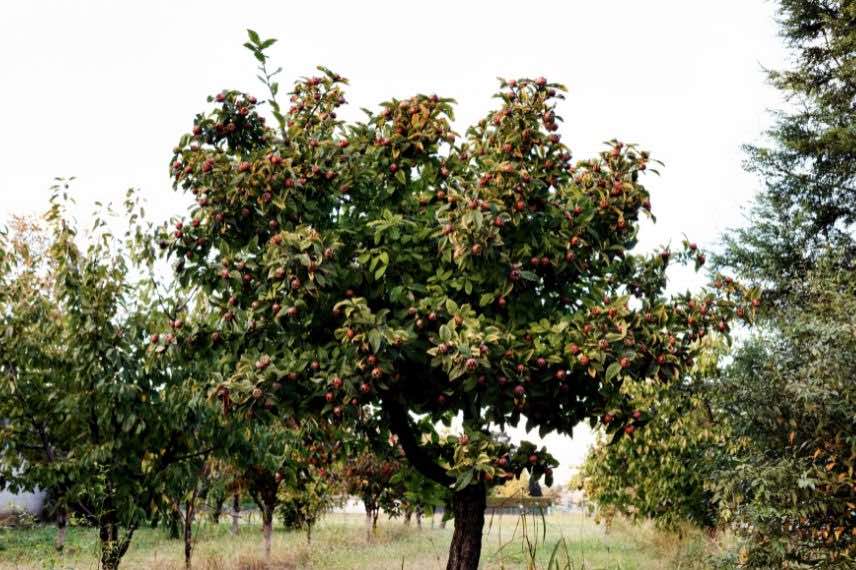
The common medlar (Mespilus germanica) is a native fruiting shrub, native to northern Europe. It is best known for its medlars, these brownish fruits that are eaten very ripe. It deserves to reclaim a place in our ecological gardens, as it is perfectly suited to local biodiversity and helps absorb one of the main greenhouse gases.
Its flowering occurs in mid-spring in May, in the form of pretty white eglantine blossoms.
The foliage takes on beautiful autumn colours before falling. The shoots are borne by a twisting trunk and can sometimes be thorny.
This spreading shrub will reach 3 to 4 metres in height with a 5 metre spread.
Very hardy, it will thrive in moist soil, in sun or partial shade. Use it to create an edible hedge, alongside small fruiting plants such as the raspberries and redcurrants.
Bloodtwig dogwood - Cornus sanguinea
Bloodtwig dogwood has no equal for adding colour to the garden. It is known for its shoots bearing a particularly bright and vivid red, which do not go unnoticed, especially in winter.
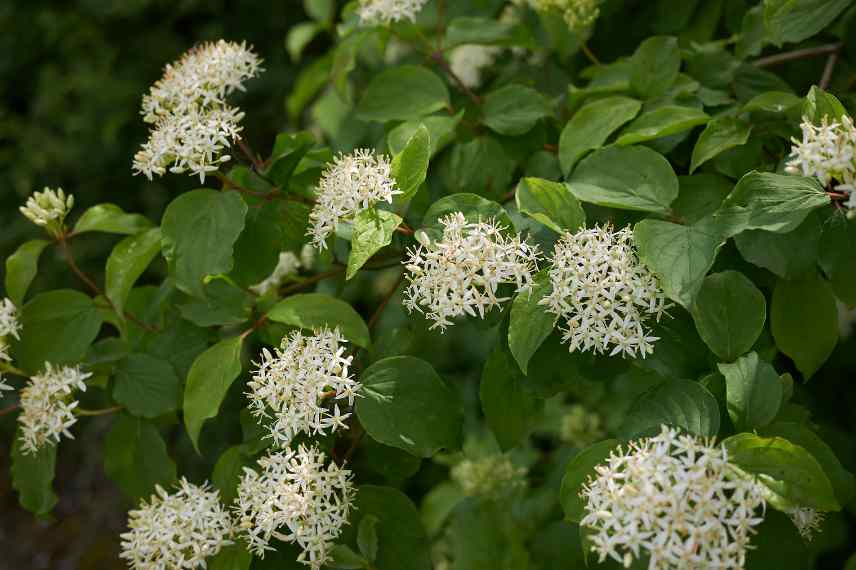
White flowering, in flat-topped cymes, occurs in late spring. It is slightly scented and very melliferous. The flowers give way to small violet berries at maturity, very decorative and enjoyed by birds.
Its foliage also makes it interesting. First green, it then turns fiery colours in autumn.
It is, once again, a native shrub that is perfectly suited to sustainable planting in an ecological garden. It will also help sequester carbon.
Particularly tolerant, the bloodtwig dogwood tolerates all soil types and proves perfectly hardy. Fast-growing, it will reach 2 to 3 metres across at maturity. In a hedge that will brighten winter, pair it with a Portuguese laurel and a winter honeysuckle.
- Subscribe!
- Contents
Comments