Bacillus thuringiensis: a natural insecticide
All you need to know about this bacterium and its use in the garden and vegetable patch
Contents
En matière de biological control, qui, rappelons-le, consiste à using living organisms to control invasion of other harmful organisms, le Bacillus thuringiensis s’est taillé une place de choix chez les jardiniers amateurs. C’est en effet a bacterium, naturally present in soil, water or air, which acts as an insecticidal agent against larvae of several lepidopterans, (all too) well known to gardeners. Tout en étant totalement harmless to beneficial insects, animals (mammals, birds, reptiles…), potentially present in our gardens, our pets and humans.
Voyons ensemble ce qu’est vraiment ce Bacille de Thuringe, son rôle et son fonctionnement dans la lutte contre les ravageurs, et surtout son mode d’utilisation.

Bacillus thuringiensis — what exactly is it?
Put simply, Bacillus thuringiensis, commonly referred to by the acronym BT, is a bacterium used as an organic insecticide. Flagship of organic pest control, this bacterium was isolated and identified in 1901 by Japanese bacteriologist Ishiwata from bombyx larvae, the well-known silkworms.
Ten years later, German biologist Ernst Berliner again isolated the bacterium from larvae of the flour moth, discovered in a mill in the Thuringia region. Hence its apt name…
Today, Bacillus Thuringiensis (BT) occupies a strong position in the market for organic insecticides, both among professionals and amateur gardeners. It is available in wettable powders or liquid concentrates, suitable for spraying in organic agriculture.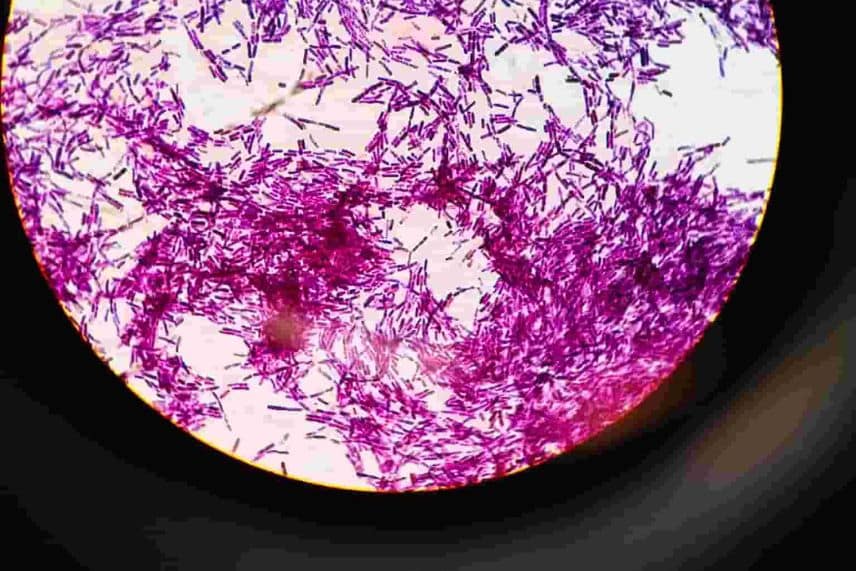
That said, this bacterium, which takes multiple forms, occurs naturally in soil, water and air. Indeed, as an aerobic bacterium, it multiplies in the atmosphere around us. Microscopic, it has a rod-like shape.
How does Bacillus thuringiensis (Bt) work?
Bacillus thuringiensis is a curative treatment. In practice, the larvae of the affected insects ingest the BT bacterium sprayed onto plants, which secretes toxins in the form of crystals. These toxins act on the intestinal epithelium and develop within the digestive system of the larvae.
The toxic cells of Bacillus thuringiensis induce the formation of pores in the intestinal membrane, which leads to the complete destruction of the intestinal epithelium and paralysis of the digestive tract. Larvae can no longer feed, while the bacterium continues to multiply. Larvae eventually die of septicaemia. And the bacillus can infect other larvae, leading to complete eradication of pests.
As for dead caterpillars, they can be eaten by birds with no problem.
Bacillus thuringiensis, an organic insecticidal agent against pests
Bacillus thuringiensis is a selective insecticide in that it eradicates only caterpillars, leaving garden auxiliary insects such as ladybirds, hoverflies, bees untouched. That said, Bt makes little distinction between larvae of pest moths in the vegetable garden and caterpillars of pollinating and nectar-feeding Lepidoptera. Its use must be controlled and targeted to reach its target.
In any case, it is very effective against most young caterpillars, particularly voracious ones, that attack vegetables, fruit trees and ornamental shrubs:
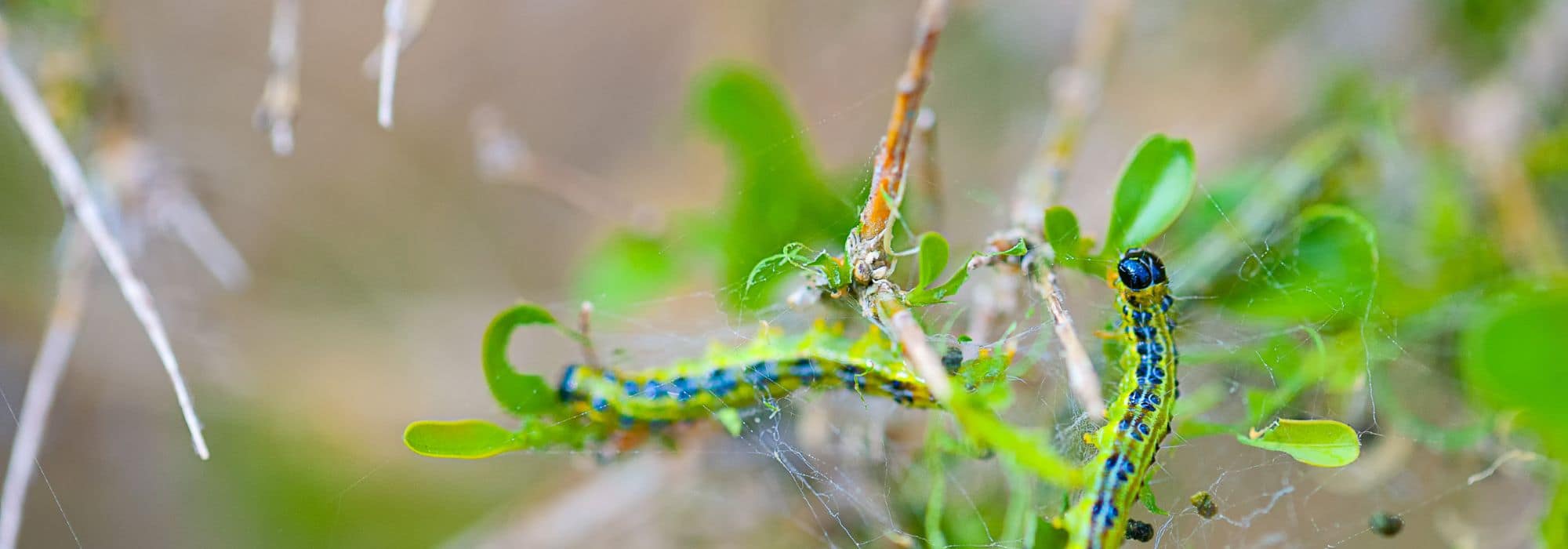
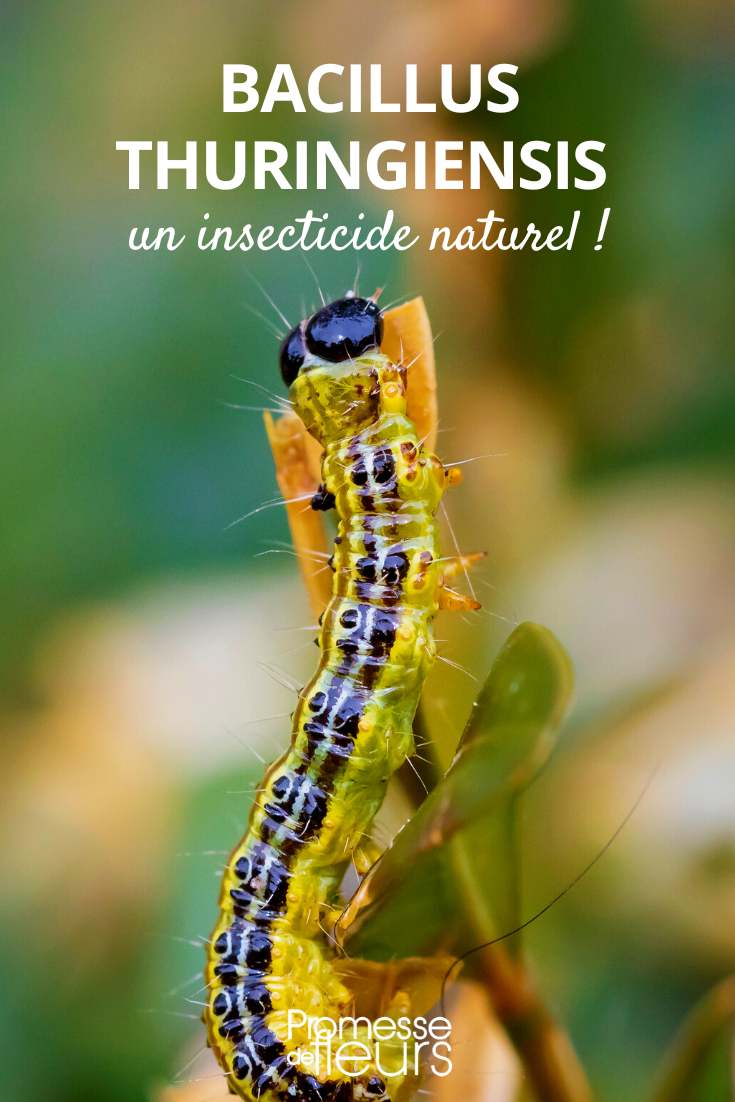
- Box tree moth : this small moth is particularly resistant to common natural treatments. Only the strain of Bacillus thuringiensis is capable of eradicating the green larvae of this white-winged moth
- Pine processionary caterpillar also causes considerable damage and is dangerous, being urticating to humans and animals. Again, Bt is effective, but must be handled with great care
- Cabbage white : recognisable above all, this small creamy-white butterfly produces caterpillars that attack cabbages but also all Brassicaceae and crucifers. Particularly voracious, they can destroy a patch of cabbages in one night
- Leek moth (not to be confused with the leek fly larva, the “baby” of a fly) is a nocturnal moth. The caterpillar first devours the leaves before hiding in the stem to finish its feast
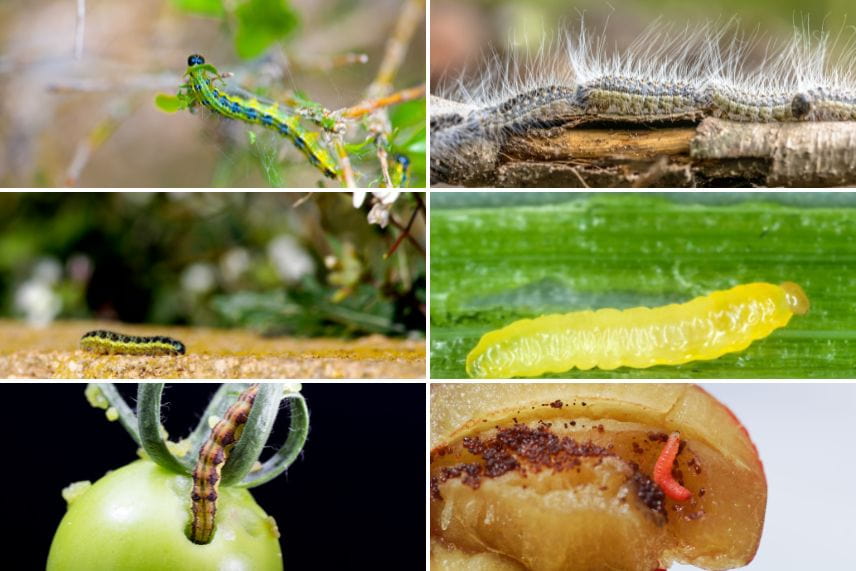
Box tree moth, pine processionary caterpillars, cabbage white, leek moth, noctuid moth, oriental fruit moth
- Noctuid moths : these are nocturnal moths that produce soil-dwelling and foliage caterpillars, defoliators or leaf miners, which attack carrots, cabbages, spinach, potatoes, apricot trees and vines, annual flowering plants, and some trees such as maple
- Leafrollers (tortrix moths) : these are small caterpillars commonly found in ornamental gardens and orchards. Many species occur that favour roses, fruit trees (oriental fruit moth of peach), oak, peas…
- Codling moths on fruit trees : they look like worms but are small caterpillars originating from a dusk-flying moth.
Strains of Bacillus thuringiensis against Colorado potato beetles are available commercially.
What is Bt like?
Thuringian bacillus is available as a wettable powder. It can also be found ready to use. It is preferable to dilute it in rainwater, strictly following the dosages prescribed on the packaging.
Bacillus thuringiensis is a living organism with a lifespan of about one year. It is readily available from garden centres and specialist online retailers, so storing it for several years is counterproductive. After purchase, store Bt in a dark, dry room at around 25 °C.
When and how to spray BT?
Because this is a curative treatment (not preventive), it is essential to properly identify the enemy to be defeated! Also important is choosing the right time of day (when caterpillars start feeding!) for the bacterium to be effective, and understanding the lifestyle of these larvae.
Overall, BT is sprayed from March to October, a period during which several generations of lepidopterans may succeed one another. A pheromone trap can help detect presence of males, indicating that mating has begun.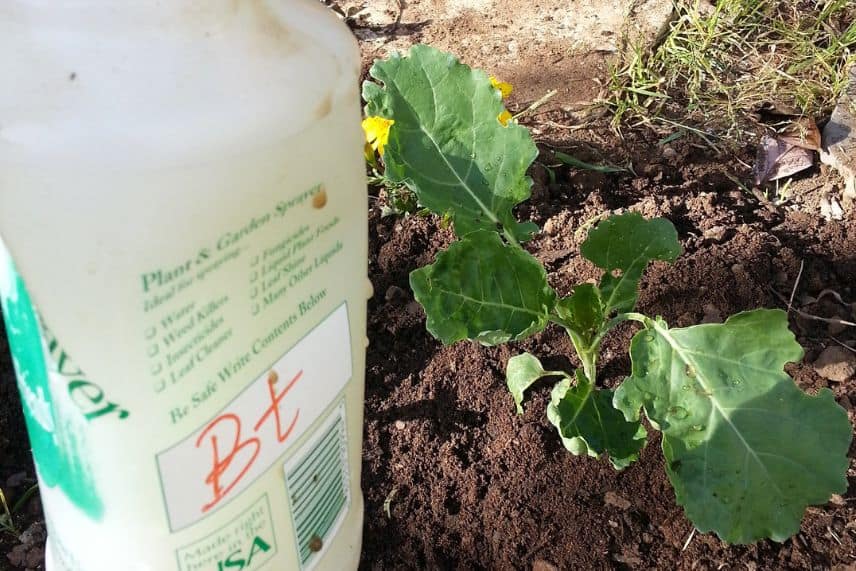
BT is applied using a fine-nozzle sprayer, preferably late in the day, and on a rain-free day. Indeed, Bacillus thuringiensis is sensitive to UV rays and has low persistence. Moreover, it is subject to leaching. For this reason, it is recommended to repeat spraying two weeks after the first application. Finally, by spraying late in the day, bees and bumblebees are less disturbed and can continue foraging.
- Subscribe!
- Contents
This form is protected by reCAPTCHA - the Google Privacy Policy and Terms of Service apply.

































Comments