





























Pairing ideas with Ismene or Spider lily
5 successful combinations with these incredible bulbous plants
Contents
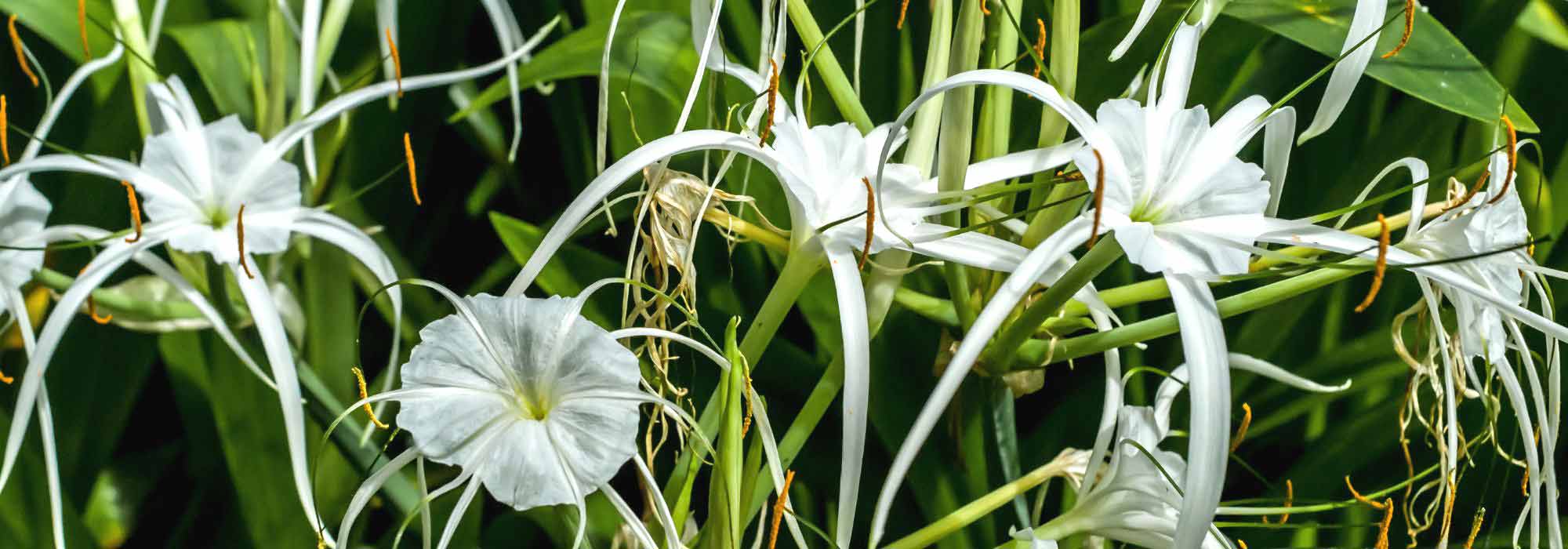
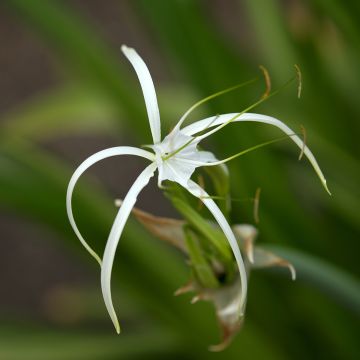
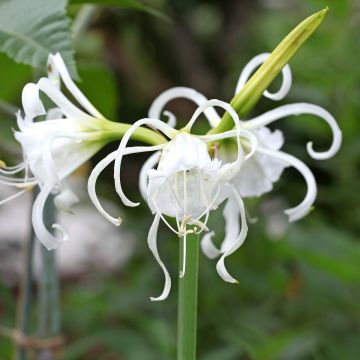
The flowering of Ismenes is truly beautiful! Also known as “Hymenocallis”, “Spider Lilies”, or “Sea Daffodils”, these bulbous plants develop large clumps of lanceolate leaves from which, depending on the variety, floral spikes with large, simply extraordinary flowers emerge from June to August.
These flowers, with petals reminiscent of spiders, can be combined in a variety of stunning arrangements. If these tropical beauties have caught your eye and you wish to plant them, discover 5 pairing ideas to showcase Ismenes in the garden or in pots.

In a white harmony on the terrace
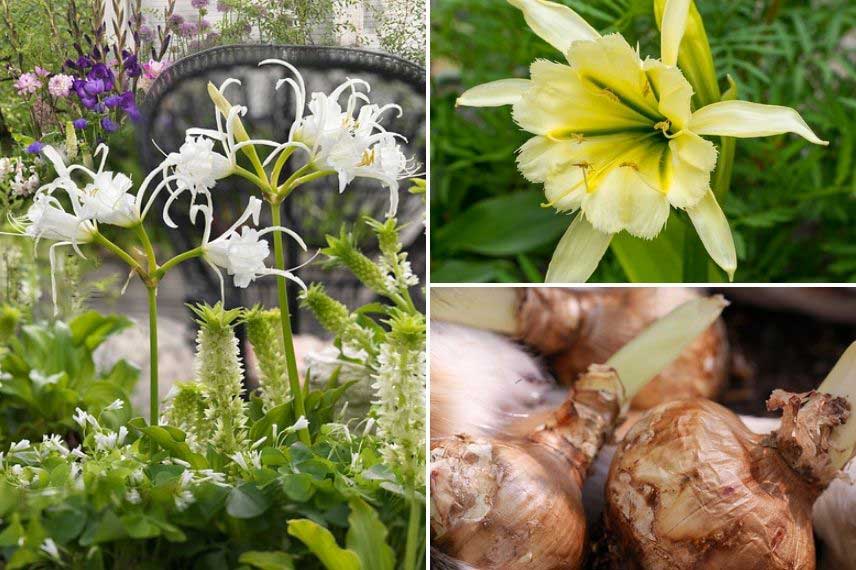
On a terrace or balcony, don’t hesitate to add refinement with Spider Lilies, which are well-suited for pot or container cultivation. In pretty matching containers or in a large pot, plant one or more bulbs of Ismene festalis. From June to August, it offers dazzling pure white flowers that are deliciously fragrant. Modestly sized (50 to 60 cm in height with a spread of 30 to 40 cm), it is particularly suited for pot cultivation. It enjoys full sun but does not survive winter in most of our regions: protect it from the cold as temperatures drop, and bring it back out in the following spring.
Pair it with an Diascia (x) barberae ‘Breeze Plus White’, which bears numerous small white flowers from April to October, and an Lobelia ‘Anabel Snow White’: its delicate foliage disappears under a cloud of white flowers, lasting until the first frosts. Alongside them, plant clumps of Carex morrowii ‘Variegata’ or Japanese Sedge. Their narrow, glossy leaves, green with cream margins, will beautifully highlight the flowers.
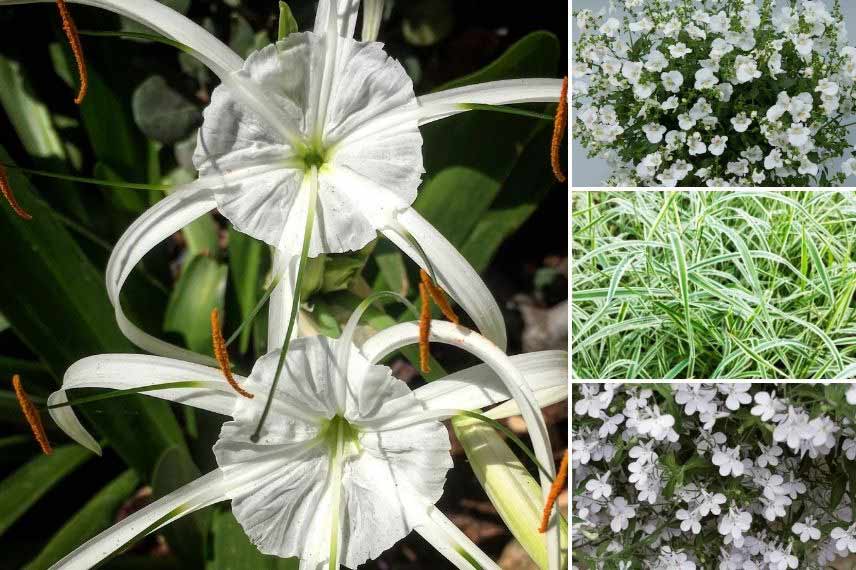
Hymenocallis festalis, Diascia Breeze ‘Plus White’, Carex morrowii ‘Variegata’ and Lobelia ‘Anabel Snow White’
Read also
Spider lily: planting, growing, careIn a delightfully fragrant spike bed
Flowers in abundance in this full-sun composition! The Martagon Lily ‘Slate’s Morning’, a robust and easy-going variety, offers numerous orange-red flowers in summer, highlighted by a small yellow centre punctate and speckled with cinnamon brown. Reaching 1.20 m in height when in flower, these beautiful bulbous plants emit a wonderful heady fragrance, matching that of the Hymenocallis ‘Sulphur Queen’. In a coastal Mediterranean or marked oceanic climate, you can leave the bulbs in the ground, taking care to mulch them well. In colder regions, they should be lifted in autumn before the first frosts and stored in a cool, dry place.
In well-drained, lightly calcareous soil, complete this composition with the splendid and brand new Camellia-flowered Dahlias ‘Yvonne’; these large and generous plants will bring a fresh pink flowering with a hint of salmon at the edges. Finally, the Gladiolus ‘Conca d’Oro’ will punctuate the arrangement with its large yellow spikes edged in copper orange. Lightness and greenery will be provided by the opulent clumps of grasses such as the Pennisetum orientale ‘Shogun’ with its feathery spikes at the end of summer. Ideal for cut flowers, these various plants will allow you to create stunning bouquets all summer long!
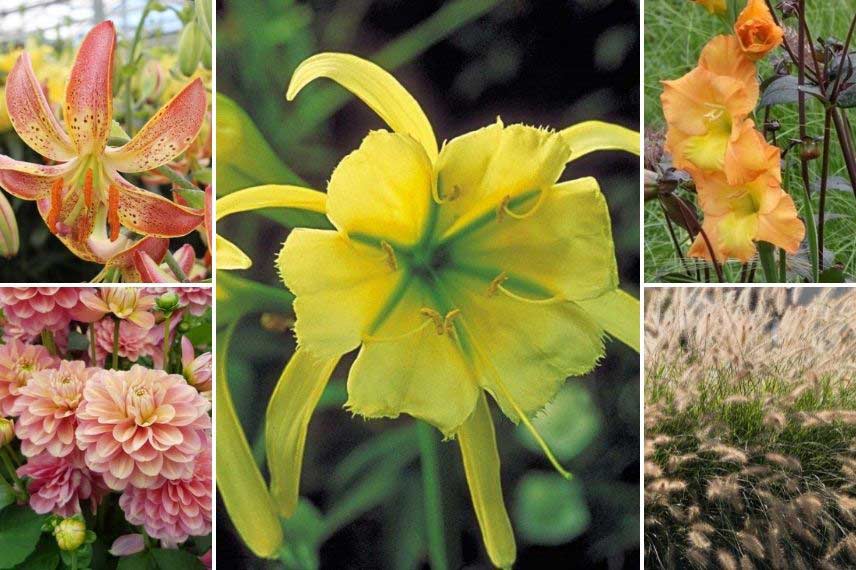
Lilium ‘Slate’s Morning’, Dahlias ‘Yvonne’, Hymenocallis ‘Sulphur Queen’, Gladiolus ‘Conca d’Oro’ and Pennisetum orientale ‘Shogun’
Discover other Ismene
View all →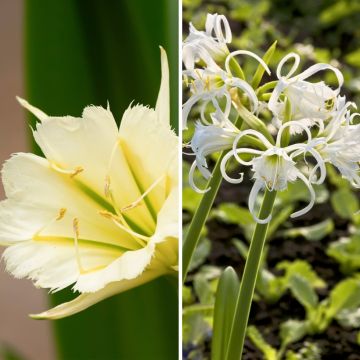
Available in 0 sizes
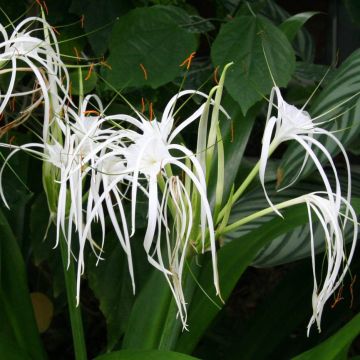
Available in 1 sizes
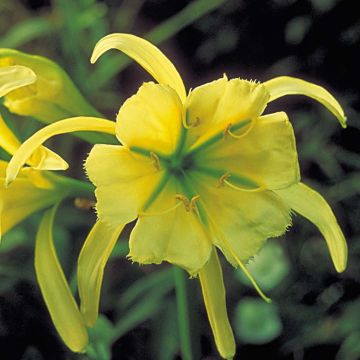
Available in 1 sizes
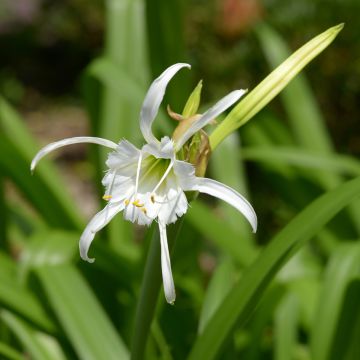
Available in 1 sizes
Available in 1 sizes
Available in 1 sizes
In a decidedly exotic display
The incomparable flowering of Ismene inevitably invites exoticism, pairing it with plants that have a similarly tropical appearance, such as the essential palms. Behind magnificent Hymenocallis festalis ‘Sulphur Queen’ in sulphur yellow with green stripes, which should be planted in light, rather poor, and non-calcareous soil, the tallest should be placed in the background and can provide beneficial shade to your display. This is the case, for example, with the tender Washingtonia robusta, which grows quickly, or the hardier Trachycarpus fortunei, which is resistant to at least -15°C. Don’t forget the Bananas, which are also heavily imbued with exoticism: due to its good hardiness (-15°C), Musa basjoo is the most common in our gardens, or try the Musella lasiocarpa, a bushy perennial close to the banana plant that stands out for its very bushy dwarf habit and its stunning golden-yellow inflorescence, which can last for several months.
Also consider Fatsia japonica, a structuring bush with large, glossy, lush leaves. Finally, adorn a wall or structure with the beautiful and voluble liana Passiflora ‘Michael’, which exudes exoticism with its large flowers in a beautiful deep fuchsia pink.
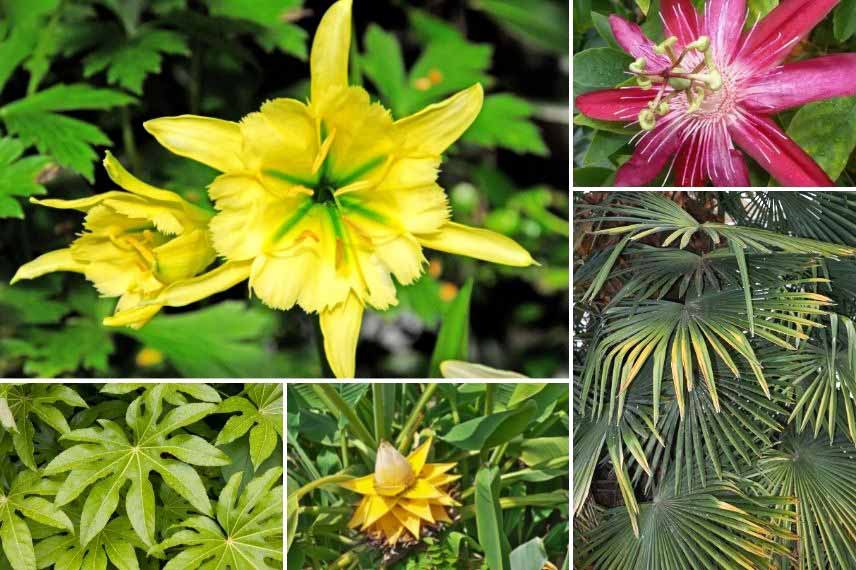
Hymenocallis festalis ‘Sulphur Queen’, Fatsia japonica, Musella lasiocarpa, Trachycarpus fortunei and Passiflora vitifolia x caerulea ‘Michael’
Read also
Planting Ismene bulbsIn a gentle and elegant variant
If you dream of a soft combination, you can marry one of the most remarkable Ismènes, Hymenocallis longipetalla with its pure white arachnoid flowering and the broad, velvety grey leaves of Senecio candicans ‘Angel wings’.
For a touch of lightness, pair it with Artemisia ‘Powis Castle’, with its grey, fluffy, finely cut evergreen leaves. And for generous flowers, plant a Rose ‘Olivia Rose Austin’, considered by its creator to be one of the best and most resilient varieties in his collection! Of modest size, this rose bush displays its large, very double flowers in a lovely soft pink hue, with a fruity fragrance from May to November.
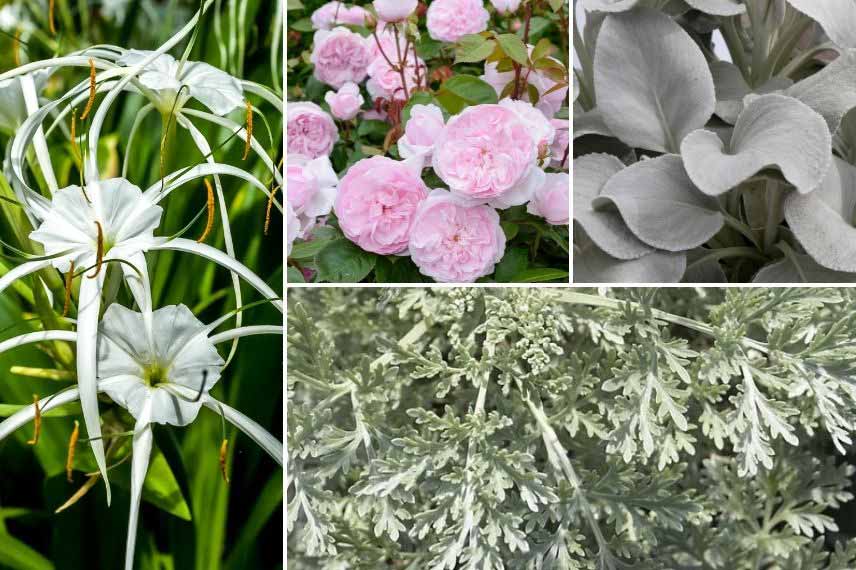
Hymenocallis longipetalla, Rose ‘Olivia Rose Austin’, Senecio candicans ‘Angel wings’ and Artemisia ‘Powis Castle’
In a contrasting display
Compositions contrasting blue and yellow always work well in the garden. The yellow Ismene ‘Sulphur Queen’ can be planted en masse in front of a small butterfly tree such as the Buddleja davidii ‘Butterfly Candy Lila Sweetheart’. This recent cultivar, with a dwarf and compact habit (80 cm in height), produces flowers in long purple spikes from summer to autumn, highly attractive to butterflies and bees. With its elegant and balanced silhouette, this bush will suit small spaces well. Add the Artemisia ‘Oriental Limelight’, a beautiful variegated variety with golden hues, capable of thriving in all situations. The Catananche caerulea, a sun lover, will bloom generously all summer with its small intense lavender blue heads. Finally, the Alchemilla ‘Thriller’ will edge the whole display with its soft lime green leaves and sulphur yellow flowers: an easy and charming plant that will enhance all its neighbours!
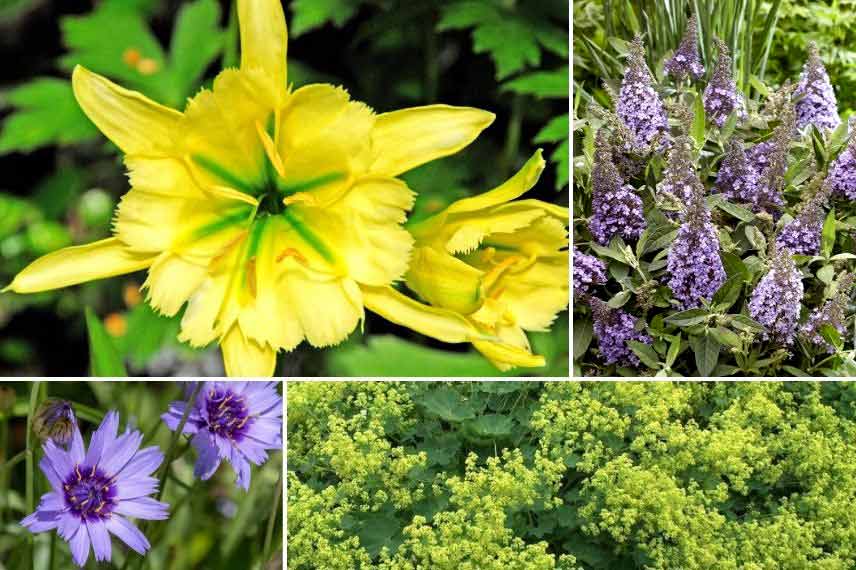
Yellow Ismene ‘Sulphur Queen’, Buddleja davidii ‘Butterfly Candy Lila Sweetheart’, Catananche caerulea and Alchemilla mollis ‘Thriller’

- Subscribe!
- Contents
Comments