





























Apple tree diseases and pests
Identification, Prevention and Treatment
Contents
The apple tree is a highly regarded fruit tree that is commonly seen in orchards. It is admired for its pretty white-pink flowering that appears in spring and its fruit harvest from September to November. Very hardy, it adapts to all regions of France. To keep this tree healthy and productive, it is crucial to manage diseases and parasitic pests that may affect it. Discover the diseases and parasitic pests that can develop on apple trees, learn to identify them, to prevent them and to treat them naturally in order to grow healthy apple trees and harvest delicious apples.

Apple Scab
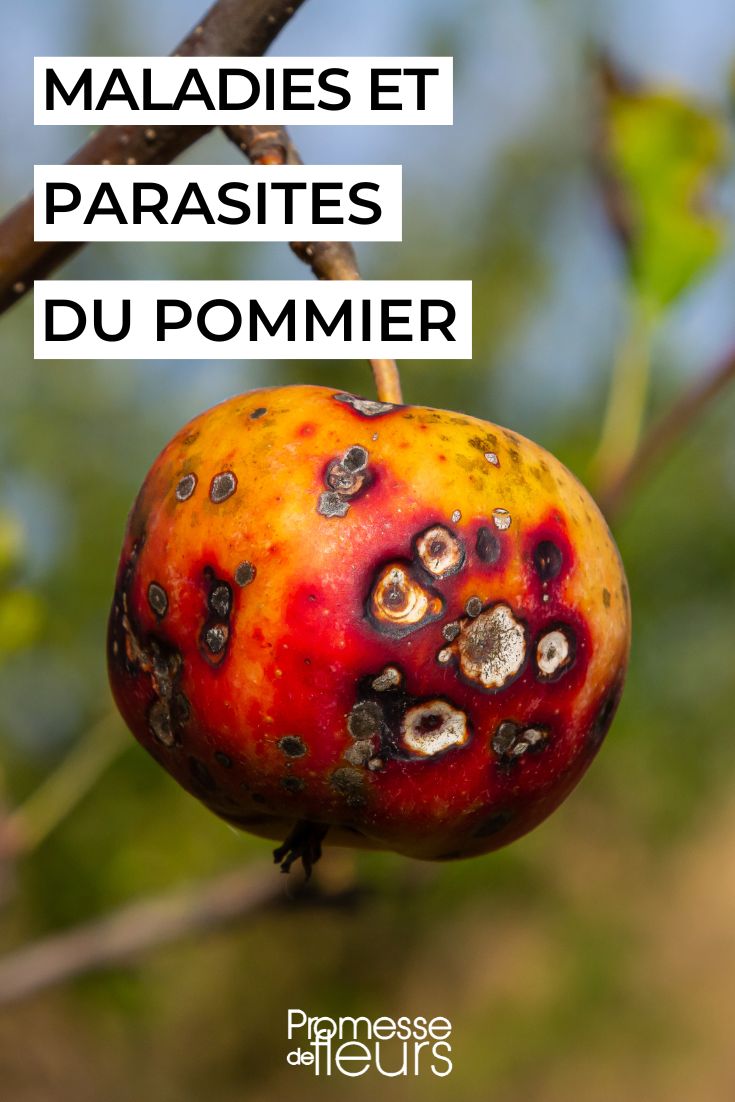
Apple scab is a disease caused by a fungus, which develops mainly in a humid, mild climate, as in Brittany and Normandy. It is one of the diseases commonly observed on apple trees.
Symptoms
Olive-brown spots appear on the leaves, then on the fruits which take on a cracked appearance. On the shoots, black spots and lifting of the bark can be observed.
Prevention
In autumn, prune the shoots whose bark appears to be peeling.
There are preventive treatments based on talc or willow bark infusion to prevent apple scab.
Treatment
In case of infection, copper- or bicarbonate-based treatments can be used. Also remove diseased leaves, shoots and fruits from the bush or those fallen to the ground.
For further reading, consult our advice sheet on Apple scab.
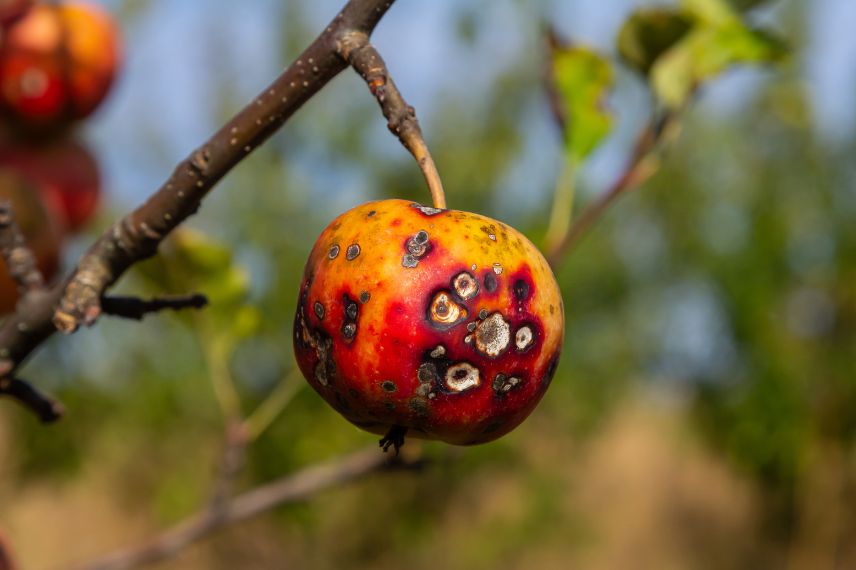
An apple affected by apple scab
Read also
How to prune apple trees?Moniliosis
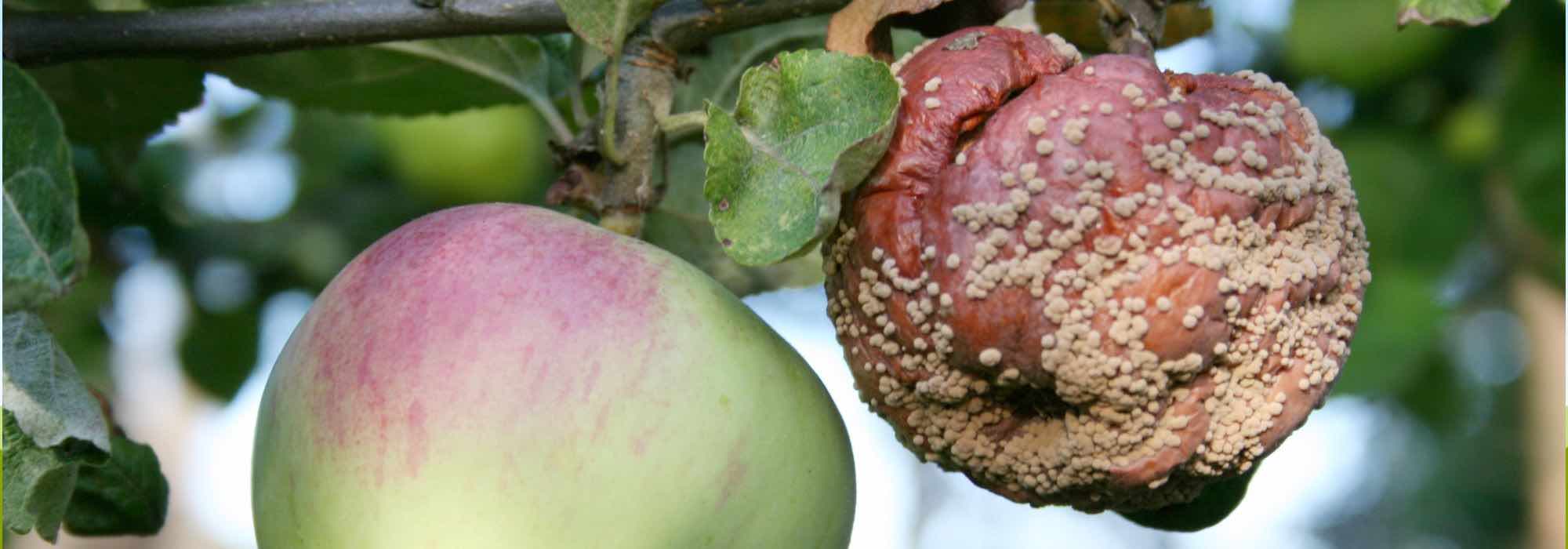
Moniliosis is also a fungal disease that affects the leaves, twigs and flowers and causes apples to rot.
Symptoms
Cankers appear on branches. Fruits appear desiccated and mummified.
Prevention
Spray a copper-based product such as Bordeaux mixture or nettle manure (15 g per litre of dried nettles).
Treatment
Collect and destroy diseased fruits, leaves and branches. Bordeaux mixture sprays can also be used to treat the disease.
For further reading, see our advice sheet on the moniliosis.
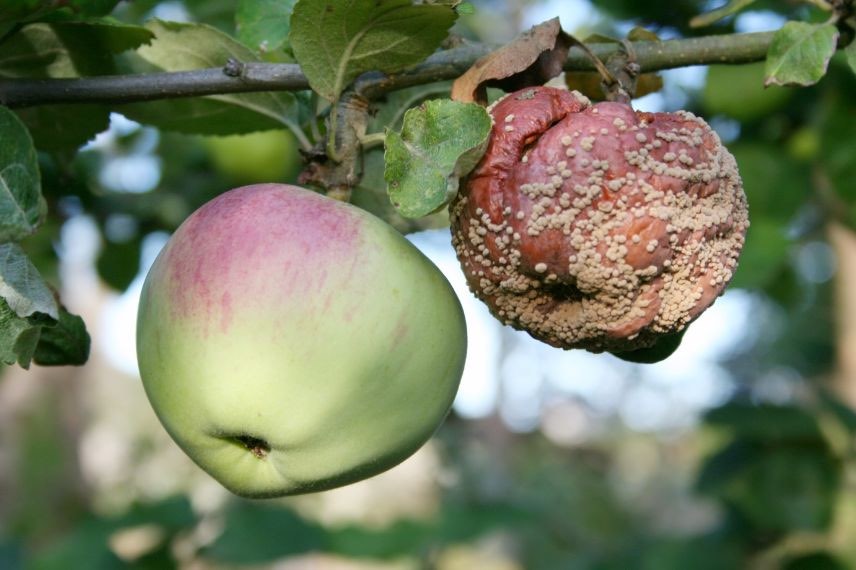
Moniliosis on apple
Powdery mildew
Also called the ‘white disease’, powdery mildew is also caused by fungi.
Symptoms
Powdery mildew is characterised by the appearance of a white, powdery coating on leaves, shoots and buds. The foliage may also become deformed and fall off.
Prevention
Powdery mildew develops in a confined, humid and warm atmosphere. To prevent it, promote good air circulation, prune and remove affected parts. As preventive treatment, sprays of horsetail decoction.
Treatment
Remove the parts affected by powdery mildew. To treat, you can use sprays containing sulfur, baking soda, or garlic macerated in oil.
For further reading, consult our advice sheet on powdery mildew.
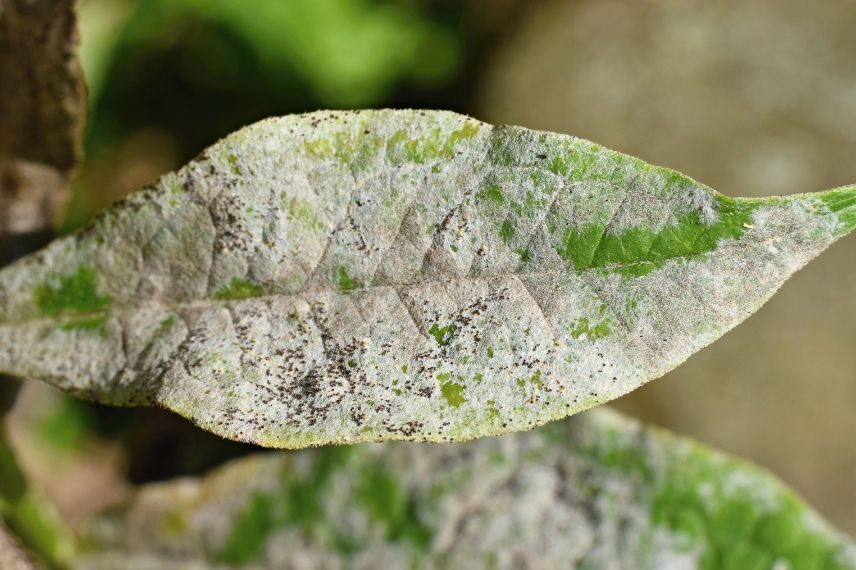
A leaf affected by powdery mildew
Codling moths
These are butterflies that lay eggs in apples, which become wormy.
Symptoms
Fruits drop early and contain pinkish-white caterpillars. Small holes may be observed in the apples, with sawdust indicating the entry to tunnels dug by the caterpillars.
Prevention
To limit codling moth caterpillar proliferation, install a pheromone trap at the end of May that will catch male codling moths. Another option, install undulate cardboard around the trunk in mid-June, in which the larvae will shelter. You can then destroy this cardboard.
Treatment
Remove affected fruit. Lime-wash the trunk in winter to eliminate codling moth larvae.
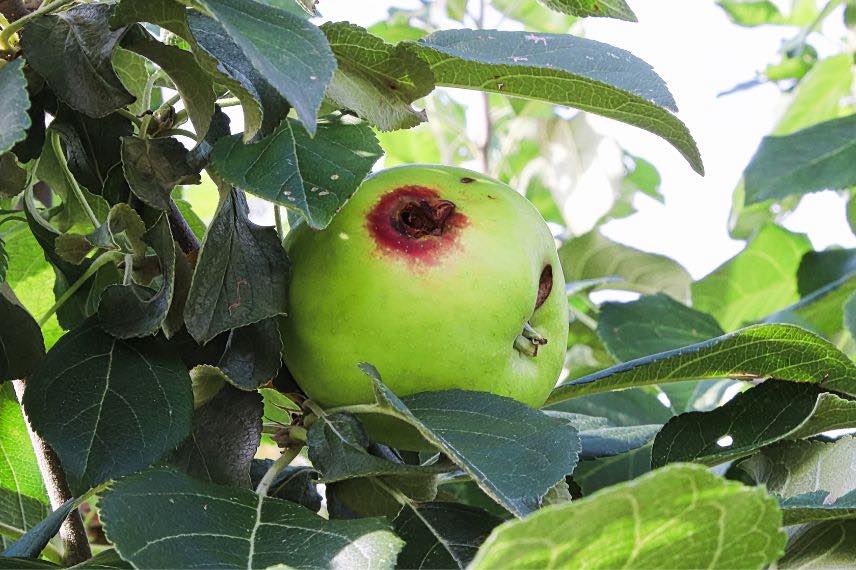
Codling moths lay eggs in apples
Aphids
Several types of aphids can attack apple trees: these are green aphids, brown woolly aphids and ash-coloured aphids.
Symptoms
These small green, brown or ash-coloured insects suck the sap from new shoots and leaves, causing them to deform. With green aphids, sooty mould may appear, a blackish coating. With woolly aphids, a white and cottony substance may be observed.
Prevention
Introduce natural predators of aphids such as ladybirds or lacewings into the garden.
Treatment
In winter, apply a treatment based on rapeseed oil to bare shoots. In autumn, lime the apple tree trunk. This will help to eliminate aphids (as well as any other potential pests) that overwinter in the tree.
Placing a glue collar around the trunk at the start of spring helps trap ants that farm aphids and thus limit their development.
For further reading, see our advisory sheet: ‘Aphid identification and treatment’.

Cankers
Cankers that appear on branches and trunks can be caused by bacteria or fungi. It is a common disease in fruit trees that are often pruned, injuries providing an entry point for contamination. It blocks sap flow and leads to the death of various parts of the apple tree.
Symptoms
Cankers appear as peeling or drying of the bark on the trunk and on the shoots. Brownish spots appear, followed by swellings, cracks and necrosis, followed by gum exudation.
Prevention
Prevention involves eliminating the factors that allow cankers to develop: injuries from pruning branches, drought stress, poor root nutrition, soil compaction.
Treatment
Cut diseased shoots with a tool previously disinfected with alcohol and burn them.
Cure cankers that cannot be cut with a metal brush or a disinfected knife and smear the wounds with fungicidal and wound-healing putty.
Spray on the entire tree with Bordeaux mixture.
Carry out copper-based sprays before, during and after leaf fall, as growth resumes.
For more information, see our advice sheet on Tree and Fruit Tree Canker.
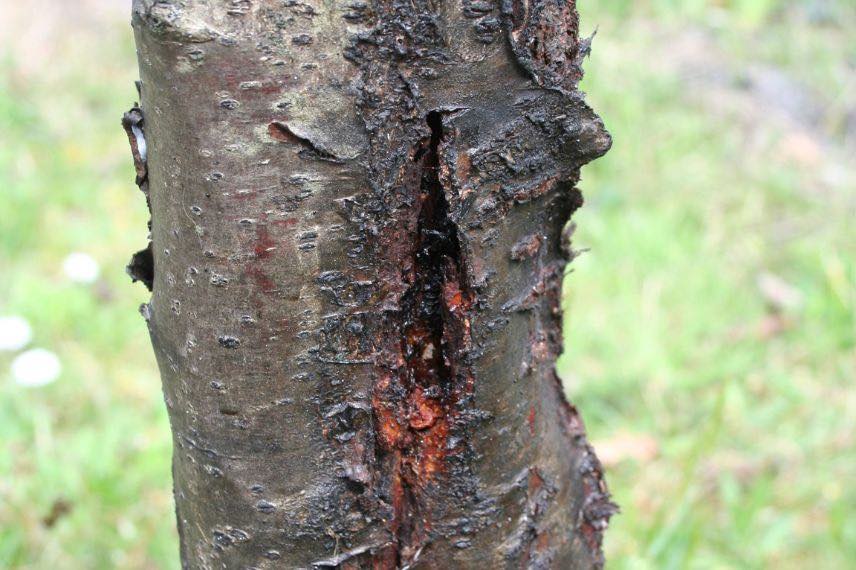
Canker
Scale insects
Mealybugs are tiny insects that feed on sap.
Symptoms
There are small waxy or mealy protrusions, brownish or grey, that are immobile.
Prevention
The presence of natural predators, such as ladybirds, lacewings and hoverflies, helps prevent mealybug infestations.
Treatment
To combat mealybugs, spray a solution: mix in 1 litre of water one teaspoon of liquid black soap, one teaspoon of denatured alcohol and one teaspoon of rapeseed oil. Spray onto the affected areas.
For more information, see our care sheet: Mealybug: identification and treatment.
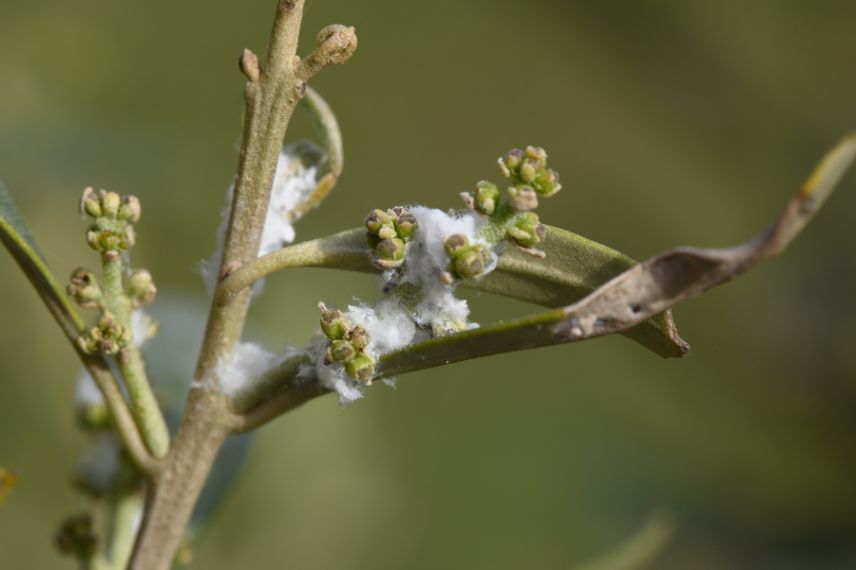
mealybugs
fire blight
Fire blight is a serious disease that can affect certain apple tree species. It spreads rapidly.
Symptoms
Leaves turn black as if they had been burnt by fire. You may also see a sticky white ooze on the bark.
Prevention
Remove the affected parts promptly and with sterilised tools.
Treatment
If the entire bush is diseased, it is best to pull it out and burn it. Notify your local council or the Regional Plant Health Service of the fire blight outbreak.
For further reading, consult our advice sheet: Fire blight: prevent and control this disease.
Other pests can affect apple trees, such as caterpillars, red mites, apple curculio (Anthonomus) and Hoplocampa sawflies.
Additionally, explore our guide: Identify the main pests and diseases of plants, as well as our comprehensive guide on the apple tree planting and care.
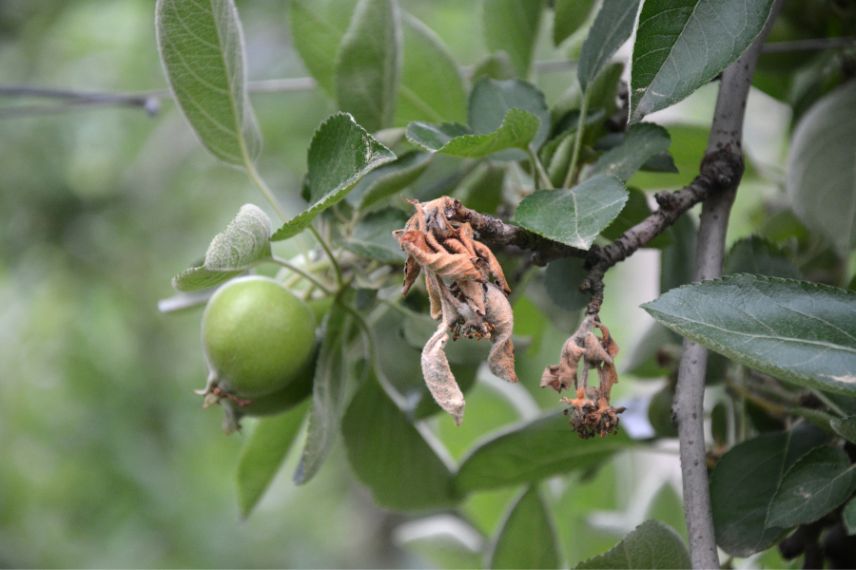
Symptoms of fire blight
- Subscribe!
- Contents
Comments