





























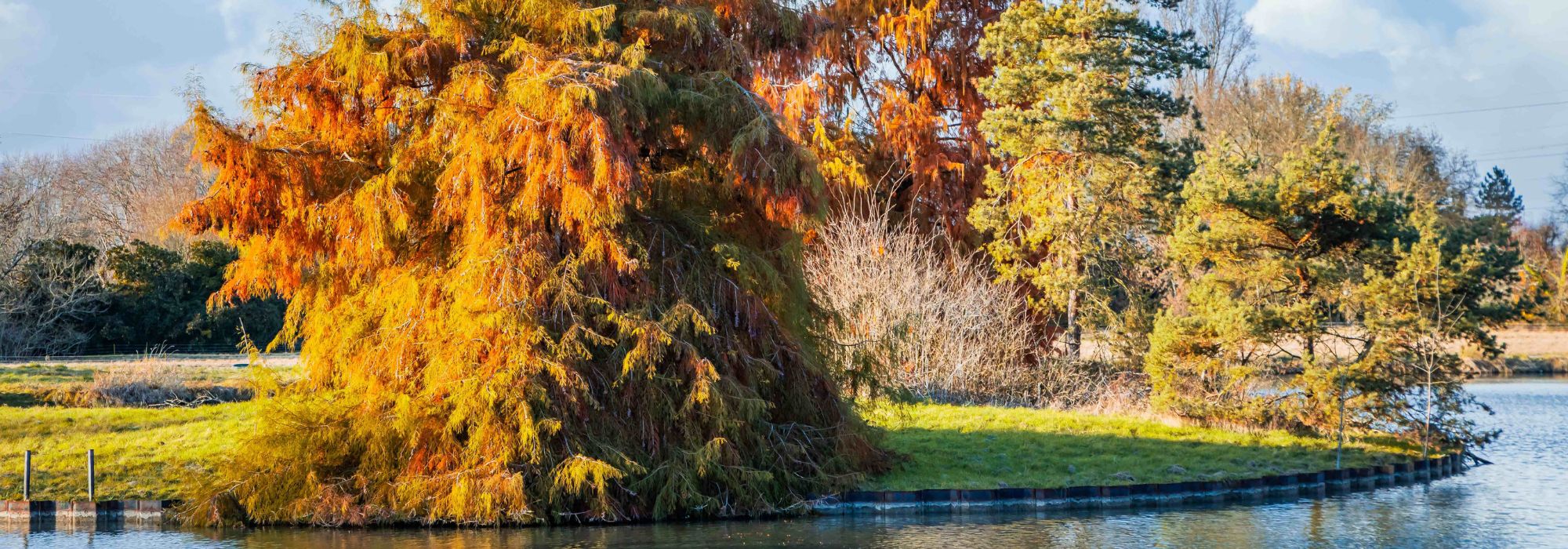
7 trees and bushes to plant by the water
Our favourite species to enhance wet mediums
Contents
Aquatic environments host a remarkable wealth of fauna and flora. While many plants are unable to survive constant moisture, conversely, some are intimately linked to its permanent presence.
We offer you in this sheet a list of our most beautiful trees and bushes that thrive by the edges of wet environments to enhance water features, ponds, or riverbanks.

Bald cypress - Taxodium distichum
Among nature’s curiosities, this magnificent tree native to Louisiana holds a special place in the hearts of botanists. Classified within the order of firs, the Taxodium distichum loses its needles (hence its nickname “bald”), displaying a sumptuous rust colour in autumn. It is also capable of living with its feet in water! These two characteristics are quite rare among conifers. Indeed, the bald cypress has developed a strategy to avoid suffocating its roots: when planted in waterlogged soil, it develops specific aerial roots known as respiratory roots. These lignified growths, which can reach 1.7 m in height, emerge from the ground or water at the base of the trunk, ensuring oxygenation of the root system as well as anchorage in shifting soils.
Reaching 20 to 25 m in height with a spread of 7 to 8 m and boasting a very beautiful pyramidal habit with relatively rapid growth, this magnificent tree is best suited for large gardens with a sizeable pond or wet area, although it can also tolerate standard and even calcareous soil. Hardy down to at least -15 °C, easy to cultivate in deep, consistently moist soil, the Taxodium distichum requires no special maintenance. It should be planted in fresh, clayey, humus-bearing, even peaty and poor soil, preferably not too calcareous, in full sun or partial shade.
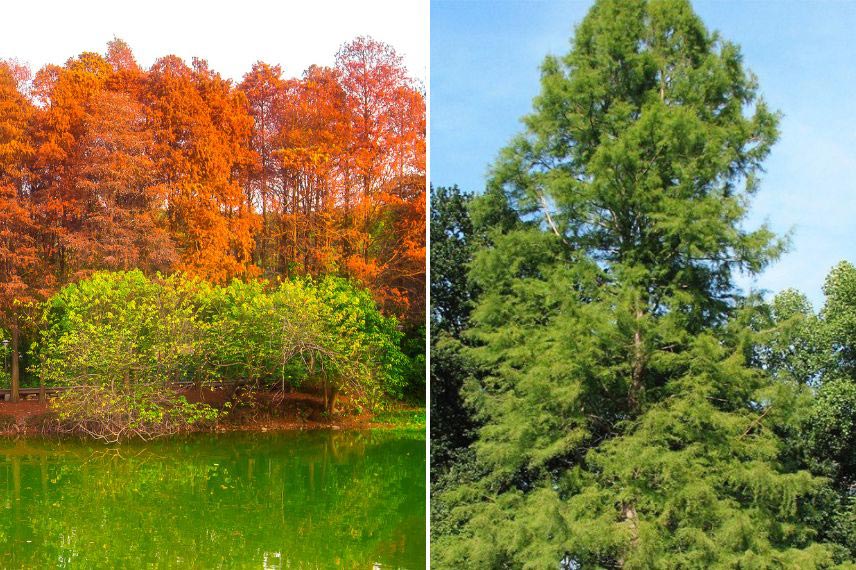
Taxodium distichum
Read also
10 trees for heavy, wet soilThe sapwood viburnum - Viburnum opulus
Our flora is often overlooked by gardeners despite its diversity and beauty, which is (too) frequently ignored. The Guelder Rose – and its horticultural variety “Snowball” – is an extremely graphic bush that remains attractive for at least three seasons of the year! This woody plant preferring damp areas is of medium size (about 3 metres) and will delight fans of original flowering: it bears on the periphery of its inflorescence “false” flowers that serve to attract the attention of pollinators surrounding the “true” sexual flowers inside the corymb. At the beginning of autumn, numerous bright red berries adorn the bush like a wild Christmas tree.
Quite hardy, this native woody plant is a must for the aesthetics and biodiversity of our gardens. It appreciates non-calcareous soils, fresh and moist. It is very suitable for enhancing a medium-sized pond or lake in a sunny or semi-shaded position.
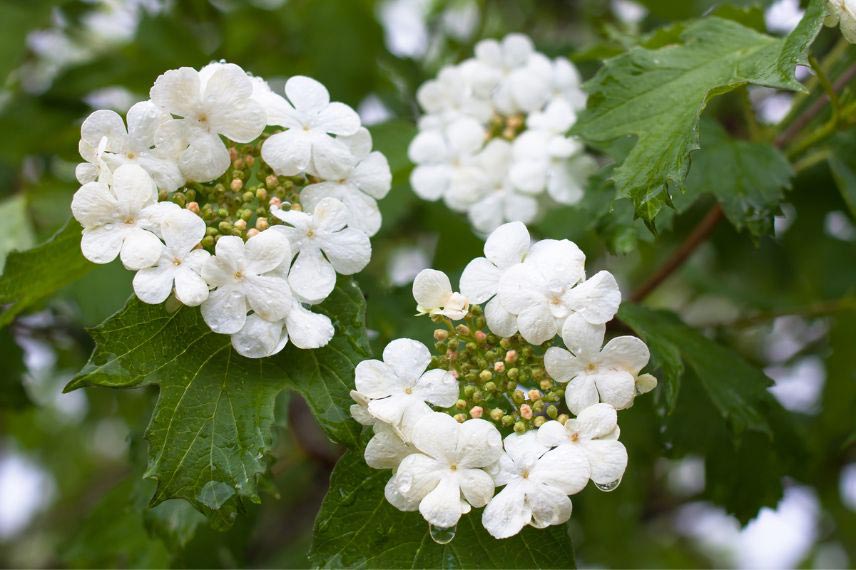
Viburnum opulus
Discover other Shrubs by soil type
View all →
Available in 1 sizes
Available in 0 sizes
Available in 1 sizes
Available in 1 sizes
Available in 1 sizes
Available in 1 sizes
Available in 1 sizes
Available in 1 sizes
Available in 1 sizes
Available in 2 sizes
The Marsh Myrtle - Myrica gale
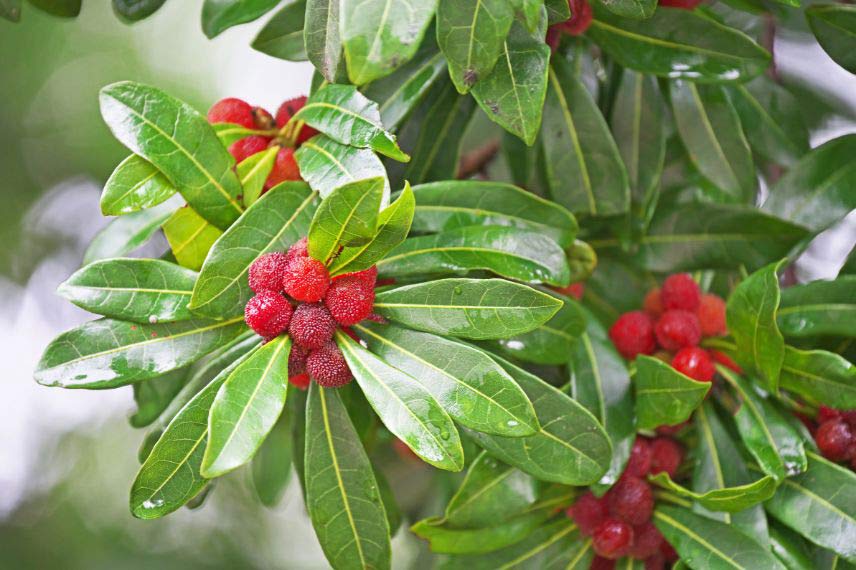
Also known as Royal Pepper or “Sweet Wood”, the Myrica gale is a charming little suckering shrub with aromatic leaves. Very hardy (-20 °C), it is a native bush in Northern and Western Europe as well as North America, typically found in poor, damp soils, such as those in certain sandy heaths.
Unfortunately, it is little known among gardeners, but it would certainly have its place by the edge of a small garden pond! Colourful, aromatic, suckering, and not growing to gigantic proportions like willows, as it typically maintains an average height of 1.50 m and a width of 1 m, it is ideal for creating a small thicket along a stream or garden pond.
In spring, small brown-yellow aments brighten the garden, giving way to small yellowish fruits punctuated with resin by late summer. This shrub is dioecious (some plants are male and others female), and only the female plants bear fruit.
The Marsh Myrtle thrives in full sun or partial shade, in moist, humus-rich, marshy, acidic, and waterlogged soil, as found in peat heaths and wet pine forests. It tolerates poor soils very well, even enriching them with the nitrogen it fixes.
Myrica gale
The downy birch - Betula pubescens
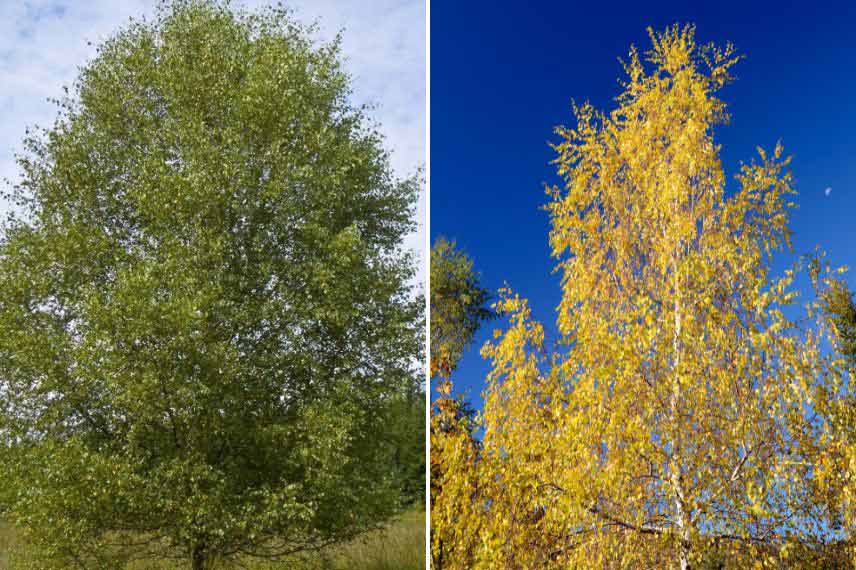
Less famous than its cousin the verrucate birch, Betula pubescens is a magnificent tree with an upright, pyramidal habit, typical of wet forests, capable of thriving in both acidic and waterlogged soils as well as sandy or clayey and limestone soils. It is not uncommon to find it in turf moors, which speaks to its resilience and love for water and cold!
With a trunk that has white bark exfoliating with age, it is in winter that this marsh birch reveals its full aesthetic potential; towards the end of winter, the aments open and colour the garden like a willow. The autumn foliage is also a very pleasant golden yellow.
This tree has the advantage of being smaller and less vigorous than the common birch, but it will still reach about 20 m in height and 10 m in spread. Extremely cold-resistant and not very susceptible to diseases, planted in full sun or partial shade, it can help dry out overly wet ground or adorn the back of a large water feature.
Betula pubescens
The marsh oak - Quercus palustris
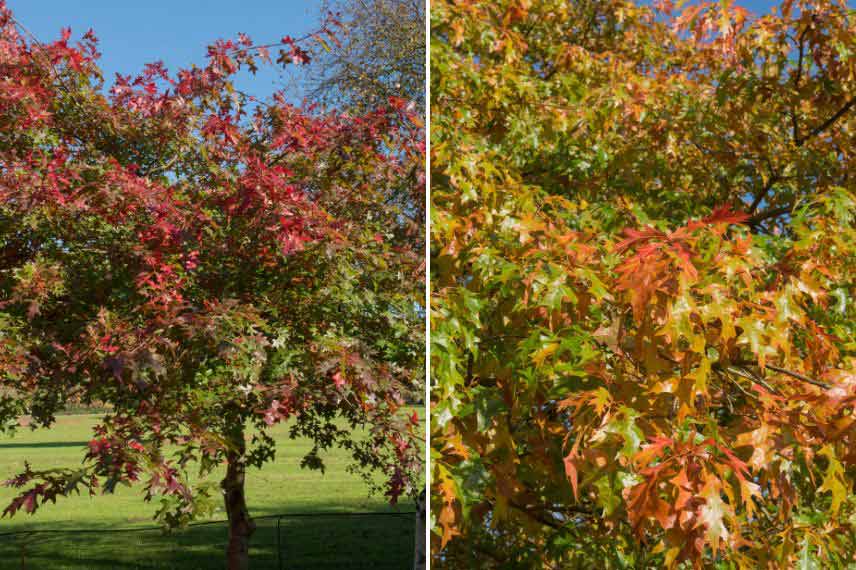
This magnificent oak native to North America is a must for enthusiasts of spectacular autumn foliage! Fast-growing, Quercus palustris has smooth bark and foliage quite similar to that of the red oak.
The leaves, the main asset of this species, are deeply lobed and have a glossy green hue. They bear large tufts of hairs along the axis of the veins and turn scarlet to brown-red once autumn arrives. Its acorns are also very attractive!
Reaching 20 to 25 m in height with a spread of 12 m, the Pin Oak is an easy-to-cultivate tree that thrives in sunny locations, preferring marshy, acidic, and non-calcareous soils. However, it can tolerate occasional dry spells.
Quercus palustris
The cordate alder - Alnus cordata
The Corsican alder is a medium-sized deciduous tree with very attractive leaves. Native to Corsica and Italy, where it is often found along waterways, its heart-shaped leaves are dark green, leathery, glossy, and remain on the tree for a long time before falling in winter. Alnus cordata thrives in acidic, moist, and clayey soils by the water and can tolerate poor soils. The lushness of its dense crown and its good hardiness make it an ideal candidate for shading gardens as well as ponds that are too exposed.
With a rapid growth rate, the Corsican alder grows 15 metres in 20 years to reach about 25 metres at ripeness. It is widely used for stabilising calcareous soils, as well as the revegetation of poor and unstable soils in challenging sites. It has the great advantage of being much more drought-resistant than other alders.
Easy to cultivate in consistently moist soil, the Corsican alder requires little maintenance. It should be planted in dry to moist soil, preferably calcareous, in full sun, and it withstands wind well. Plant it on the bank to retain the soil, and it will thrive! Hardy down to -20ºC, it can also be installed in gardens north of the Loire.
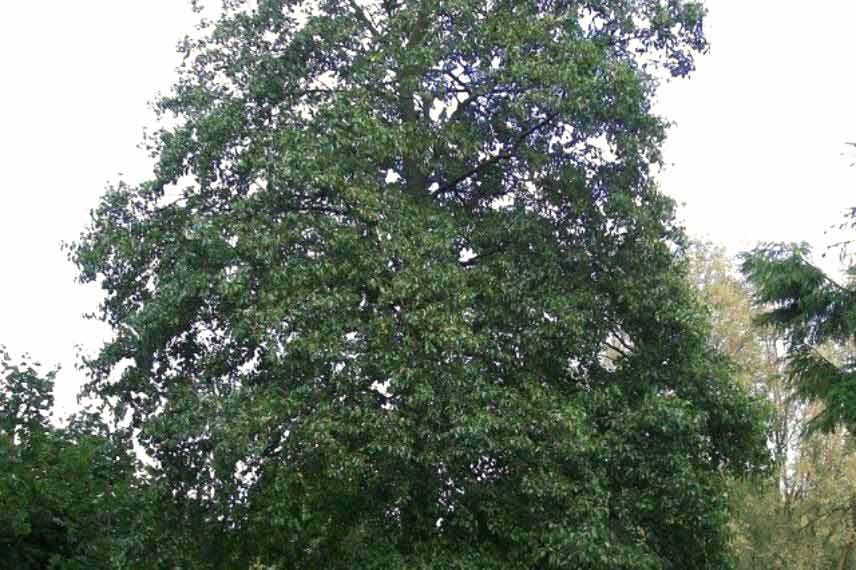
Alnus cordata
Creeping willow - Salix repens
Ideal for adorning small ponds or natural basins, the Creeping Willow is a true warrior of nature. Able to adapt to harsh conditions such as those found in turf moors or wet dunes, it is one of the “indestructibles” of the garden. In addition to its resilience, it adds a lovely touch of originality compared to other “salix” in our regions.
This dwarf undershrub, less than one metre tall, has spreading, upright, and pubescent branches. Its pretty leaves are entire, silky, silver, and lightly ribbed. This unique willow thrives in moist, acidic, sandy, and poor soil, but will need full light to perform at its best. It is extremely cold-resistant.
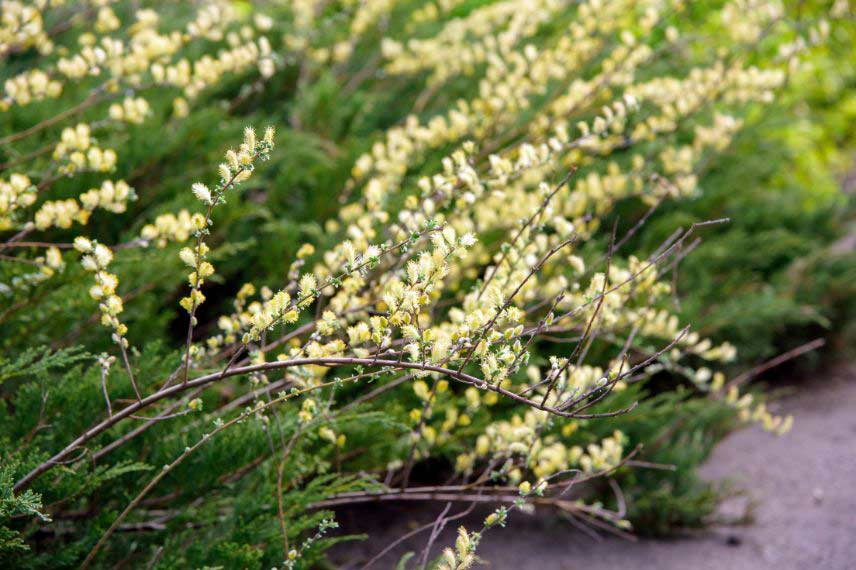
Salix repens
- Subscribe!
- Contents
Comments