





























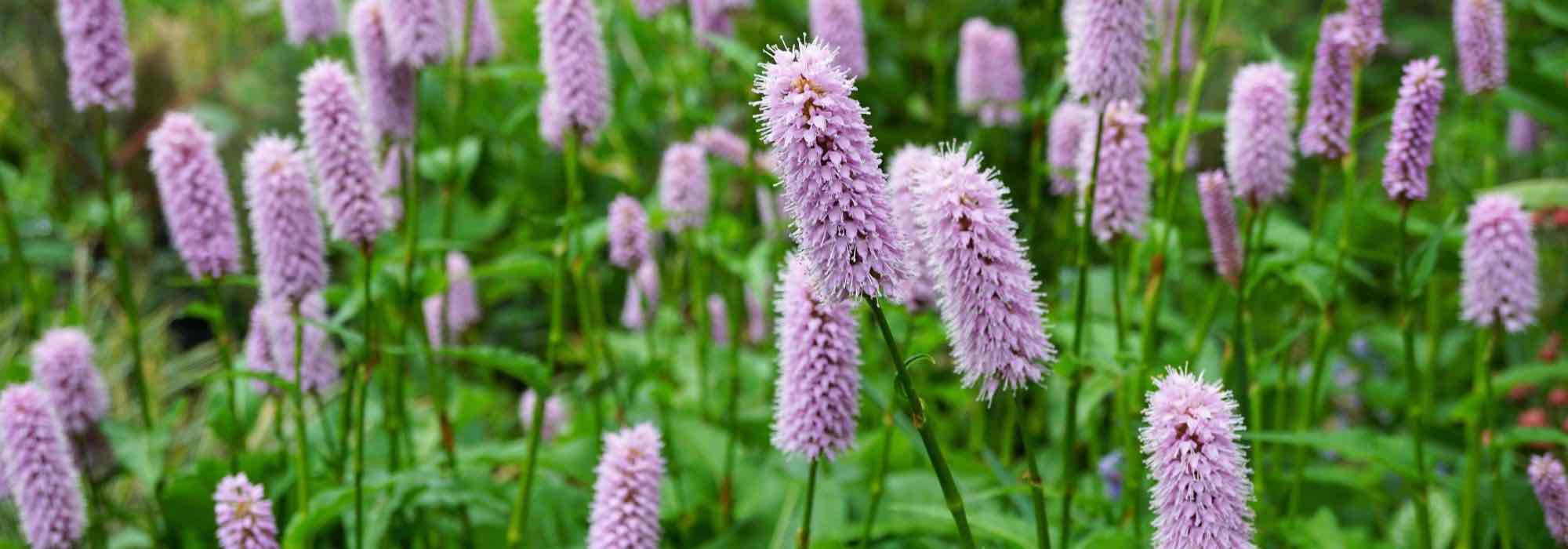
7 pink flowering Persicarias
Spikes in all shades of pink
Contents
Persicarias, Persicaria or Knotweeds are essential perennials for gardens with cool soil, where they bring their upright, minimal, and graceful silhouette that dances. Very hardy and robust, they come in numerous species and cultivars, and are known to thrive in cool to moist soils. Their single flowering, most often in spikes, brightens up in red, white, or pink. In some Knotweeds, the foliage is adorned with lovely intricate patterns.
Knotweeds with pink flowers are tinted in soft pink, coral pink, bright pink, or mauve pink. Discover them, whether in fine or bushy spikes, or with sophisticated foliage.

Persicaria amplexicaulis 'High Society'
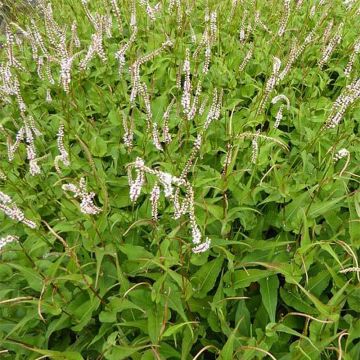
Like a lady of high society, the variety Persicaria amplexicaulis ‘High Society’ has a distinguished appearance with its tall, thread-like spikes. Its simplicity also gives it a wild air, making it suitable for both contemporary gardens and those with a spontaneous character! On a tall plant that can reach 1.20 m in flower and 50 cm in width, it produces numerous thread-like spikes measuring 10 to 15 cm long from July to October. Burgundy in bud, it turns candy pink upon blooming. The different stages of flowering create a lovely gradient of colours. Its semi-evergreen leaves turn red in autumn.
In all simplicity, plant it with grasses for beautiful autumn colours: Miscanthus with rosy plumes, Panicums with red leaves, or even Calamagrostis.
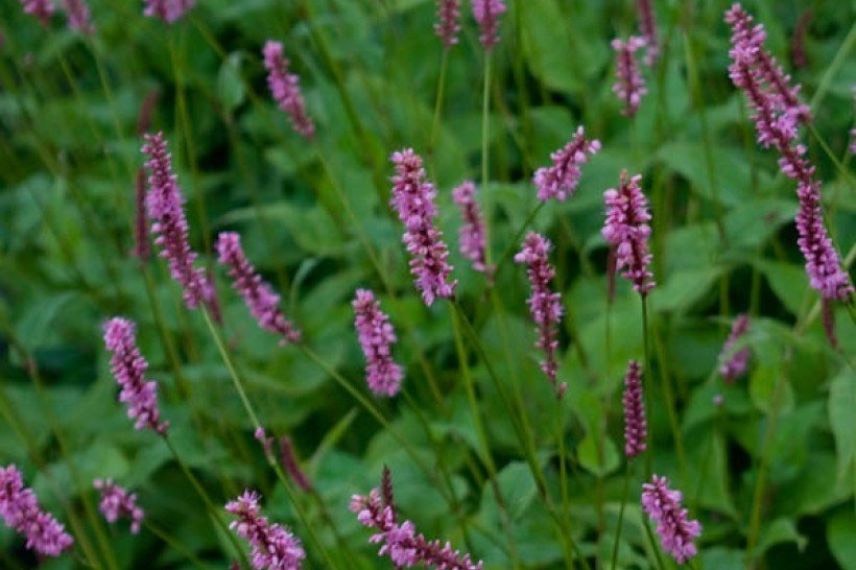
Persicaria amplexicaulis ‘High Society’
Persicaria amplexicaulis 'Rosea'
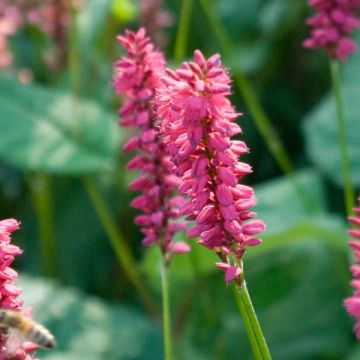
The Persicaria amplexicaulis ‘Rosea’ is a large specimen as well: it forms a bushy clump that reaches 1 m in height and 50 cm in spread, and even more for an older plant. Its long, slender spikes made up of multiple bell-shaped flowers measure 7 to 10 cm in length and are pale pink in colour. Its flowering is continuous throughout the summer and into October. Its lanceolate leaves, measuring 15 to 25 cm long, take on a red tint as it finishes flowering.
Pollinated by bees and butterflies, add it to any border with fresh soil or in a damp area alongside Rodgersias and Lysimachias.
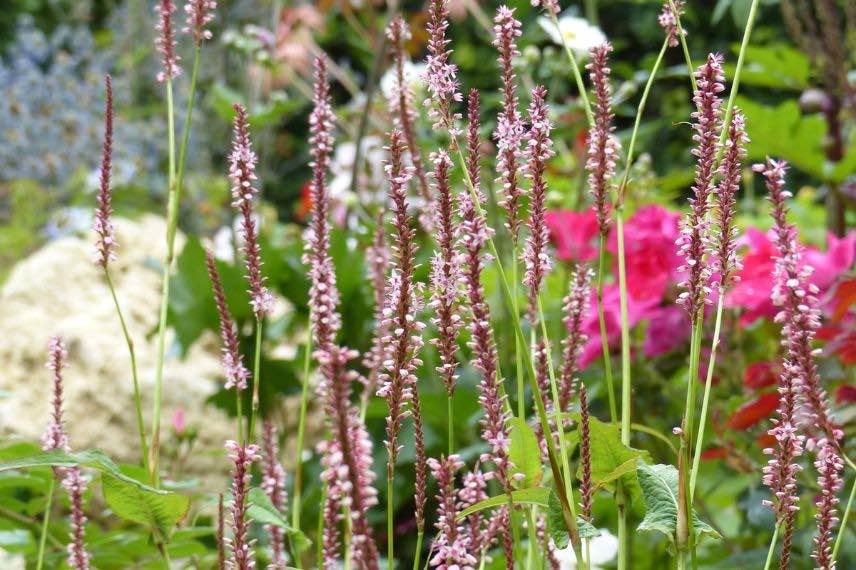
Persicaria amplexicaulis ‘Rosea’
Discover other Persicaria
View all →
Available in 1 sizes
Available in 3 sizes

Available in 2 sizes
Available in 2 sizes
Available in 1 sizes
Available in 1 sizes
Available in 1 sizes
Available in 1 sizes
Available in 1 sizes
Available in 2 sizes
Persicaria bistorta 'Superba'
Persicaria bistorta or Polygonum bistorta are distinguished by denser, compact, and cylindrical spikes. The flowers of the ‘Superba’ variety are larger than those of the type species. Particularly ornamental, it has been awarded the Award of Garden Merit by the Royal Horticultural Society (RHS). This variety forms a fairly compact, dense, and upright clump. Vigorous, it spreads quickly and produces spikes of 5 to 7 cm long with small, pale pink bells in May and June. Its semi-evergreen leaves are ovate, a rich green, and measure 10 to 30 cm long.
Native to wet meadows and riverbanks, plant it in masses on banks, in clayey and cool soil. Its natural companions can be Euphorbia palustris and Camassia leichtlinii ‘Caerulea’.
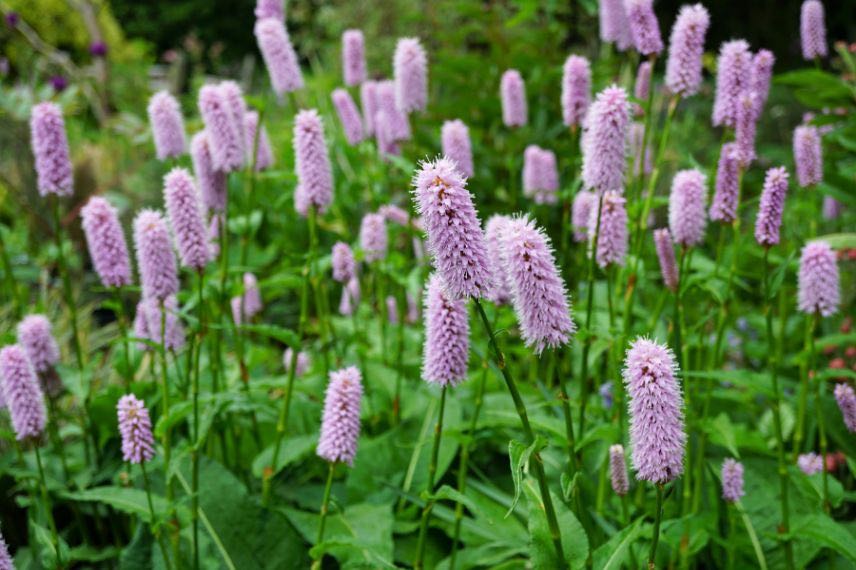
Persicaria bistorta ‘Superba’
Persicaria campanulata
Refined and elegant, the Persicaria campanulata features lovely lanceolate, veined leaves in a dark green hue. Atop reddish stems, large, airy spikes of pale pink flowers bloom. It flowers in summer, from July through to autumn. This persicaria forms a large bush, reaching heights of 1.20 m to 1.50 m, and spreads gradually. It is slightly running.
As a true Persicaria, its ideal conditions are partial shade and cool soil; pair it with silver-leaved Brunneras and large Hostas.
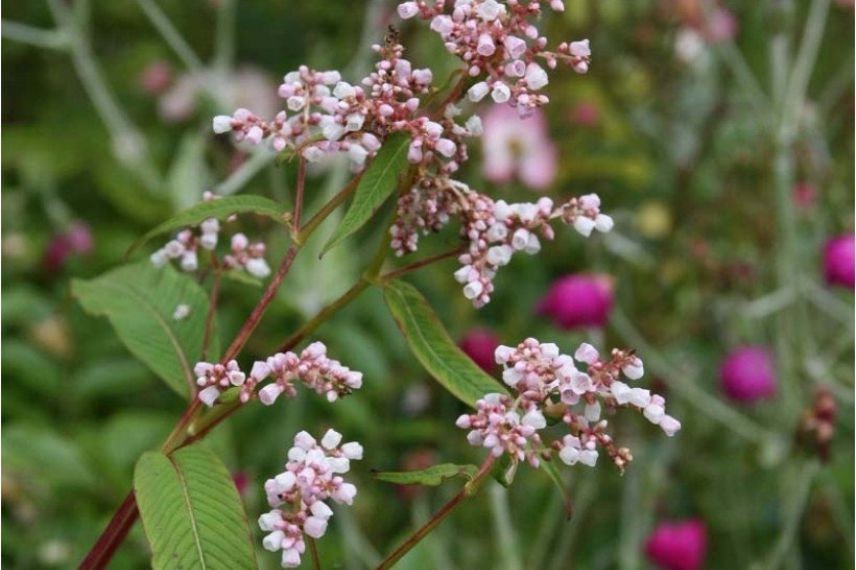
Persicaria campanulata
Persicaria bistorta 'Hohe Tatra'
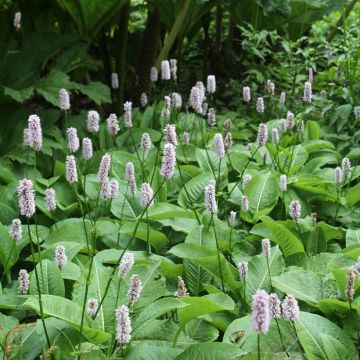
Another bistort, Persicaria bistorta ‘Hohe Tatra’ is a lovely cultivar with cool pink flowers, leaning towards mauve. Its thick, cylindrical, feathery spikes are about 10 cm long and add a lot of softness to the atmosphere of this plant. They appear in June and last until September. This bistort forms a beautiful dense clump of 60 cm in all directions. Its leaves measure between 10 and 20 cm long and are ovate and pointed.
Robust, it thrives in damp, rich soils but can also adapt to a well-drained soil in borders. In a romantic and natural garden, it provides height and movement with its dancing spikes. Pair it with Cirsium rivulare ‘Atropurpureum’ and Marsh Sage: Salvia uliginosa.
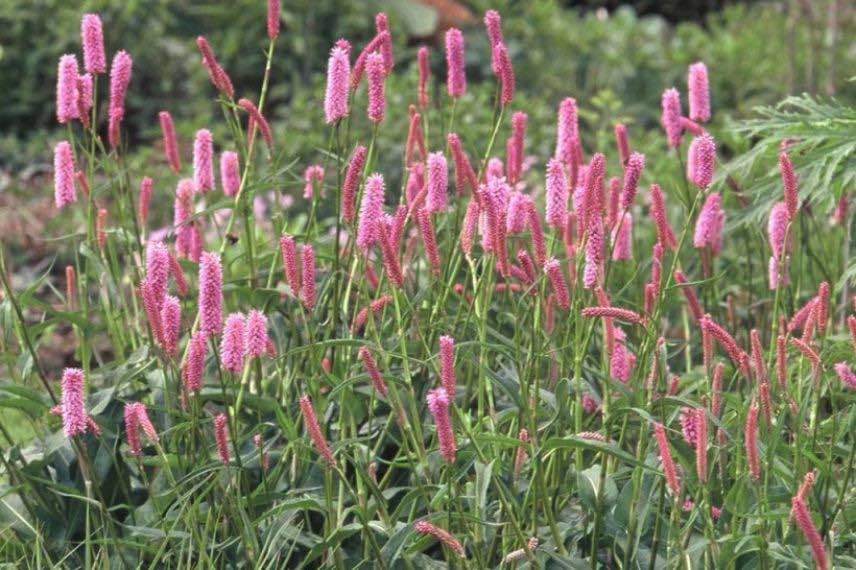
Persicaria bistorta ‘Hohe Tatra’
Persicaria virginiana 'Painter's Palette'
Discover the lovely foliage of Persicaria virginiana ‘Painter’s Palette’. It features large, velvety leaves, 8 cm long, ovate, splashed with shades of ivory, green, cream yellow, and pink. The centre of each leaf is marked with a chocolate-purple V. This knotweed forms a clump 60 cm high and 40 cm wide, with its main appeal lying in its foliage. It rarely flowers in our climates, and when it does, it produces sporadic, very delicate spikes made up of small pink flowers.
In cool, well-drained soil, in partial shade or in non-scorching sun, pair it with plants that complement the various shades of its foliage: consider Heucheras or, as shown here, a bronze Carex, such as Carex comans ‘Bronze Form’.
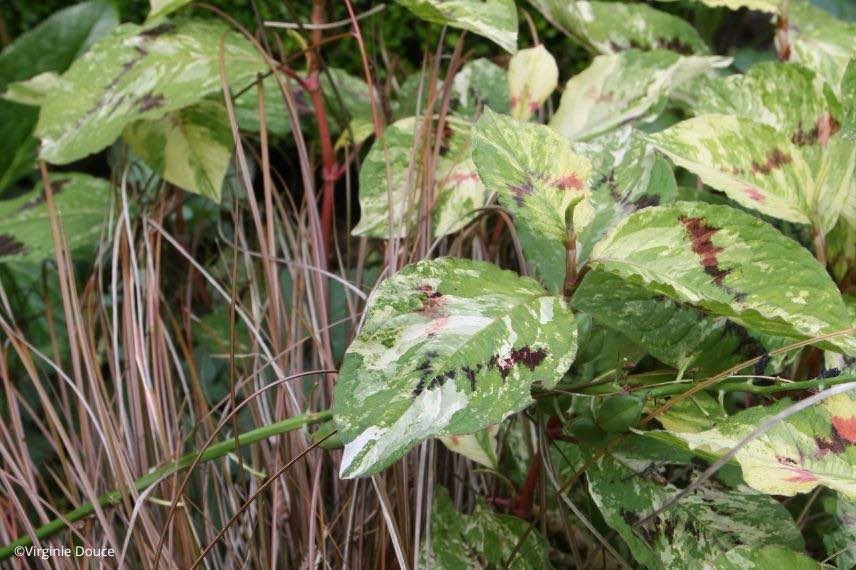
Persicaria virginiana ‘Painter’s Palette’
Persicaria amplexicaulis 'Orange Field'
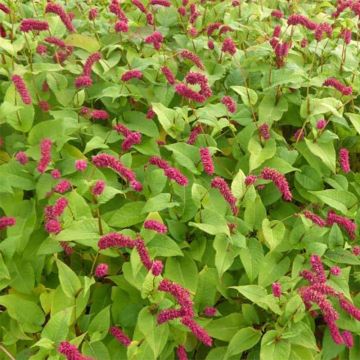
The Persicaria amplexicaulis ‘Orange Field’ stands out with an unusual hue: salmon pink to coral pink. It offers a long, relentless flowering period from July to October, forming a vigorous, tall, and dense clump, reaching 1 m in height and eventually 1 m in spread. It produces spikes 7 to 10 cm long, coral pink in bud, then salmon pink as they bloom. The embracing leaves are medium to dark green and, like all stem-clasping knotweeds, turn red in autumn.
Plant this knotweed alongside flowers in complementary tones, such as Echinaceas or Dahlias.
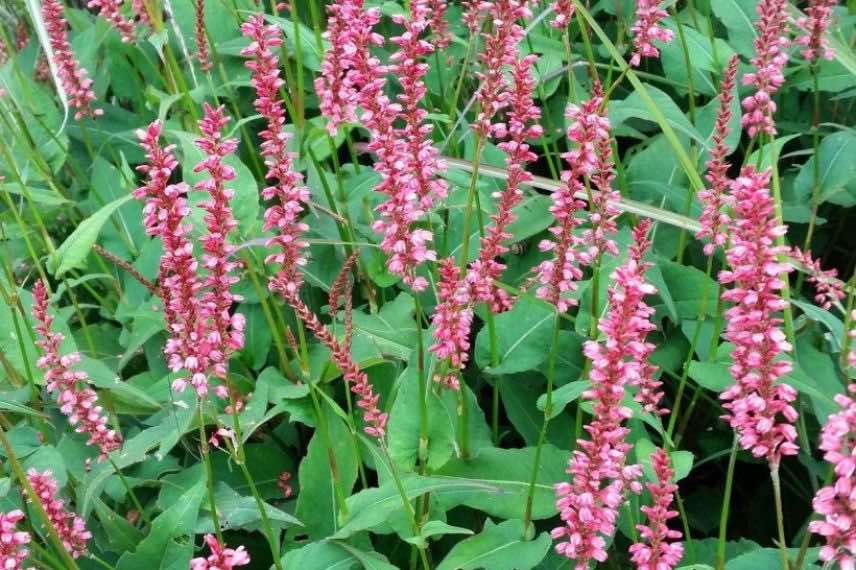
Persicaria amplexicaulis ‘Orange Field’
- Subscribe!
- Contents

Comments