





























7 conifers to brighten up shaded spaces
Our selection of the best varieties
Contents
Among the options for planting in shaded areas, the conifers suited to shade stand out for their resilience and their ability to bring structure, colour and life year-round. If your garden benefits from dense blanket bog cover, there is a range of conifers able to thrive and brighten these shadier corners. This article invites you to discover 7 conifers that provide an evergreen and dynamic backdrop to your garden.

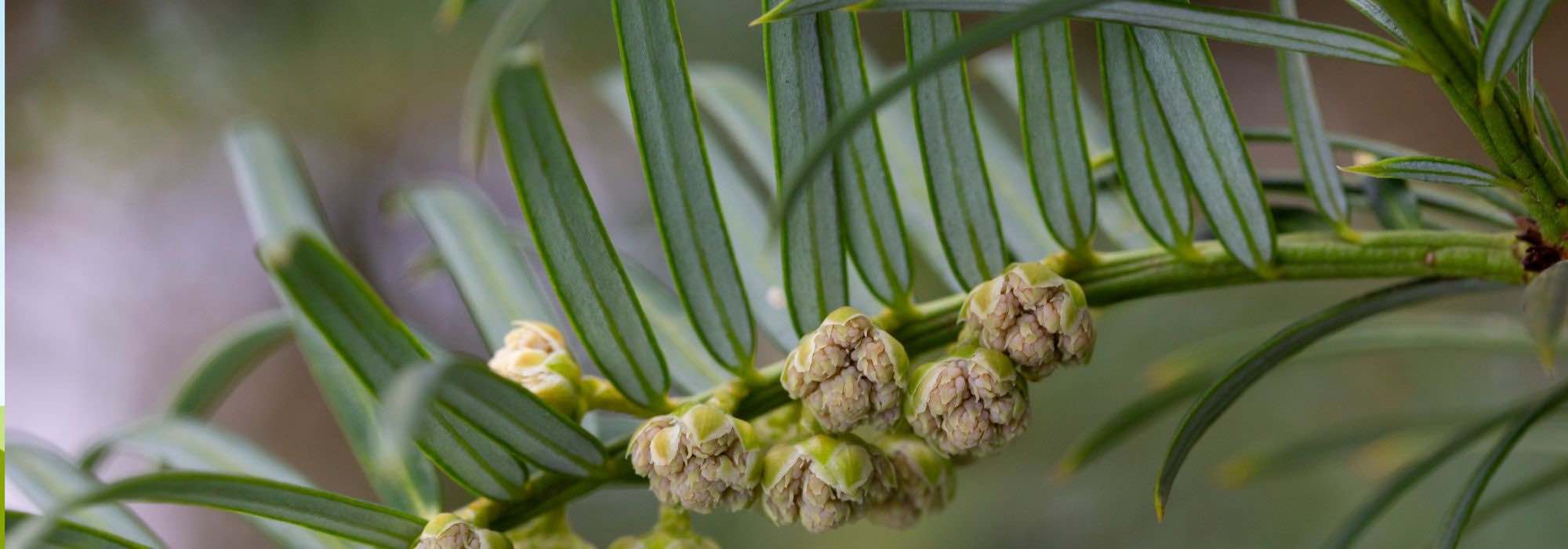
Cephalotaxus harringtonia 'Korean Gold' or Japanese plum yew
The Cephalotaxus harringtonia ‘Korean Gold’ is a small conifer offering soft, glossy foliage, with golden shoots in summer turning green in winter. It is distinguished by its spreading colonial habit and its elegance reminiscent of yew. Suitable for all exposure types, it prefers moist, slightly acidic soils. Ideal at the back of a border, in a rock garden, as a specimen or in groups, it adds structure and light to the garden.
‘Korean Gold’, particularly elegant, develops a columnar habit reaching 2 m tall by 90 cm wide after ten years. Its branches, covered with curved needles, bear fleshy fruits on the female plants and small pollen sacs on the male plants. Its bark is dark reddish-brown, adding to its charm.
This conifer is ideal for creating a backdrop in a border or at the garden entrance. Its architectural presence suits contemporary gardens, offering a durable alternative to clipped box. Paired with roses, peonies, ornamental grasses or groundcover plants, it plays with volume and colour to enrich the garden’s aesthetic.
Tsuga canadensis 'Jeddeloh' or Canadian hemlock
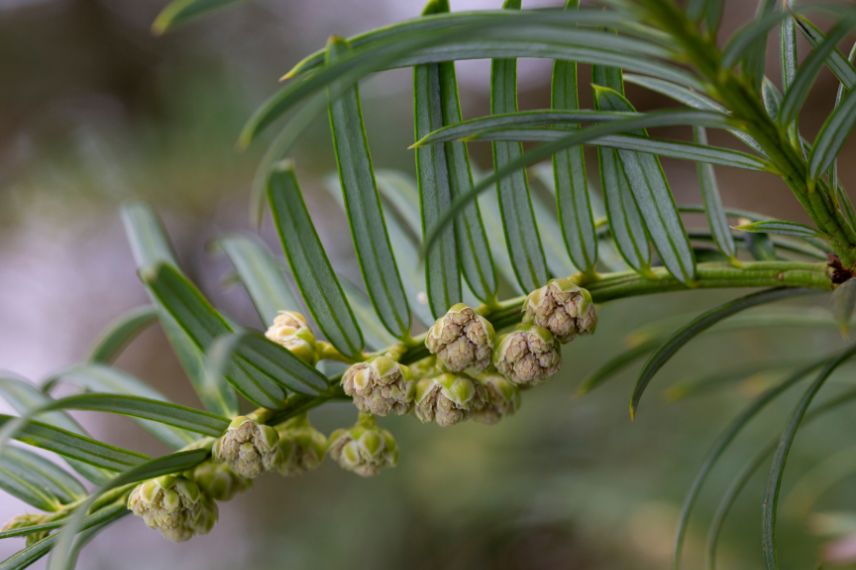
The Tsuga canadensis ‘Jeddeloh’ is a dwarf and unusual evergreen conifer, which adds a touch of charm to shaded areas of the garden thanks to its unique hemispherical, flattened form resembling a bird’s nest. Its glossy green needles arranged on tiered, trailing branches create a captivating visual effect. This conifer particularly favours partial shade or shade and requires moist, well-drained soil to thrive.
Pinus mugo 'Green Column' or mountain pine
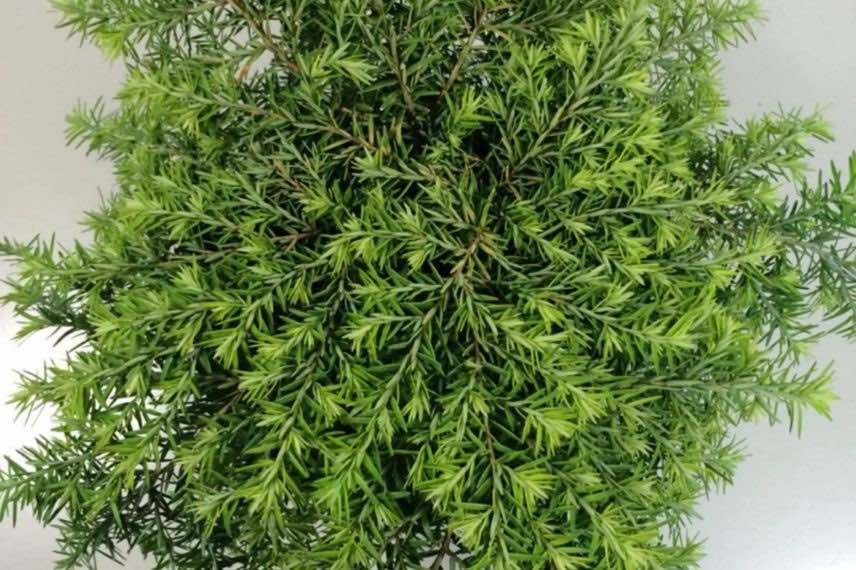
Pinus mugo ‘Green Column’ is an uncommon variety of mountain pine with a slender conical habit and dense foliage ranging from dark green to blue-green. Suitable for small gardens or large rockeries, this hardy and robust conifer does not require any pruning and adapts to various soil types, including poor and calcareous soils, as well as to all exposures, including shade.
Snowy Podocarpus or Podocarpus nivalis
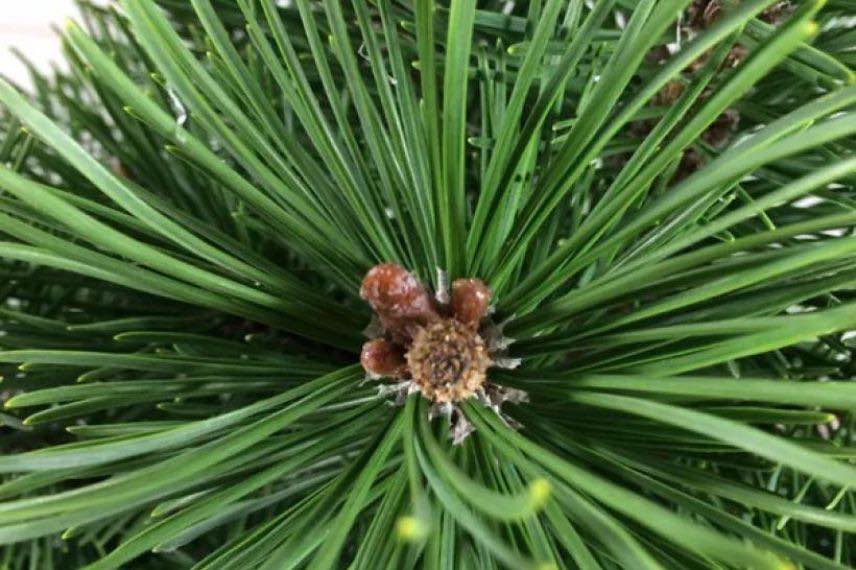
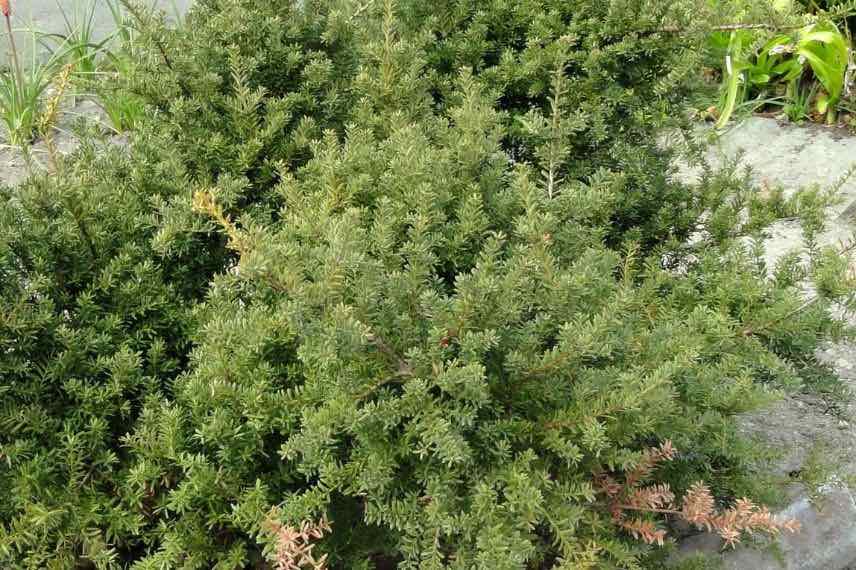
The Podocarpus nivalis, native to the New Zealand mountains, stands out for its great hardiness and adaptability. This evergreen bush, still underutilised in our gardens, offers dense, mounded foliage in dark olive-green colour, with a variable habit, spreading or bushy. It adapts well to dense shade as to full sun, is not fussy about soil type and resists drought once acclimatised, although it prefers moister conditions for optimal growth.
Picea orientalis 'Silver Seedling' or oriental spruce
The Picea orientalis ‘Silver Seedling’ is an exceptional cultivar of Oriental spruce with unique foliage, variegated in silver and sand against a dark green backdrop, giving each specimen a distinct personality. Its form varies, ranging from a slightly prostrate, rounded habit to a more upright or pyramidal appearance over time. This dwarf conifer, which prefers shade or filtered light to avoid scorch on its branches, grows slowly, gradually enriching the darker corners of the garden with its fantastical presence. It tolerates poor, moist soils.
‘Silver Seedling’ has an annual growth of 5 to 15 cm, reaching about 70 cm in height and 40 to 50 cm spread in ten years, ultimately measuring between 1.5 and 3 m tall and 1.5 m in diameter at maturity. In spring, its dense, silvery or pale yellow new growth contrasts magnificently with the darker older green foliage, especially when grown in shade.
Taxus baccata 'Dovastonii Aurea' or golden yew
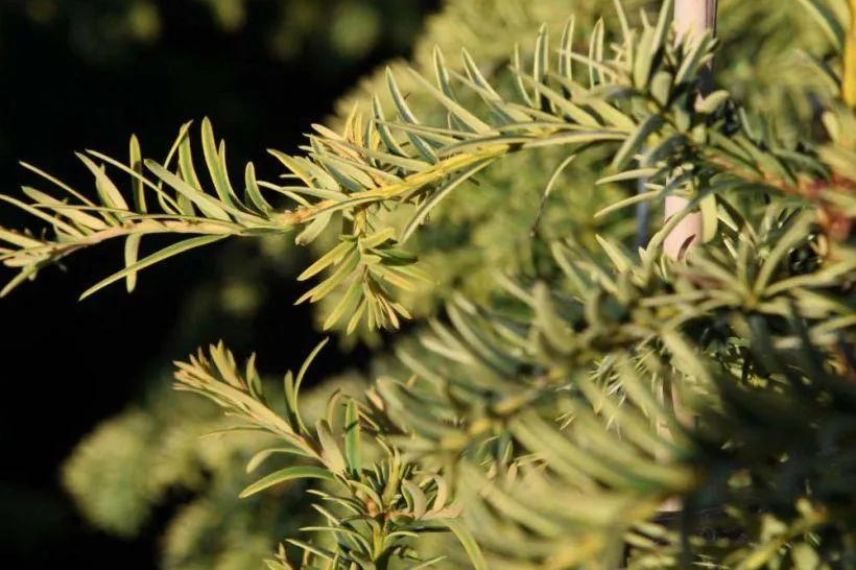
The Taxus baccata ‘Dovastonii Aurea’ enriches the world of the common yew with its dazzling golden foliage, offering a touch of whimsy to this tree often regarded as austere. This bright conifer slowly develops a spreading, weeping habit, with drooping branches that, on female plants, bear bright red berries. Ideal for medium-sized gardens thanks to its moderate growth, it pleases with its year-round appeal, its low maintenance requirements, its robustness and its ability to adapt to a range of soils, exposures and climates.
Japanese spruce or Picea jezoensis var. hondoensis
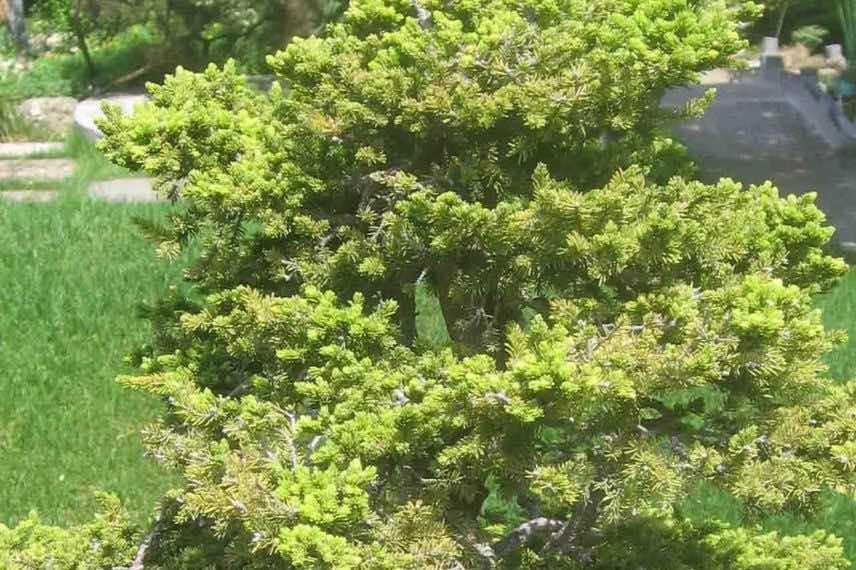
The Picea jezoensis var. hondoensis, known as the Hondo spruce or Japanese spruce, is a majestic evergreen conifer and relatively rare in cultivation, native to the high mountains of southern Japan. With a broad, conical crown, it bears silvery spring shoots that develop into light green and then mid-green over the course of the year. Its pendulous, slender cones, green or orange, add to its charm, as does its red-brown bark that cracks with age. Suitable for large spaces when planted as a specimen, it can also be cultivated as a bonsai, appreciating montane climates with abundant summer rainfall as well as a partly shaded to half-shaded exposure.
- Subscribe!
- Contents

Comments