





























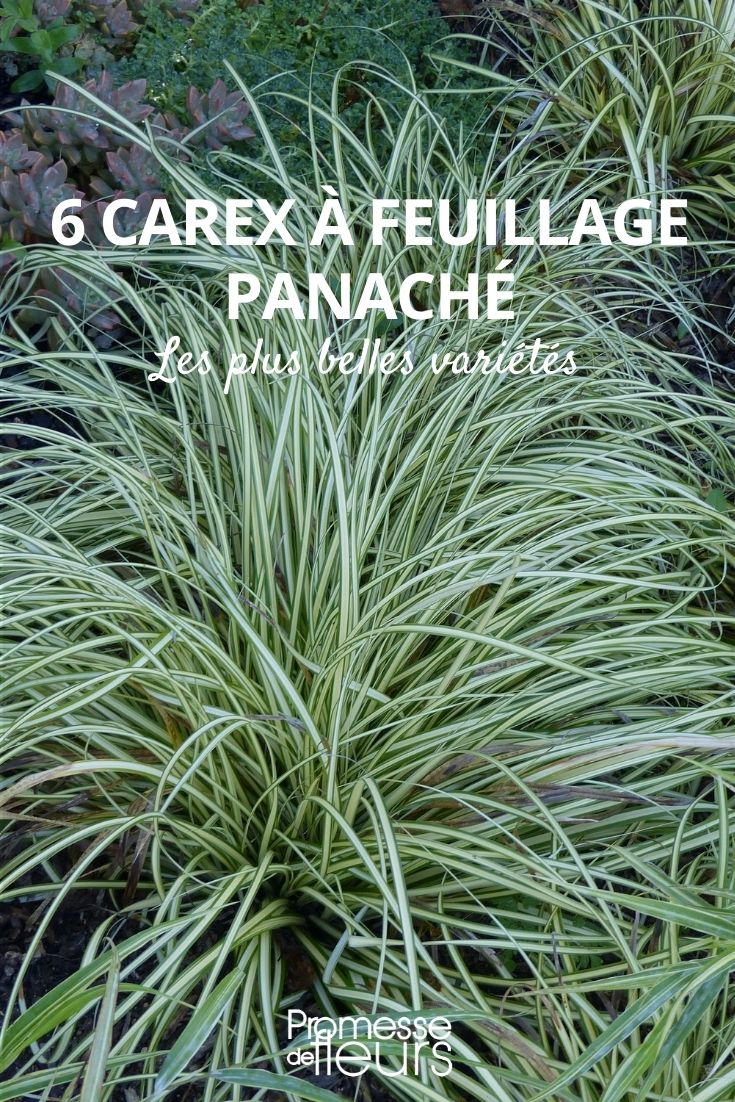
6 Variegated Carex
the most beautiful Marginate sedges
Contents
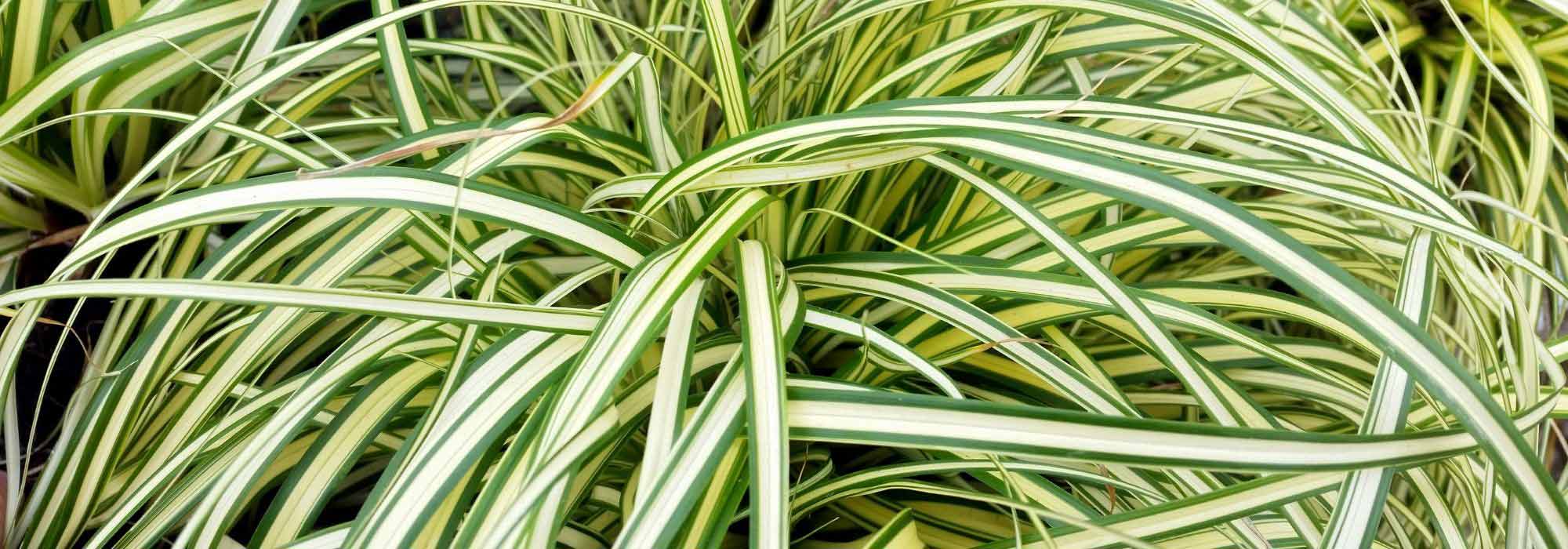
With their lightness and colours, Carex are grasses that bring life to our gardens and terraces. Hardy and easy to grow, sedges comprise over 2,000 species, easily enlivening our flowerbeds with their graphic clumps. They come in a wide variety of colours, featuring light brown, bronze-red, or soft green foliage. Better still, variegated Carex stand tall in spikes, blending several shades, bright yellow marked with green, light green edged with cream white, olive green, and orange… We have selected 6 variegated Carex and offer you some ideas for combinations to create graphic ensembles, playing with both colours and shapes.

Carex oshimensis 'Everest'
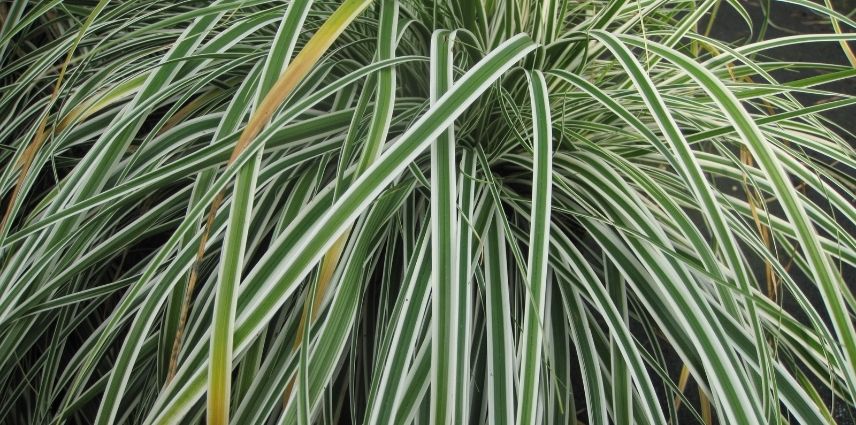
Also known as “Oshima Sedge”, Carex oshimensis ‘Everest’ appears tousled and bright, with green-blue foliage marginate with a cream-white that varies depending on the plant’s exposure. The autumn flowering is discreet, forming small brown, even black spikes. Ideal for borders or pots with its small growth of 30 cm in height and 35 cm in diameter, it will illuminate your garden all year round thanks to the brightness of its evergreen foliage.
Hardy down to -18°C, it adapts to all types of soil, provided it is fresh but well-drained. It tolerates moderate periods of drought well.
An easy grass to grow and succeed with, this Carex pairs very well with Euphorbia ‘Glacier Blue’, at the foot of Cornus ‘Siberian Pearls’ or alongside white Astilbes, or even on a carpet of Sagina. It also grows very well in pots!
Carex oshimensis ‘Everest’
Read also
Carex: planting, dividing and careCarex conica 'Snowline'
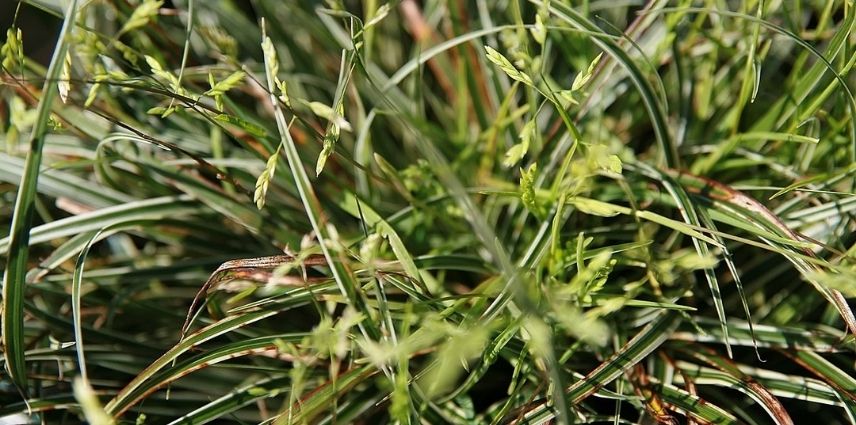
Dwarf variety with a soft lawn-like tuft, the Carex conica ‘Snowline’ features attractive evergreen foliage in dark green, edged with silver. During its summer flowering, pure white flowers appear… It is worth noting that it will take a few years of cultivation to achieve a dense, respectable size (30 cm in all directions).
Hardy down to -15 °C, the Carex conica ‘Snowline’ is ideal for shady rockeries, at the edge of woodlands, or in woodland areas, as it prefers well-drained humus-bearing soils and partial shade.
In partial shade, pair it with a Lungwort, a fern Polystichum setiferum, Hostas, Pachysandra terminalis with variegated foliage, or spring bulbs like Iris reticulata or daffodils.
Carex conica ‘Snowline’
Discover other Carex
View all →
Available in 3 sizes
Available in 3 sizes

Available in 1 sizes
Available in 0 sizes
Available in 3 sizes

Available in 2 sizes
Available in 2 sizes
Available in 2 sizes
Available in 3 sizes
Available in 2 sizes
Carex 'Feather Falls'
Resilient and easy to care for, Carex ‘Feather Falls’ forms a small, original, and graphic tuft, with slightly curled and variegated evergreen leaves. In May, small beige and white spikes measuring 1 to 3 cm appear. This grass, attractive even in winter, is perfect for enlivening borders, beds, or pots on the terrace throughout the year, where its growth of about 35 cm in all directions is just right.
Hardy down to -18°C, Carex ‘Feather Falls’ not only withstands the cold very well, but also sun and even moderate drought periods. Plant it in groups in full sun or partial shade in light, well-drained soil.
Absolutely stunning in pots or hanging, pair this admirable Carex with a purple Heuchera like ‘Black Beauty’ or a Pennisetum x advena ‘Rubrum’.
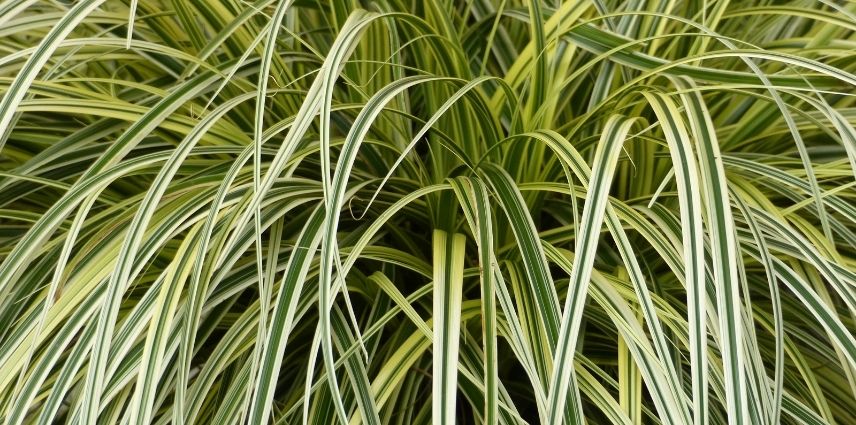
Carex ‘Feather Falls’
Read also
Carex: 5 Pairing IdeasCarex Morrowii ‘Variegata’
Adapted to partial shade, the Carex morrowii ‘Variegata’ features narrow leaves (unlike other varieties of its species) that are green with cream margins. Several other Carex morrowii have variegated foliage – such as the Carex morrowii ‘Aureovariegata’ in yellow, edged with green, and the Carex morrowii ‘Ice Dance’ with its emerald green and white-cream margins.
These variegated carex varieties pair well with Siberian squill, which will provide a carpet of blue flowers at their feet, or with heather in pink flowering (Erica mediterranea), white and fragrant (Tree heather ‘Great Star Le Vasterival’) or multicoloured, ranging from pale pink to coppery orange (Corsican heather). The Carex morrowii also pairs beautifully with Penstemons: the intense cherry red of the Penstemon hybrid ‘Schoenholzeri’, the pure purple of the Penstemon ‘Midnight’, the white of the Penstemon ‘White Bedder’, or the lavender pink of the Penstemon digitalis ‘Pocahontas’!
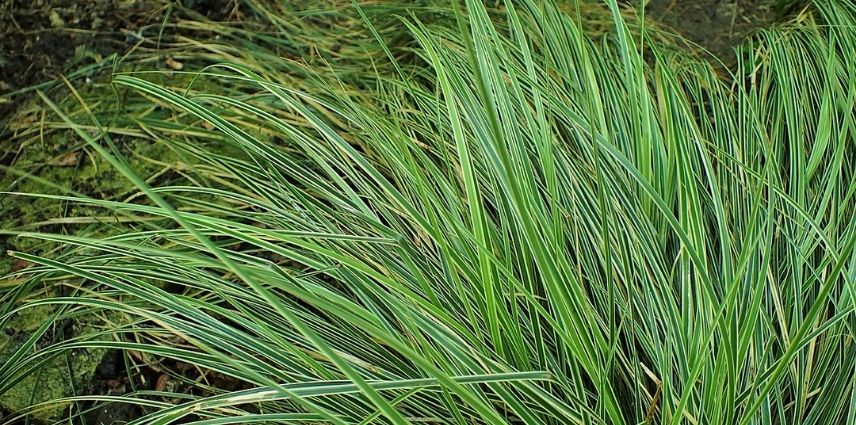
Carex morrowii ‘Variegata’
Carex oshimensis 'Evergold'
Displaying in a dense and magnificent tuft, Carex oshimensis ‘Evergold’ boasts trailing green leaves, highlighted by a creamy yellow stripe, which are evergreen both in summer and winter. From May to June, small upright spikes of light brown appear. With a growth of about thirty centimetres in all directions, this sedge is suitable for both garden and pot cultivation. Easy to care for, it will adapt to all exposures, but its foliage will be more vibrant in partial shade or dappled sunlight.
Hardy down to -18°C, Carex oshimensis ‘Evergold’ prefers cool, well-drained soils and copes well with moderate drought periods.
Perfect with heucheras, or hostas, this variety of Carex can also be combined with the highly ornamental foliage of Uncinia rubra, as well as with the twisted and curled, bright purplish-red leaves of Leucothoe axillaris ‘Twisting Red’, not to mention the shiny, vivid red of Cornus sanguinea!
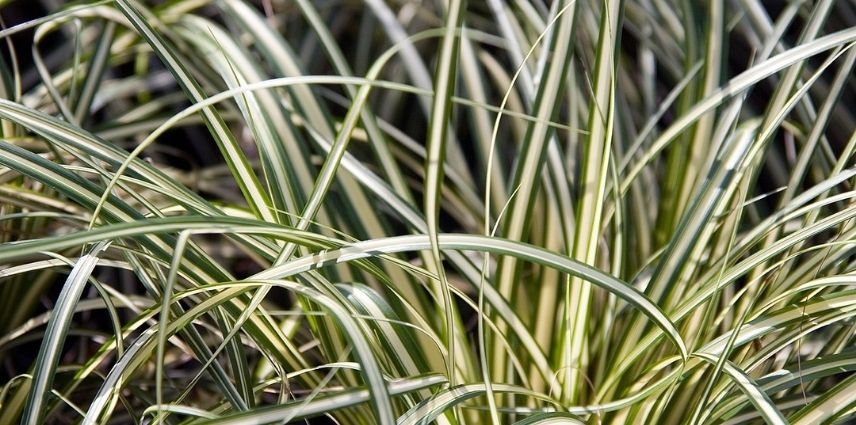
Carex Oshimensis ‘Evergold’
Carex siderosticha 'Variegata'
Forming a dense rosette, Carex siderosticha ‘Variegata’ features broad, bright green, striated leaves, also marginate with silver. Although the foliage does not withstand winter, it re-emerges very early in spring, quickly displaying slender brown spikes during its flowering period, between April and May.
Hardy down to -23.5 °C, it requires a partially shaded position, with rich, humus-rich, cool to moist, fertile, and not too heavy soil to thrive. Plant it happily in a cool rockery where its foliage will bring a lovely brightness, at the edge of a mass planting, or in a beautiful container. Its spread of 40 cm in all directions makes it suitable for many settings.
Why not highlight its beautiful bright green striated with white, alongside the colourful touches of a campanula? The intense purple of the Campanula glomerata ‘Acaulis’ or the bicoloured blue-violet flowers variegated with white of the Campanula glomerata ‘Genti Twisterbell’… And in a different style, the Astilbe arendsii ‘Hyazinth’ with its feathery green foliage, reddish in spring, and lavender mauve flowers.
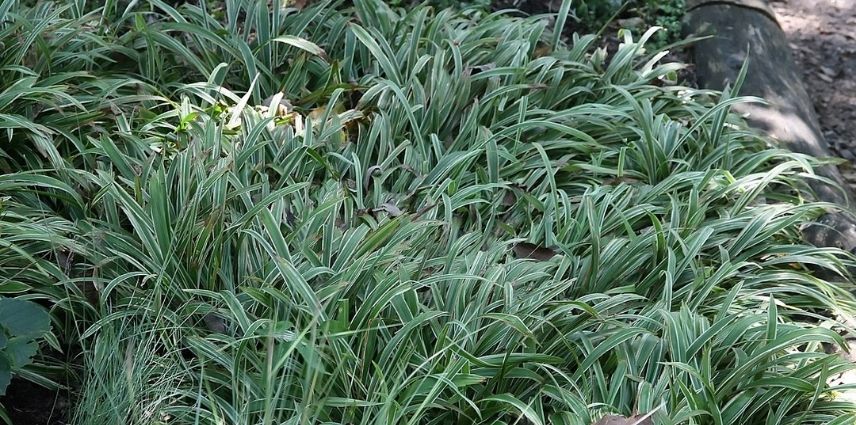
Carex Siderosticha ‘Variegata’
- Subscribe!
- Contents
Comments