





























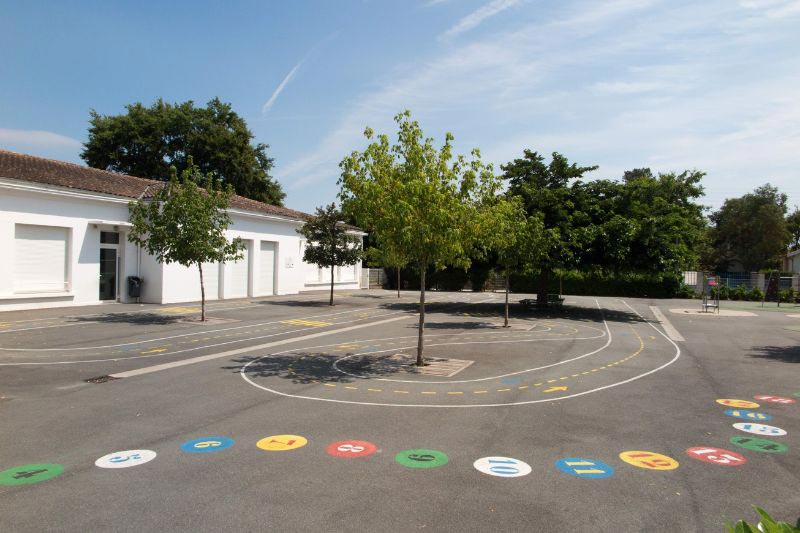
Schoolyards should be places of respite for every child. However, it must be acknowledged that these spaces are predominantly made of tarmac and surrounded by concrete walls. Whether in nursery schools, primary schools, or even secondary schools, our children spend their leisure time at school far from nature, both in rural villages and large cities. Why is this the case? How can we change this situation and green the learning environments? Here’s a brief overview of schoolyards and the challenges surrounding their greening.
Why are so many schoolyards so dreary?
In France, municipalities are responsible for public primary schools located within their territory. They own the premises and are responsible for their construction, extension, and maintenance. Departments are responsible for secondary schools, which they own, while regions are responsible for high schools and specialised educational institutions. However, due to ease of maintenance and budget constraints, schools and their exteriors have been concreted, tarmacked, and stripped bare for decades. Some have not been renovated since their establishment, which can date back several decades, and even most recently renovated or newly built schoolyards do not allow nature to pass through their gates. Yet, educational practices and our lifestyles have evolved significantly in this regard.
While children and adolescents would be more than happy to play and relax on grass rather than tarmac, it seems that for maintenance staff, parents, teachers, and decision-makers, nature is seen as a nuisance and somewhat intimidating...
Why is it urgent to green schoolyards?
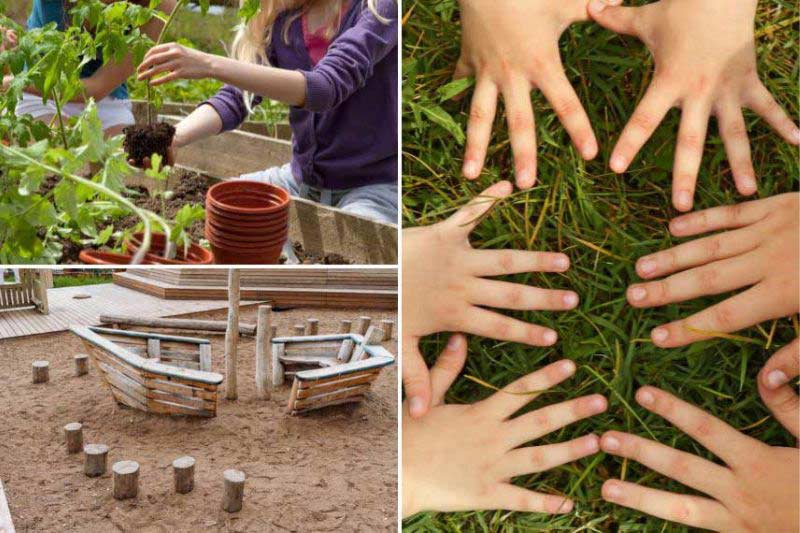
Nature plays a fundamental role, and time spent outdoors fosters autonomy, sociability, and creativity. In more natural and green schoolyards, in the form of gardens, what are called "oasis yards", games are more diverse, allowing for relaxation, discovery (digging holes, collecting leaves, small branches, observing insects and birds), as well as cooperation and release of energy.
On a more practical level, in the context of climate change, with heatwaves or flooding, increasing green spaces within schools would help manage rainwater better, provide shade for yards and buildings, and store more carbon. In towns and village centres, this would create thousands of precious cool islands.
What does this involve?
To start, all or part of the existing dark mineral coverings must be removed to restore permeable, living soil and vegetation. Solutions for infiltration, retention, or storage of rainwater should be considered, and Water Agencies can support this type of project.
The different spaces and their functions must be defined: natural material play areas, lawns, rest zones, nature corners, vegetable gardens or orchards, green spaces, and flowering meadows in less frequented areas. It’s about planting wisely and valuing what exists (if anything...) and all these spaces will serve as educational tools for both young and older students. Trees are allies in redesigns that promote shade. They can be fruit trees (avoiding small fruits that stain), evergreen if managers fear leaf collection, drought-resistant yet hardy, fast-growing, and planted at a large size for immediate impact.
Sun and cooling shelters can be added with green pergolas using climbers (including to shade classrooms) and awnings. It is also possible to create water points or adapted water games.
Nature is neither dirty nor dangerous
"Nature is dirty": this is a main point of opposition to the implementation of such projects. The various adults involved: parents, teaching staff and their assistants, maintenance personnel may indeed view the creation of vegetated and grassy areas in schoolyards unfavourably. One solution: explain the approach and its multiple benefits, both for the children and for the overall living environment of the community.
Usage rules and operational guidelines must be established to avoid potential issues: setting up clean zones, protecting potentially muddy areas (vegetable gardens, flower beds) with mulch, circulation paths and Japanese stepping stones, integrating buffer spaces between the outside and inside, establishing access rules during rainy weather, etc.
Installing cleaning areas (doormats and boot scrapers) is also quite feasible, as is asking families to provide boots or other easy-to-slip-on outdoor shoes, while ensuring there are spaces to store them.
"Nature is dangerous" will also be part of the arguments from detractors of returning to nature within schools: risks of falls, injuries, falling branches, allergies, stings... It is true that many nuisances can be cited, but it can be just as dangerous for children to run and fall on concrete surfaces or to play in schoolyards that overheat under UV rays during heatwaves.
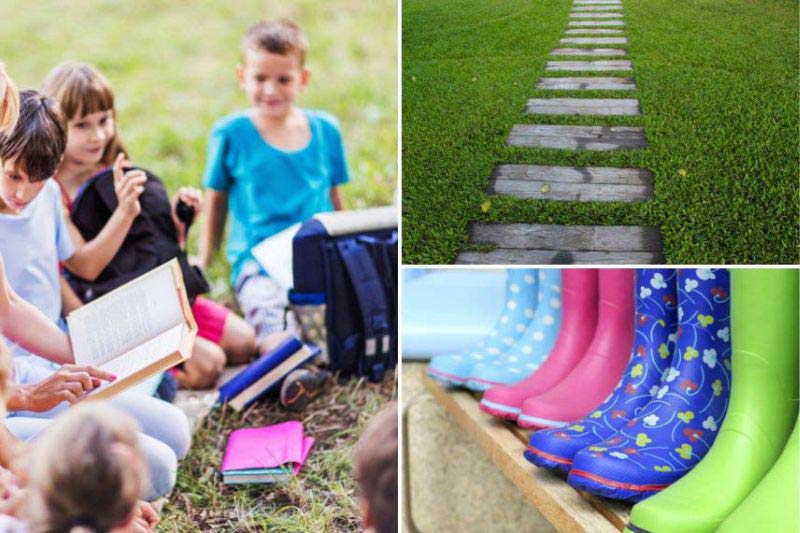
It is therefore crucial to highlight the positive effects on health and to balance the risks with the numerous advantages of greening schoolyards: stress reduction, well-being, development of coordination, and increased self-confidence. All these health benefits for children are provided by the presence of nature!


Comments