





























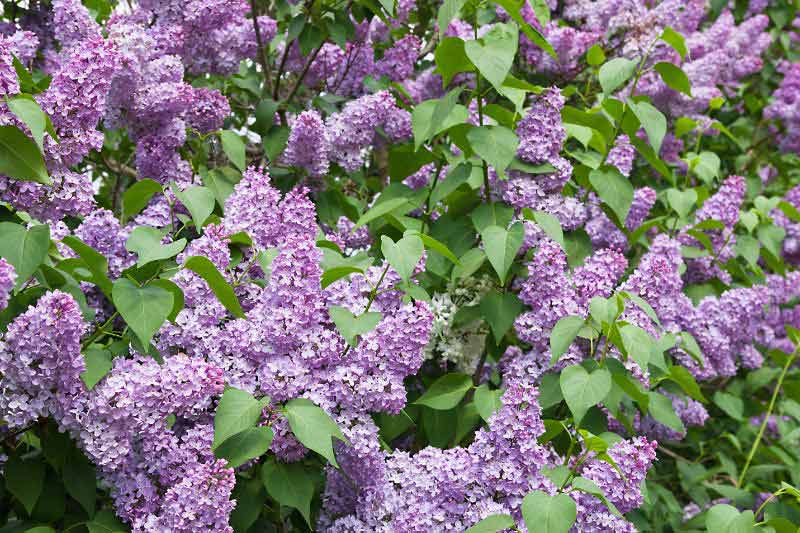
In the good old days, rural life was marked by sayings concerning crops. Almost every saint on the calendar had one of these sayings associated with it, prescribing an activity for a given plant. The oral tradition is thus rich with these adages cherished by gardeners, marking the seasons with temporal references: "on Saint Catherine's Day, all wood takes root," "you plant potatoes when the lilac is in bloom," or "the first of the Ice Saints often leaves its mark.".
We thus knew until now when to sow, prune, plant, or harvest thanks to these markers. But nowadays, no one knows which saint to turn to, as the disrupted climate cycle no longer really corresponds to the sayings of our ancestors and their seasonal markers.
Disrupted seasonal markers
Indeed, in France, over a century, the average temperature has increased by 0.7 °C, and the IPCC (Intergovernmental Panel on Climate Change) predicts a rise in global temperatures between 1.4 and 5.8 °C by 2100. It is unnecessary to consult specialists to observe this warming, see the consequences on our gardens, and notice a desynchronisation with traditional seasonal markers.
So, do not be surprised to see your apple or cherry tree offering a second flowering at the end of August; the fact that they are "off-season" (that's the jargon term) is a sign of this disruption to which living things do not know how to adapt, as it is so abrupt. It seems that one of the only expressions still in use in this matter is, indeed, "there are no more seasons." Amidst this disorder, our traditional sayings that punctuate the meteorological year remain a reference, a collective memory, but it must be acknowledged that we will now have to adapt them to the situation of a disrupted world.
Visible disruptions in the garden
On the scale of our Hexagon and Belgium, phenology has revealed for several years that winters are becoming milder, without sparing us from frosts, even late ones. Dry spells are set to multiply, leading to soil drying and a scarcity of fresh water.
Thus, regarding the vegetation of gardens and the nature that still surrounds us a bit, we notice:
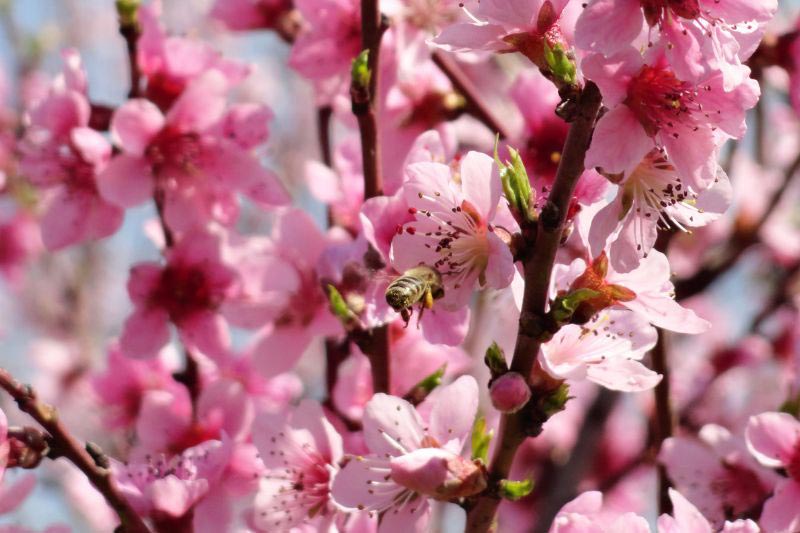
- earlier bud bursts (the moment when leaf or flower buds open). Scientists consider that for every 1 °C increase, buds appear 5 days earlier
- an earlier ripeness of fruits
- desynchronisation between flowering preventing the cross-pollination of these fruit trees
- insufficient dormancy break and a lack of frost hardiness in plants
- inhibition of general plant development
- an increase in pests, which remain in the garden year after year and develop more rapidly with a longer breeding period due to rising temperatures
- an increase in fungal diseases
The differences in seasonal rhythms affect not only plants but also insects, birds, and all the garden fauna that feed on plants, sometimes affecting an entire food chain.
Phenology as a resilience tool
In light of this observation, if we still wish to have pleasant gardens to live in as well as regular and abundant harvests, we must take into account all current impacts, but also those anticipated. If ancestral seasonal markers are no longer very reliable, phenology, or the observation of periodic events in the lives of plants and animals (such as the appearance of leaves, flowering, the departure of migratory birds, etc.), can truly help us understand the influence of warming on our patch of land.
Get out your gardening notebooks and record your observations throughout the seasons! It is highly likely that these will be valuable for the years to come. Small shifts in sowing periods or dates of flowering, appearance of diseases or pests, for example, are worth noting to remember in subsequent years. This is resilience: adapting our gardening practices and habits to gently (or not!) adjust and avoid repeating mistakes that can discourage even the most passionate gardeners.

If you take up the challenge of these fascinating observations, you can participate in a citizen science programme on the French website of the Observatory of Seasons - created by a research group from the CNRS - to help the scientific community collect data on the seasonal rhythms of flora and fauna to understand the impact of climate change on ecosystems.


Comments