





























There are three things that strike you when you visit Promesse de Fleurs in Houplines:
- the impressive number of plants waiting to be sent to your home,
- the impressive number of speed bumps on the road, which are not at all suitable for my own vehicle,
- the impressive number of cats.
To say that we love cats at Promesse de Fleurs is an understatement! You have to step over one, pet another, open the door for a third, stop a fourth from climbing on the camera tripod, and push the last one off a desk to be able to write something (true story!).
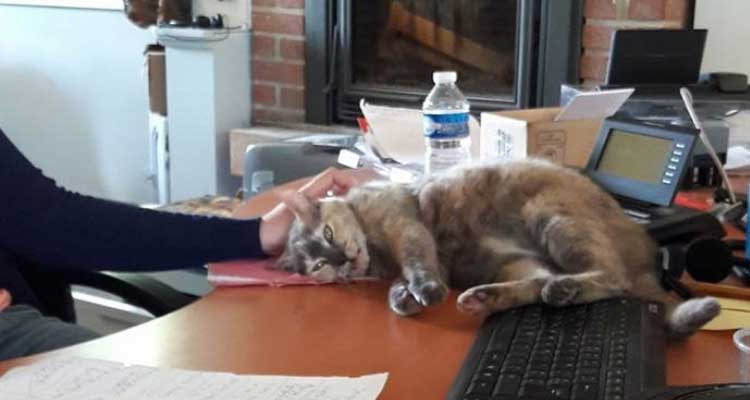
In short! It's just like at home since I share my place with four little furry tyrants.
Yes, I love cats too, and like most people who love cats, I also love other critters: spiders, insects, tigers, giraffes, pangolins, jellyfish... but especially birds.
So I can already see some of you frowning or reacting (tock!): “ Having cats and birds in the garden at the same time! But that's as incompatible as doing macramé while playing the slide trombone. ”
Well, no! And I’m going to prove it to you.
The perspective of ornithologists and naturalists
It should be noted that a normally constituted cat, well-fed and spending a large part of its time outdoors, can catch an average of 27 prey per year, of which about a quarter are birds, or roughly 7 birds, the other prey being micro-mammals, insects, and reptiles. For a stray cat, it's ten times more! I should clarify that this is an average; some cats are completely useless at hunting, while others are born killers. It is estimated that there are about ten million domestic cats in France and roughly the same number of stray cats (a difficult number to estimate). Do the math: we end up with 770 million birds killed each year in France (roughly speaking!).
And that's normal; the cat is a predator by nature. It is designed for that. So you might say upon seeing this staggering figure, “ Goodness! Blimey! Crikey! Gosh! Wow! Fan of Chichourle! But that's enormous! ”
Indeed... But we need to put this figure into context. In reality, billions of birds die each year for various reasons: diseases, famine, drought, cold, climate change, use of insecticides, predation and hunting, destruction of natural habitats, destruction of nests by humans, ...
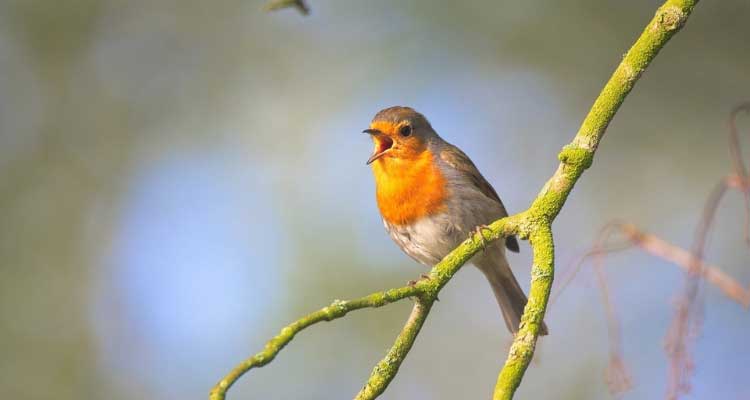
Birds are disappearing. This is a fact, but not solely due to cats (except on certain small islands where cat predation has actually caused the extinction of some species). Let's say it's just a drop in the ocean. A big drop of several million individuals, I grant you.
But that doesn't mean we shouldn't do anything about it either... Simple solutions can help cats and birds coexist in perfect harmony.
Simple solutions to avoid finding a plucked corpse at your door...
Neutering cats
You read it right; it is mainly stray cats that pose a problem because they are not fed or are fed very little by humans. However, if there are stray cats, it is largely due to the non-neutering of our four-legged friends. A female cat can have up to 3 litters a year of 4 to 5 viable kittens. Few will survive, but cats multiply very quickly. This is why large neutering campaigns have emerged in recent years for both domestic and stray cats.
A welcoming garden for birds
Transforming your garden into a refuge for birds is an excellent idea... But avoid turning it into a bird trap or a cat restaurant! To do this:
- Create refuge areas for birds such as an untrimmed, bushy hedge where your little protégés can hide, feed, and nest. (to read more on the subject: Hedge for birds: which bushes to choose)
- Do not place feeders and nesting boxes in areas accessible to cats. And if possible, in open areas so that birds can see predators from afar.
- Multiply feeding spots and do not place food on the ground. Turdidae like blackbirds or thrushes that often feed on the ground are quickly caught. Increasing feeding stations will also benefit the number of different bird species, as some are shyer than others or prefer certain environments.
- Cats have favourite spots or, conversely, places they never set foot in. Identify them!
- Do not feed cats outside. This could attract many others...
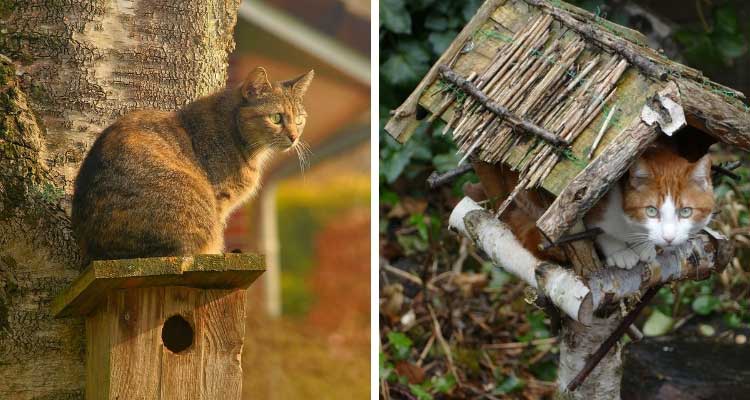
But less welcoming for your cat...
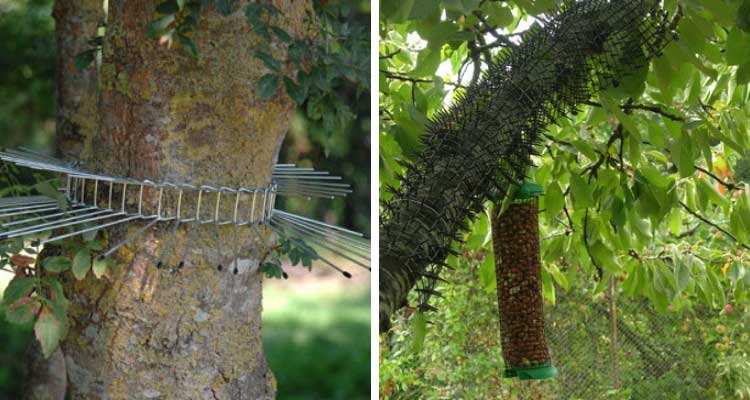
- Place Stop Minou or inverted funnels at the base of feeders, on the trunks of trees where you would have installed a nesting box, in the cat's ambush spots, ... These devices do not harm the cat; they simply prevent it from climbing or staying in a specific spot.
- Place Stop-cat grids or simple chicken wire in strategic locations: at the base of feeders, for example. Yes, cats are sensitive on their paws and do not like walking on them.
- Let your cats out as little as possible, especially when they are young. After three years, cats are often more "laid-back" and do not think much about hunting. If your cat has been used to staying indoors most of the time from an early age, it will not demand to go out. It will stay inside playing on the console while gorging on chips.
- Plant repellent plants like Rue officinale or Lemon verbena. Personally, I find that these plants work only moderately: one of my cats loves to roll in lemon verbena. I’ll share the tip anyway...
Other little tips for cohabiting cats and birds
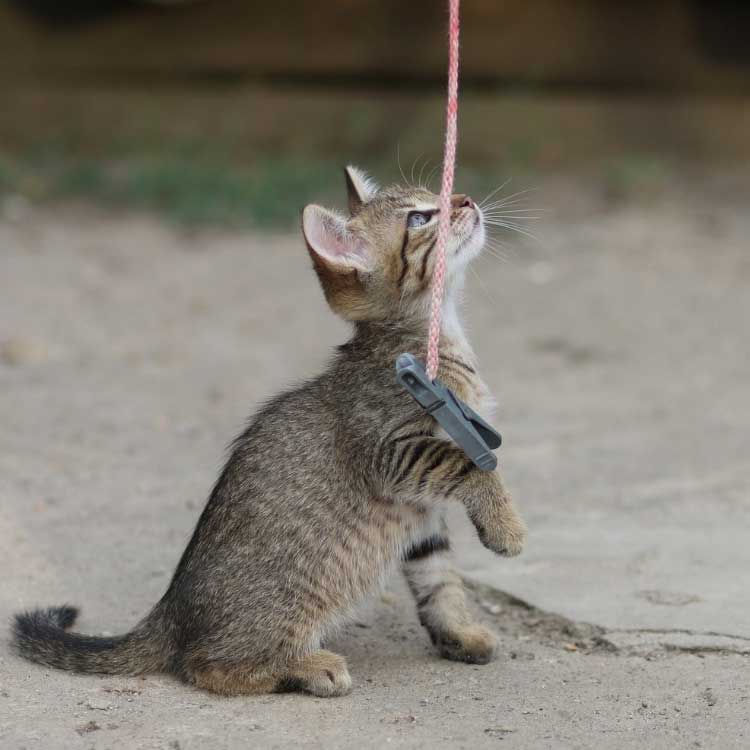
- Play with your cat! Playing will stimulate your cat, and it will no longer want to "play" at catching birds. Plus, it will be tired... and so will you.
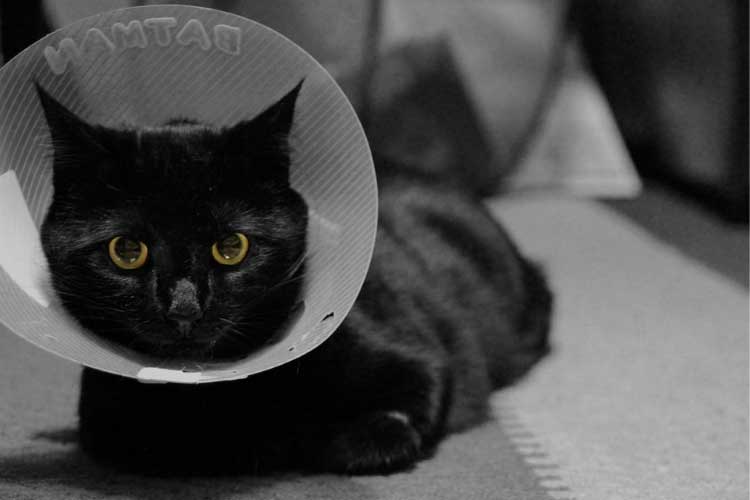
- Get it a collar! But a ridiculous one with lots of flashy colours to warn birds of the presence of your furry predator. Alas, God knows that cats are sensitive about their appearance. Minou probably won't keep this fashion accessory for long...
- Avoid exclaiming with lots of petting and scratches: "Oooh, well done Minou! You’ve killed that beautiful bird. Plus, we thought the species was extinct!" Instead, opt for a very serious "Oh dear, that's not good at all, naughty kitten!" Cats never listen to us, but at least you'll have a clear conscience...
What not to do!
- Collars with bells are a bad idea for cats. They are very little useful for warning birds but particularly effective for alerting a fox, a larger cat, or a malicious person to your cat's presence... They also cause long-term hearing problems for cats because they have very sensitive hearing (that's why they yell at you loudly when you don't respond to their requests promptly: they think you are hard of hearing!). Forget it!
- There are devices that surround your garden and emit a high-pitched sound at a certain frequency that is inaudible to us but unpleasant for cats. No way! This is a garden, not Alcatraz! You don't want to put up barbed wire while you're at it...
- Hanging CDs in trees does not scare cats away. On the contrary, they love to play with the reflections of the sun or climb trees to try to catch them. Or maybe they are just fans of Rock and Metal...
In conclusion
It is very easy to make cats and birds coexist in your garden with a few simple precautions. Cats are indeed one of the many problems concerning the disappearance of birds, but certainly not the most important, despite what some ornithologists in my circle, particularly biased, might say... (they are afraid of cats!)
All you need to do is pay a little attention to your cat, not make it easy for it to hunt, and ensure that the birds in your garden do not enter it like a ring for a lost cause fight. So that Titi can always escape from Gros-minet...

Comments