









While it is widely agreed that gardening is good for both physical and mental health, many gardeners develop certain phobias. The fear of weeds is a classic, but it is closely followed by another, the fear of invasive and encroaching plants. In gardens and elsewhere, the fear of invasion is not new, but it seems to be experiencing a resurgence in recent years! Ambrosia, Giant Hogweed, Water Hyacinth, Japanese Knotweed, Buddleia... it must be admitted that these exotic plants are concerning, but can we compare them to our troublesome goutweed or our pesky bindweed?
So today, I propose to clarify the distinction between invasive plants and those deemed encroaching, as it can sometimes be difficult to navigate through all of this.
So, invasive or encroaching?
Cronk and Fuller drafted an official definition in 1996 for invasive species:
Naturalised exotic species in a territory that modifies the composition, structure, and functioning of the natural or semi-natural ecosystems in which it spreads.
An invasive species, whether plant, animal, or otherwise (let me remind you that there are officially six kingdoms in the living world), is an exogenous species, or exotic if you prefer, that has rapidly colonised a location, threatening or disrupting the native biodiversity of a medium. In other words, an EEE or Invasive Exogenous Species will employ the technique of “move aside so I can take over” at the expense of one or more native species, causing an imbalance in our already fragile ecosystems. This is, according to the UN, the second leading cause of biodiversity loss.
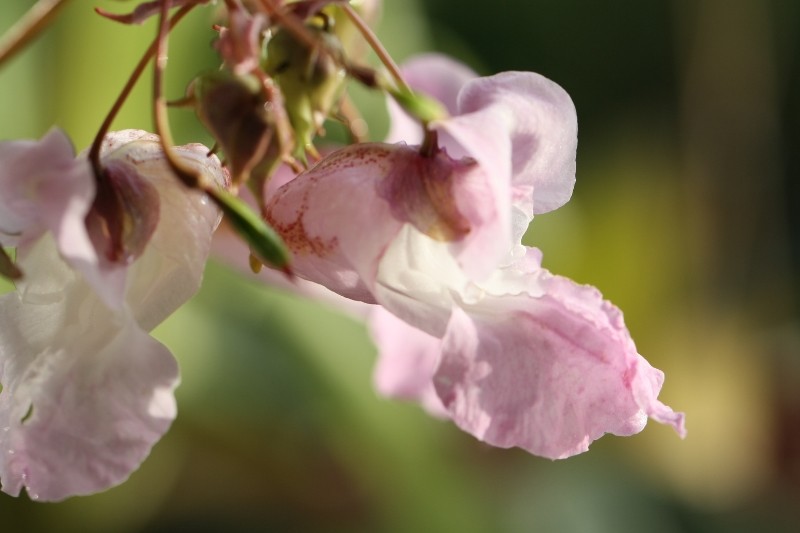
Himalayan Balsam, considered an invasive species
These invasive plant species are so because they are:
- either euryecious, meaning these plants can thrive in very different habitats and withstand significant ecological variations (temperature, soil, sunlight, ...);
- or pioneer species, meaning they are species that will colonise just after lichens and mosses in a young natural environment or one restored to this state by human action (clear-cutting, forest fire, ...);
- or nitrophilous, meaning a plant that particularly enjoys nitrogen-rich soils as found in our areas;
- and... or, by a terrible stroke of fate, a species that has managed to find the right conditions for its proliferation (but that’s really bad luck for the wild flora!).
It seems that the term “invasive” (an anglicism) should no longer be used. Instead, the acronym EEE for Invasive Exogenous Species should be preferred. The problem is that this term can suggest an encroaching plant that is... native. Like nettles, cleavers, bindweed, ...
Nota bene: do not confuse this with a temporary invasion, as is sometimes the case with certain birds. For example, the winter invasion of Bohemian Waxwings from the North a few years ago. This phenomenon causes little to no disruption to ecosystems. At most, two birds of different species might squabble over who gets to eat that Viburnum berry...
What is a native plant?
A species is considered native to a specific region or biotope if its presence in that area (its range) is the result of natural processes, that is, without human intervention. If humans have interfered, then we will refer to it as an introduced species.
Thus, a plant can become very encroaching in your garden without being invasive because it is native: cleavers, nettles, sorrel, ground elder, creeping ivy, ...
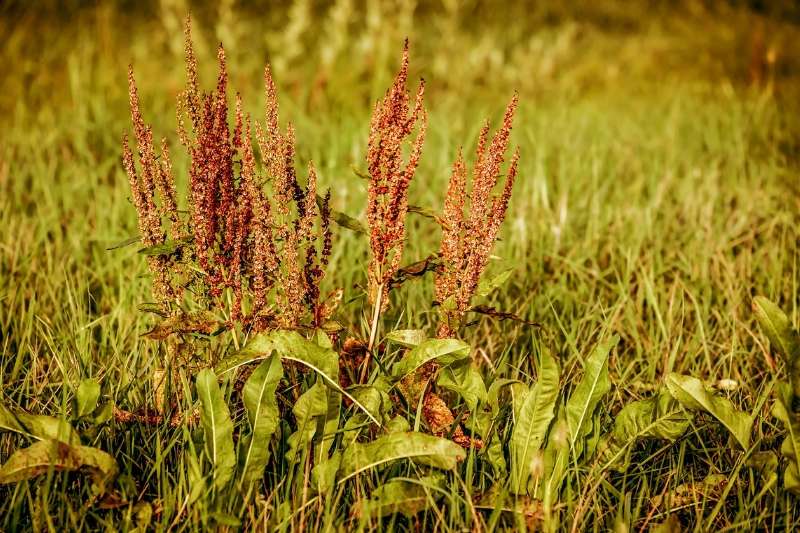
Rumex or wild sorrel
That’s a lovely definition, but...
We recently discussed this as a team, and I noted a phrase from Michaël on this subject: “After how long of colonisation do we consider a species to be native or not?”
And he is right. Throughout history, species (plants, animals, or otherwise) have seen their ranges shift, contract, expand, ... depending on climatic factors, dispersal modes (seed dispersal), ... but also, it is true, due to humans.
Invasive plants, a contentious issue...
We are currently experiencing (on a human timescale!) a huge and rapid climate change that is currently altering the ranges of living species on Earth. Not just plants. Did you know that Beech trees are “moving up” slowly towards Northern Europe, to the detriment of oaks in our forests?
Consequently, species that we now consider native were not so thousands of years ago. And conversely, who is to say that today’s invasive species won’t be tomorrow’s native? But all of this is a reaction of nature to the climate disruption largely orchestrated by... humans. Yet Homo sapiens sapiens is an animal (some more than others...) so why make a distinction between colonisation induced by an animal (endo- and ectozoochory) and a phenomenon caused by humans? You have two hours...
The second point that often sparks debate: the role of invasive plants in nature.
A plant becomes invasive for a very simple reason: through various factors, it has become more efficient than its native counterpart. Some have dramatic consequences for biodiversity, particularly for insects that have often co-evolved with a single plant species. And if they disappear, perhaps other links in the food chain will vanish with them?
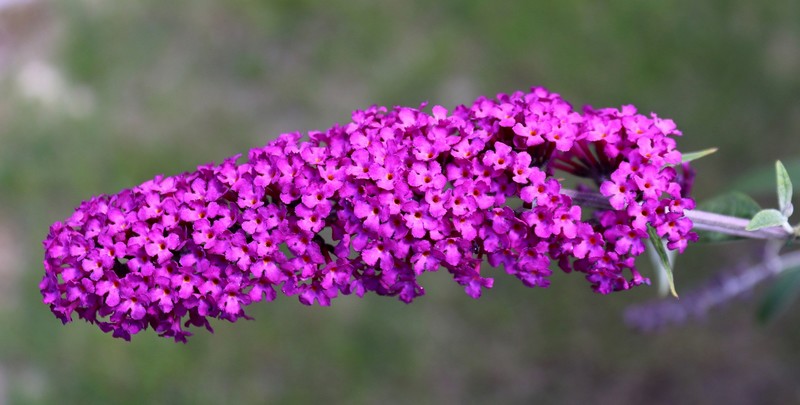 Buddleia davidii
But... an invasive species sometimes performs the role of a species that is no longer present (or has never been there). For example, on a spoil heap, an entirely artificial habitat disrupted by humans, Buddleia davidii proliferates unabashedly because they are more effective pioneer woody species than native birches. However, the "butterfly bushes" will ultimately prepare the ground for other species, those that are native... In the end, we will achieve a colonisation of native woody species similar to what we could have obtained with birches initially, but more quickly.
So, what do we do?
1) We inform ourselves
This is the first thing to do. The issue is quite complex, and fortunately, experts decide for us who will be on the "invasive" list for a given region or not (I continue to use this term to avoid confusion). These official lists can be easily found online (links at the end of the article) for your country or region. Indeed, a plant may be invasive in Marseille but not at all in Strasbourg or Brest. You just need to consult these lists to know precisely the problematic plants, their impact on biodiversity and their ecology, and to avoid them at all costs in your garden thereafter. This way, you will know who to strike off your future shopping list.
2) We put things into perspective
This is a thorny issue that has been debated for many years. Some nature protectors advocate for the regulation of invasive species “with phosphorus grenades” (that’s an expression, mind you! Don’t think we actually do this in natural environments), while others prefer to “wait and see” hoping that nature will sort out the problem. The right attitude should be found somewhere between these two extremes. But it is often on a case-by-case basis that decisions must be made. For example, we regulate Himalayan Balsam less than before, but we are still in a perpetual battle with Japanese Knotweed. Just keep in mind that no one has ever died from a large-flowered Water Hyacinth attack, and that getting worked up in front of your computer screen while cursing everyone is of very limited educational value. When it comes to invasive plants (as in other areas), the ideal is to keep a cool head. It’s better for everyone’s nerves.

3) We let the pros handle it... or we work with them.
The study of invasives is a specialist matter. Often, well-meaning individuals end up doing more harm than good. That’s why I urge you not to tackle it yourself. Except in your own garden, where you can do as you please. Just avoid mistaking a rare native species for an invasive one (that has happened!). If you wish to actively participate in the regulation of invasive species, nature conservation organisations are always looking for extra hands to help. Try to find one of these organisations in your area. They will be happy to inform you and welcome you among their friendly volunteers.
In conclusion...
And finally, there has always been a longstanding conflict between horticulturists, suspected by nature lovers of spreading invasive species out of sheer malice, and naturalists, suspected by the opposing side of being obstacles to beautifying our daily lives. Personally, I have the immense honour of finding myself between the hammer and the anvil with the difficult mission of reconciling both camps.
Come on, give a kiss!
You will have understood that there is a lot to say on the subject, and this article was only meant to clear the ground a bit. The idea was mainly to clarify the confusion between invasive and encroaching plants.
In conclusion, please note that invasive plants or EEE do exist. Some cause ecological disasters, while others are somewhat less dangerous. But the important thing is to inform yourself beforehand and to avoid introducing any of these plants listed as EEE in your garden. After all, the world of plants is so vast that it would be disingenuous not to find a lovely replacement for that invasive plant on your shopping list for your new flowerbed.
And don’t forget, nature conservation organisations always need volunteers. So don’t hesitate!

Comments