




















Winter is here in many regions, temperatures are steadily dropping, and birds are increasingly struggling to find food. Fat balls, seed silos, feeders… and don’t forget water; everything helps them survive during the harsh season!
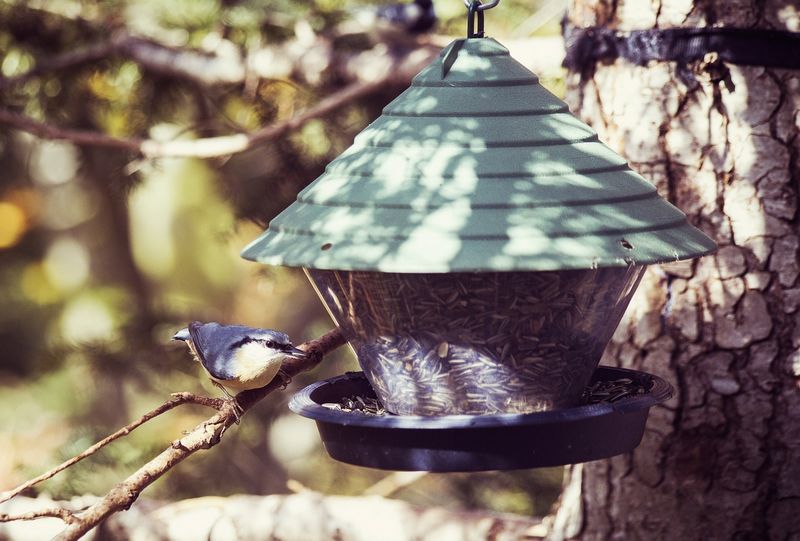 A Nuthatch enjoying sunflower seeds
In my village, a kind old man sets up a five-star restaurant every year! In my garden, I don’t go that far, but I still make sure the birds have enough to eat.
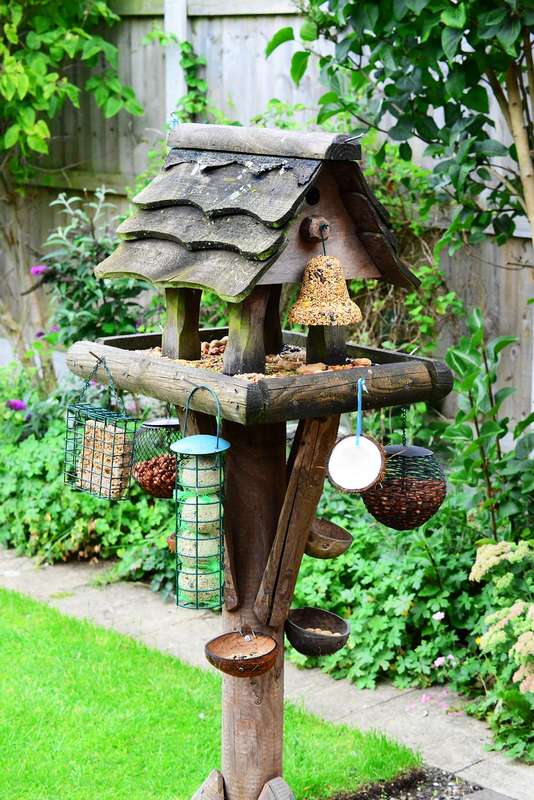 The Five-Star Feeder: diversity and abundance on the menu!
I have a small feeder, a silo that holds a mix of seeds (sunflower, millet, wheat, oats) and I scatter a few fat balls around. One year, I made half coconuts filled with a mix of seeds and vegetable fat. I still have them; I should reuse them. I’ve also set up a way to provide water, and I change the water very regularly, especially when it freezes!
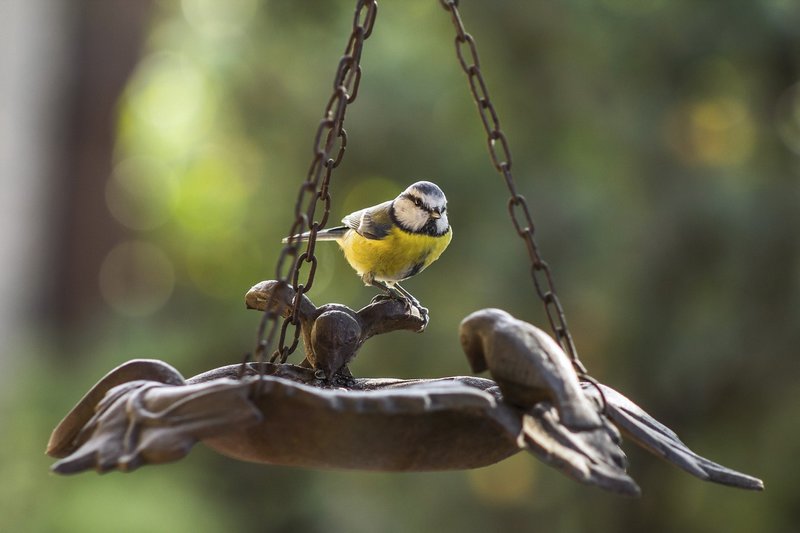 A Blue Tit at the garden water feeder
It’s a real joy to see them flitting from branch to branch in the garden amidst a lively cacophony.
When to feed garden birds?
I start feeding when I notice there’s not much left to forage in the garden and surrounding areas, when the number of insects has drastically decreased, when frosts become more frequent, and when snow arrives, usually around the end of November. Just observe nature; it gives us the signal. Occasionally, I leave a few withered or slightly rotten apples for the blackbirds and thrushes to enjoy. Robins also like apple quarters. And I gradually stop feeding them around mid-March.
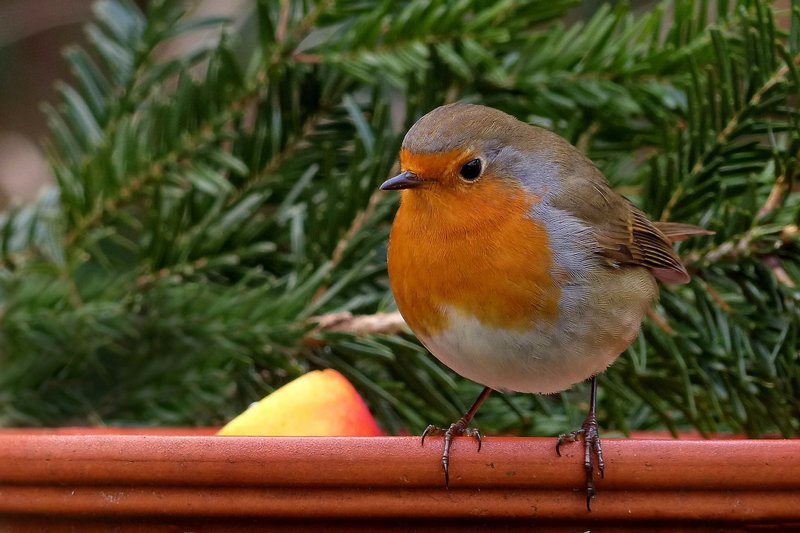 Robin
Robin
Rules to follow
Feeding birds may seem simple, but remember that sometimes hell is paved with good intentions. Here are a few rules to follow to ensure everything goes smoothly.
DO:
- Seeds should always be stored as dry as possible, preferably in an airtight container.
- Put out food early in the morning or late in the day, but try to do it at roughly the same times every day.
- Regularly check your seeds; they should be free from any mould.
- Hygiene is essential: feeders and bird baths must remain clean, and water should be changed very regularly to prevent the spread of diseases.
- If possible, opt for organic seeds.
- Place feeders, fat balls, etc., out of reach of predators.
- Prefer multiple feeding points to just one, so that shyer birds can also feed.
- Finally, distribute small amounts of seeds several times a day rather than a large quantity once a week.
DO NOT:
- It is unnecessary to feed birds all year round.
- If you start feeding them, do not stop midway through winter.
- Avoid dry bread, rusks, dried coconut, raw rice, and pastry leftovers. These foods swell in birds' stomachs and can lead to death.
- If you make your own fat balls or cakes, use vegetable fats (preferably rapeseed-based) and not animal fats, which can cause cardiovascular diseases.
- Do not give salty foods, and do not add salt to the water in bird baths to prevent it from freezing.
- Do not give them fly larvae (just in case!), nor milk.
- Be wary of poor-quality seed mixes that may contain ragweed seeds, an invasive plant that poses serious problems.
And if you encounter a bear, kindly tell it that the seeds are not for it!
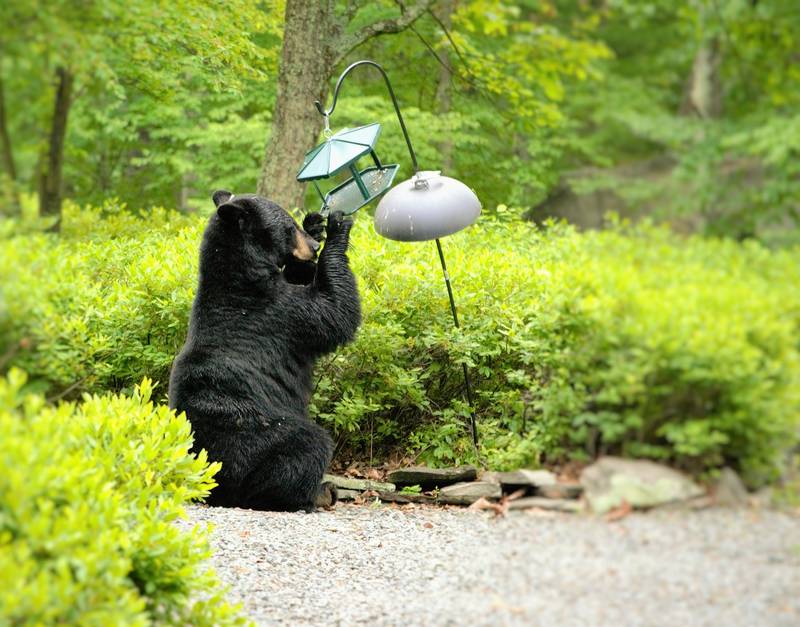 I thought I saw a big hairy bear!
If, like me, you love birds, know that winter is also the ideal season to make birdhouses and plant hedges made up of bushes that provide both shelter and cover. It takes a bit longer than distributing seeds, but it’s also very useful!
Discover Olivier's video: Feeding birds: when, how, and why?
Also, check out our tutorials on making a hanging seed feeder for birds in winter and how to make a bird feeder from oranges.

Comments