



























Promesse de Fleurs offers no less than 2000 varieties of vegetable seeds: classic seeds, organic seeds certified AB, as well as F1 hybrid varieties (and even organic F1 hybrids!). With such a wide range of options, what should you choose?
To help you, today I propose to clarify these different types of seeds.
What is an organic seed?
What differentiates an organic seed from a conventional seed is the cultivation method of the seed-bearing plant. Indeed, organic seeds or "AB" are derived from plants grown without phytosanitary products (insecticides, synthetic herbicides, etc.). These seeds also do not undergo any treatment after harvest. They carry the AB label for Organic Agriculture and are certified by Ecocert, an independent control and certification body.
Why buying organic seeds?
- Are vegetables from organic seeds better for health?
On a garden scale, no, vegetables from organic seeds are not necessarily better because it is your way of managing your garden that will determine whether you have good vegetables or any pesticide residues in your harvests. However, on a global level, yes, because by buying organic seeds, you support the ecological practices of organic farming and thus protect the environment… since your supplier does not pollute.
- The specific case of untreated seeds
Untreated seeds or "NT" are derived from plants grown conventionally; they are not organic: during cultivation, the use of phytosanitary products is permitted. What differentiates them is that they do not undergo any treatment after harvest. For your information, these seeds are allowed in organic market gardening when organic seeds are out of stock.
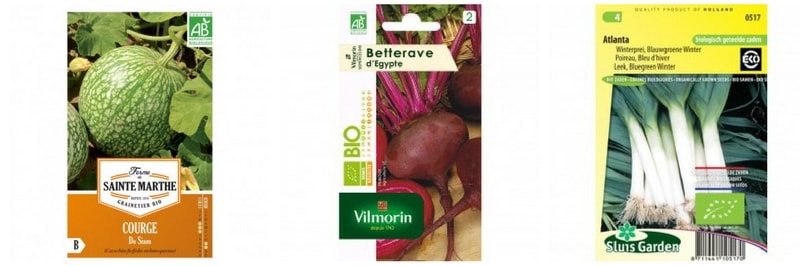
organic seeds: Sainte Marthe Farm, Vilmorin, Sluisgarden
What is an F1 hybrid seed? Should we be wary of them?
- What is an F1 hybrid?
F1 hybrid varieties are the result of crossing selected parent plants to combine their qualities. This results in varieties that are often earlier, more productive, and resistant to certain diseases. The productions are also more homogeneous, the vegetables are better sized and have better shelf life. The resulting plants can also be more compact and suitable for small spaces. As for taste, opinions vary: some find them generally bland, while others appreciate their flavour. But again, the way you cultivate the vegetables will certainly influence this.
Be aware that seed producers carry out selection and crossing work to regularly offer new varieties. These so-called improved varieties are not necessarily F1 hybrids!
- What is the problem with F1 seeds?
The main problem with F1 hybrid seeds is that it is impossible to save seeds from them. Their qualities do not pass on to the next generation. You will therefore have to buy them again. For the amateur gardener, even if the seeds are more expensive, it is an investment quickly recouped by the harvests… but it is a bit more complicated for market gardeners and farmers who become dependent on seed producers.
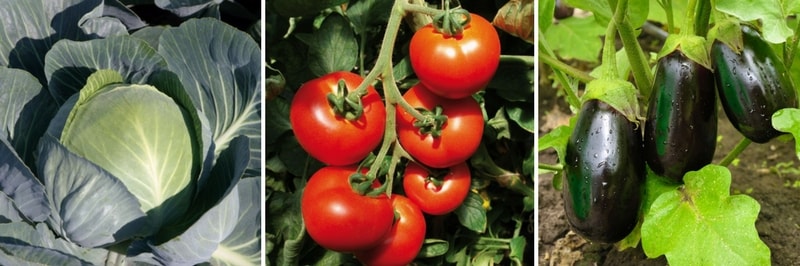
Stonehead Cabbage, Previa Tomato, and Bonica Aubergine: all productive, resistant, and reliable F1 hybrids.
And what about classic seeds?
Unlike organic seeds, classic seeds are cultivated conventionally. It is very rare for ranges intended for individuals, but sometimes seeds may have undergone treatment after harvest to eliminate any risk of mould and remove potential pests. If this is the case, the treatment will be mentioned on the packet.
By the way, coated seeds are not treated but simply covered with a natural substance (based on clay) that makes them much easier to sow and reduces the chore of thinning.
Organic or classic seeds… what about heirloom varieties?
Producers of organic seeds are known for maintaining heirloom varieties, selecting them to preserve their characteristics. Thus, it is more likely that you will find some rare gems, once cultivated in your region or by your grandfather, in organic. However, this is not a monopoly; traditional seed producers also offer heirloom vegetables, regional varieties known as "terroir" varieties.
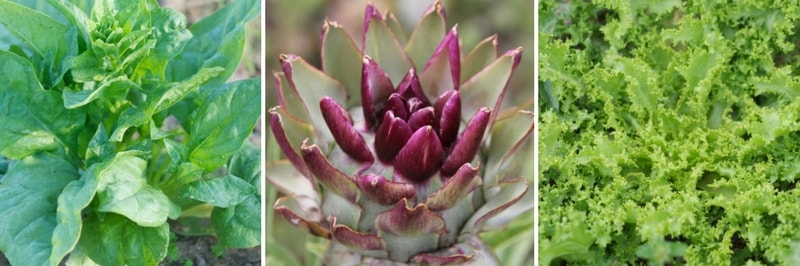 Viroflay Giant Spinach, Violet Artichoke from Provence, and Walloon Endive: heirloom or regional varieties offered in organic and classic seeds.
No F1 in an organic garden?
To conclude, and at the risk of sparking some debates, in my garden, Previa tomatoes sit alongside Black Crimea, Gynial cucumbers with English long greens... and I’m not even mentioning colourful sunflowers! Why? Because I believe that in an organic garden, F1 hybrids, AB seeds, and classic seeds can coexist perfectly without being inconsistent. And it’s not even contradictory; there are organic F1 varieties, such as Brussels sprout Igor, for example.
Why? Because I am pragmatic: the reliability and resistance of F1 hybrids allow for cultivation without any treatment (not even a little Bordeaux mixture spray, that’s not organic, is it?) and to achieve, almost certainly, abundant harvests. This assurance allows for trying out older, tastier varieties without fear, even though their results can be a bit more uncertain. On the other hand, what matters most is how you cultivate the vegetables: healthy soil, compost, good mulching, nothing simpler to grow your vegetables naturally!
What about you? Do you prefer classic seeds, certified AB, or are you more into F1?

Comments