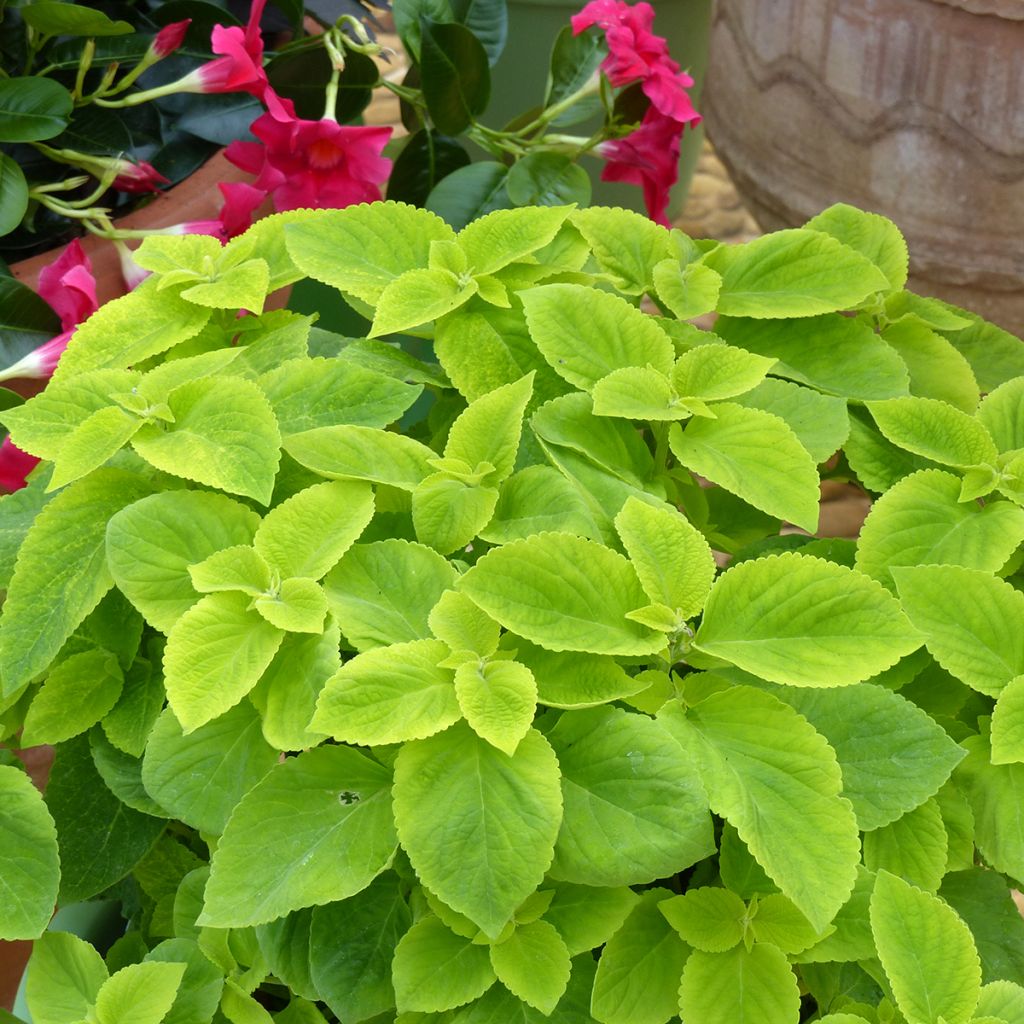
Solenostemon scutellaroides Mezmerize® Bright Green - Coléus, Plectranthe fausse-scutellaire, Ortie flamboyante, Tapis monseigneur, Vieux garçon
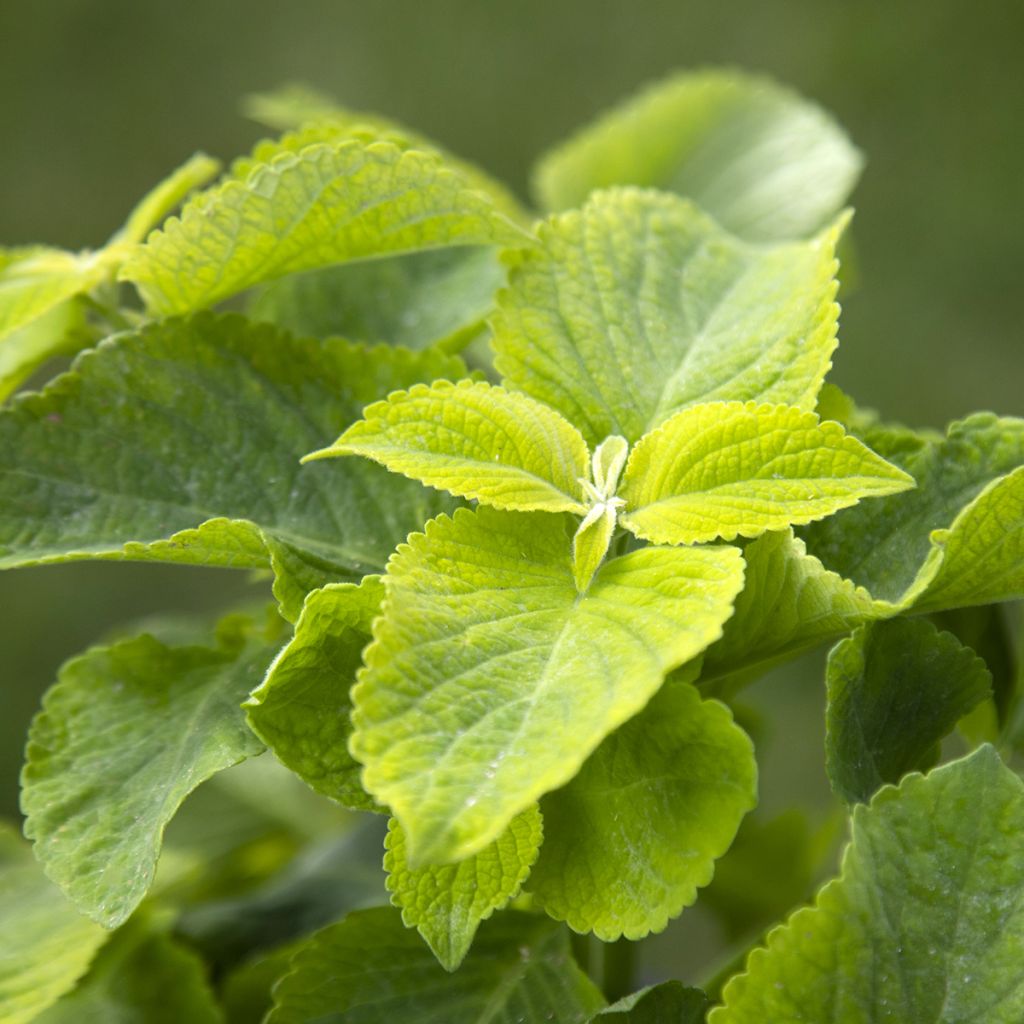
Solenostemon scutellaroides Mezmerize® Bright Green - Coléus, Plectranthe fausse-scutellaire, Ortie flamboyante, Tapis monseigneur, Vieux garçon
Solenostemon scutellaroides Mezmerize® Bright Green - Coléus, Plectranthe fausse-scutellaire, Ortie flamboyante, Tapis monseigneur, Vieux garçon
Solenostemon scutellaroides Mezmerize® Bright Green
Back-to-school special offer!
Get €10 off for every €50 you spend! And get up to €40 off on a single order.
How does it work?
1. Shop your favourites
Add your favourite plants to your basket. For every €50 you spend (excluding delivery charges, store credit and the plastic-free option), you’ll receive a €10 voucher.
€50 spent = €10 voucher
€100 spent = €20 voucher
€150 spent = €30 voucher
€200 spent = €40 voucher
2. Place your order
Once your basket reaches one of the spending thresholds, place your order. You can even choose your delivery date!
3. Receive your voucher
As soon as your order has been shipped, you’ll receive an email containing your personal voucher code and its value.
4. Use it on your next order
Your voucher is valid for 90 days from the date you receive it. It can be used once only, on a new order worth at least the value of the voucher, excluding delivery charges.
Please note: Vouchers can be combined with other offers, but cannot be split or refunded.
Home or relay delivery (depending on size and destination)
Important: You may be charged customs duties by your country’s customs authorities upon delivery.
Schedule delivery date,
and select date in basket
This plant carries a 6 months recovery warranty
More information
We guarantee the quality of our plants for a full growing cycle, and will replace at our expense any plant that fails to recover under normal climatic and planting conditions.
Does this plant fit my garden?
Set up your Plantfit profile →
Description
Les graines de Coléus Mezmerize® Bright Green permettent de cultiver une plante ornementale au port buissonnant et compact, appréciée pour son feuillage d’un vert éclatant très lumineux. Avec ses feuilles finement dentelées, ce coleus apporte une touche vibrante aux massifs, bordures et compositions en pot. Adapté aux climats doux, il préfère une exposition lumineuse, mais pas brûlante, avec un sol bien drainé et frais. Idéal pour l’ornementation des jardins, des balcons et des terrasses, il se cultive facilement en annuelle en extérieur ou en plante d’intérieur. Sensible au froid, il doit être rentré dès l’approche des premières gelées pour prolonger son éclat tout au long de l’année. Semez-le au printemps ou toute l'année en intérieur.
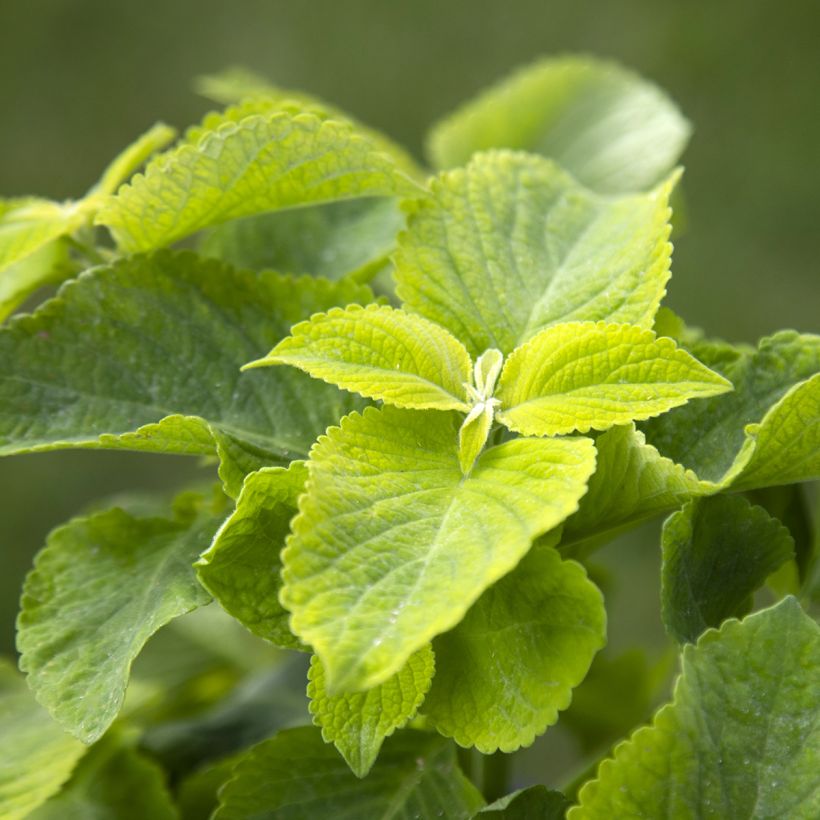
De la famille des Lamiacées, comme l’ortie et le basilic, les Coléus, également connus sous les noms de Solenostemon ou de Plectranthus, sont des vivaces arbustives gélives, originaires d'Asie et d'Afrique tropicale. Ils ont pour synonymes botaniques : Plectranthus scutellarioides, Coleus hybridus, Coleus blumei var. verschaffeltii, Solenostemon scutellarioides, Coleus saundersiae, Ocimum scutellarioides, Coleus verschaffeltii, Coleus pumilus, Coleus blumei. On les rencontre aussi sous les noms de Plectranthe fausse-scutellaire, Ortie flamboyante, Tapis monseigneur ou Vieux garçon. On les cultive principalement pour leur feuillage décoratif, mais ils offrent aussi une floraison en épi durant l’été. Leurs petites fleurs bilabiées à lèvre inférieure allongée sont typiques des Lamiacées. On supprime généralement les fleurs dès l’apparition des boutons afin que les plantes ne s'épuisent pas à produire des graines et conservent un feuillage généreux. Le Coléus Mezmerize Bright Green forme une touffe de 40 à 50 cm en tous sens, en une saison. Les dimensions finales en pleine terre et en pot sont similaires. Les feuilles, finement dentelées, arborent une couleur vert pomme éclatante. Le coleus Mezmerize Bright Green a été sélectionné pour son feuillage capable de mieux résister à la chaleur et au soleil. Même en conditions de faible humidité, ses feuilles restent bien développées et ne s'enroulent pas sous l'effet du stress thermique. Les tiges sont quadrangulaires, une caractéristique typique des Lamiacées. Le système racinaire est fibreux et superficiel. Bien que principalement cultivé pour son feuillage, il produit de petites fleurs bleuâtres en épis, généralement en fin de saison.
Le Coleus Mezmerize Bright Green capte immédiatement le regard par son feuillage lumineux, véritable touche de fraîcheur dans une palette végétale. Il excelle en pot sur une terrasse ombragée, où son vert éclatant contraste magnifiquement avec les teintes pourpres d’une Heuchera ‘Obsidian’, le bleu argenté d’un Festuca glauca ‘Elijah Blue’ ou encore les feuillages bigarrés d’un Caladium ‘White Christmas’. En pleine terre, il anime les bordures et les massifs mi-ombragés en apportant du relief et une présence vibrante au sein d’une scène où des feuillages sombres ou métalliques viennent équilibrer son intensité. Associé à des Bégonias au port souple ou des impatiens à floraison délicate, il crée une atmosphère élégante et raffinée, idéale pour les jardins aux allures tropicales.
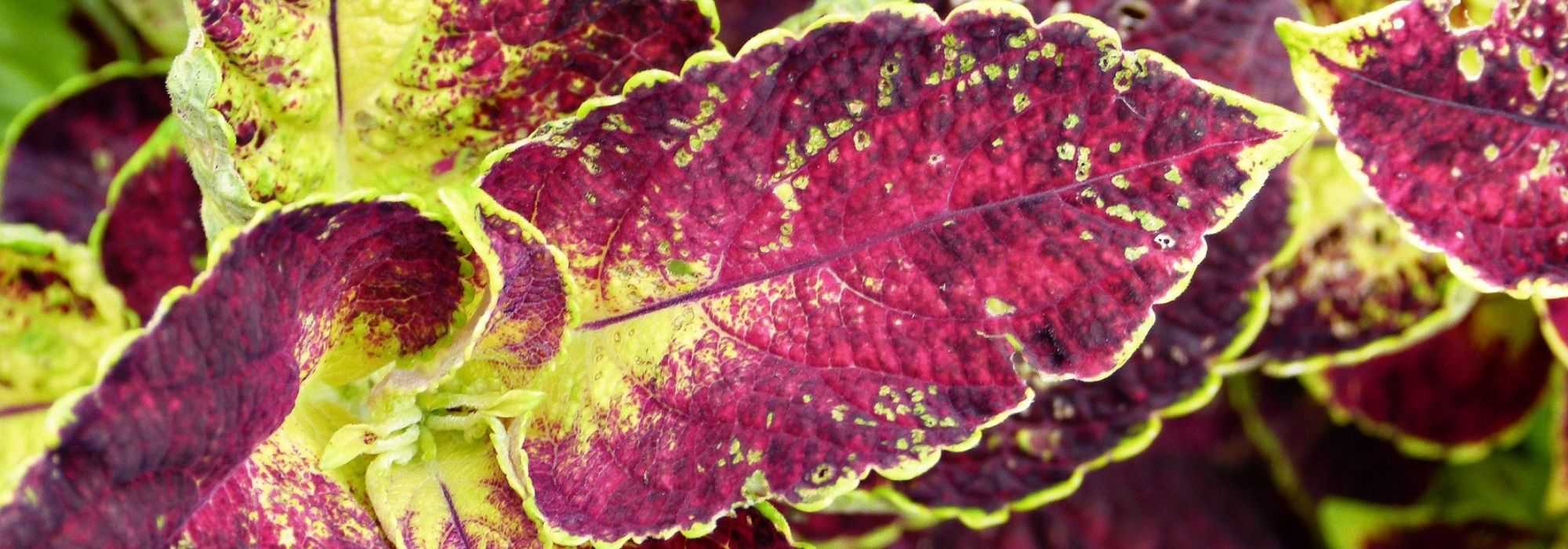
Solenostemon scutellaroides Mezmerize® Bright Green - Coléus, Plectranthe fausse-scutellaire, Ortie flamboyante, Tapis monseigneur, Vieux garçon in pictures
Flowering
Foliage
Plant habit
Botanical data
Solenostemon
scutellaroides
Mezmerize® Bright Green
Lamiaceae
Plectranthus scutellarioides, Coleus hybridus, Coleus blumei var. verschaffeltii, Solenostemon scutellarioides, Coleus saundersiae, Ocimum scutellarioides, Coleus verschaffeltii, Coleus pumilus, Coleus blumei
Cultivar or hybrid
Planting and care
You can sow Coleus 'Mezmerize Bright Green' all year round if you grow them as indoor plants. For your borders and containers, sow them in spring, from March onwards, so they are ready to be planted after the last frosts. Use good quality potting compost, possibly enriched with well-rotted compost. Lightly firm the surface of the seed tray before broadcasting your seeds on the surface. Do not cover the seeds with compost. Water with a fine spray. Place your tray in the light, at a temperature of 20 to 25°C. Using a mini greenhouse will speed up seed germination. The substrate should remain moist: mist morning and evening.
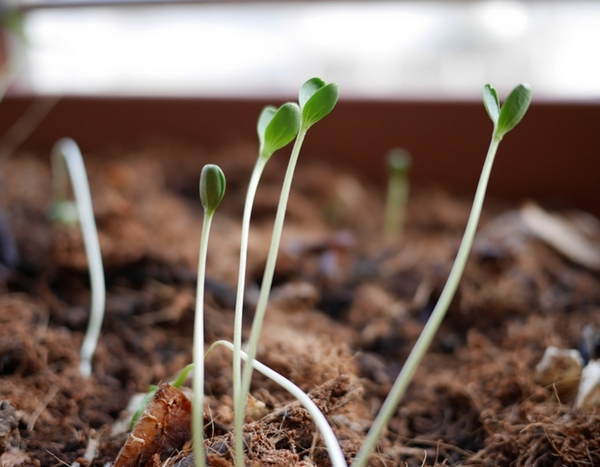
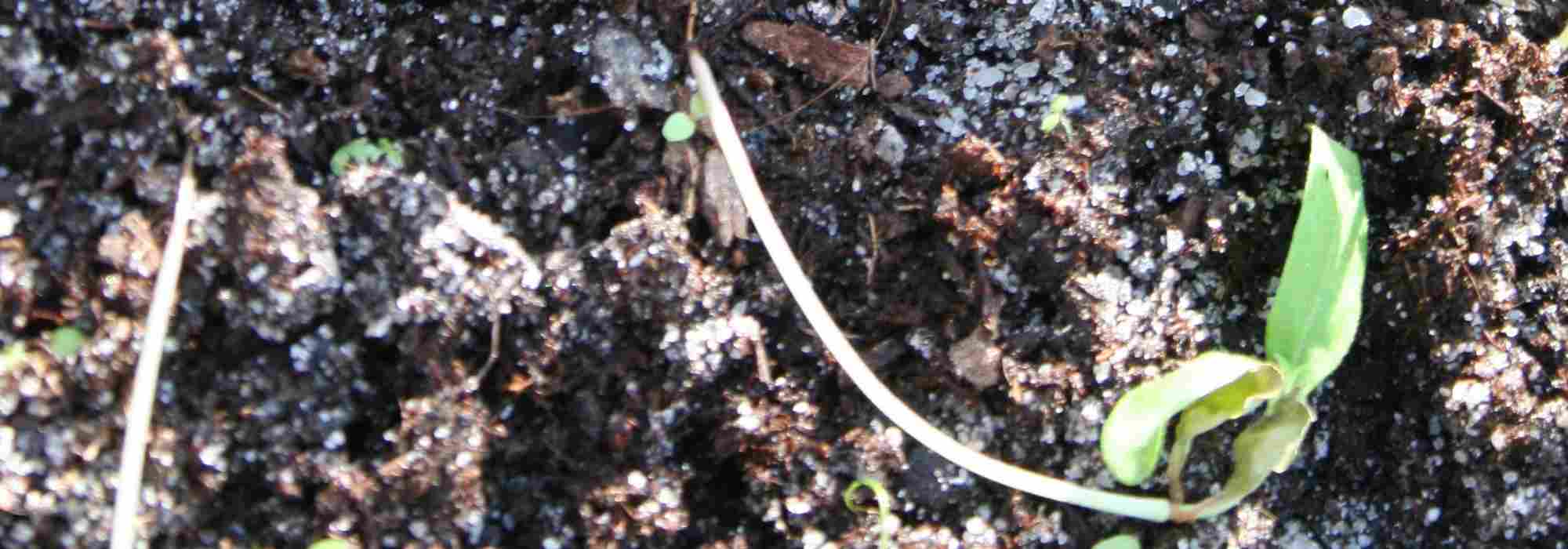
Seed germination will take 15 to 20 days. Once the young plants have reached a sufficient height to be handled (about 4 to 6 leaves), transplant them into pots. Pinch out the tips of the shoots to encourage branching of your coleus.
Plants intended for outdoor planting will need to be gradually acclimatised to a temperature of 15°C, ideally 15 days before their final positioning. By late May - early June, the outdoor temperature should be warm enough to install your young plants. Choose a slightly sunny location, but not scorching. Add a good spadeful of compost to each planting hole. Space your plants 25 to 30 cm apart.
Water regularly. For potted plants, remember to empty the saucers placed under the pots. In winter, you can store them frost-free in a bright, minimally heated room while reducing watering.
Remove the flower spikes as soon as they form to avoid prematurely exhausting the plant.
Sowing period
Intended location
Planting & care advice
-

-

-
-
-

-

-

-

This item has not been reviewed yet - be the first to leave a review about it.
Recently viewed products
Haven't found what you were looking for?
Hardiness is the lowest winter temperature a plant can endure without suffering serious damage or even dying. However, hardiness is affected by location (a sheltered area, such as a patio), protection (winter cover) and soil type (hardiness is improved by well-drained soil).
In temperate climates, pruning of spring-flowering shrubs (forsythia, spireas, etc.) should be done just after flowering.
Pruning of summer-flowering shrubs (Indian Lilac, Perovskia, etc.) can be done in winter or spring.
In cold regions as well as with frost-sensitive plants, avoid pruning too early when severe frosts may still occur.
The harvesting period indicated on our website applies to countries and regions in USDA zone 8 (France, England, Ireland, the Netherlands).
In colder areas (Scandinavia, Poland, Austria...) fruit and vegetable harvests are likely to be delayed by 3-4 weeks.
In warmer areas (Italy, Spain, Greece, etc.), harvesting will probably take place earlier, depending on weather conditions.
The sowing periods indicated on our website apply to countries and regions within USDA Zone 8 (France, UK, Ireland, Netherlands).
In colder areas (Scandinavia, Poland, Austria...), delay any outdoor sowing by 3-4 weeks, or sow under glass.
In warmer climes (Italy, Spain, Greece, etc.), bring outdoor sowing forward by a few weeks.
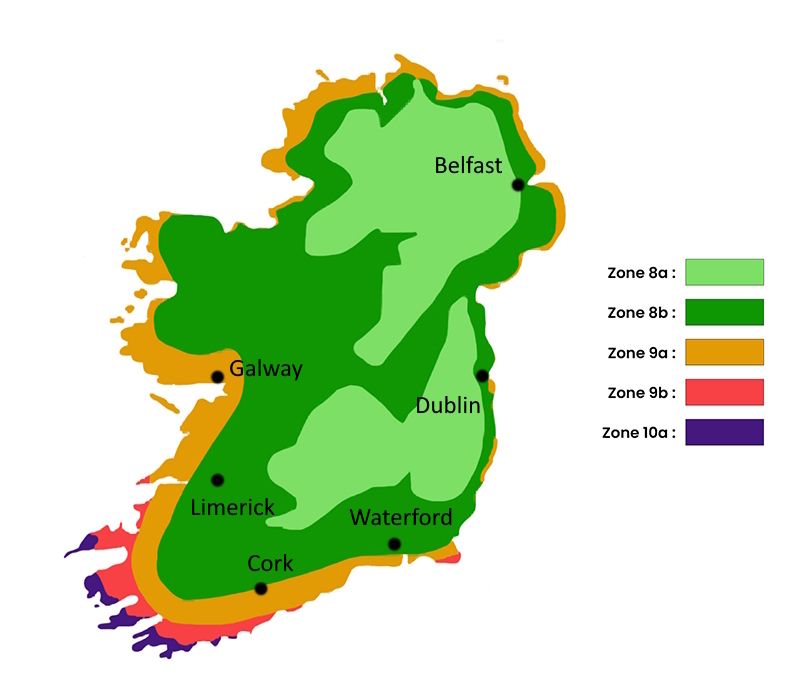
The planting period indicated on our website applies to regions in USDA Zone 9a (East Coast and Midlands: Dublin, Wexford, Waterford, Kilkenny, Portlaoise). It will vary depending on where you live:
- On the west coast and in the north-west (Galway, Limerick, Sligo, Donegal, Westport), delay planting by 1 to 2 weeks in spring and bring it forward by 1 to 2 weeks in autumn compared to the dates given, preferably choosing periods without strong winds.
- In the inland hills and plateaus (Wicklow Mountains, Macgillycuddy’s Reeks, Connemara, Killarney), it is best to plant in spring (April–May) or autumn (September–October), avoiding periods of waterlogged soil in winter and strong winds, which pose the main risk to newly planted trees in these areas.
The flowering period indicated on our website applies to regions in USDA Zone 9a, such as the East Coast and Midlands, including Dublin, Wexford, Waterford, Kilkenny and Portlaoise.
This will vary depending on where you live:
- On the west coast and in the northwest (Galway, Limerick, Sligo, Donegal and Westport), it will be delayed by one to two weeks compared to the given dates, due to stronger Atlantic winds and less spring sunshine.
- In the inland hills and plateaus (the Wicklow Mountains, the Macgillycuddy's Reeks, Connemara and Killarney), flowering will be delayed by two to three weeks. Flowering mainly occurs between May and July, with the limiting factors being less frost and more of the excessive humidity, strong winds and lack of sunshine that are characteristic of these areas.
Shipping country and language
Your country of residence may be:
Your country of residence is:
For a better user experience on our website, you can select:
Your shipping country:
-
 Austria
-
 Belgium
-
 Bosnia & Herzegovina
-
 Bulgaria
-
 Croatia
-
 Cyprus
-
 Czechia
-
 Denmark
-
 Estonia
-
 Finland
-
 France
-
 Germany
-
 Greece
-
 Hungary
-
 Iceland
-
 Ireland
-
 Italy
Italy
-
 Latvia
-
 Liechtenstein
-
 Lithuania
-
 Luxembourg
-
 Malta
Malta
-
 Netherlands
-
 Poland
-
 Portugal
-
 Romania
-
 Serbia
-
 Slovakia
-
 Slovenia
-
 Spain
Spain
-
 Sweden
-
 Switzerland
Language:
-
French
-
 English
-
Spanish
-
Italian
-
German
-
Portuguese
-
Dutch
-
Finnish
My Account
Hello
My wish lists
My cart
Log in / Register
Existing customer?
This form is protected by reCAPTCHA - the Google Privacy Policy and Terms of Service apply.
New customer?
Create an account to track your orders, access our customer service and, if you wish, make the most of our upcoming offers.