





























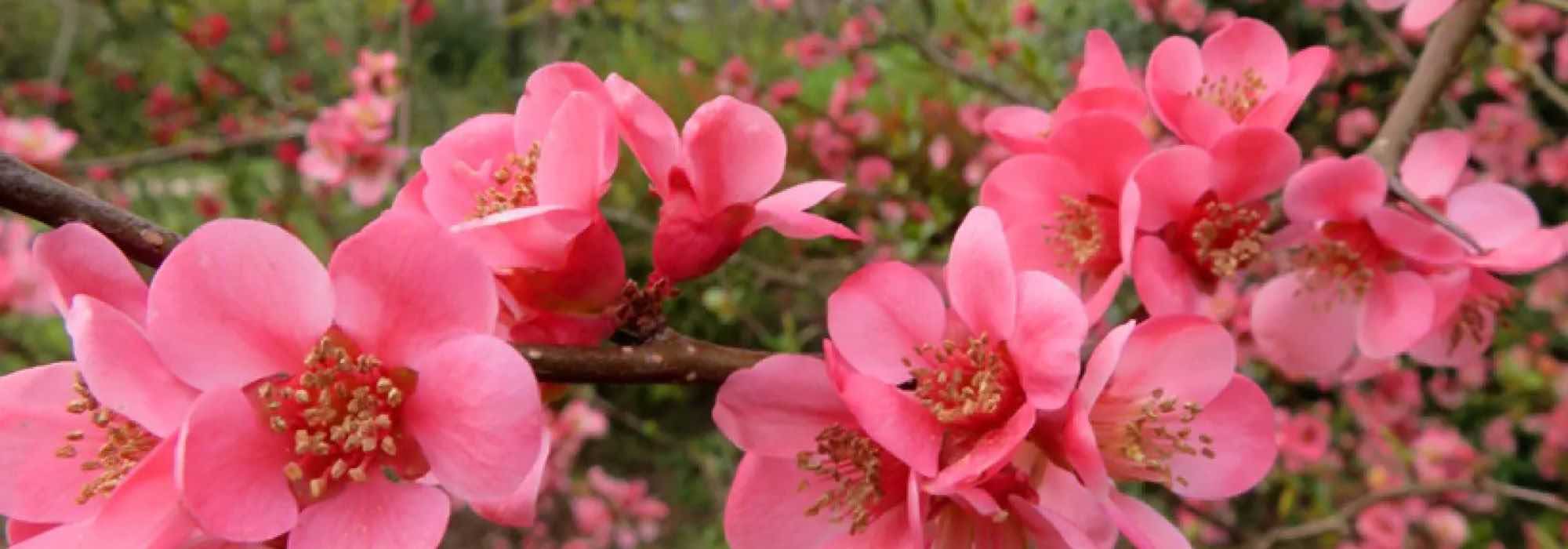
The 9 best varieties of Japanese quince to grow in pots
Smaller, more compact varieties to brighten up even the smallest spaces
Contents
Japanese quince shrubs(Chaenomeles) enchant late winter and early spring with their refined flowering. Whether single or double, in shades of pink, white or red, they are always abundant. Appearing on twigs still bare of leaves, the flowers are hard to miss. In autumn, they can give way to small decorative fruits, which can also be eaten in jams.
Growing Japanese quince is not difficult: they are hardy shrubs. And did you know that you don’t need a large garden to enjoy them? Indeed, there are varieties that readily lend themselves to growing in pots, to brighten terraces, balconies or courtyards.
Discover here our favourite dwarf Japanese quince varieties, easy to grow in pots.
→ For more on its cultivation, see our guide: Japanese quince: planting, pruning and care.
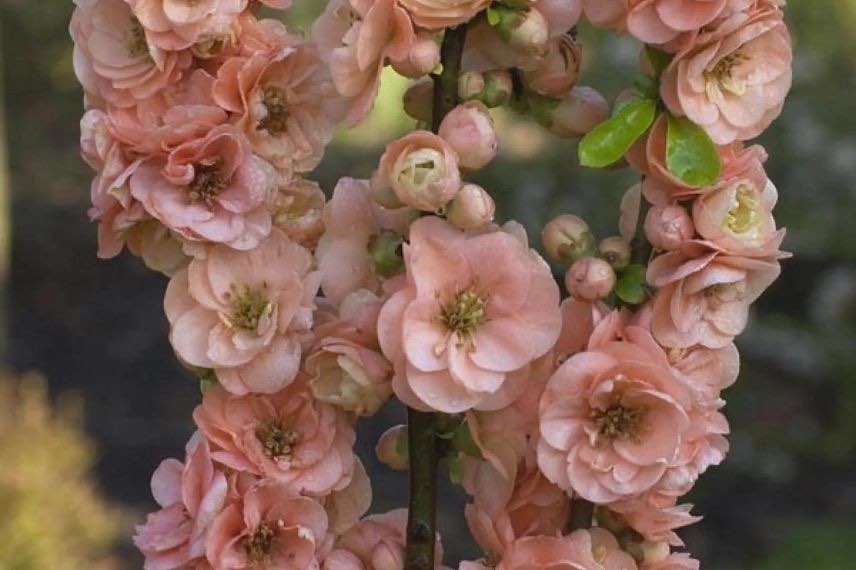
Japanese quince Chaenomeles superba 'Cameo'
This small variety of Japanese quince flowers at the very start of spring, between March and April. ‘Cameo’ unveils then very refined double flowers, in a colour ranging from orange to salmon-pink, rather unusual.
These small flowers, about 3 cm in diameter, are gathered in cut flower arrangements on the still naked shoots.
They also please pollinating insects at a time when nectar is not yet abundant.
In autumn, these decorative yellow fruits (quinces, though they will be less fragrant than those of the common quince) provide the spectacle by releasing a pleasant fragrance.
The deciduous foliage displays a medium green and the shoots are thorny, as with most Japanese quinces.
This small variety grows to just 1.5 metres in height with a 1 metre spread, which makes it easy to fit into any space. It tolerates pollution, making it a good choice for city gardens.
Hardy and hardy, this quince will appreciate sunny or partly shaded exposures in the south. The soil should preferably be moist (never allowed to dry out completely), but well-drained (water should not stagnate there).
Read also
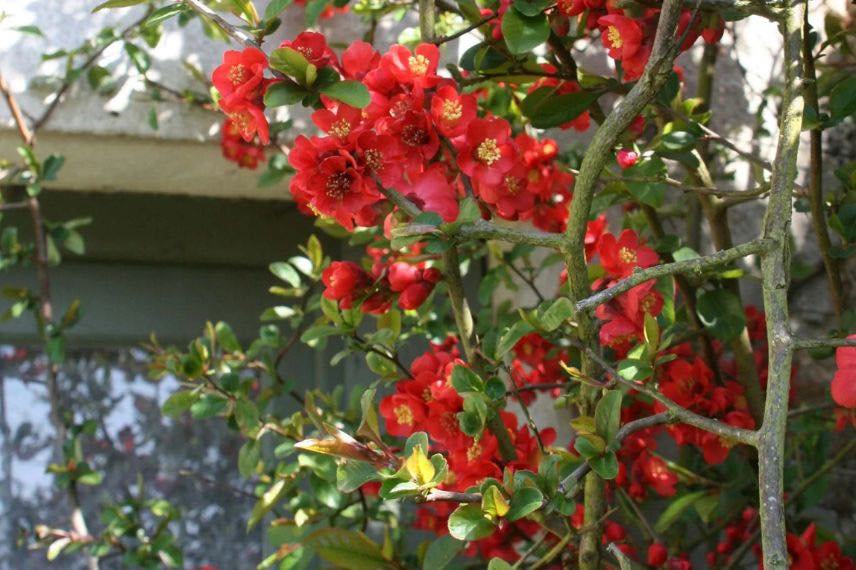
How to choose a Japanese quince?Japanese flowering quince Chaenomeles speciosa 'Fire Dance'
‘Fire Dance’ is a small Japanese quince bush that offers a flowering display of an intense red-orange colour. The cup-shaped flowers measure about 4 cm. They appear from March to April, before leafing out, or at the start of leafing. Another decorative asset: fruiting occurs in autumn and reveals globose fruits of a yellow-green colour.
This shrub with a bushy habit averages 1.5 to 2 metres in height and almost as wide, but it will be less expansive in a pot. A modest size, allowing it to be grown on a terrace or balcony, where it will brighten early spring with its warm colours. This flowering quince can even be trained as a bonsai, for a true Japanese touch.
This variety thrives in all light conditions, but will be more floriferous if given light. It dislikes only calcareous or waterlogged soils. Choose a container wide enough to accommodate its spreading habit.
Japanese quince Chaenomeles superba 'Nicoline'
‘Nicoline’ is one of those compact varieties. It grows to about 1.5 metres in height with a 1.75 metre spread. As with its congeners, it blooms in early spring, between March and April, when the garden has not yet fully woken up. It produces single flowers of 4 cm in diameter in a bright, vivid red, contrasting with a heart of yellow stamens. Appearing on bare shoots, they are particularly conspicuous and will inevitably attract pollinators. In autumn, fruits that look like small yellow apples when ripe will add to its ornamental appeal.
Hardy, easy to look after and tolerant, this is a bush you can grow in a pot without any trouble. Just ensure its potting mix never dries out completely and shield it from the fiercest sun, especially in the southern regions of France.
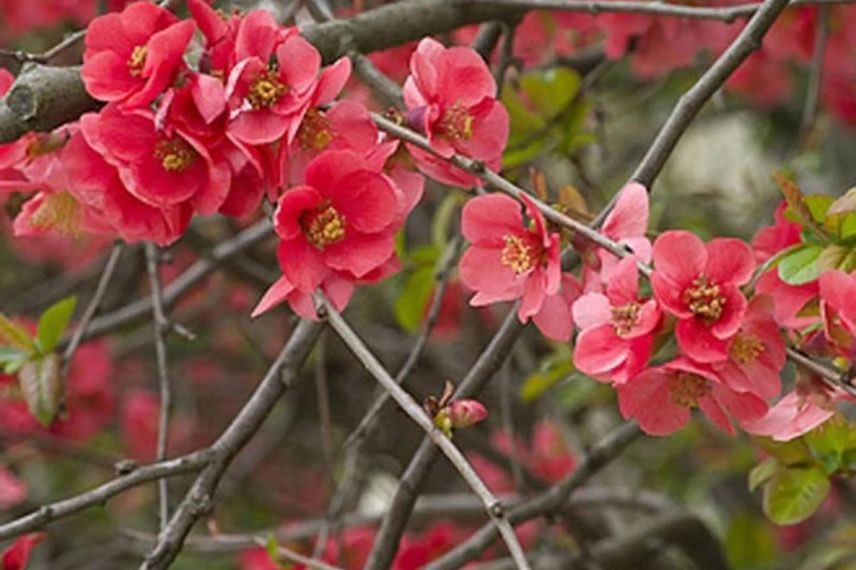
Japanese quince Chaenomeles japonica 'Cido'
‘Cido’ we especially like its small size, which does not exceed 1.3 metres in all directions. A boon for small spaces and for pot culture. Next, it doesn’t lack ornamental qualities. A little later than its peers, it flowers in mid-spring, between April and May. It delights us then with small flowers of 3 cm, bearing an orange hue shaded with red and coral.
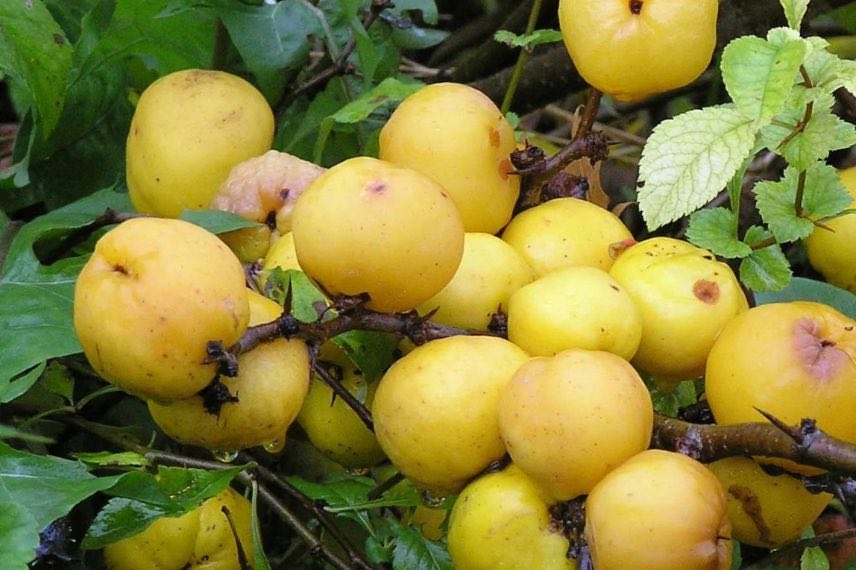
In late summer and autumn, it is valuable for its fruiting. It indeed bears large fruits of 6 cm, yellow in colour. They have a tangy flesh, prized for their richness in vitamin C. They are used in compotes, jellies, jams, or even in tagine.
For pot culture, plan for a substrate fairly rich in organic matter to support flowering and fruiting. Water as soon as the substrate surface is dry and place your quince in full sun or partial shade.
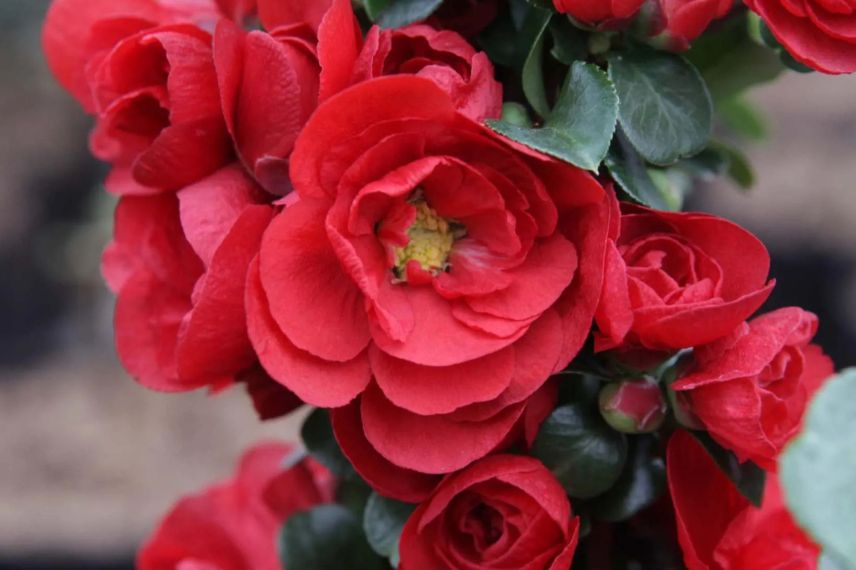
Japanese quince Chaenomeles speciosa ‘Scarlet Storm’
With a spread of 1 metre to 1.2 metres in all directions, ‘Scarlet Storm’ is a perfect candidate for growing in a pot. But its compact size does not prevent it from being flamboyant. Between March and April, it produces large double flowers with many petals, reminiscent of camellias. They display a dark, deep red, hypnotising!
One of the advantages of this variety is that its shoots are inermous, i.e., that they are without thorns. It can therefore be grown in a pot, even near areas of foot traffic, without risk of injury. Take the opportunity to use its shoots for making bouquets.
This quince tree is grown solely for its ornamental qualities, as it does not bear fruit. It also has the advantage of being drought-tolerant once established, but watering will remain necessary when grown in a pot. Water does indeed evaporate more quickly, and the roots cannot spread as freely as they would in open soil to draw moisture from the soil.
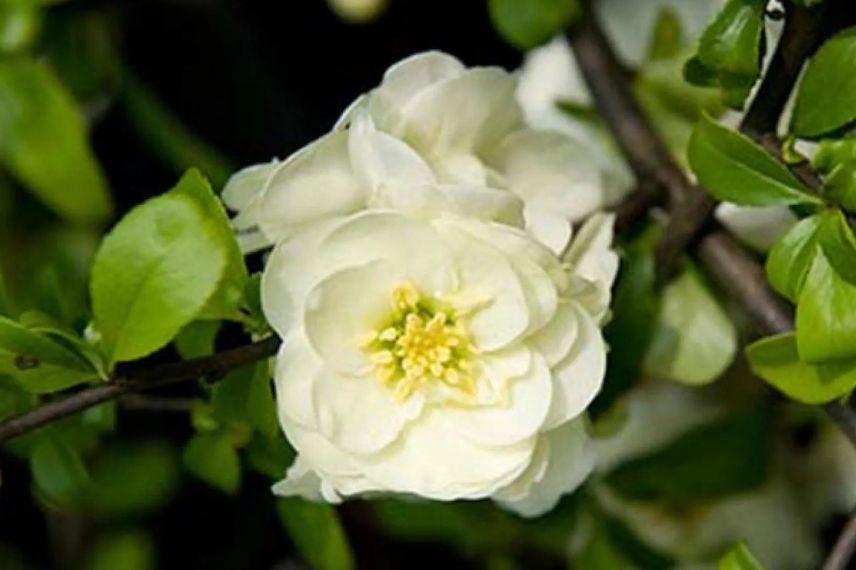
Japanese quince Chaenomeles speciosa 'Yukigoten'
The Japanese quince ‘Yukigoten’ stands out for its double flowering, with a very soft creamy-white colour. The petals surround a heart of golden stamens. The flowers put on a display from March to April. In autumn, the quinces-shaped fruits take over.
In terms of foliage, young shoots display red hues during bud burst period, then the leaves take on a soft green colour at ripeness.
This compact Japanese quince grows to 1 metre in height and 1.5 metres in spread. Provide it with a well-drained (light) soil and plant it in full sun or partial shade.
Japanese quince Chaenomeles speciosa ‘Pink Storm’
Another colour, somewhat less common, is ‘Pink Storm’. As its name suggests, it flowers in a pretty, rich pink. This early-spring flowering reveals large double flowers, about 6 cm across, that dress branches still bare of leaves. In this variety, again, the shoots do not bear thorns, which allows it to be grown even in small spaces and to be used to create beautiful colour spring bouquets. However, this quince does not bear fruit.
As for dimensions, expect only 1 metre in all directions for this compact bush.
Hardy and tolerant, it’s an easy-care bush that will delight in the early spring.
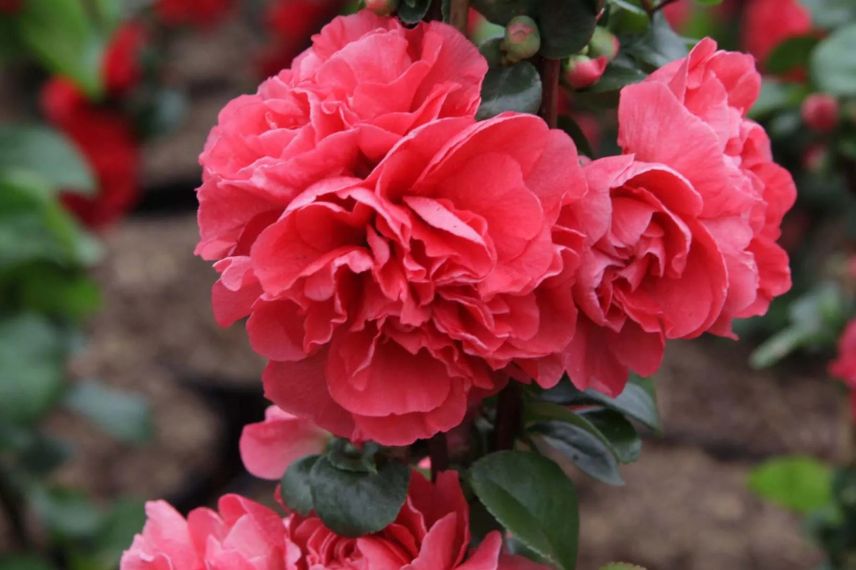
Japanese quince Chaenomeles speciosa 'Mango Storm'
‘Mango Storm’ is part of these new thornless varieties that display bold, bright colours. Here, it is a coral-orange with salmon reflections that brightens the early spring. The double flowers are clustered in bouquets on the bare shoots, the foliage developing after flowering. They have real camellia-like appearance.
This small quince bush grows to about 1 metre in all directions.
Easy to grow, it is an ideal bush for new gardeners who require little maintenance. Its natural resistance has been tested in challenging conditions, in the Appalachian Mountains in North America. To enjoy a generous flowering, plant it in full sun, but in a site sheltered from the harshest rays of midday.
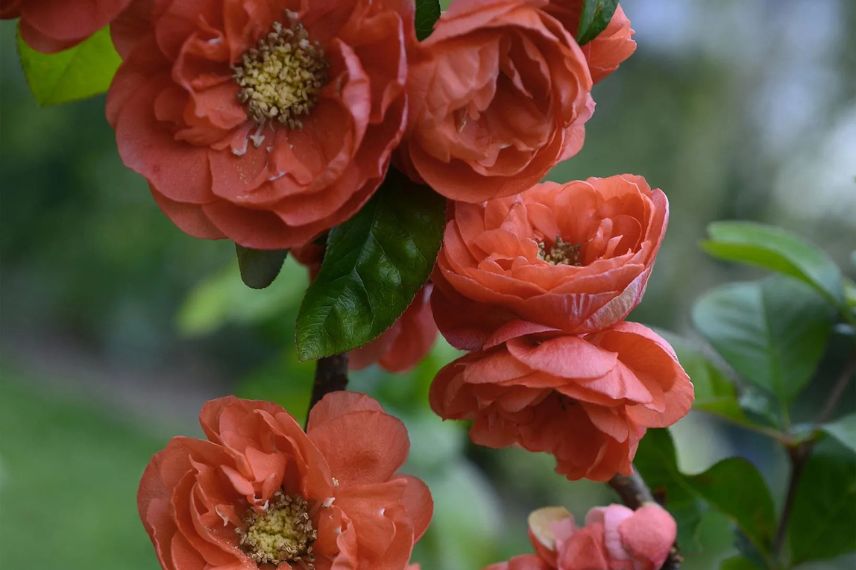
Chaenomeles superba 'Pink Trail'
Latest variety of quince for pots on this non-exhaustive list: the compact ‘Pink Trail’. In terms of size, expect around 1.1 m in height and spread after several years of growth.
Between March and May, it graces us with flowers in a magnificent salmon-pink colour, lightly scented. They precede the formation of globose yellow fruits in autumn.
The foliage, absent at flowering, is initially bright green before taking on yellow hues around October.
Easy to grow anywhere, this Japanese quince will add plenty of charm to a terrace, a balcony or an internal courtyard, in sun that isn’t scorching or in partial shade.
- Subscribe!
- Contents

Comments