





























String beans: 3 good reasons to grow them
Why prefer runner beans over sugar snap peas?
Contents
In terms of beans, the choice is vast. Many gardeners find themselves quite at a loss when it comes time to choose and sow their seed varieties… Beyond the differences between climbing beans and dwarf beans, the shell beans or the magnificent Spanish beans, the amateur gardener (or the more experienced one) looking to plant green beans faces the choice between string beans and snap beans. Especially since seed suppliers now offer string beans without strings! It can be quite bewildering…
In this article, we will focus on string beans to understand what sets them apart, and especially why you might prefer to sow them in your vegetable garden.

String beans, what exactly are they?
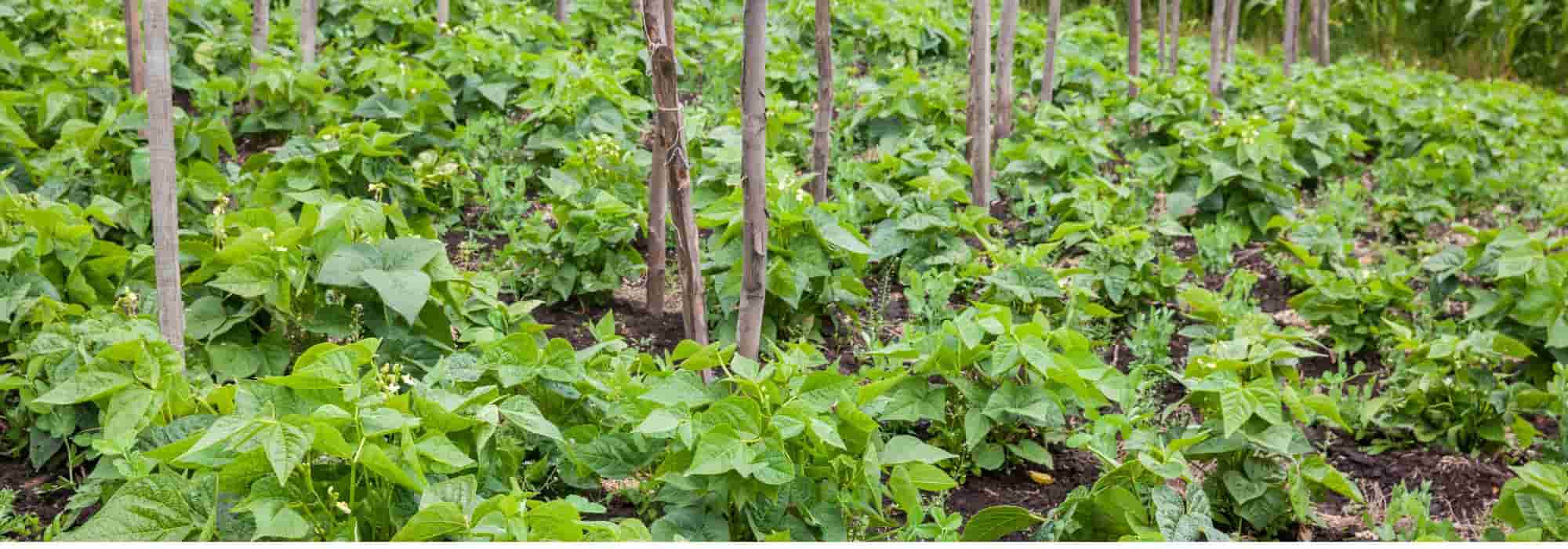
String beans are varieties of beans (Phaseolus vulgaris) that are characterised by a bushy tuft of foliage that does not exceed 40 to 50 cm in height. They stand alone and do not require any supports or stakes.
But what truly makes string beans unique is the filament! Indeed, string beans have filaments while snap beans do not. I can already imagine you, as you read my words, scoffing and exclaiming loudly that it is unthinkable for you (and for me too, I assure you!) to eat beans with filaments. However, there is a way to enjoy these string beans without the filaments! Simply by harvesting the pods before they reach full ripeness, that is to say, while they are still young.
In fact, string beans are beans that should be harvested every 2 to 3 days, early. Not at 6 o’clock in the morning when the sun’s rays are just warming the vegetable garden (although!), but early in the season. Indeed, string beans are much earlier and more precocious than snap beans as they are harvested before they reach full ripeness. 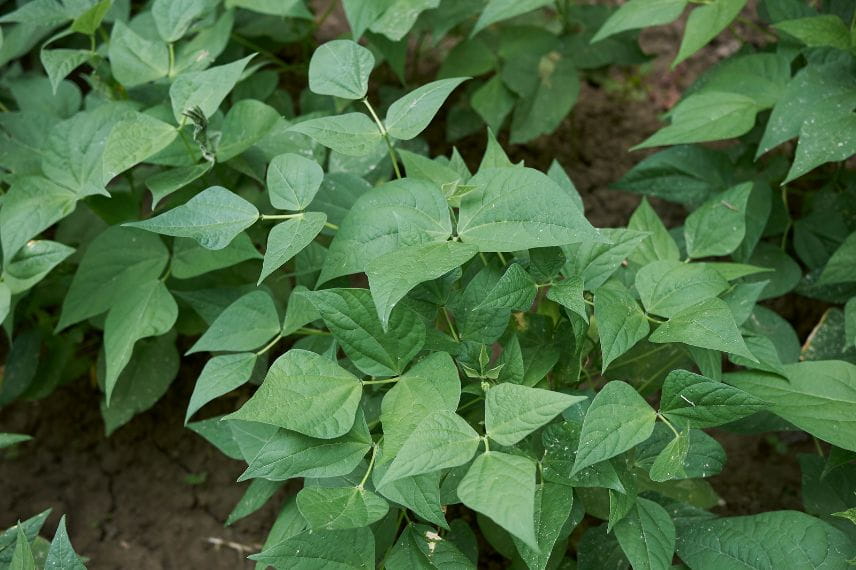
So, to summarise, string beans are harvested young before the filament appears. This is essentially what distinguishes them from snap beans, which are harvested later, at full ripeness, when the seeds swell the pods.
Choose runner beans for their flavour quality.
Indisputably, string beans surpass other varieties of beans for their flavour and taste quality. Picked young and immature, thus without strings and with a parchment-like skin, they are of incomparable tenderness. These beans also benefit from excellent cooking quality.
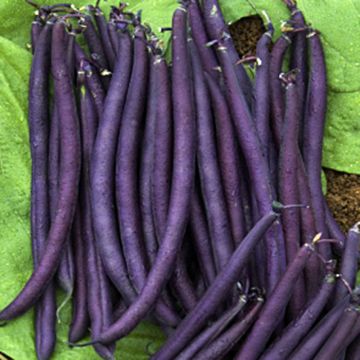
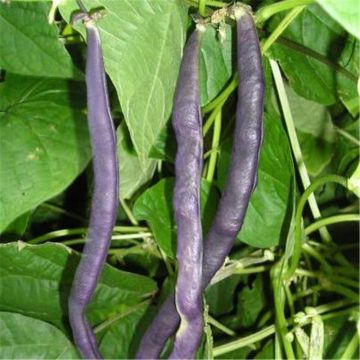
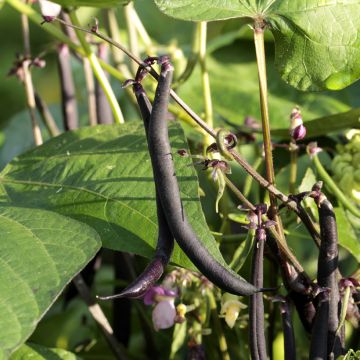
The pods are indeed 12 to 20 cm long, perfectly straight and narrow. They can be described as extra-fine beans. With a lovely green colour, sometimes variegated with purple or violet depending on the variety, string beans are the best beans there are. They melt in the mouth and can be prepared in various ways.
However, to achieve this excellence, one must put in the effort by harvesting them every 2 to 3 days and providing them with enough water, especially during hot weather. Harvested at ripeness, they develop strings, the pod becomes parchment-like, and they lose their flavour.
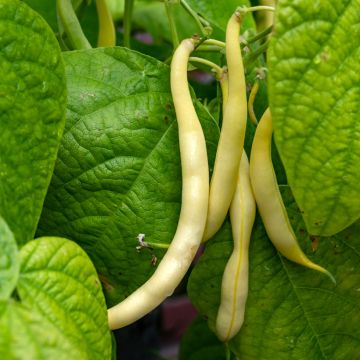
Among the best string beans, we can mention the must-have ‘Fin de Bagnols’, with unvariegated pods, and the ‘Triomphe de Farcy’, with variegated pods, which serve as a reference. Indeed, we now refer to Bagnolais types and Farcy types to identify new varieties. Nevertheless, other, more recent varieties are beginning to dethrone them, such as ‘Talisman’, particularly early, or ‘Cupidon’, which only develops strings late.
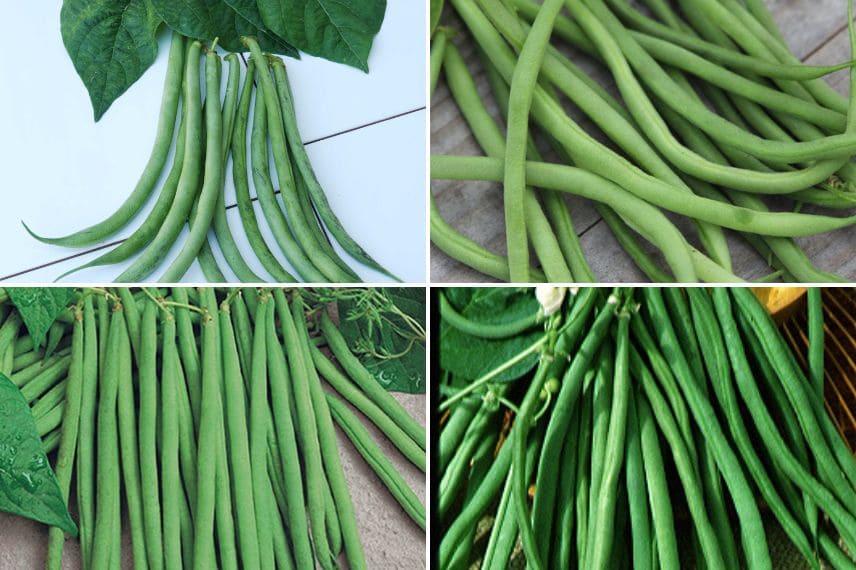
‘Triomphe de Farcy’ (©La Ferme de Sainte-Marthe), ‘Fin de Bagnols’, ‘Talisman’ and ‘Cupidon’
Discover other Bean seeds
View all →
Available in 0 sizes

Available in 1 sizes
Available in 1 sizes
Available in 1 sizes
Available in 1 sizes
Available in 1 sizes
Available in 1 sizes
Available in 1 sizes
Available in 1 sizes
Available in 1 sizes
Select runner beans for their productivity
Overall, string beans prove to be very productive. Moreover, the harvest is staggered over a longer period, generally lasting 2 to 3 months. Indeed, the pods do not reach ripeness at the same time, extending the harvest duration. It is not uncommon to find both formed pods and flowers on the same plant.
Among the different varieties of string beans, some are recognised for their productivity:
- ‘Aiguillon’: this variety produces fine, very long pods (between 18 and 20 cm) with a round cross-section. It is also resistant to viruses and anthracnose.
- ‘Molière’ produces straight, round pods of 18 to 20 cm in a vibrant green. It is a very productive and early variety, with harvests occurring from late June to September.
- ‘Mascaret’: this variety has an exceptional yield, as it is very repeat flowering throughout the summer, from mid-June to September. Its pods are bright green, fine, and 18 cm long.
- ‘Delinel’: this variety has vibrant green pods, 16 to 18 cm long, that are stringless and do not parchment. Therefore, they can be consumed at both immature and mature stages like a mangetout.
- ‘Gourmandel’: this variety has round, straight, dark green pods and produces slightly later, from July to September.
Read also
How to choose beans?Choose runner beans for their ease of cultivation.
String beans (like sugar snap peas) are very easy to grow, both in terms of planting and maintenance. Indeed, unlike climbing beans, they grow in clumps and require no support. This represents a significant time saver, as setting up supports can be time-consuming. Especially if you decide to delight the children with a teepee! Thus, you need to gather the supports (possibly from nature), plant them deeply in the soil to withstand the elements and wind, tie them together… Not to mention cutting back the faded plants that are completely tangled in the supports.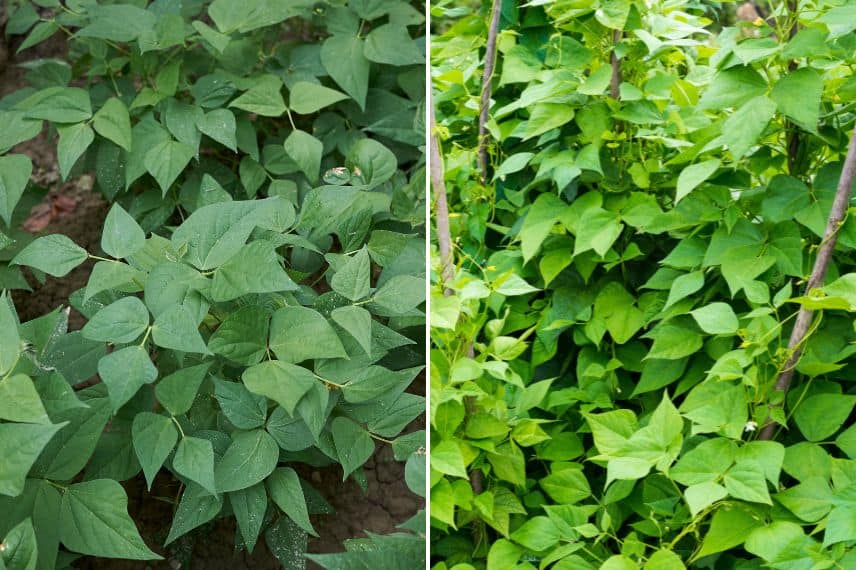
With string beans, planting is simple, as is maintenance: you create furrows, sow in clusters or in a line, cover with soil and firm down, water, and wait for 2 months. After that, you need to water regularly, mound the plants occasionally, and harvest every 2 to 3 days. Only the harvest requires effort and may cause some back pain. But the exquisite taste of these beautiful pods makes it all worthwhile!
Further reading:
And the runner beans without strings?
With the development of new varieties, stringless beans are now available for sale. They have the flavour of string beans, but they can be harvested immature every 2 to 3 days, as well as later like sugar snap peas. Even at this stage, the pods contain neither string nor parchment. However, they are generally smaller. Among these varieties, we can mention:
- ‘Vanilla’: this is a variety with dark foliage that produces short, dark green pods from July to September
- ‘Crocket’: this variety produces fine, long, very dark green pods
- ‘Satelit’: this is a very early variety that offers pods up to 15 cm long
- ‘Pongo’: the pods measure between 15 and 17 cm and are a shiny green. The flowering and fruiting occur above the plant, making harvesting easier
- Subscribe!
- Contents

Comments