






























Spring bulbs: the depths guide
to succeed in your plantings
Contents
Even though spring flowerings may not have the lushness of summer fireworks, visits to the garden as soon as the first sunny days arrive are always rewarding, especially with bulbous plants. At this time, each flowering is an event, and the bulbs enjoy their moment of glory: essential daffodils, tulips, hyacinths, crocuses, muscari, snowdrops, ornamental onions… the choice is plentiful!
So, to ensure you plant them correctly in the autumn, there are a few basics to follow, particularly the depth at which they should be installed in the soil. Planting them like experts, follow our guide to planting depths for the main families of spring bulbs.

The basic rules for planting bulbs at the correct depth
It is said that bulbs should be planted at a depth of 2 to 3 times their height in soil or substrate to grow under optimal conditions. By “planting depth,” we mean the height between the top of the bulb and the soil surface. This rule applies to many bulbs, but a few require a different depth.
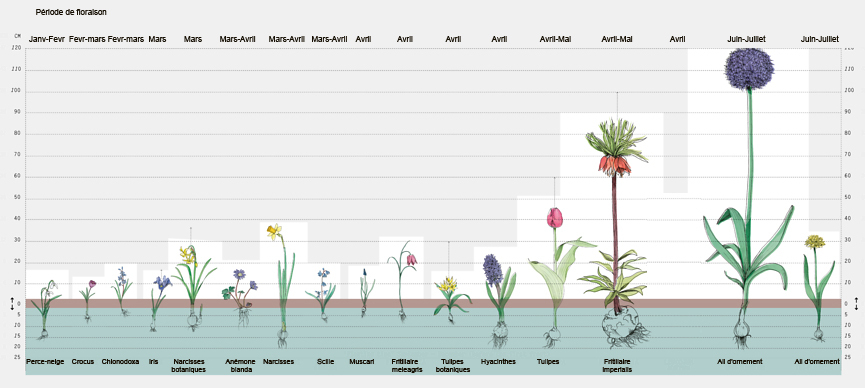
Planting depths for main spring bulbs (click on the image to enlarge)
If you wish to create beautiful flowering pots, place your bulbs at the appropriate height in different superimposed strata.
The depth can also be adjusted: depending on the nature of the soil, as lighter soils can accommodate them at a slightly greater depth, while in heavier soils, it is preferable to plant them a bit higher. To better protect the more delicate varieties in winter, they can also be planted at a slightly greater depth. Finally, to provide better wind resistance for tall bulbous plants (large Alliums, Fritillarias…), you may also consider planting them deeper in the soil or substrate.
Snowdrops
Galanthus nivalis, commonly known as Snowdrop, are the first bulbs to flower as early as January, even under the snow. Perfect for woodland areas, rockeries, in beds of bushes and perennials, as well as in pots, these well-known small bulbous plants thrive in soft, cool soils that are not too rich and well-drained in winter. For a beautiful mass effect, they should be planted in numbers and closely together from September to the end of October, in a semi-shaded position.
→ Snowdrops need to be planted at a depth of 5 cm, with a maximum of 8 cm. For a successful mass planting, count at least 50 bulbs per square metre. You can leave them in place for several years and divide the clumps every 3 to 5 years to propagate them.
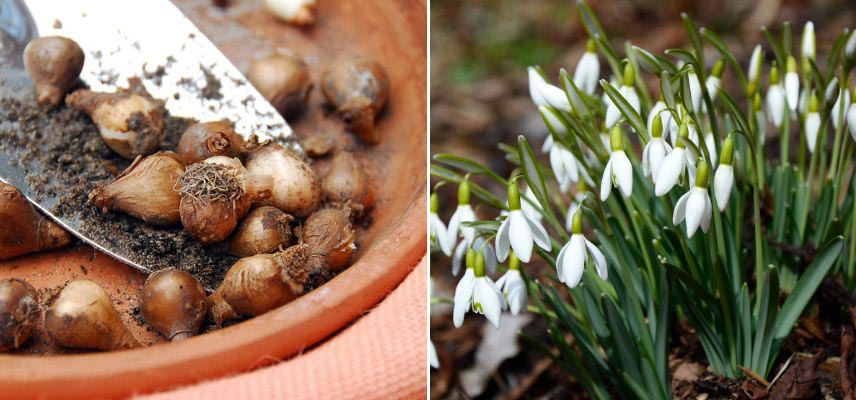
Snowdrop
Discover other Spring bulbs
View all →
Available in 1 sizes
Available in 1 sizes
Available in 1 sizes

Available in 1 sizes
Available in 1 sizes
Available in 2 sizes
Available in 1 sizes
Available in 1 sizes
Available in 1 sizes
Spring Crocuses
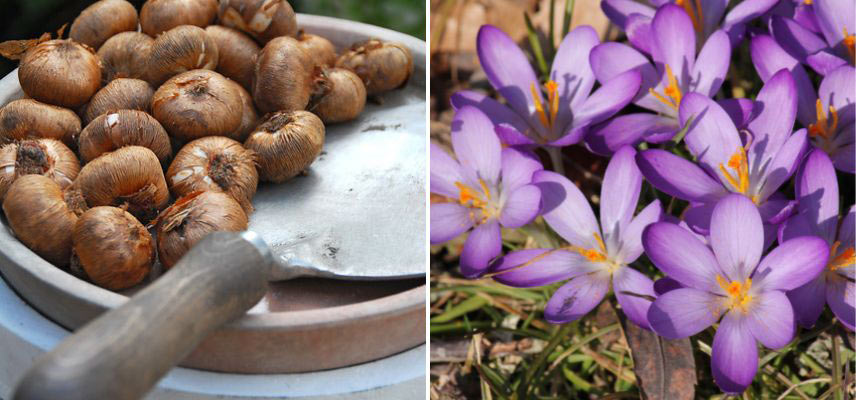
Among the spring crocuses, some, such as the botanical crocuses, are among the first spring flowerings as early as February-March. Easy to plant and full of charm with their cup-shaped flowers, crocuses naturalise to return faithfully each year. Perfect when planted in carpets on a lawn, in mixes, or in patches of white, purple, or yellow, they prefer well-drained soil and a sunny position. You can also plant them in rockeries or in pots or containers alongside other bulbous plants.
→ Plant the spring crocuses from September to November, at a depth of 10 cm, in groups of 5 or 10. If necessary, drain the bottom with a thin layer of gravel or clay pebbles.
Spring Crocus
Chionodoxas
Chionodoxas or Glory of the Snow are small bulbous plants that create very charming flowering carpets at the end of winter. These hardy plants, closely related to scillas, form clumps of leaves from which rise clusters of star-shaped blue, white, or pink flowers. Chionodoxas prefer to grow in permeable, loose, and not overly rich soil, in partial shade or light sun. They can be cultivated in pots or containers, and can be forced indoors. Requiring no maintenance, Chionodoxa naturalises well in borders, rockeries, or woodlands, but will not thrive in hot, dry climates.
→ Plant Chionodoxas from September to November at a depth of about 5 cm and 10 or 12 cm apart. Leave the bulbs in place for several years; they will form generous clumps.
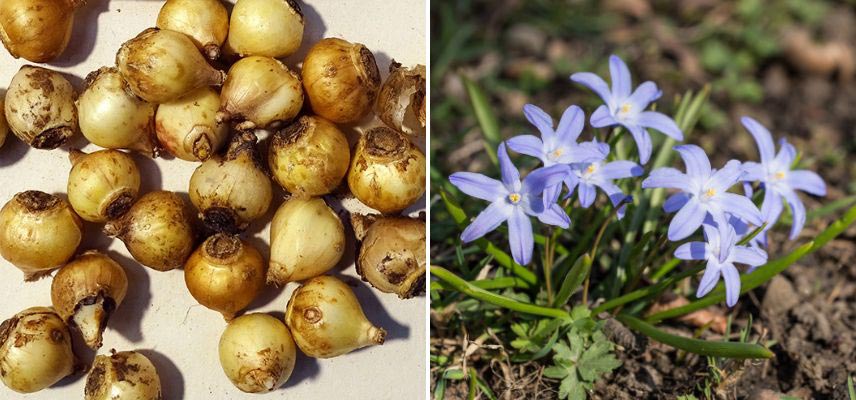
Chionodoxas
Irises
Warm and dry climates, humid areas, and woodlands—Irises are “all-terrain” plants that thrive in very different environments across temperate zones.
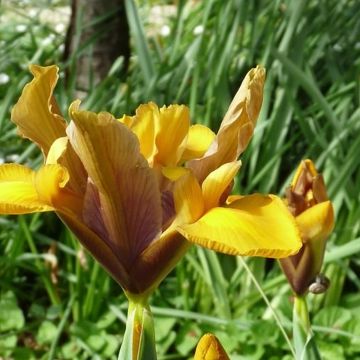
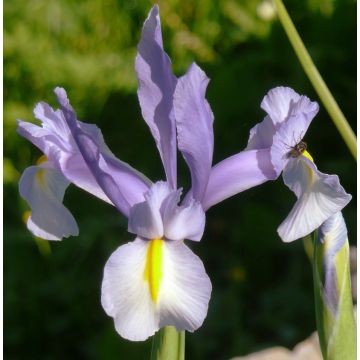
→ Iris germanica, which is a rhizomatous perennial, should be planted very shallowly, allowing the rootstock to be just above the soil surface. Preferring dry, well-draining soils, ensure proper drainage at planting.
→ The Iris ensata thrives in full sun or partial shade, in cool to moist soils. Plant the root ball of this Japanese Iris 1 to 2 cm deep, with the fibrous rootstock at a depth of 3 to 5 cm, at the edge of a pond, in damp soil.
→ The Iris sibirica, or Siberian Iris, is very similar in cultivation to the Japanese Iris: like it, it prefers rich, moist soils, and its rootstocks should be planted at a depth of 3 to 5 cm. Position it either on the bank of a pond, not too close to the submerged area, or in a consistently cool to moist border, even in summer.
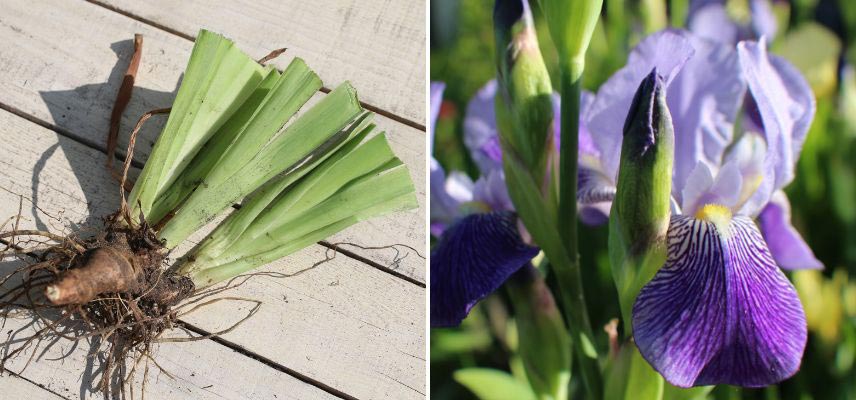
Garden Iris
Daffodils
Daffodils or Narcissus are spring flowering bulbs that can thrive in both partial shade and full sun. Plant them in patches of colour or in mixes according to your preference and the look of your garden. Depending on the varieties, their flowering periods range from February-March to May, and their heights vary from 15 to 50 cm. Particularly robust and tolerant, they can withstand slightly heavy and moist soil, and will return to bloom for many springs, naturalising further in the garden.
→ Plant Daffodils at a depth of 10 cm and spaced 10 cm apart. Group them in clusters of at least 5 bulbs for a natural effect, including in the lawn: lift a patch of grass, dig and loosen the soil to at least 20 cm. Then plant your bulbs, cover with soil, and replace the grass.
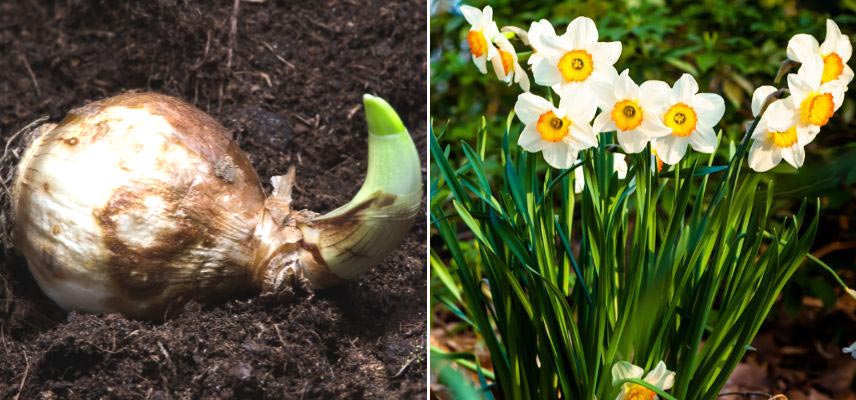
Daffodils or Narcissus
Muscari, Spring Anemones, and Scillas
Essential muscari! Their intense blue or white flowers are indispensable in the garden. Tolerant of both full sun and shade, they naturalise very well. Plant your bulbs as soon as possible in well-drained soil.
→ Loosen the soil deeply and plant your Muscari bulbs at a depth of 8 cm, spacing them 6 to 8 cm apart.
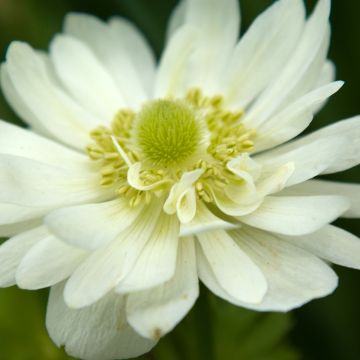
The Spring Anemones are also beautiful bulbous perennials, very hardy, with colours ranging from white to red, including all shades of pink and lovely blues. Perfect for borders or carpeting an area even in woodland, Anemones prefer well-drained, cool, fertile soil in sunny or partially shaded positions.
→ Plant the bulbs of Anemones at a depth of 5 or 6 centimetres and then firm the soil. Adding compost can be beneficial for them.
Scillas are spring bulbous plants that are quite little known. Most are blue or white, with a few varieties in shades of pink. Easy to grow, these low-maintenance and very hardy bulbs are perfect for brightening up a shady corner in spring. They naturalise easily in our gardens, forming beautiful flowering colonies over time.
→ Plant the Scillas at a depth of 8-10 cm, ensuring the pointed end of the bulbs is facing upwards.
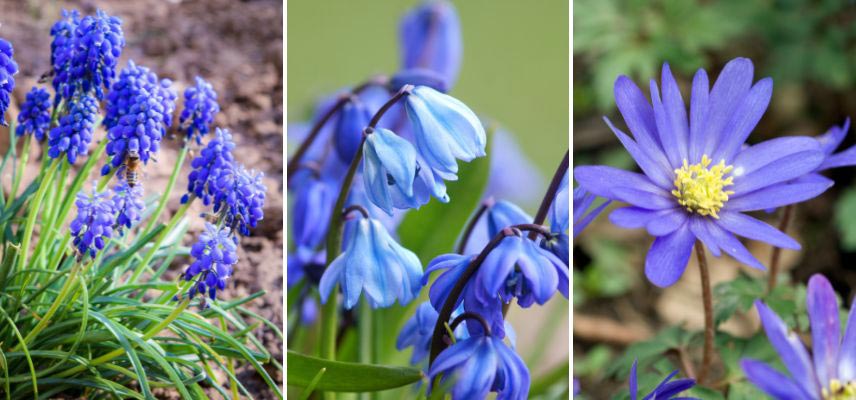 Muscari, Scillas and Spring Anemone[/caption>
Fritillaries
Imposing and graphic, Fritillaries are bulbous plants that inevitably attract attention in the garden. In March, for the earliest varieties and until May, their warm-coloured bells emerge from grassy clumps to herald spring. Whether in non-burning sunlight or partial shade, they can naturalise easily in some cases, forming beautiful floriferous clumps over time in well-drained fertile soil. The bulbs of Fritillaries are susceptible to both drying out and rotting, so they should be planted promptly upon purchase.
→ Plant your Fritillaries carefully, at about three times the height of the bulb, which means 10-20 cm deep, with the pointed end of the bulb facing upwards and spacing small bulbs 10 cm apart, and larger ones 30 cm apart without touching.
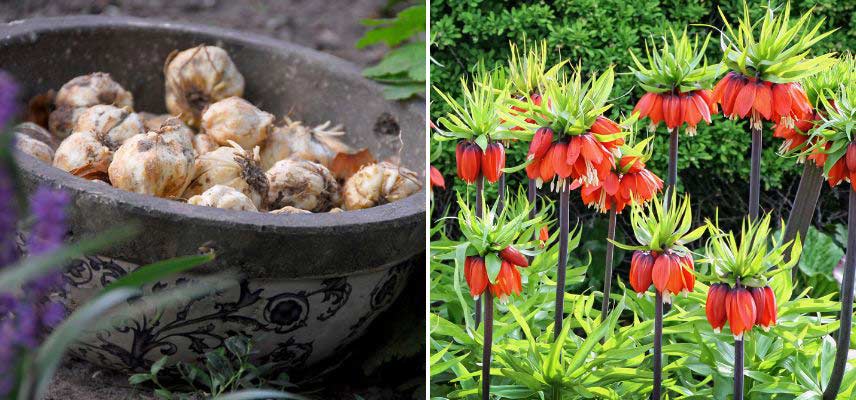
Fritillaries
Tulips
There is no shortage of choice among tulips, and our collection offers over 400 varieties, including early, late, single or double varieties that thrive in the sun. Ideally, plant them in a sheltered spot from the wind, in full sun or at least in a well-lit area, in light, well-draining soil.
→ Plant your tulips between 12 and 15 centimetres deep, keeping in mind that botanical tulips should be planted slightly shallower, always under twice the height of the bulb. Allow about ten centimetres of space between each bulb. As they do not like moisture that can cause them to rot, if your soil is heavy, place a layer of gravel or coarse sand in the planting holes to improve drainage. You may also add compost if your soil is a bit poor.
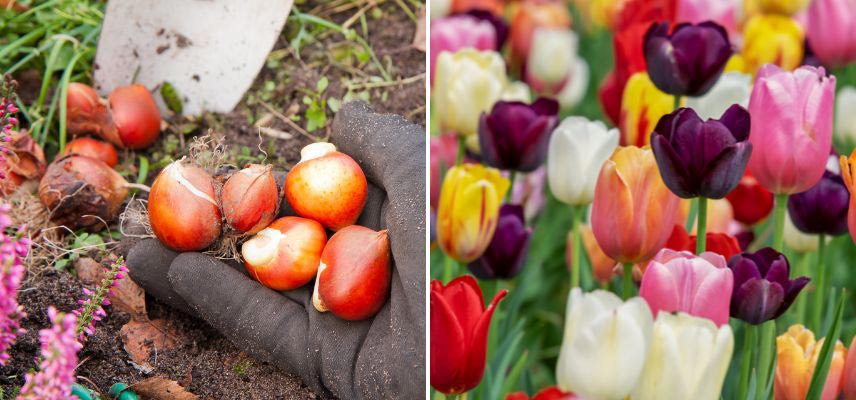
Tulips
Hyacinths
Hyacinths are truly popular due to their many qualities: early flowering, fragrance, variety of colours, and versatility of use: forcing indoors for Christmas blooms, in pots, in rock gardens, or as borders. In the garden, plant them in October-November in deep, fertile, slightly acidic, neutral, or slightly calcareous soil.
→ Plant Hyacinths in full sun or light partial shade, 8 cm deep, spaced 10 to 15 cm apart. In damp soil, add sand or gravel at planting to improve drainage, which will prevent bulb rot.
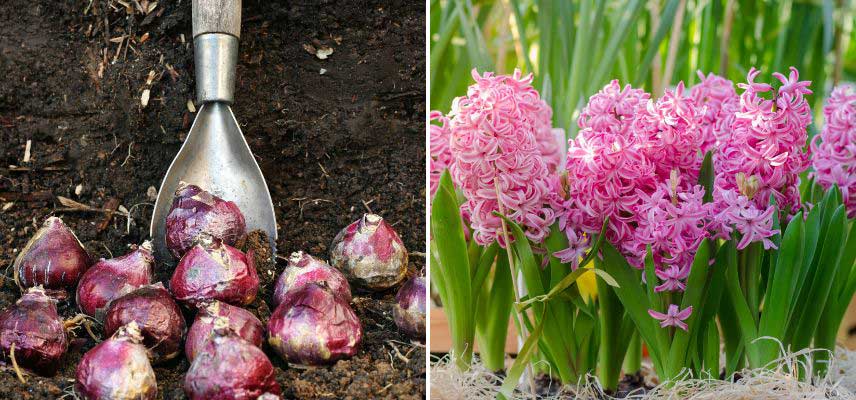
Hyacinths
Alliums
The Allium or Ornamental Garlic includes many varieties cultivated for the beauty of their globular flowers perched atop tall stems. In shades of lilac, mauve, and purple, they are stunning in borders where they return for many years, and their very long flowering period spans from April to July depending on the varieties. Their height ranges from 20 cm to 1.5 m, and their flowers can have a diameter of between 5 and 40 cm! Mediterranean bulbs, they should be grown in full sun, in well-drained, rather dry soil.
→ Plant Alliums 10 to 15 cm deep, spaced 15 cm apart, preferably before the end of October to allow them to settle in properly. They are sensitive to winter moisture, so provide them with a sunny spot in well-drained, even stony soil.
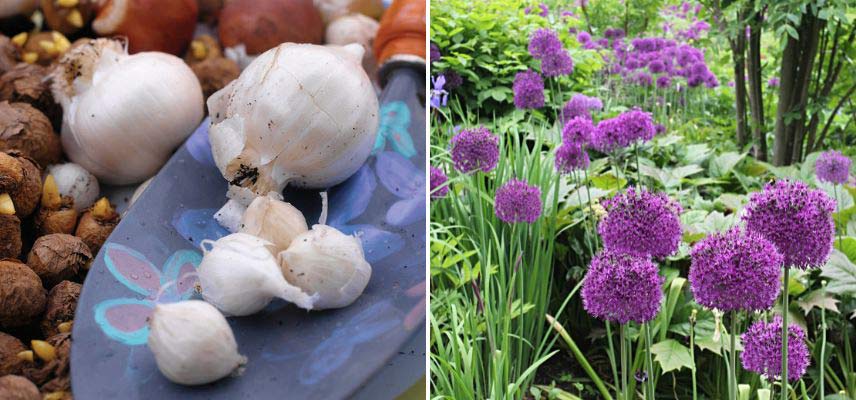
Alliums

- Subscribe!
- Contents
Comments