





























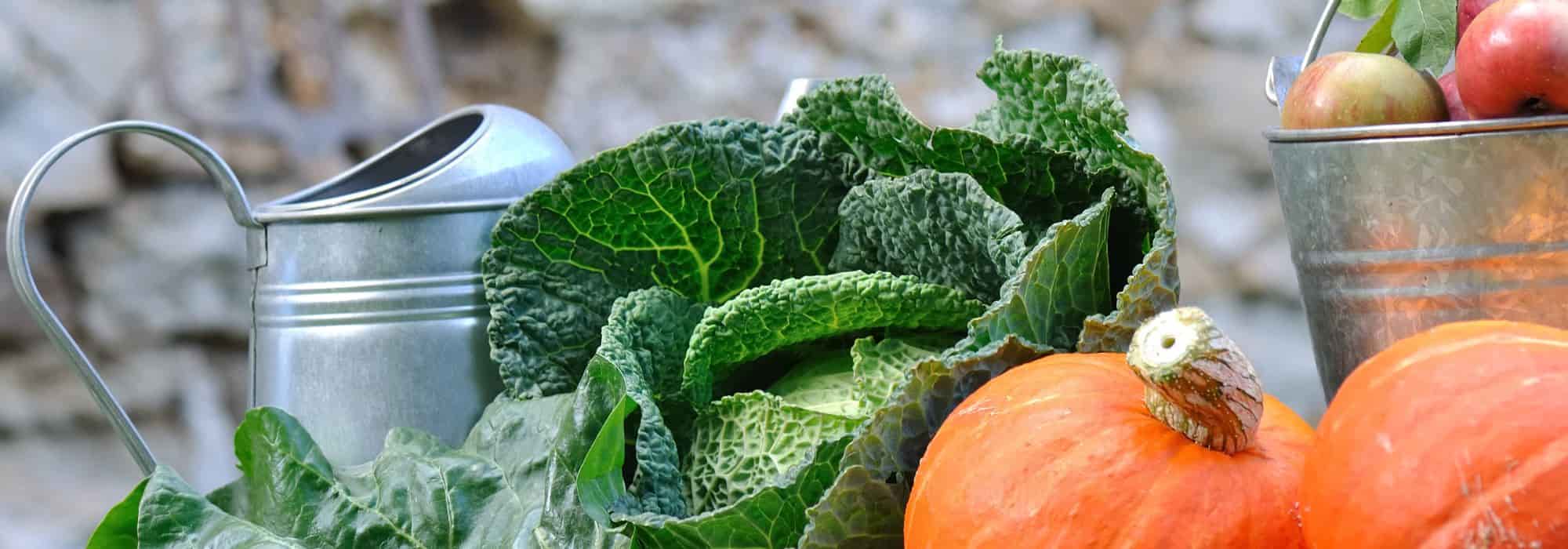
Preparing your vegetable garden for winter
What tasks should be done in the vegetable garden to prepare for winter and get ready for spring?
Contents
It’s undeniable, summer is behind us. Days are shorter, temperatures are cooling, and rainfall is increasing… Nature is adorned with vibrant colours, and fallen leaves blanket the lawn. As for you, the gardener, you may be inclined to seek the comforting warmth of indoors. However, it is not yet time to abandon your vegetable garden. On the contrary, autumn is a transitional season for gardening. This is indeed the perfect time to tend to the vegetable garden that has provided you with a bounty of beautiful vegetables throughout the lovely season. A garden that will soon enter a period of relative winter rest, which is very important. A period that can be utilised to prepare for future sowings, plantings, and harvests in an optimal way.
Discover the small and large tasks to undertake in the vegetable garden to prepare it well for winter and the next growing season.

Harvest the last vegetables and tend to those that remain
Following the region where you live and depending on the current climatic conditions, your vegetable garden may still house a few vegetables to harvest. Among the summer vegetables, grown in open ground or under glass, there are likely still some tomatoes left. Don’t hesitate to pick them, even if they are barely coloured or still green. Indeed, wrapped in newspaper and placed in a relatively warm spot, such as a conservatory, tomatoes will continue to ripen. As for green tomatoes, they can be turned into a delicious jam, for which Ingrid shares the recipe. Also, check out Virginie T.’s tips on what to do with green tomatoes?
Autumn is also the ideal season to harvest root vegetables (carrots, beetroots, turnips, parsnips…) which can be stored in clamps or silos and consumed throughout the winter. Likewise, don’t hesitate to harvest garlic, shallots, and onions. I explain the different ways to stock up on vegetables for winter, how to harvest them, and how to store them.
Finally, when it comes to autumn harvesting, there are the essential squashes, pumpkins, potimarrons, and the like. They should be harvested before the first frosts, adorned with their lovely colours, firm and heavy. Generally, the peduncle is well lignified. Be sure to harvest your cucurbits with the peduncle intact. For further reading, also check out: Harvesting and storing squashes.
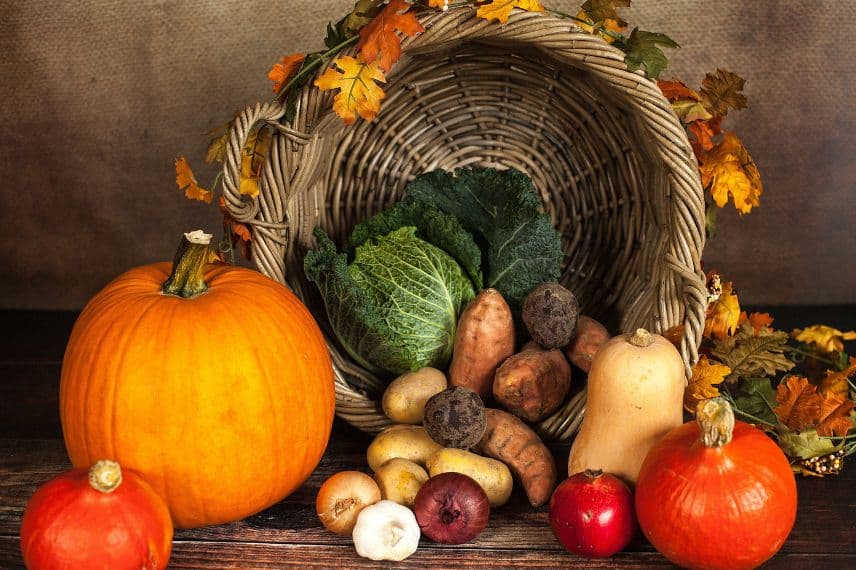
Before winter, there are still vegetables to harvest in the garden
Other vegetables and small fruits remain in the ground all winter thanks to their hardiness. However, in some regions, it is essential to protect them, not only to help them withstand frosts but also to facilitate harvesting. For instance, leeks that overwinter in the ground can first be earthed up and then protected from the cold with a thick mulch of straw or fallen leaves. Carrots, beetroots, parsnips, and Jerusalem artichokes left in the ground can also receive the same winter protection. Don’t forget to protect artichokes. This mulching will also help preserve soil life.
It is also possible to set up a winter cover or a mini-tunnel to shelter tender vegetables.
Read also
Protecting the artichoke from the coldRemove the remnants of cultivation
Now that the last vegetables have been harvested, it’s time to clear the vegetable garden! Indeed, there are still all the crop residues from the various vegetables grown throughout the summer. We can only advise you to keep these residues rather than take them to the tip. On one hand, you save fuel, and on the other, these residues can be very useful for your vegetable garden. Except perhaps those affected by diseases like downy mildew. In this matter, the decision is yours, but remember that it is mainly the climatic or cultural conditions that promote the appearance of certain diseases such as downy mildew, powdery mildew, alternaria, or even blossom end rot in tomatoes.
You have several options for utilising these plant residues:
- Leave them on the soil of the vegetable garden where they will decompose over the winter
- Incorporate them into the compost
- Use them as winter mulch, mixed with other organic and carbon-rich mulches.
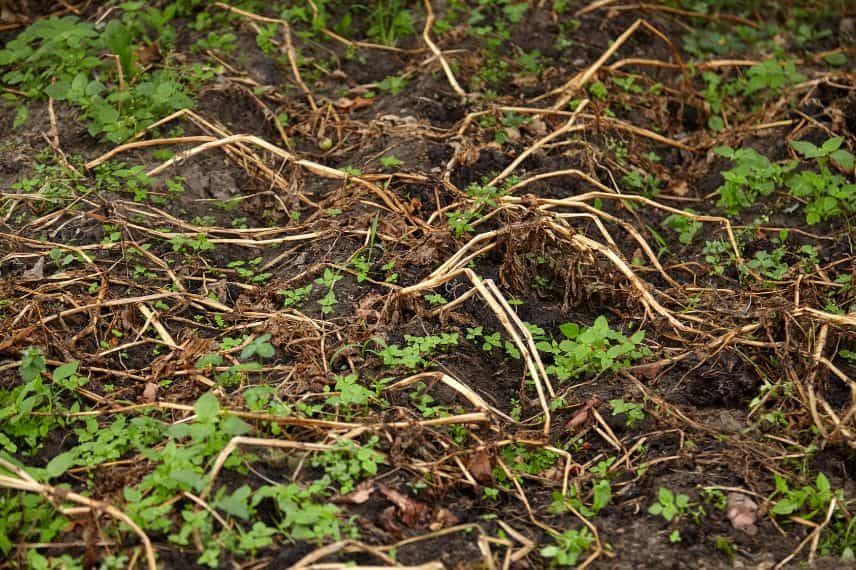
Crop residues can be collected, left on the ground, or composted
Pascale’s tip: however, I usually do not pull out legume plants that are no longer producing (beans, peas, broad beans…). I prefer to cut them down to the ground, leaving the roots in the soil. As a reminder, the root system of these Fabaceae (formerly legumes), which carries nodosities, has the ability to absorb atmospheric nitrogen and return it to the soil. So, I leave it to decompose in the earth.
To learn more:
Weed and then dig the soil
We are reaching one of the most important stages in preparing the vegetable garden for winter. Indeed, once the vegetable garden has been cleared of the last harvests and crop debris, it is essential to aerate and restructure the soil. It is true that various crops, as well as foot traffic or the runoff from watering, may have compacted the soil.
Therefore, autumn is the ideal time to tend to the soil. To start, carry out good weeding to eliminate the most stubborn weeds. Next comes the soil work, which depends on the nature of your soil, as well as the gardener’s practices, whether traditional or more inspired by permaculture. Indeed, some are keen on good digging, while others prefer not to work the soil, and some use a grelinette® to loosen it. In summary, it can be advised to dig heavy and very clayey soils, as digging has the advantage of breaking up clumps and softening the soil. In your wake, feel free to let your chickens loose, as they will feast on grubs or white worms, even if they enjoy a few earthworms along the way. Lighter soils, such as sandy ones, should not be worked too much for fear of breaking the soil structure and harming the microorganisms present.
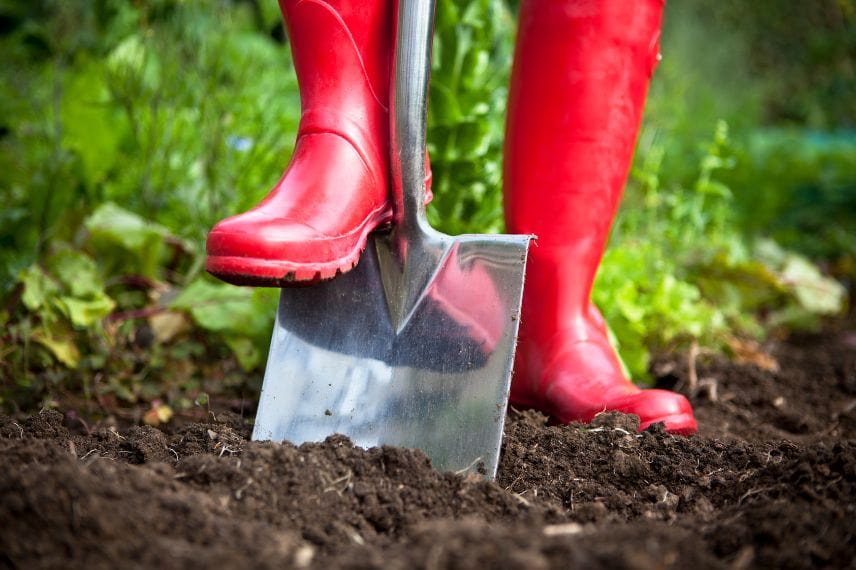 To dig or not to dig, that is the question facing the gardener in autumn!
The compromise between the two methods lies in loosening the soil with a grelinette® or biofork, which allows for aeration of the top 20 to 25 cm without disturbing the microfauna.
More details on this gardening tool: What is a biofork used for? To care for soil life.
Read also
What mulch for the vegetable garden?Amend and fertilise the soil
Once you have properly worked the soil, it’s time for amendment. Organic amendments will not only improve the structure of the soil but also nourish the microfauna through their decomposition and enrich the soil with their wealth of nutrients (nitrogen, phosphorus, and potassium). It is more important to nourish the soil than the young plants!
In autumn, it is therefore recommended to make a good application of compost that is not yet fully decomposed or fresh manure. These organic amendments will decompose throughout the winter thanks to the weather and stimulate soil life. Simply spread them on the soil without burying them; rain, snow, and frost will do the rest of the work. In spring, you will just need to incorporate the remaining amendments with a grelinette® and a rake.
In autumn, all types of manure can be spread. The choice mainly depends on the nature of your soil. At this time, you can also use chicken litter. Very rich in nitrogen, it will have plenty of time to decompose throughout the winter. However, it should not be spread in spring, as it may burn the plants.
To learn more:
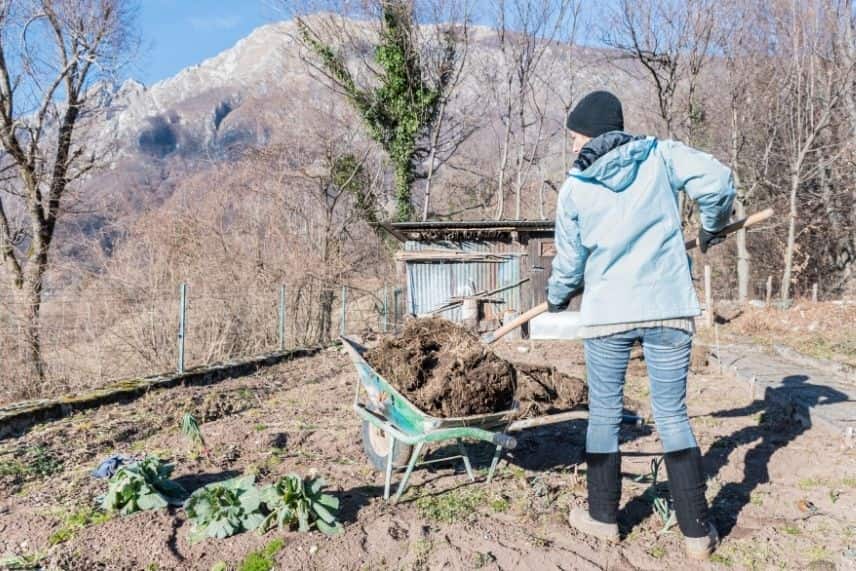
Fresh manure is spread in autumn, composted or well-decomposed manure in spring
Do not leave the soil naked
Autumn is the perfect season for a walk in the forest. What do you see? A soil covered with dead leaves, dark and rich in humus. Simply put, in nature, soil is never left bare, always covered with dead leaves or vegetation that decomposes naturally.
In the vegetable garden, we will try to apply the same rule. Indeed, if you leave the soil in your vegetable garden bare during winter, you run the risk of it compacting and eroding due to the weather. On bare soil, water runs off and forms a crust that prevents water from infiltrating.
Therefore, the soil in your vegetable garden must be abundantly mulched during winter. This mulching will, of course, limit soil erosion and thereby increase its porosity. Furthermore, mulching allows the soil to gain a few degrees as it forms a barrier against the cold. Similarly, this mulch will decompose under the influence of the weather and thanks to the activity of microfauna (worms, insects, fungi, bacteria…), which, although less active, are not completely dormant. As it decomposes, this mulch will form rich humus, very useful for the growth of future vegetables. In parallel, the action of this microfauna improves the structure of the soil.
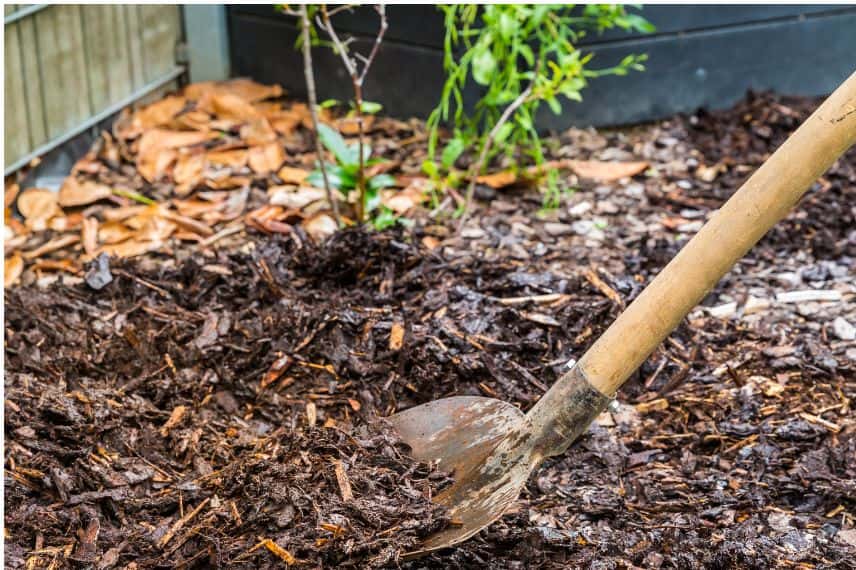
Mulching is essential in winter for the vegetable garden to avoid leaving the soil bare
To mulch the soil of the vegetable garden during winter, several options are available to you:
- Dead leaves collected from the lawn and, if necessary, shredded with a lawn mower
- Straw or hay
- Dry grass clippings
- Chipped material from pruning shrubs and trees or RCW (ramial chipped wood).
To avoid leaving the soil bare, on certain plots of the vegetable garden, it is possible to sow green manures such as winter vetch, mustard, fava bean, phacelia in association with buckwheat or rye.
Clean your tools and drain the watering systems
Autumn is also the ideal season to take care of your gardening tools that will be stored away during winter. Once all the work is completed, carefully remove the soil stuck to your tools and then clean them with soapy water. It is also advisable to disinfect them with methylated spirits before storing them in a dry, well-ventilated place.
In the vegetable garden, in case of frost, irrigation systems can be damaged if they have not been drained. Therefore, it is essential to drain the pipes and other systems, leave the taps open, and turn off the water supply if it is independent. Small water collection tanks can be emptied in regions with harsh climates.
For further reading: Clean, maintain and protect your gardening tools.
Plan and prepare for the next season
Preparing your vegetable garden for winter is complete, and you can look forward to some warm rest. Take advantage of this downtime to anticipate spring:
- Take stock of your seeds and place your order for vegetable seeds.
- Organise your vegetable garden on paper to plan your crops temporally and spatially, considering crop rotation and companion planting.
- Plan for early sowings and winter plantings that begin in January and take inventory of your sowing equipment.
For further reading:
- Vegetable garden: crop rotation in autumn
- Companion planting in the vegetable garden
- Planning your vegetable garden: rotations and associations in 5 steps
- Subscribe!
- Contents

Comments