






























Plants not to be planted in autumn
Spring plantings to prioritise
Contents
Creating and shaping a garden requires going through the planting stage. If autumn, along with spring, is one of the two most favourable times for this operation, you may be wondering whether one is better than the other. As you’ll see in this article, planting in spring can be more prudent in certain cases. Depending on your region, the weather, your soil or the plants you have chosen, a spring installation is sometimes a better option to ensure a good establishment of your plants. So I invite you to take a quick tour together of the plants to be planted in spring, explaining why this period is sometimes preferable.

Planting in autumn or spring?
Autumn and spring are the two most favourable periods for planting.
- Autumn offers soil well warmed by the preceding months and seasonal rains which generally prevent having to water too much. Nature also prepares to go into dormancy, and weeds are therefore less present as well, effectively reducing weeding. Plants spend the following months developing their root system, but shoot little or not at all, waiting for the warmer days to restart.
- In spring, the rigours of winter are broadly behind us, the soil warms gradually and it’s a season that can be damp. Plants develop their vegetation with vigour but on a root system still limited, which can create an imbalance in case of insufficient rainfall. A watering schedule may therefore prove indispensable, not to mention the unwanted herbs to pull up to avoid competition. For plants most sensitive to cold, these few months of warm weather, however, allow them to harden to face the coming winter.
In any case, Take care when planting (the plant’s needs in terms of exposure and soil, soil preparation, mulching…) and act outside frost periods!
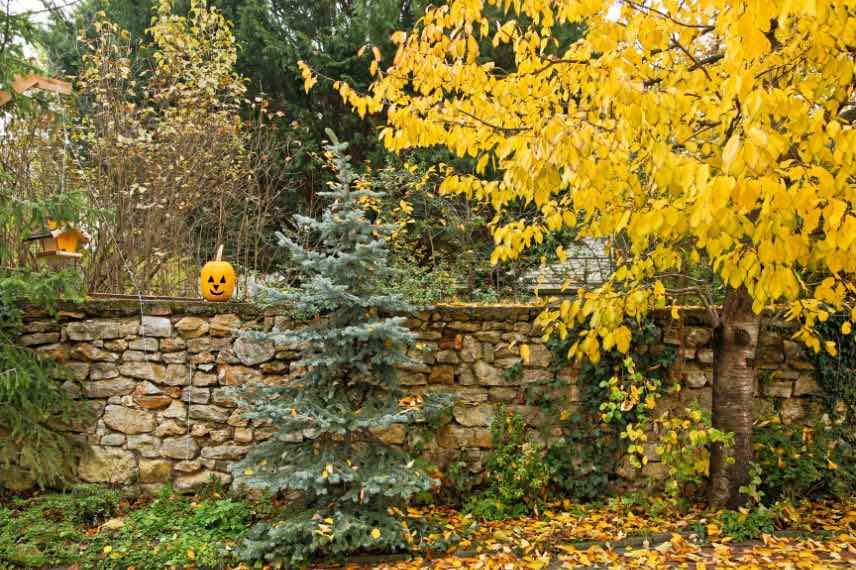
If autumn is an ideal planting period, this does not apply to all plants
Read also
Planting in autumn: is it the best time?Annuals
Generally, herbaceous plants are classed into three categories:
The perennials, whose development and life cycle span several years and which return regularly to the same spot. Their foliage may die back in winter but they are simply in dormancy and wait for spring to produce fresh foliage, flowers or fruit.
The biennials, as their name suggests, develop over two years. In the first year, the plant only produces foliage and blooms the following year.
The annuals are by definition plants whose life cycle is tied to a year. It is then advisable to sow these in spring, as they need warmth and moisture to germinate and develop properly. Only some so-called ‘hardy’ annuals can be sown in autumn because they are able to withstand a few cold spells. This also allows earlier flowering than sowing in spring. Among them, for example sweet peas, California poppy or Love-in-a-mist can be cited. Note however, some still need to be sown under cover or to face only short and not very lasting frosts. Remember to check the recommended sowing dates depending on the flowers you want to brighten your garden.
In doubt, and for most annual flowers, sow in spring as a preference. Some must be sown in seed trays, then pricked out into pots and acclimatised gradually before they can join your borders. Others, on the other hand, can be sown directly in place, where you want them to flower. Keep in mind that late frosts can wipe out your efforts and don’t be too eager to sow too early at the start of the season. The annuals in plug plants or in pots are a somewhat more expensive but interesting alternative for gardeners who do not wish to or cannot carry out sowing. To help you make your choice, read Marion’s article, which presents all the advantages and disadvantages of annuals from seed, plug plants or pots.
- Some annuals to sow from the end of winter to spring: Cup-and-saucer vine, Nasturtium, Ipomoea, California poppy, Love-in-a-mist, Ageratum, Cosmos, Petunia, Tagetes, Cup-and-saucer vine, Sage, Amaranth, Cleome, Lavatera tree-mallow, Lobelia, ornamental tobacco, Sunflower, Phlox, Zinnia…
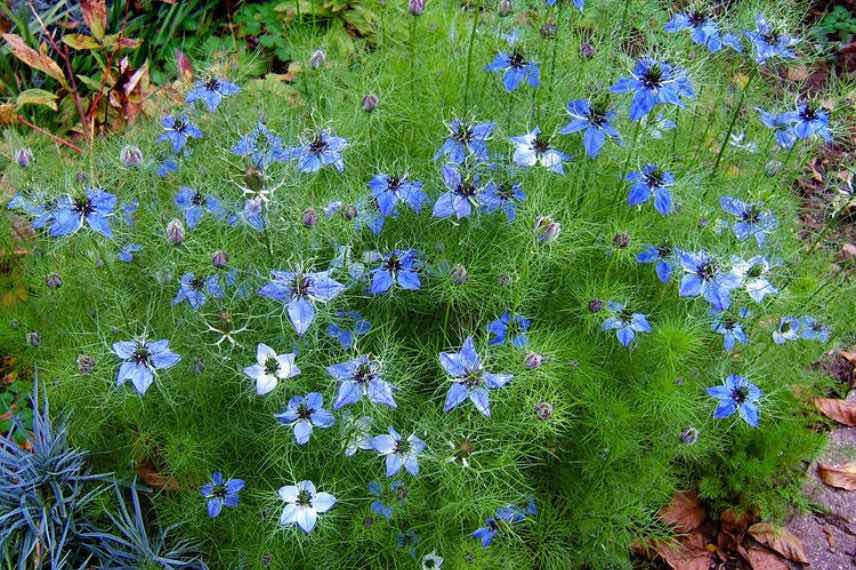
Annual plants, such as nigella, are planted in spring
Summer-flowering and autumn-flowering bulbs
Like annuals, the summer-flowering bulbs allow you to bring a lot of colour to a flower bed. Moreover, they are very easy to grow since all you need to do is bury them where you want them to bloom, following the depth indicated on the packet. They are often regarded as bulbs of other storage organs with fairly close properties: corms (for Crocus, for example), tubers (as with dahlias among others) or rhizomes (one might think of wood anemones).
There can also be some confusion among beginner gardeners when we talk about spring bulbs. These are bulbs whose flowering is in spring but which are planted in autumn (crocuses, tulips, and daffodils are among the most popular). For summer- and autumn-flowering bulbs, spring planting after the last frosts is wiser. Spring planting gives them time to develop well (including root growth) to bloom abundantly in season and face the following winter more calmly. Moreover, these bulbs reach the end of their growth cycle in autumn, a period not conducive to a good establishment. Some bulbs, however, are planted differently depending on the species: most lilies, for example, should be planted in autumn, but Asian species benefit from being installed in spring. Note that some bulbs must be dug up in late autumn and stored frost-free over winter to be planted again in the following spring.
- Some late-flowering bulbs (summer and autumn) : Gladioli, Crocosmias, Arums, Asiatic lilies, Cannas, Freesias, Eucomis, Trillium, Colchicums, Sternbergias, Dahlias…
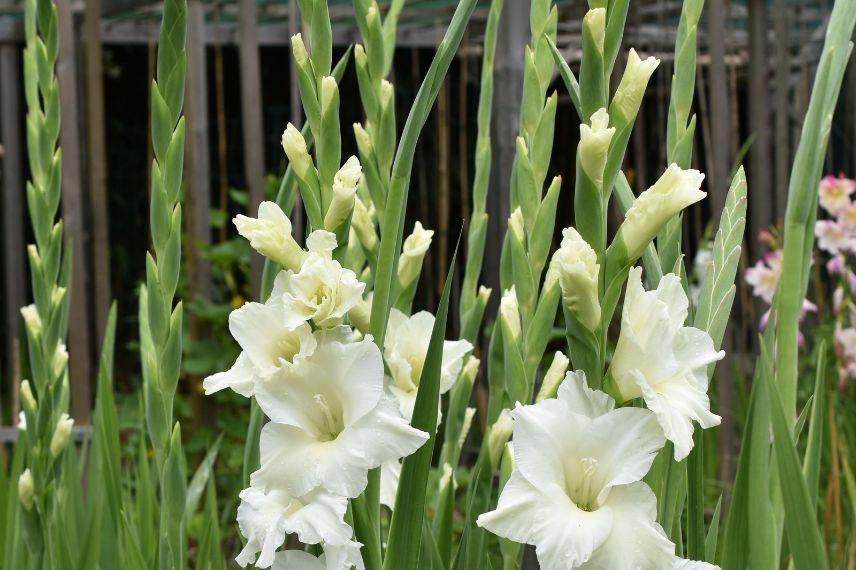
Summer- and autumn-flowering bulbs are planted in spring
Read also
What to plant in autumn?Tender plants
Not all plants offer the same hardiness, that is, the ability to withstand winter cold. Some can endure down to -30°C without flinching, others perish at -5°C and some even disappear as soon as the thermometer touches 0°C. Frozen soil also blocks access to water for the roots and a plant can easily die of thirst in mid-winter. Moreover, a heavy, clayey, cold soil saturated with water suffocates the roots which eventually rot, thereby killing the plant. Spring planting thus helps to spare them, at least in the first year, while they establish themselves to a minimum. This does not absolve the gardener from having to intervene (improving drainage, mulching, protective fleece, frost-free overwintering…) if the plant is not genetically equipped to withstand the temperatures of our gardens.
According to your region, you may therefore attempt autumn planting, as with many other plants, but do not hesitate to wait until spring for the more fragile. Of course, this does not apply to bare-root plants, therefore in vegetative dormancy, which are generally available only from November. Plants native to regions with exotic, tropical and even Mediterranean climates for some, logically belong to those that require vigilance, all the more so if you live in a region with cold winters and heavy soil. Furthermore, the planting period can influence flowering time. Planted in autumn, a perennial generally flowers earlier than if you install it in spring.
Among plants to be planted preferably in spring:
- Some trees and shrubs : Mimosa, Albizia, Eucalyptus, Palms, Olive trees, Citrus trees, Anisodontea, Banksia, Callistemon, Ceanothus (evergreen ones are more frost-prone), Cordyline, Cycad, Diosma, Grevillea, Oleander, Pittosporum…
- Some climbers : Bougainvillea, Hardenbergia, Passiflora, Jasmine, Chocolate vine…
- Some perennials : Aeonium, Evergreen Agapanthus, Agave, Aloe, Canna, Colocasia, Crassula, Cyperus, Dietes, Echeveria, Echium fastuosum, Elegia capensis, Euryops, Farfugium, Madeira geranium, Hedychium, Lavender Papillon, Phormium, several Salvias, Crinum lilies, Strelitzia, Tulbaghia.
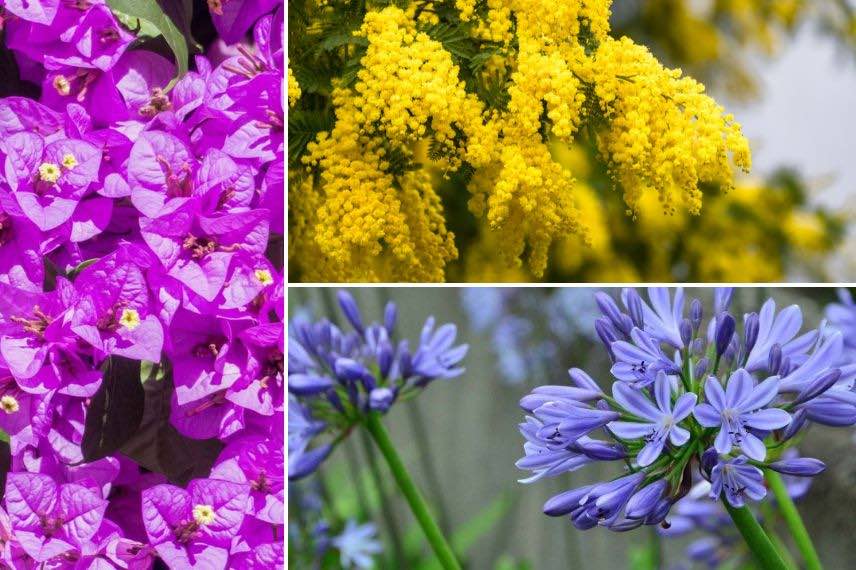
Most shrubs, perennials and trees are ideally planted in autumn, with the exception of those that fear frost, such as Bougainvillea, Mimosa or evergreen Agapanthus, for example.
Warm-climate grasses
The grasses have no equal for adding lightness and movement to herbaceous borders. Evergreens, they play their role all year round. Marcescent, they remain very decorative throughout the winter, especially when their chamois-toned silhouette is frosted. Some grasses are native to warm climates and even if they can be hardy, they benefit from being planted in spring. During this season, rising temperatures and ambient humidity favour optimal growth. Once again, your climate may require you to wait for this period to give yourself the best possible chance. Don’t worry if the plants you buy look dead, for only the above-ground part has dried up or disappeared, but the roots will ensure a recovery for the coming season.
- Some grasses from warm climates : Andropogon, Arundo, Chasmanthium, Miscanthus, Muhlenbergia, Panicum, Pennisetum (some species are even frost-hardy), Phragmites, Saccharum, Schyzachyrium and Sporolobus
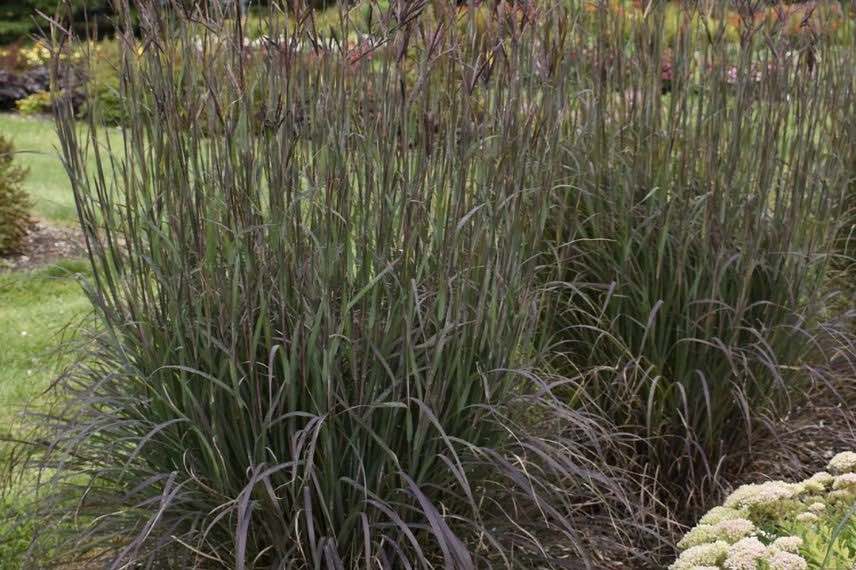
Andropogon is part of warm-climate grasses
Aquatic plants
A water feature, whatever its size (from a large pond to a simple barrel) adds a touch of charm to a garden or terrace. Its mere presence provides a refreshing effect, visually as well as through the tangible cooling from evaporation. A pond also offers the opportunity to attract wildlife, enriching biodiversity. Aquatic, floating and oxygenating plants then help create an eye-catching display and foster a balance conducive to clear, clean water. If some plants of this type can overwinter in or under water (sometimes disappearing from the surface), the best time to plant remains spring, from April, when water temperature is at least 12°C. Your perennials are then in the vegetation growth phase and benefit from the best warmth and sunlight conditions to grow quickly and give you the garden of your dreams.
- Some aquatic plants : Water aloes, Flowering rush, Elodea, Myriophyllum, Thalia, water hyssop, water hyacinth, water lilies.
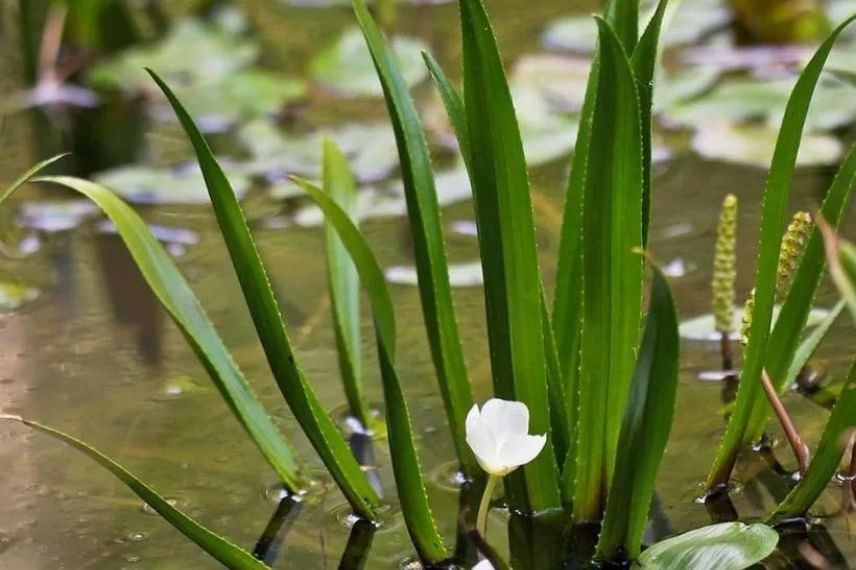
Wait until water temperature is at least 12°C before planting aquatic plants
- Subscribe!
- Contents

Comments