





























Permaculture: how to create a plant guild
For more abundance, resilience, and biodiversity
Contents
Permaculture is experiencing a genuine surge in popularity, and that’s a good thing. It aims to draw inspiration from nature to meet our needs without degrading the planet. Since it involves mimicking what nature does, it’s worth noting that plants never grow in isolation, and monoculture does not exist in natural environments. Plants interact with one another and provide mutual benefits.
In permaculture, we talk about plant guilds, or companion planting. Plants are selected and planted with the aim of achieving diverse harvests that require very little work from the gardener… wonderful, isn’t it? However, creating plant guilds is not something to be improvised, as it is essential to find complementary plants. Discover some explanations about these plant guilds and all our tips for creating the right plant associations.
What is a plant guild?
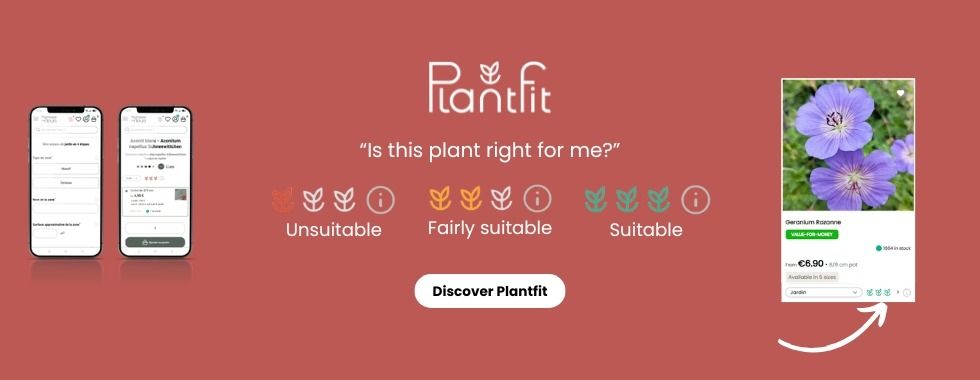
Created in the Middle Ages, guilds were mutual aid associations among merchants, craftsmen, or bourgeois; their cooperation allowed them to work towards a common goal. In permaculture, the focus is on recreating ecosystems that enable plants to thrive in harmony within a diverse environment, and guilds are associations of beneficial plants. All components of the created ecosystem fulfil one or more functions that support and complement each other. This leads to a harmonious grouping, a stable coexistence where the gardener is nourished, and where the garden is mulched, the soil fertilised, pests controlled, pollinators attracted, and nutrients accumulated.
In this ideally self-sufficient polyculture system, trees, bushes, plants, insects, and small wildlife “work” together to ensure productivity, health, and sustainability for all.
→ Note that the botanical discipline studying plant communities and their relationship with the environment is called phytosociology.
What is it for?
- Planting guilds or plant associations helps achieve balance in the garden. Each plant contributes something to the others and to the whole for greater fertility.
- We create a nourishing garden, a forest garden, a vegetable patch, or plant a fruit hedge based on plant guilds to feed ourselves, but we also share this space with other forms of life, such as birds, insects, and certain mammals, all of which are beneficial.
- By planting vegetation in combinations based on what they can offer each other, we also reduce the maintenance of the planted space. At the time of planting, this ecosystem is immature, so it will require interventions such as watering, weeding, pruning, or mulching, but eventually the plants and their entire community will become self-sufficient.
- In case of issues (climatic, pest attacks, diseases…), the resilience of the system will come into play, and the garden will be better equipped to defend itself or recover from these aggressions.
- Moreover, in addition to avoiding carbon emissions related to the transport of what we grow and consume on-site, plants capture CO2 as they grow and also help combat climate change.
Discover other Vegetable gardens
View all →
Available in 1 sizes
Available in 1 sizes
Available in 1 sizes
Available in 1 sizes

Available in 1 sizes
Available in 1 sizes
Available in 1 sizes
Available in 1 sizes
Available in 1 sizes
Key points for successfully running a guild
Understanding the Particularities of Your Garden and Soil
First, take the time to understand your garden, its soil, and its exposure, as well as the prevailing winds it is subjected to. Even if you have a small area, it is still possible to create such guilds by favouring species with a small growth habit and self-fertile plants that only require one plant to produce a harvest.
You should choose plants that have the same water and soil requirements, as well as root systems that are either deep or spreading, so they do not compete with each other.
Defining Your Needs and the Type of Plant Guild
Next, think about your desires and needs: do you want to create vegetable guilds, a fruit hedge, or an edible forest? Define what you wish to harvest (vegetables, fruits, berries…) and how much you intend to consume.
Creating Different Strata
In permaculture, the space where plant guilds are established mimics the functioning of natural ecosystems. In forest gardens or edible forests, for instance, plants are organised into different layers where everything is edible or has a use for the plant community:
- the tree layer, composed of standard trees
- the bush layer, containing the largest bushes
- the shrub layer, which includes smaller bushes
- the herbaceous layer, which consists of groundcover plants
Read also
Permaculture: the technique of swalesThe different components of a plant guild
Plant associations are generally organised around a main plant that is taller than the others, and is accompanied by other plants within what is called a plant community.
To make these associations effective, you should group plants that fulfil as many of the following functions as possible:
Nourishing plants
When creating a guild, the idea is to think about maximising health and nutrition benefits. To consume a wide variety of foods, you need to plant a wide diversity of nourishing plants. This means including fruits, vegetables, legumes, herbs, berries, and nuts. Other needs can be met with medicinal plants, building materials, useful fibres, etc.
Fertilising plants
All plants need nutrients to grow, and nitrogen is one of the main nutrients that plants use for their growth. An easy way to introduce nitrogen into the soil is to plant nitrogen-fixing plants. What makes them specific and useful to the gardener is the presence of nodules on their root system, which are outgrowths that work in symbiosis with bacteria and have the ability to metabolise atmospheric nitrogen; the plant provides carbon to the bacteria, and the bacteria provide nitrogen to the plant. Nitrogen that the roots can fix, use, but also return to the soil. The leaves and other organic matter from these plants can also be used as mulch or added to compost to increase its nitrogen content.
Among nitrogen-fixers are legumes or fabaceae such as beans, peas, peanuts, the liquorice, and green manures such as clovers, alfalfa, blue and yellow false indigo, and lupins. At the end of their life cycle, they are mown and left to decompose in place so that the organic nitrogen produced mineralises and returns to the soil.You can also plant nitrogen-fixing trees such as the black locust (Robinia pseudoacacia), the black alder (Alnus glutinosa), the Chinese mahogany (Toona sinensis), the Virginia persimmon (Diospyros virginiana) and the beech (Fagus sylvatica). Among shrubs, there are false indigo (Amorpha fruticosa), the Siberian pea tree (Caragana arborescens), Eleagnus (E. angustifolia, Bohemian olive, Japanese goumi) and the sea buckthorn (Hippophae rhamnoides male and female).
→ Discover in our article how to improve your vegetable garden soil with legumes
Decompacting plants
Deep-rooted plants, such as trees, penetrate deep into the soil and bring minerals to the surface (like a miner). These deep-rooted trees are excellent diggers, decompacting the soil and allowing air and water to be easily absorbed by the earth. Some “excavator” plants also take the form of tubers or root vegetables: carrots, beetroots, sweet potatoes, cassava, yams, etc. In the garden, diggers can also be insects and animals that burrow into the soil such as: ants, worms, moles, beetles, etc.
Groundcover plants
Groundcovers protect the soil from the sun’s harshness, help retain moisture, and prevent the growth of “weeds”. There are many types of edible groundcovers such as squashes, cucumbers, sweet potatoes, strawberries… and anything that will grow on the soil. Mulch is also a form of groundcover and can be made from a wide variety of organic materials such as grass clippings, leaves, wood chips…
Climbing plants
Climbing plants allow for maximising food production by using vertical space and are particularly useful when ground space is limited. Think of climbing beans, cucumbers, the Luffa Cylindrica or sponge gourd, and fruit-bearing climbers like grapevines, kiwis, passion fruits… etc.
Aerial structuring plants and supports
For shading and wind protection. These vertical and sturdy elements also serve as natural supports that support climbing plants and make the best use of available space. Supports can be trees, upright bushes, or stalks of corn or sunflowers. Just choose the right support for the right climber.
Attractive and protective plants
To protect the guild as a whole from harmful insects, repellent plants are very useful. Tansy, basil, onions, chives, lemongrass, and a host of herbs can help repel insects. Natural predators can also be very helpful in controlling insect problems in a guild. Some melliferous plants and pollinators can attract these predators to protect their neighbours. Also attract beneficial animals and insects to your garden such as birds, amphibians, lizards, ladybugs, praying mantises, and pollinating insects through various types of habitats and plants that are conducive to them. Thorny plants can help protect crops from larger pests (wild boars, etc.).
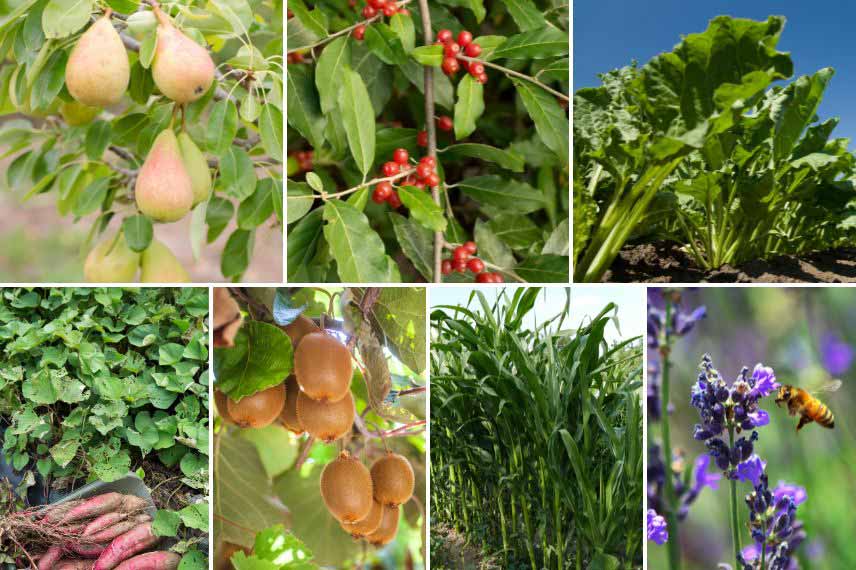 Fruit trees such as pear trees for nourishment, Japanese goumi to help fertilise the soil, root vegetables like beetroots to decompact the soil, sweet potato plants to cover it, kiwis as fruit-bearing climbers to utilise vertical space, corn to serve as natural supports, and lavender to attract pollinating insects and repel harmful insects.
Here are some examples of plant guilds for the vegetable garden:
There are many classic combinations to use, and by being creative and sensible, one can produce groupings that are increasingly complete and fruitful. Finding lists of companion plants online is easy and from there, it’s just a matter of trying to establish logical links, then experimenting. Remember that taller vegetables provide shade for shorter ones, so it’s wise to place them accordingly. Consider adding flowers to the vegetable garden, and also plant herbs such as dill, tansy, or fennel to attract pollinators, as well as predatory insects like ladybirds and lacewings that control pests.
Here are some plant associations to establish in the vegetable garden:
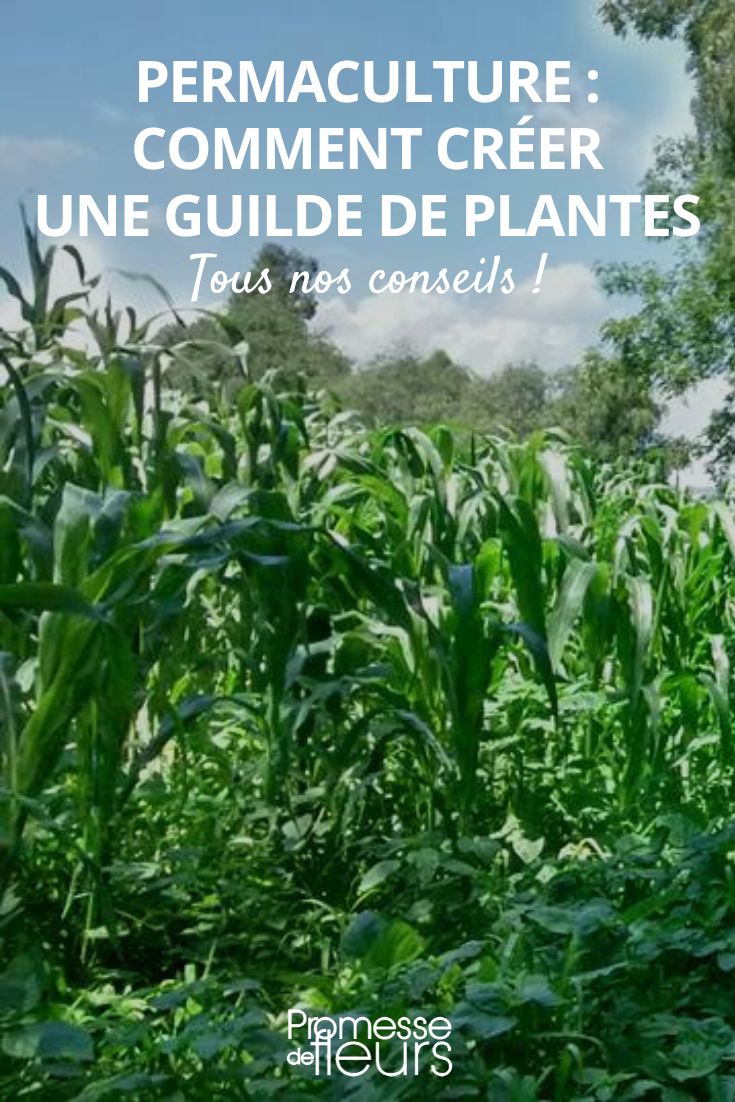
- Sweetcorn, beans, and squashes are the classic example of a well-known guild that works very well. This association is called the “three sisters” or Milpa. It is traditionally used by Indigenous communities in North and Central America. The sweetcorn plants serve as support for the climbing beans, and the beans fix nitrogen that enriches the soil for the next crop. The squashes spread their broad foliage over the ground, creating a mulch that significantly limits weed growth and retains moisture in the soil. From a dietary perspective, the three sisters provide a balanced diet for growers. These three elements work very well together and can be considered a complete guild, but it can be enhanced by planting comfrey, which is a deep-rooted nutrient accumulator, an attractant for pollinators, and an additional mulch. Traditionally, the three sisters are often accompanied by chillies and sweet potatoes.
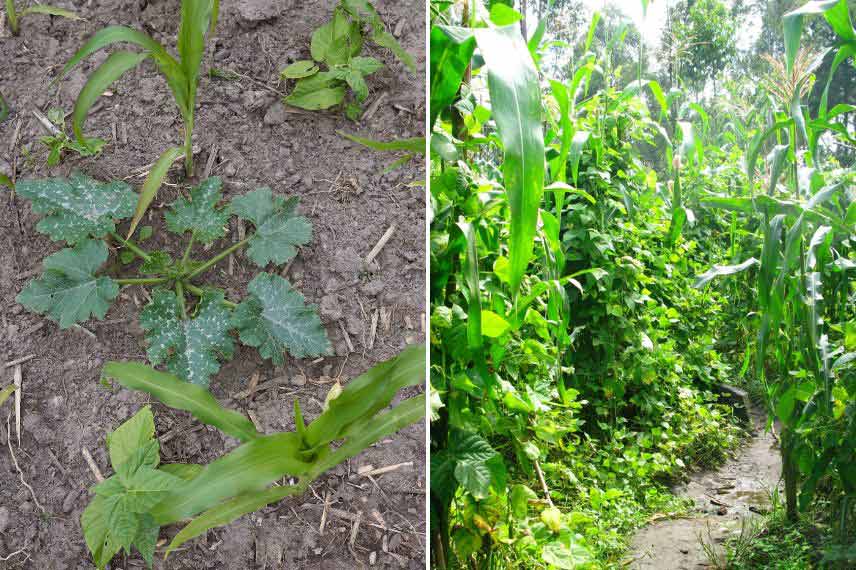
Association of the “three sisters” squashes, sweetcorn, and beans at planting and then at maturity
-
Tomato plants do not necessarily provide much to the plants around them, but they are infinitely valuable in the kitchen. Basil releases an aroma that repels pests and pairs very well with tomatoes on the plate. Clumps of basil fill the space between tomato plants, and you can also addnasturtiums, which are beautiful and prolific groundcover plants with lovely edible flowers. Their seeds can be pickled to make “poor man’s capers”. Additionally, borage is ideal for attracting pollinators, adding nutrients to the soil and repelling tomato worms. Its leaves and flowers are edible, with a slight cucumber taste. It is an annual that self-seeds and can return directly to the soil to enrich it.
- Carrots and onions (which protect against carrot fly) like to grow alongside lettuces or spinach, which provide excellent ground cover, helping to retain some moisture. You can add buckwheat as a green manure, as well as Swiss chard. A Japanese Goumi will provide shade and nitrogen to the soil, but it’s better to prune it if you don’t want it to take all the light and space. Its fruits are edible.
Here are some examples of plant guilds for forest gardens: 1. **Fruit Tree Guild**: - Apple tree - Comfrey - Garlic - Clover 2. **Nut Tree Guild**: - Hazelnut - Blueberries - Chives - Yarrow 3. **Vegetable Guild**: - Tomato - Basil - Marigold - Nasturtium 4. **Herb Guild**: - Rosemary - Thyme - Oregano - Sage 5. **Pollinator Guild**: - Lavender - Bee balm - Echinacea - Sunflower These guilds promote biodiversity and support the health of the garden ecosystem.
-
In sunny spots sheltered from strong winds, subject to some dryness but avoiding heavy, wet soils, plant the guild of the Plum Tree (Prunus domestica), associated with the Rowan Tree (Sorbus aucuparia). As nitrogen fixers, you can plant Broom (Cytisus scoparius) or Bladder Senna (Colutea arborescens). Add Amelanchier alnifolia ‘Saskatoon Berry’ as a berry shrub alongside Lycium barbarum producing the famous Goji berries. Plant Asparagus (Asparagus officinalis) as tuberous herbaceous plants and strawberries as groundcover. You can also add perennial vegetables like Daubenton Kale, perpetual leek, or rhubarb.
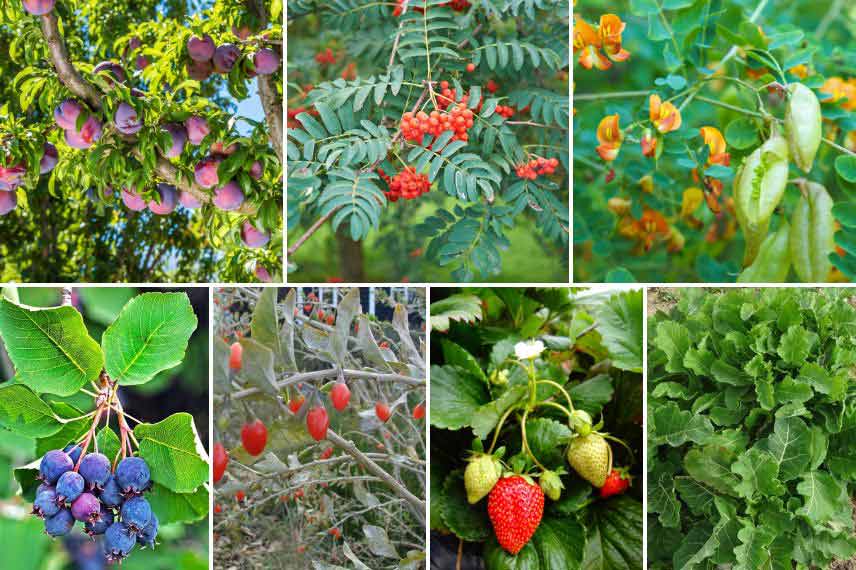
Plum Tree, Sorbus aucuparia, Bladder Senna, Amelanchier ‘Saskatoon Berry’, Goji berries, strawberries, and Daubenton Kale
-
Another guild can include a particularly productive variety of Amelanchier, selected for its medium-sized berries with a sweet flavour, an excellent alternative to blueberries: Amelanchier alnifolia ‘Smoky’. It can be associated with Beech (Fagus sylvatica). At their feet, plant raspberries as companion berry shrubs and Schisandra chinensis or Five-Flavor Berry as an edible climbing plant. Finally, add violets and strawberries as groundcover.
-
Alongside an apple tree, plant as companion trees a service tree (Sorbus aria ‘Lutescens’) and the Rowan Tree ‘Sheerwater Seedling’ which is distinguished by its large decorative scarlet fruits, highly appreciated by birds. Add male dogwood ‘Schönbrunner Gourmet Dirndl’ which produces large red fruits with a sweet flavour, edible raw or prepared as jams, jellies, or juices, as well as a hazel tree. In the lower strata, you can find St. John’s Wort. The honeysuckle and ivy are interesting companion climbing plants. Wild Sorrel (Rumex acetosa) is a perennial forming a tuft of leaves with refreshing properties, consumed in soups or to accompany fish and white meats.
Here are some examples of plant guilds for a fruit hedge: 1. **Berry Guild**: - Blackcurrants - Raspberries - Strawberries - Comfrey (for nutrient accumulation) 2. **Apple Guild**: - Apple trees - Chives (to deter pests) - Nasturtiums (for attracting beneficial insects) - Garlic (for pest control) 3. **Citrus Guild**: - Lemon trees - Marigolds (to repel nematodes) - Basil (for companion planting) - Lavender (to attract pollinators) 4. **Stone Fruit Guild**: - Cherry trees - Borage (to attract pollinators) - Thyme (for ground cover) - Clover (for nitrogen fixation) 5. **Nut Guild**: - Hazelnut trees - Comfrey (for mulch and nutrients) - Yarrow (to attract beneficial insects) - Wildflowers (for biodiversity) These guilds promote biodiversity, enhance growth, and improve pest management in your fruit hedge.
- In a fruit hedge, it is not necessary to install tall trees. In the highest stratum, fruit trees such as apple trees, pear trees, plum trees, fig trees, or peach trees should be prioritised, especially ancient and local varieties. Dwarf varieties are also interesting for creating beautiful edible hedges.
- Between the fruit trees, you can plant berry bushes that will be regularly pruned to the desired height: the bloodtwig dogwood (Cornus sanguinea) is a plant that attracts birds and beneficial insects, but its fruits are not edible. The black elder (Sambucus nigra) attracts birds and hoverflies, which are predators of aphids, and its fruits can be used to make jam. The autumn olive (Elaeagnus umbellata) is a nitrogen-fixing shrub, and its edible fruits are rich in vitamins and antioxidants. Other shrubs are also possible: hazel, medlar, serviceberry, or even feijoa.
- Between the bushes, you can install small fruit shrubs and at the base of these bushes, aromatic plants (rosemary, thyme, sorrel, lemon balm…)
- Finally, by installing posts at regular intervals with taut wires, you can plant an edible liana approximately every 5 metres, such as kiwi, grapevine, thornless blackberry…
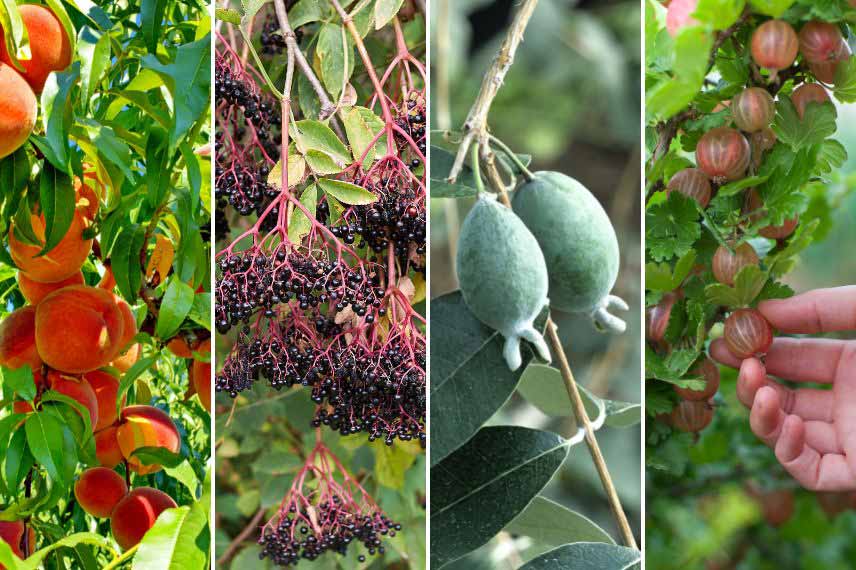
Peach, black elder, feijoa, and currant
For further reading...
→ Discover how to create a forest garden
→ Follow all our tips to create a forest garden without breaking the bank using bare roots

- Subscribe!
- Contents
Comments