





























Ornamental vegetables: beauty and flavour in the kitchen garden
These beautiful vegetables can be planted in the vegetable garden or even in flower beds or borders
Contents
Most of the time, in a productive and subsistence vegetable garden, the gardener chooses their vegetables based on criteria such as yield, cold resistance, or disease resistance, and growth speed, rather than aesthetic considerations. However, a vegetable garden, beyond being nourishing, can also be beautiful. It is indeed common to plant flowers that add a decorative touch while repelling harmful insects. What if you considered your vegetable garden differently? Why can’t a vegetable garden be as ornamental as a flower bed or border in your ornamental garden? By planting vegetables chosen for their aesthetics in addition to their productivity, the vegetable garden takes on a whole new look as you introduce unique foliage in terms of shape, colour, and texture… Not to mention the fruiting vegetables with varied hues and shapes. Furthermore, these unusual vegetables can also migrate to the flower beds and borders.
Discover our selection of vegetables chosen for their beauty and originality.

A productive and beautiful vegetable garden is possible
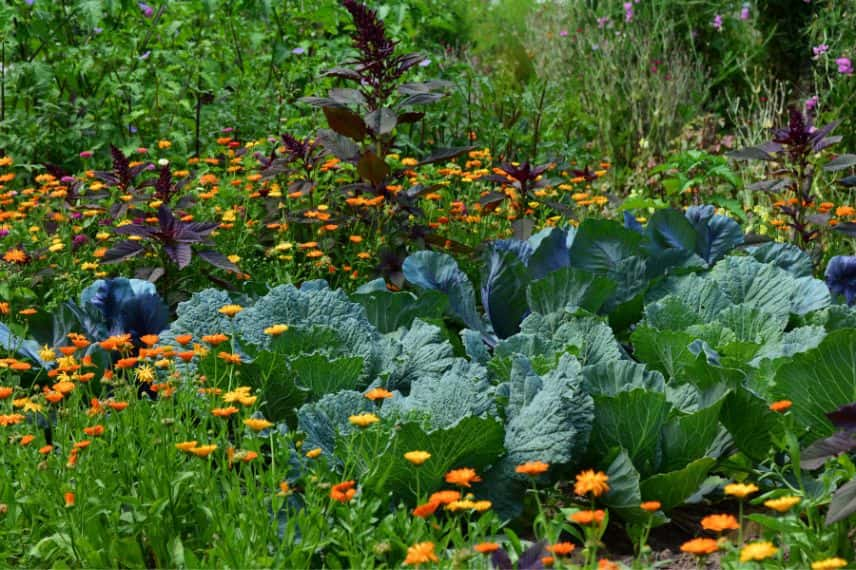
Blue cabbages harmonise here with purple foliage and orange marigolds, a lovely ensemble
Compared to a carefully constructed ornamental garden following a specific style with chosen perennials, bushes, and trees, the vegetable garden often looks dull. Often laid out with string, the vegetable garden features rows of sown or planted vegetables in straight lines and well-defined paths. However, it is easy to add a touch of whimsy by adopting less linear curves or designing geometric shapes. It is also simple (and functional) to edge your paths with various materials such as logs, woven fences, or straight tiles… The use of teepees or trellises for climbing plants also adds some verticality.
It is also wise to introduce colour by planting flowers that, for some, are repellent and useful for biological pest control. Don’t hesitate to create a mosaic of herbs, which is particularly aesthetic.
To add a purely decorative touch, also pay attention to the aesthetics of your labels, install an insect hotel, birdhouses, and feeders, create a scarecrow with your children or grandchildren, and invest in beautiful glass cloches…
It is also possible to integrate ornamental vegetables for their foliage, flowers, or fruits, which are equally productive. Vegetables that can also escape into the flower beds and borders, taking their place among perennials and annuals.
→ For further reading: Flowers in the vegetable garden: essential plants
Read also
10 unusual and curious vegetablesOrnamental vegetables with unique foliage
In terms of ornamental vegetables, it’s hard to overlook the cabbages. There are so many varieties that they can easily be integrated into a flower bed, surrounded by annuals like pansies, osteospermums, or petunias. With smooth, frilled, or curly leaves, round hearts, or large, beautiful leaves, cabbages are very aesthetic both in the vegetable garden and in ornamental gardens. For instance, the Daubenton ‘Popof’ cabbage with its variegated foliage, the sea kale with its beautiful tufts of curly leaves, the late autumn curly kale, or the kales add a decorative touch while being hardy and delicious. As for the ‘Romanesco’ broccoli or the ‘Large Red’ cabbage, they are undeniably as beautiful as they are tasty. Just like the Brussels sprouts, which can have an ornamental appearance with their long stems adorned with firm little heads.
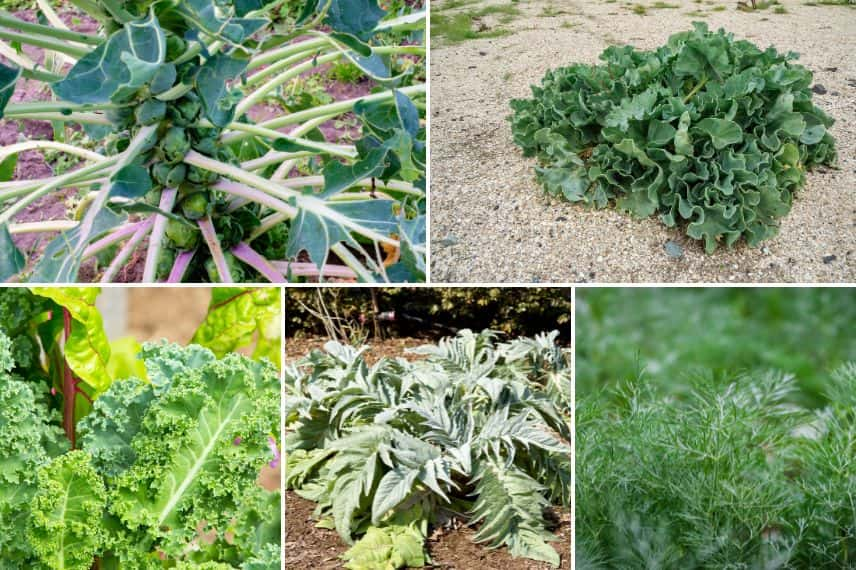
The foliage of the Brussels sprout, sea kale, kale, cardoon, and fennel
Besides cabbages, other vegetables boast the most unusual foliage. In particular, the artichokes and cardoons. With their deeply lobed, heavily veined leaves, cardoons display a grey-blue or silvery colour, while artichokes have a dense tuft of green and white foliage, making them stunning in a vegetable garden or flower bed. And when they bloom in violet-blue, they are the kings of the ornamental vegetable garden! While most gardeners are familiar with artichokes, fewer have tasted cardoons… except perhaps in the Lyon region, where this vegetable is traditionally enjoyed in gratin on Christmas tables.
In another genre, the fennel, this vegetable with an aniseed flavour, is also splendid with its very delicate, finely cut feathery foliage. Some varieties can grow up to 2 m tall, while others, like the bronze fennel, display purplish foliage that turns to a coppery green as it matures.
Ornamental vegetables by colour
In the vegetable garden, it is relatively simple to play with colours by inviting leafy vegetables, often adorned with vibrant hues that contrast with the surrounding green. It is then just a matter of harmonising them well by planting them in bands or concentric circles to create quite extraordinary patterns. In the very large family of salads, the cut lettuce ‘Lollo Rossa’ turns red, just like the variety ‘Grenadine’ or the broad-leaved chicories ‘Palla Rossa’ and ‘Rouge de Vérone’.
To add a bit more colour to the vegetable garden or flower beds, also consider chards or Swiss chard. While the foliage is always green, their edible stalks play the colourful card. There are yellow-stemmed chards, and ‘Rhubarb Chard’ with bright red stalks. And if you can’t decide between introducing red or yellow into the vegetable garden, opt for the assortment of chards ‘Bright Light’ that mixes pink, red, yellow, and green.
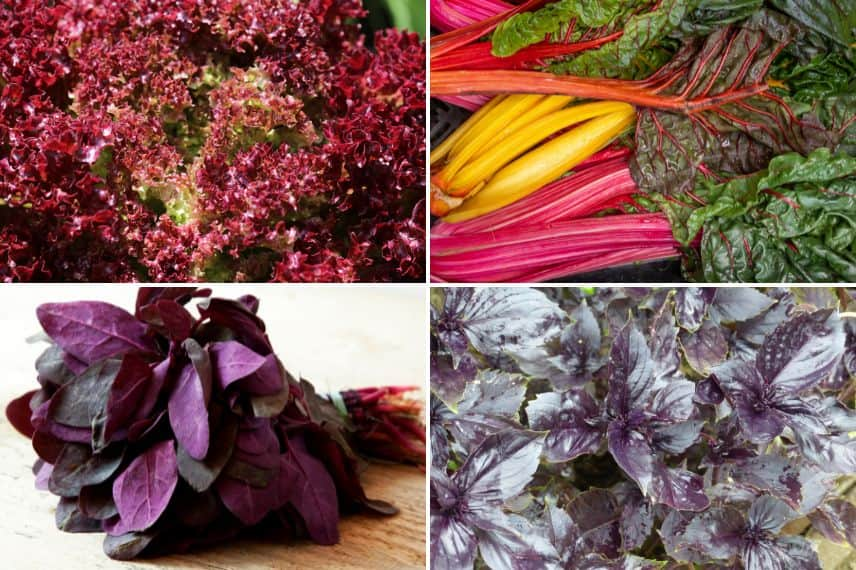
The colourful foliage of cut lettuce ‘Lollo Rossa’, chards, red orach, and purple basil ‘Black Opal’
Other vegetables, more discreet or less known, also raise the colours high. Starting with basil ‘Dark Opal’ whose leaves are dressed in almost black purple. As for orach or false spinach, it can grow up to 2 m tall. Therefore, it is impossible to overlook the vibrant foliage of red orach.
Read also
7 exotic vegetables to discoverOrnamental vegetables by their fruits
Sometimes vegetables bear fruits. Among the fruiting vegetables that we consume as vegetables in savoury dishes, but which are botanically speaking, fruits, some display their difference and uniqueness as a banner. Of course, when discussing fruiting vegetables, one cannot overlook tomatoes. Among tomatoes, some are highly ornamental due to their colours that differ from red and their slightly different shapes. Indeed, there are yellow tomatoes, orange tomatoes, green tomatoes, blue-purple tomatoes (‘Indigo Rose’), almost black tomatoes (‘Black Krim’), and bicoloured tomatoes like ‘Black Zebra’ with a green skin veined with orange-red or ‘Green Zebra’ with anise-green fruits marbled with golden yellow… Others showcase their difference with their unique shapes like ‘Orange Banana’, ‘Yellow Pear’, or ‘Yellow Pepper’.
Still within the sun-loving fruiting vegetables, do not hesitate to explore the seeds of peppers and chillies and aubergines.
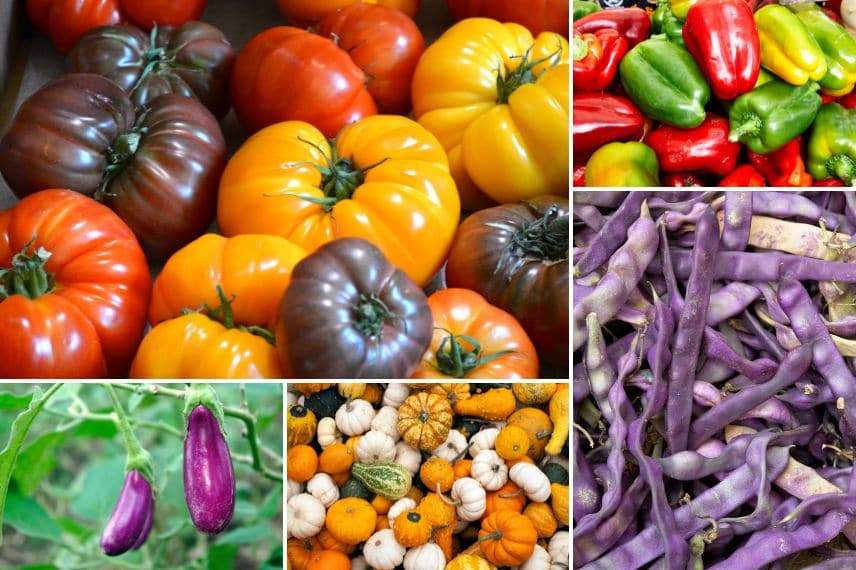 In terms of ornamental fruiting vegetables, squashes also hold a prominent place in the vegetable garden. By varying the species and varieties, you will bring a touch of whimsy to the garden, provided you have a bit of space. Even though squashes can also be decorative when trained against a trellis or wall. Solenne’s tutorial explains how to trellis squashes, while my advice sheet helps you choose your squash varieties based on several criteria, including aesthetics.
Finally, let’s conclude this overview of ornamental vegetables with beans: Spanish climbing beans with their lovely red flowers are very productive beyond their aesthetic appeal. Just like the purple-podded snap beans.
- Subscribe!
- Contents
Comments