




























How to create a bocage hedge?
a boon for biodiversity, but not just that...
Contents
Bocage hedges once structured the agricultural landscape of our beloved countryside. They were composed of tree and bush species from the local flora, adapted to the climate and soil of the region. Unfortunately, during the major land consolidation between 1960 and the 1980s, they were destroyed without further ado. Yet, these hedges are filled with qualities and usefulness. They help to drain and filter water, protect against wind, maintain soil fertility, and preserve biodiversity. Fortunately, we are beginning to realise the mistake of removing these hedges, and gradually, some replanting initiatives are emerging in France as well as Belgium. What if we accelerated the process by welcoming a bocage hedge into our own gardens?
How to do it? What to plant in a bocage hedge? Is it really useful? We tell you everything in our advice sheet.
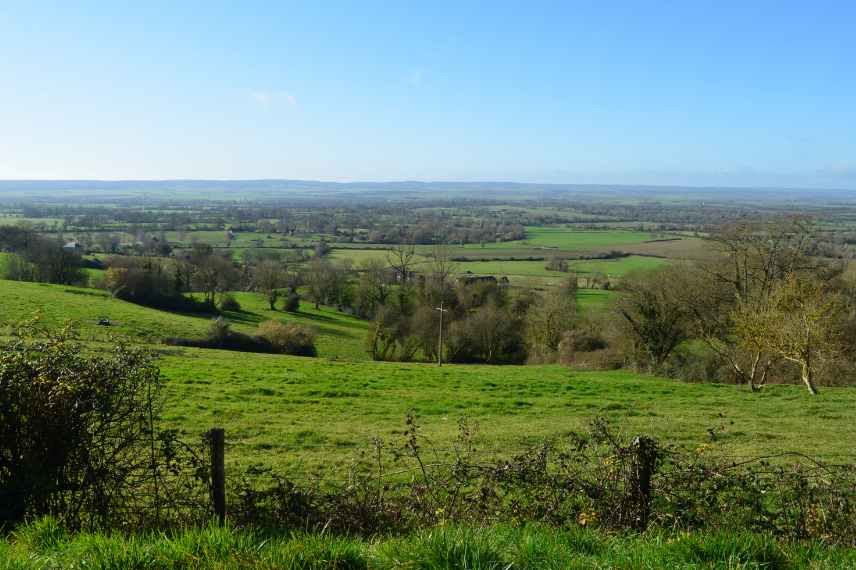
The Norman bocage in the Orne region
What is a bocage hedge?
A bocage hedge is a hedge made up of trees and bushes that grow in different strata: large trees, large bushes, shrubs, lianas… The plants that make up this hedge must be native species that are suited to the local terroir, thus adapted to the climate and soil of your region.
In the past, these bocage hedges served, among other things, to delineate agricultural plots, meadows, or as natural fencing for livestock. Unfortunately, the large land consolidation initiated between the 1960s and 1980s led to the destruction of these hedges to create increasingly larger plots for increasingly larger machinery. This destruction has resulted in flat expanses as far as the eye can see, often disdainfully referred to as “agricultural deserts.” The removal of these hedges has indeed been devastating for wildlife and biodiversity in general, but it has also had negative impacts on soil fertility and land maintenance.
Fortunately, we have finally realised the importance of bocage hedges, and replanting projects are emerging all over France and Belgium.
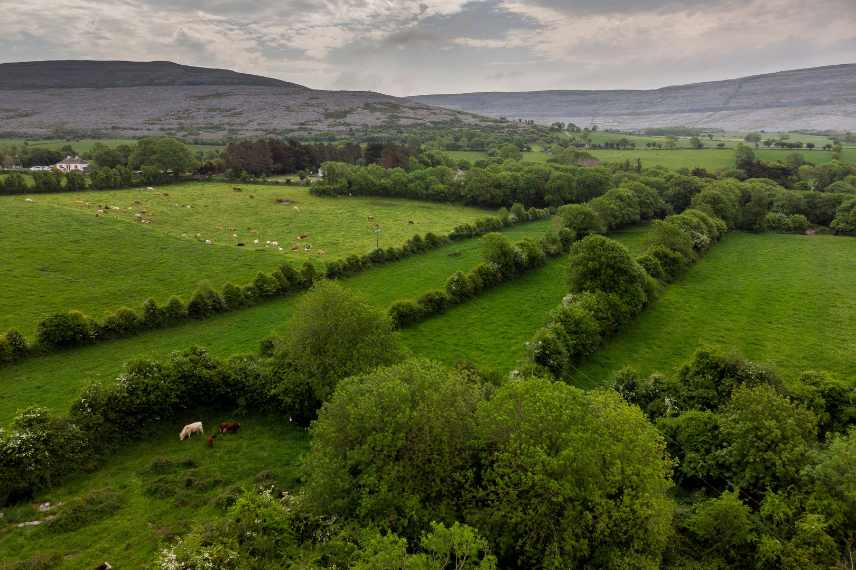
Bocage hedges… a living element of the landscape in our countryside
Why is it useful?
Bocage hedges were initially used to delineate land and agricultural plots, but this is only part of their usefulness:
- the roots of trees and bushes help to maintain the land against erosion. Planted perpendicular to the slope, trees promote water penetration into the soil. Drainage and water filtration are also improved, meaning that certain pollutants can be trapped within the roots of the trees, thus preventing them from entering the groundwater;
- hedges filter the wind, thereby limiting the effects of wind erosion;
- leaves and some branches of trees and bushes fall to the ground and create humus, gradually enriching the surrounding soil;
- these three factors mentioned above work together to preserve soil fertility;
- bocage hedges were a source of free and local wood for nearby people: firewood, fence posts, small wood for crafts or small constructions;
- depending on the bushes present, these hedges could also provide a source of food: elderberries, small fruits, apples…;
- bocage hedges have an aesthetic and landscape interest: local tourism can be enhanced;
- finally, hedges made up of local species provide habitat for a wide range of wildlife, offering shelter and cover: birds, small mammals, insects, terrestrial arthropods, bats… These hedges, when connected, can form ecological corridors linking two natural environments. A restored biodiversity helps to recreate a balance in the food chain (prey, predators, parasites, symbiosis…). All this wildlife will work to limit diseases and pests in surrounding crops.
Discover other Countryside Hedges
View all →
Available in 0 sizes
Available in 5 sizes
Available in 3 sizes
Available in 3 sizes
Available in 6 sizes
Available in 4 sizes
Available in 1 sizes
Available in 5 sizes
Available in 3 sizes
Available in 1 sizes
Which trees and bushes to choose?
As you may have understood, depending on your region, and thus your climate and soil, a bocage hedge will not consist of the same species of trees and bushes. Feel free to take a walk around your area to observe what grows there naturally. It is difficult to make generalisations, but here are a few suggestions to help you choose.
- Tall trees (10 to 20 m high): Glutinous alder, Verrucate birch, sessile oak, pedunculate oak, Durmast oak, sweet chestnut, ash, beech, service tree, and rowan, common walnut, poplar, sycamore, lime…
- Coppice trees, which are pruned at the base to create shoots (3 to 8 m): White willow, basket willow, Goat willow, hornbeam, field maple, wild apple, wild pear…
- Shrubs (1.5 to 3 m): hawthorn, hazel, blood dogwood and male, European spindle, blackthorn, black elder, guelder rose and lantana viburnum, dog rose, broom, hedge honeysuckle…
- Evergreens and marcescent trees (whose dead leaves remain on the tree in winter): common box, common holly, common yew, common privet… for evergreens, and beech or hornbeam for marcescent trees.
- Climbers: hedge clematis, common hop…
Please note: When choosing your plants, prefer purchasing from a local nursery. In addition to the good advice provided by a professional, the native trees and shrubs offered will be suited to the soil and climate of your region. You can also opt for free young plants: some environmentally conscious organisations offer free bare-root plants in autumn. But consider discussing with neighbours or friends who have a “nature” garden. They will be happy to offer you cuttings and young rooted plants (often provided by birds…) that they have in excess.
→ Oli’s little note: even though theoretically the chosen species should be native to this type of hedge, you can opt for a few slightly more “exotic” shrubs as long as they fit harmoniously into a natural hedge and can benefit wildlife (flowering and fruiting). Moreover, most species of native trees and shrubs have given rise to cultivars with different flowering or foliage (elders, hawthorns, blood dogwoods…), so consider them too! And, I promise: we won’t tell anyone! 😉
→ Also find our advice sheet on: 9 shrubs for a bocage hedge
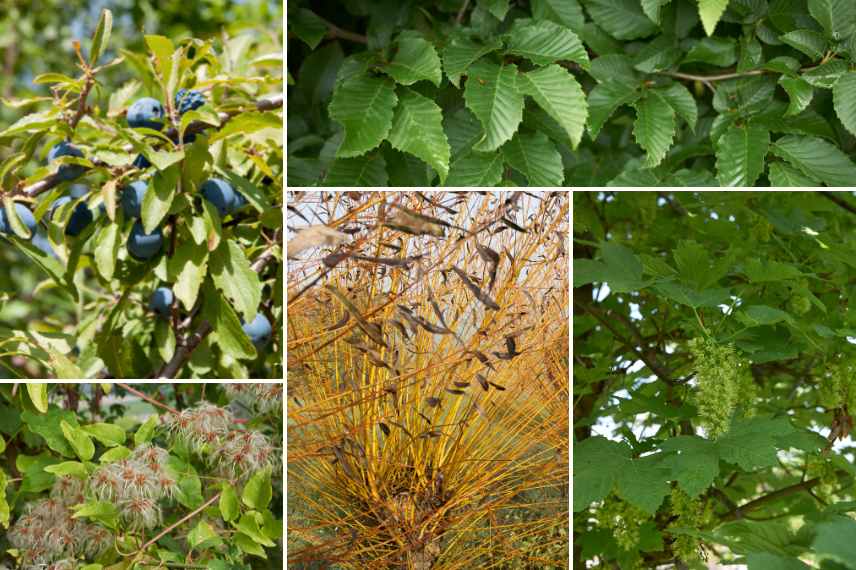 Blackthorn, common hornbeam, hedge clematis, basket willow, sycamore
How to create and maintain a bocage hedge?
Planting
Prepare the planting surface by removing the grass and loosening the soil a bit with a digging fork or a biofork. Alternatively, in a more ecological and less strenuous way, but much slower, you can “prepare” the ground naturally by placing cardboard over the entire area or a thick layer of fallen leaves. By smothering, the grass will suffocate and disappear, and the cardboard or leaves (or both!) will improve the soil, making it more workable and ready for planting. Note that it may take an entire year if you choose this method.
→ to learn more about this technique, read: What to do with cardboard in the garden?
Planting should preferably be done in autumn (November-December), so that the trees and bushes have time to establish a good root system before the following year. Preferably use plants with bare roots: they are more economical and ultimately more vigorous.
Planting is generally done (though not obligatory!) in two rows and staggered. This way, the hedge will become very bushy in a minimal amount of time.
- for a hedge made up of bushes: a distance of 80 cm between the rows and 1 m between the bushes is recommended.
- for a hedge including trees (standard and coppice shoots): allow a distance of just over 1 m between the rows, but at least 3 m between the trees. Later, you can intersperse bushes in the “gaps”.
→ to find out how to plant trees and bushes with bare roots, follow Christine’s good advice.
→ otherwise, to avoid mistakes in planting trees and bushes, we have prepared this slightly quirky article: how to fail at planting your trees in 5 lessons?
Attention!!: The law stipulates leaving 50 cm between the edge of the property and the planting if the bush grows to a maximum height of 2 m at maturity. You must maintain 2 m between the property boundary and the trunk of the tree if it exceeds 2 m in height. However, these guidelines may vary from region to region. Be sure to contact your local council beforehand for any information regarding tree planting at the property boundary.
Maintenance
Watering should only be followed during the first summer. After that, when the roots have developed well and the hedge is bushier, the trees and bushes will manage without external help, even during drought.
A bocage hedge is a free and wild hedge and should not be trimmed to a strict shape. However, you can carry out maintenance pruning for branches that obstruct passage, either in autumn before winter, or preferably in late winter (February-March) outside of frost periods.
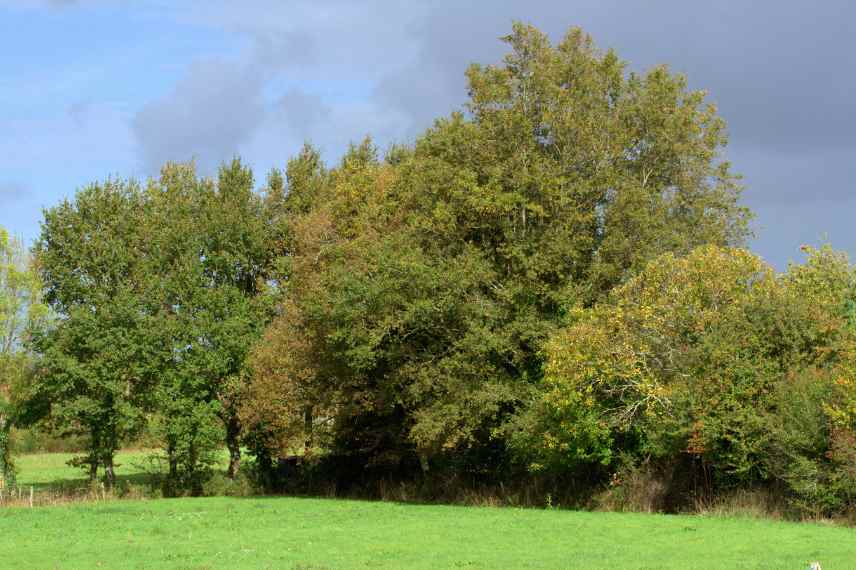 You normally won’t need to maintain your bocage hedge, which should retain a natural appearance.
- Subscribe!
- Contents

Comments