





























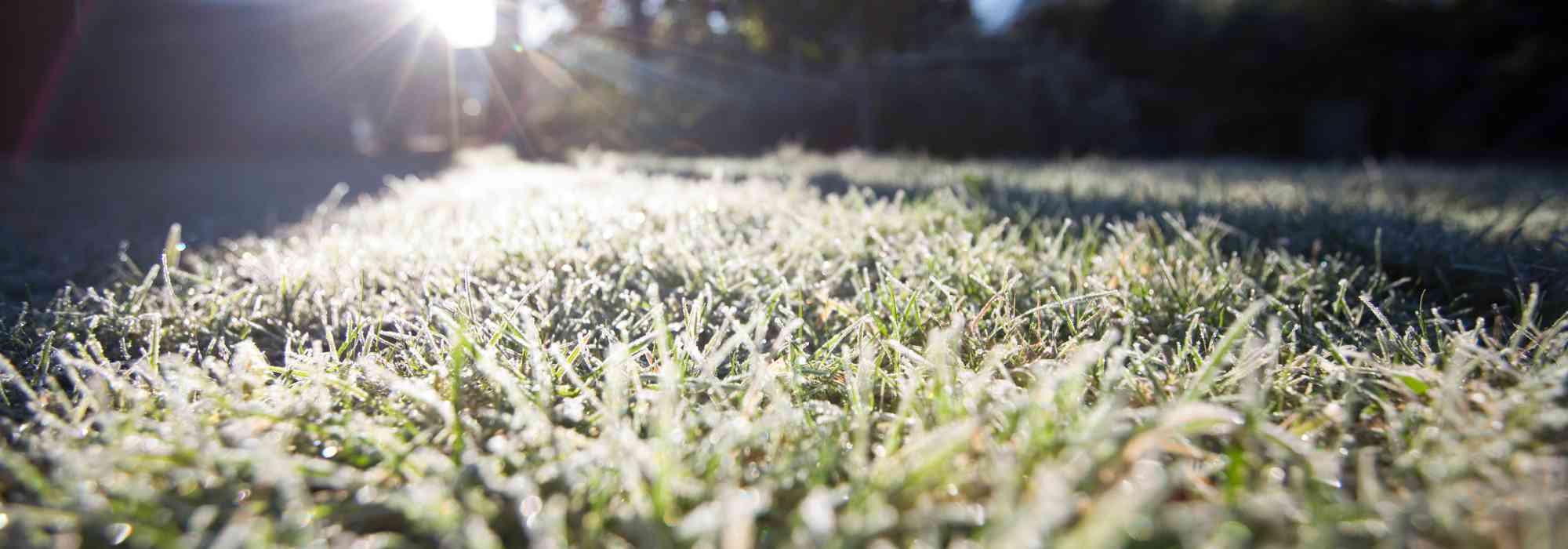
How to care for your lawn in winter?
Essential Techniques and Tips for a Beautiful Lawn
Contents
Winter maintenance of lawn is crucial for ensuring the health and vitality of your lawn throughout the year. As temperatures drop, your lawn faces a range of challenges that can affect its appearance and health in the following spring.
One of the main issues with winter lawn care is preventing damage from frost and snow. Low temperatures can make grass blades more fragile and prone to breaking, while the weight of snow and ice formation can suffocate the lawn. Special attention should also be given to preparing the lawn before winter arrives. Proper mowing, balanced fertilisation, and soil aeration before the first frosts greatly contribute to enhancing the lawn’s resilience.
In summary, even in winter, lawn maintenance should not be overlooked. By adopting appropriate practices during this period, you prepare your lawn to withstand the rigours of winter and to thrive in health as spring arrives.

Preparing the lawn for winter
Last Mowing Before Winter
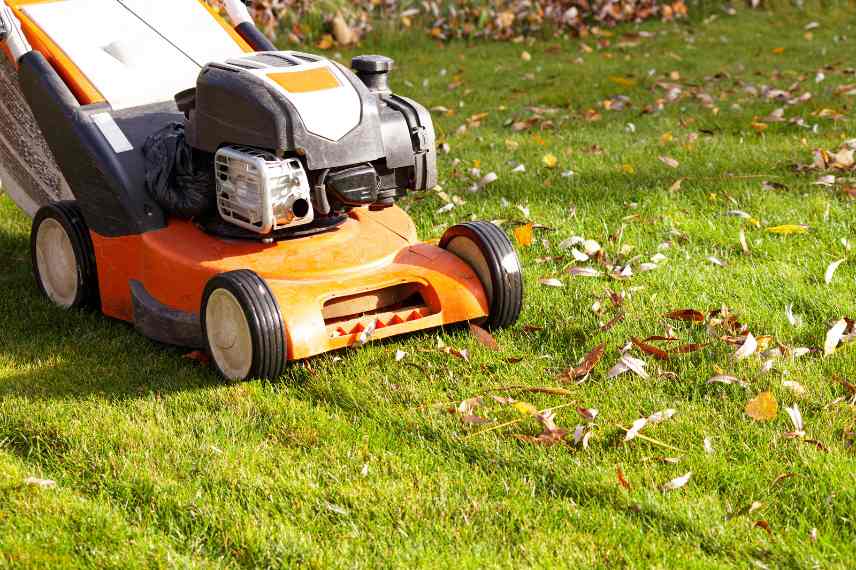
The optimal time to carry out the last mowing of the year is generally just before the first frost. It is crucial to monitor local weather forecasts to determine the right moment. This late mowing helps maintain the lawn at an ideal height for winter, reducing the risk of diseases while protecting it from harsh weather conditions.
The recommended cutting height for the last mow varies depending on the type of lawn, but in general, it is advisable to keep it between 3.5 cm and 4.5 cm. A slightly higher height than in summer helps protect the roots and reduces stress from the cold, while preventing the grass from becoming too tall, which can encourage fungal diseases.
A little word from Oli: the only place where I collect fallen leaves in the garden is on the lawn. Indeed, a thick layer of leaves will smother the grass by depriving it of light and preventing it from breathing. The collected leaves can then be composted, used in flower beds, at the base of trees, or on vegetable layers.
Soil Aeration and Fertilisation in Autumn
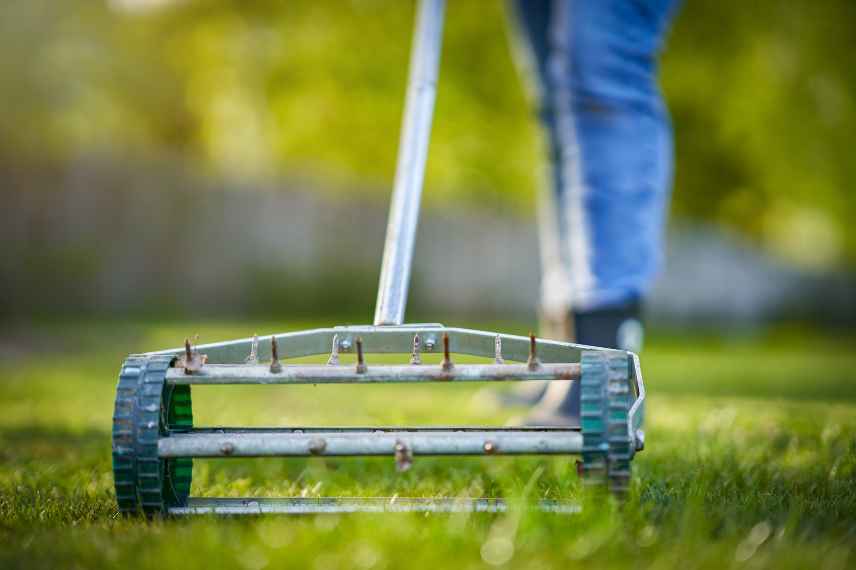
Soil aeration can be done using a mechanical or manual aerator, which creates holes in the soil to allow air, water, and nutrients to penetrate better. It is recommended to aerate in autumn (by December at the latest if it hasn’t frozen yet) when the soil is well-moistened but not saturated. This improves soil structure and prepares the lawn to better withstand winter conditions.
For autumn fertilisation, choose a fertiliser rich in potassium and relatively low in nitrogen. Potassium strengthens the lawn’s resistance to cold and diseases, while excess nitrogen can stimulate inappropriate growth in winter. A nitrogen dosage of around 5-6 is good, with a potassium dosage of at least 7-8. For example, this special “lawn” fertiliser is dosed at 6-5-7 (N-P-K), making it ideal for autumn fertilisation. Other lawn fertilisers exist, with higher nitrogen content, which should be used during the growing season, between April and October.
Please note: Apply the fertiliser according to the manufacturer’s instructions, ensuring even distribution to avoid burning the grass. And never apply fertiliser in the heart of winter. It is pointless, as the grass is dormant anyway. You risk doing more harm than good.
Avoiding Compaction!
As much as possible, when the soil is waterlogged as it should be in autumn (though this is not always the case, unfortunately…), avoid walking on the lawn too much and refrain from placing heavy items (machines or even wheelbarrows) on it, which will compact the soil or create ruts. In short, let’s give our lawn a break! If you must walk on the lawn, consider using Japanese stepping stones (even temporary), a mulch path, or laying boards to limit the compaction of the grass and soil.
A little word from Oli: if you want a “golf green” for your lawn and cannot tolerate the slightest flower within your grass, late autumn is also a good time to remove adventive plants, as the soil is softer. Otherwise, leaving a few flowers in the lawn (dandelion, daisy, clover…) is not only good for biodiversity but also strengthens the grass against drought and diseases.

Read also
Lawn: essential tools for its upkeepMinimise frost and snow damage
Frost
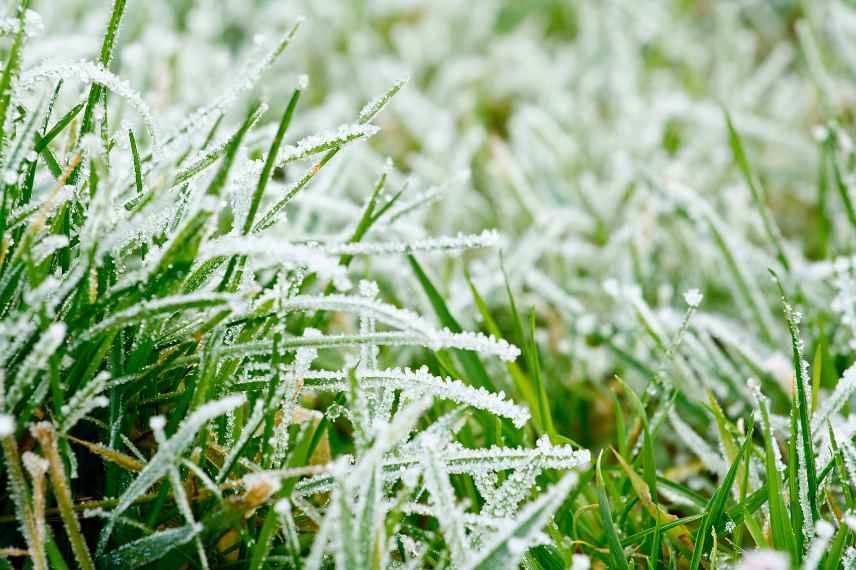
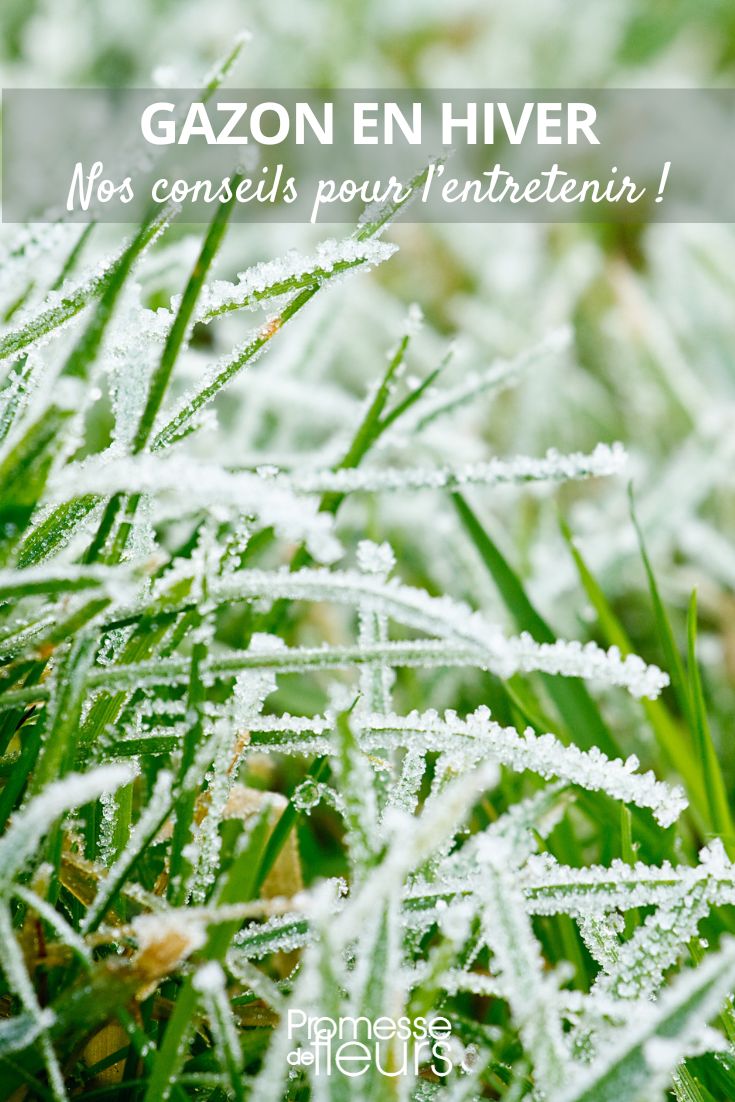
Severe frost can sometimes cause certain blades of herb to turn brown. There’s not much you can do about it; after all, you’re not going to cover the lawn with a winter blanket! The simplest solution is to wait for the thaw and, if possible, avoid walking on the frozen herb, as this can break the blades. However, some professionals activate lawn irrigation before a severe frost (for example, on golf courses or natural football pitches). Indeed, water releases heat as it freezes, thus protecting the blades from the lowest temperatures. Nevertheless, avoid overwatering, as standing water can freeze and damage the roots.
Our advice: if it freezes, do nothing for your lawn! It’s the simplest and costs nothing. In the vast majority of cases, the lawn will not have suffered too much. And come spring, it will quickly green up again.
Snow
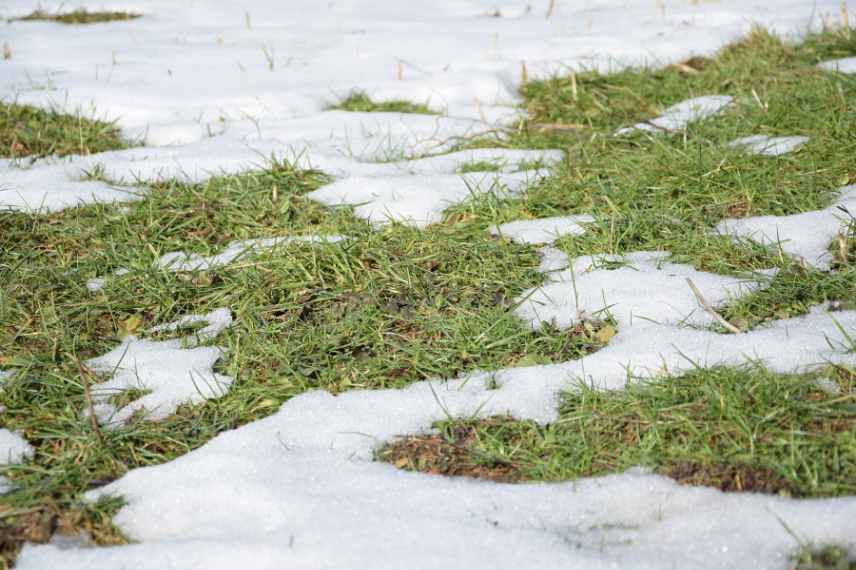
Snow is not necessarily more damaging to the lawn. Once again, avoid walking on the snow-covered lawn. Foot traffic compacts the snow, turning it into ice, which can potentially damage the lawn underneath.
After heavy snowfall (not just a mere 5 cm thick), use a broom or shovel to evenly distribute the snow across the lawn. This prevents the formation of snowdrifts that can smother and yellow the herb below. And, if possible, direct the snow removal to avoid creating drifts on the lawn. Large snow piles take longer to melt and can cause excessive moisture.
Our advice: here too, unless you live in Lapland, let the snow melt naturally on the lawn. It will cope very well this way. Moreover, snow even has a protective effect against frost and biting winds.
Lawn care in winter
In regions with a mild climate, where frosts are infrequent and generally light, it is possible to carry out a few mowings during winter. These mowings, done with care, maintain the lawn at an ideal height without completely scalping it, especially if the mild weather and humidity encourage grass growth.
Read also
Which lawn to choose?Monitoring Winter Lawn Diseases
Winter can expose lawns to various diseases due to cold and damp weather conditions. Careful monitoring and preventive measures are essential to maintain the health of your lawn.
- Spots and discoloured areas: Watch for the appearance of yellow, brown, or whitish spots on the lawn, which may indicate a fungal infection.
- Moulds and fungi: Be alert to the presence of moulds, such as snow mould, which often appears as whitish or pink filaments on the lawn, especially under melting snow.
- Sunken or thinning areas: An area where the grass is sunken or thinning may be a sign of root diseases or the presence of parasites.
- Abnormal texture: Grass that becomes slimy or has an abnormal texture may indicate a disease or a problem with excess moisture.
To avoid most of these issues, ensure to improve soil drainage through regular aeration to prevent moisture accumulation, which is conducive to diseases, and choose hardy varieties, such as rustic grass.
Preparation for Spring
The end of winter is the ideal time to start preparing your lawn for spring. Proper preparation during this key period can ensure a smooth transition and promote healthy, vigorous growth of your lawn.
As winter comes to a close, you should:
- Cleaning: Remove debris accumulated during winter, such as dead leaves, branches, and other litter. This will allow the grass to breathe and receive more light.
- Soil aeration: Aerating with a mechanical or manual aerator may be necessary, especially if the soil is compacted after winter.
- Repairing any damage: Inspect your lawn for areas damaged by frost or winter diseases. Carry out repairs, such as sowing or applying topsoil and compost, if necessary.
- First mowing around mid-March or early April: Mow for the first time when the grass reaches a height of about 5 cm and daytime temperatures are around 10°C. Set the mower to a slightly higher height than used in summer to avoid stressing the grass.
- Fertilisation: Apply a balanced fertiliser (like this one: special “lawn” fertiliser) at the beginning of spring to encourage healthy growth. Choose a fertiliser suitable for your type of soil and lawn.
- Subscribe!
- Contents
Comments