





























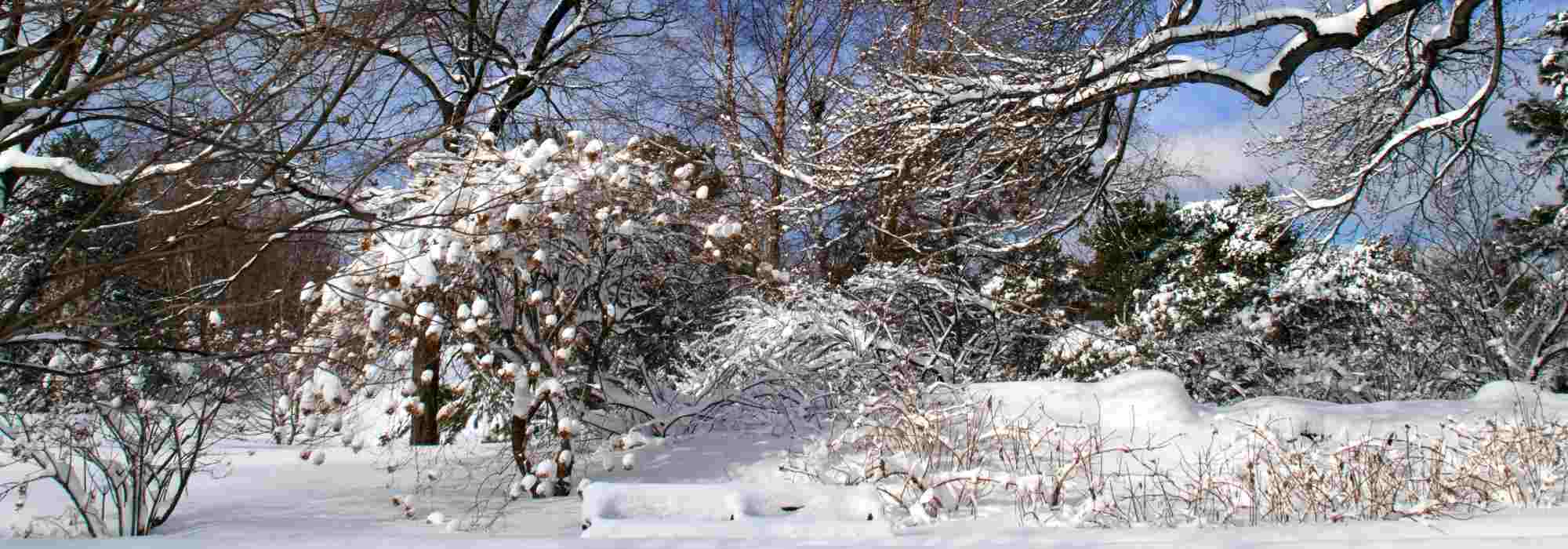
Garden landscaping in mountain areas
Our tips to choose the most suitable plants in harsh climate
Contents
Renowned for its challenges due to the hardiness requirements of plants, its topography, the need for more effective protection against the cold, and adapted gardening practices, a well-constructed mountain garden often becomes a unique, remarkable, and rare space. While the harsh climate is associated with endemic plants from cold regions such as conifers, other mountain plants – but not only – adapt to these conditions of extreme temperatures.
Are you unsure about cold-resistant plants in your region with a harsh climate? Have you just moved to the mountains and need advice on creating a garden that can withstand extreme conditions? We will address this topic primarily from the perspective of the plant layout of an alpine garden and cold climate. It’s up to you to draw inspiration from these robust and ornamental plants to create a garden that is beautiful in all seasons!

What is meant by montane climate?
The montane climate is, by definition, a climate with cold winters and cool, humid summers. These are regions characterised by a high thermal amplitude, as they are far from the coast, which plays a role in thermal inertia, and subject to strong winds. In France, the alpine mountain ranges located in the east of the country, certain high-altitude areas of the Massif Central, and the Pyrenean fringe are affected. Also included in this classification are the montane pockets of the Jura and Vosges massifs, still at altitude. In addition to the high thermal amplitude, this “cold” climate is distinguished by significant summer rainfall, unlike other regions.
It is the resistance to cold and the strong summer sunshine that concern us when planning a garden in a continental-type climate. The cold hardiness of a given species is defined in relation to hardiness zones. These zones are based on minimum winter temperatures, which you may sometimes find in place of precise temperatures. France comprises nine zones, with the so-called mountain climate being relevant to zones 5, 6, and 7. This includes all the mountain ranges of the hexagon where minimum winter temperatures range between -15 °C and -26 °C.
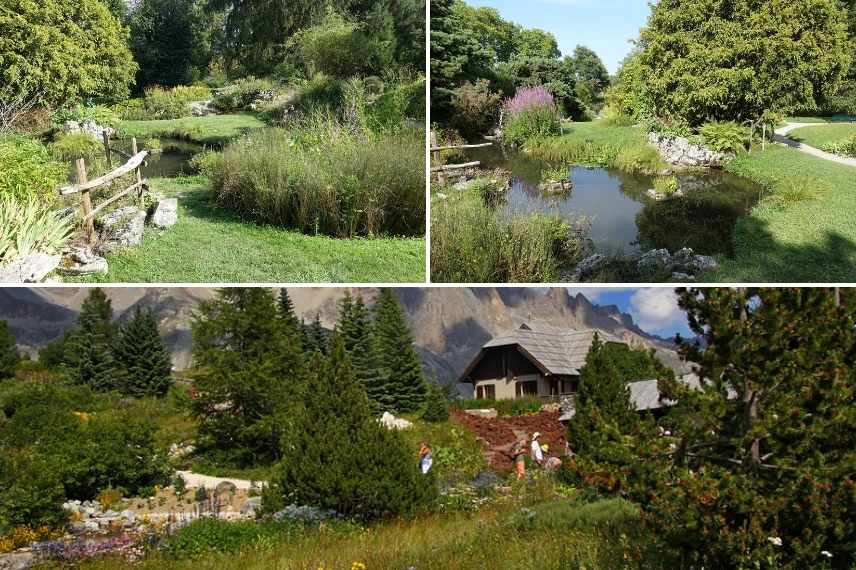 Above, views of the alpine botanical garden of Geneva (Photos: G. Vellut), below the botanical garden of Lautaret in the Alps (Photo: G. Baviere)
Read also
10 very hardy, frost-resistant treesThe constraints in mountain climates
Gardens experiencing a cold climate in winter and relatively warm in summer actually endure much longer winters, shorter summers and autumns, colder winds, and periods of intense frost. Summer storms are often stronger than elsewhere. If spring arrives later in a mountain climate, one must also contend with snow, which, due to altitude, is recurrent.
Shorter springs will directly influence your choices regarding plants: it will indeed be essential to opt for plants that bud later, in order to limit bud frost, which jeopardises any fruit production in the orchard, in particular.
Colder winds must be taken into account in the overall hardiness of plants, and for certain branches that are too fragile, which should be avoided.
Snow, on the other hand, is not really a constraint when choosing your plants wisely: it even has an insulating effect against frost, maintaining the temperature at 0 °C or +1 °C. However, you must use bushes or trees that are resistant to the weight of snow, to avoid breakage. Thus, conifers are ideal, bending just under the snow.
What precautions should you take when gardening in a cold climate?
In gardens under snow for several months a year at altitude, or enduring strong winds and repeated negative temperatures, even in flat urban areas, your plants must be ultra-hardy (we’ll elaborate on this below)… you can’t possibly cover an entire garden with a bell jar or fleece!
Several precautions are essential for gardening in a montane climate, where the actual gardening time is limited to 6 months of the year:
- Regarding planting periods, one imperative: it is in spring and not in autumn that you should intervene, to allow the plants to settle in.
- Your soil must be well-drained for the vast majority of your plantings, to avoid stressing the roots that cannot tolerate overly waterlogged soils for months on end.
- For pruning, at altitude, due to late frosts, you will need to prune your roses and other summer-flowering bushes much later than elsewhere (generally in May for roses).
- Also, make use of annual plants with a short growing cycle, perfect for harsh climates!
Read also
8 very hardy shrubs resistant to frostYour garden style in harsh continental climate
Choosing a mountain garden style is easy: it is dictated by robust plants that withstand the cold of the climate, and it naturally presents itself as a garden often referred to as alpine. This garden style oscillates between a natural garden, a rock garden, and even a rustic one, typically featuring differences in levels due to the terrain, connecting various subspaces. In open gardens, try to integrate the surrounding landscape as best as possible!
At lower altitudes, you will have less elevation change and can incorporate even more varied plants, as well as choose your own plant atmosphere. You can certainly attempt other garden styles, but nothing replaces the beauty of native flowering plants blending into the landscape, the effects of pine forests, rocky areas, and heather gardens.
Regarding compositional elements, local natural stone, often left raw, in large blocks, is a strong marker, as is wood for various fences or decorations. Water, in the form of a small stream, is another theme you can explore at your leisure. Create winding paths that follow the often rugged terrain.
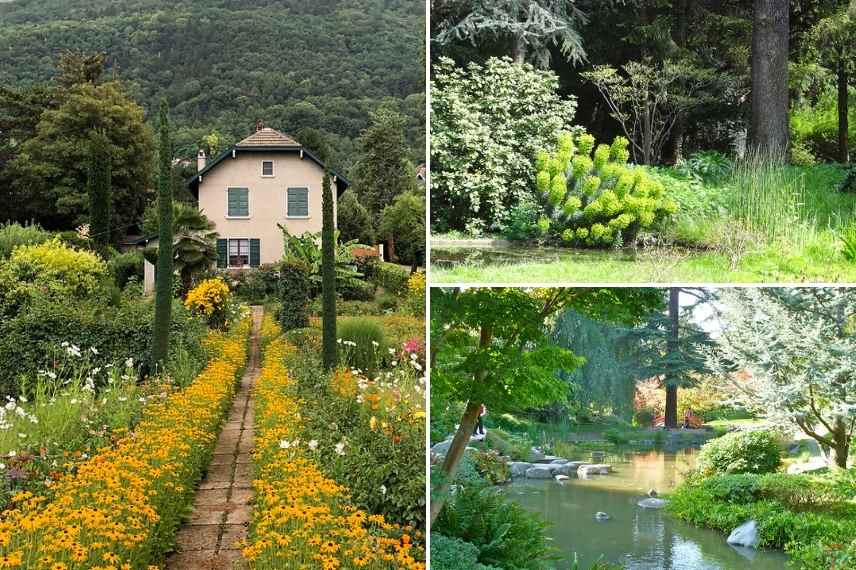
A garden in Annecy where palm trees grow, because we are at a low altitude. On the right, Euphorbias mingle with conifers in the Vosges forest of the Albert Kahn Garden (Photo: E. Westerveld). Below, an evocation of the Vosges forest, also at the Albert Kahn Garden (Photo: A. Poskanzer)
Which plants to choose in a mountain climate?
Here’s a crucial first piece of advice: more than anywhere else, draw inspiration from natural landscapes, and try to replicate the wild beauty of this majestic, unique nature in your own home! Also, observe your neighbours’ gardens; they will give you a good idea of the plants that thrive in soil that is less ungrateful than you might think. By planting native plants, as well as shrubs and perennials that can withstand -20°C, even -25°C, you will save yourself from repeated failures and tedious maintenance regarding protections:
- Trees: evoke woodland scenes: favour endemic species, compose with a majority of conifers while adding contrast and colour through different shades of green (Abies, dark green spruces with ultra-bright new shoots in April, Piceas glauca with bluish hues…). Also adopt trees with autumnal interest, such as the Larch, a deciduous conifer that is stunning in autumn (some are indeed of modest size). A few deciduous trees will provide golden hues after summer (hornbeams, beeches, birches, hazels). The quince tree (fruit tree) is a very beautiful ornamental tree that flowers late. Since autumn is brief, favour deciduous trees with remarkable bark (birches, Prunus, Acer griseum, Parrotia persica…), as you will truly enjoy them for many months. In a large garden, add oaks, willows, and everywhere evergreens like holly (Ilex).
→ Read also Mountain trees: 6 species to adopt!
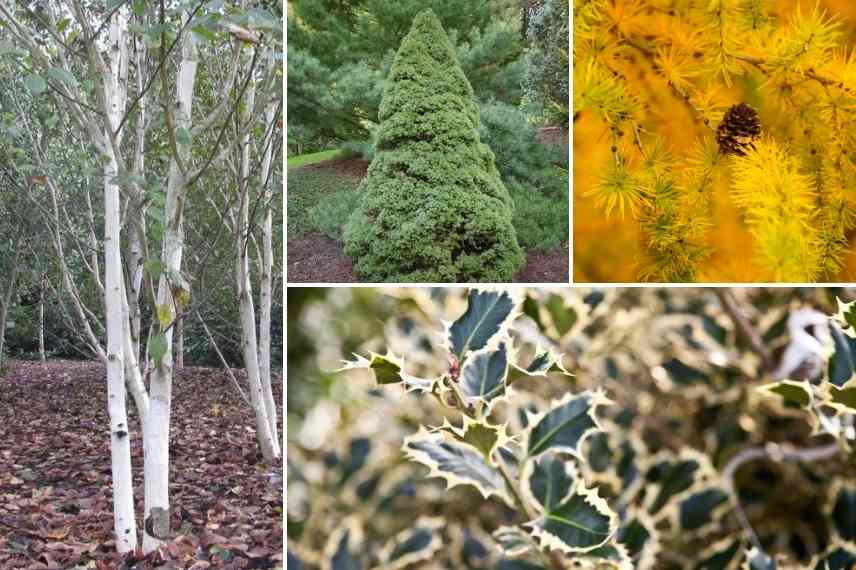
Himalayan white birch, Picea glauca ‘Rainbow’s End’, autumn foliage of the larch, variegated holly
- Shrubs: the list is much longer than one might imagine among very hardy shrubs: often of Asian or Himalayan origin, with acid-soil shrubs like Rhododendrons and azaleas, Magnolias, Hamamelis… Also count on the unmatched robustness of deciduous ornamental shrubs of American origin: Serviceberries, Physocarpus, Kalmias and Calycanthus. The Syringas (lilacs), shrub peonies, Viburnums, Sambucus, Hydrangeas, create stunning flowering subjects from spring onwards. Dwarf and prostrate varieties of conifers are perfect for rockeries, and evergreen holly is a boon for any garden. Some winter-flowering shrubs like Chimonanthus praecox or Japanese quinces should be placed against a sunny wall to avoid damaging the buds. Among climbers, Virginia creeper and honeysuckle are simply stunning, and Clematis alpina is ultra-hardy!
→ Check out our selection of very hardy shrubs that are frost-resistant as well as Alexandra’s advice on 6 evergreen shrubs for a mountain garden and Which shrubs for a mountain hedge?
- Perennials
There are numerous alpine perennials naturally growing at altitude, which delight us during hikes: they thrive very well in a mountain garden. With a wild appearance, they bring a natural touch that makes it seem your garden is not a complete creation. Among the most beautiful specimens of alpine flora with vibrant colours of yellow, orange, intense blue, and pink: Epilobium angustifolum (Saint Anthony’s fire), the Alpine Aster, the iconic Edelweiss and gentians, Eryngiums (or thistles), alpine buttercups, Anemone alpina, Veronica alpina, Primula vialii delavayi…
→ Learn more with our advice sheet 9 perennial plants to create an alpine rockery and alpine perennial plants.
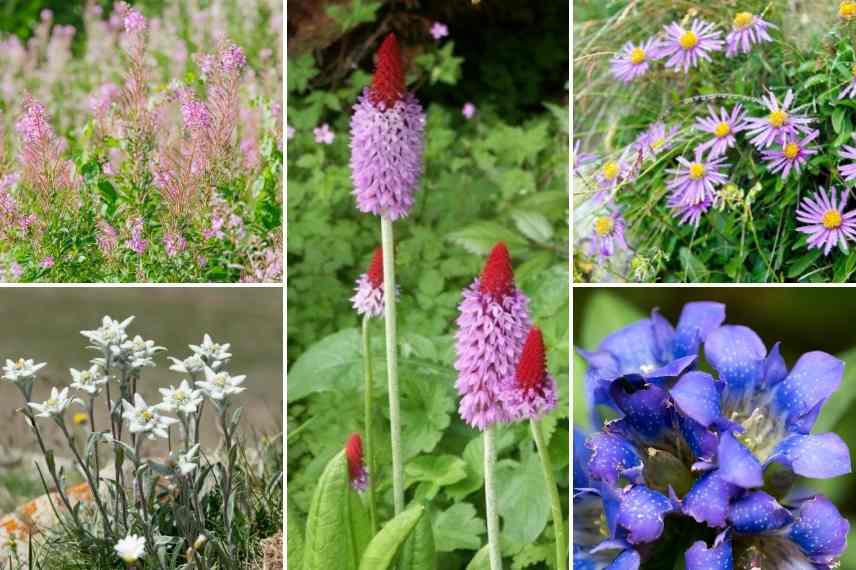
Epilobium angustifolium, Edelweiss, Primula vialii (Photo: V. Douce), Aster alpinus, gentians
- In any garden, naturally upright perennials are perfect, such as catananches, agastaches, Calamintha, foxgloves, loosestrife, Aruncus, Physostegias, Platycodons, Japanese anemones to finish the season. A few annuals are also useful for your summer beds, such as the stunning Icelandic poppy. Hardy bulbs are very handy for bringing freshness and delicacy in spring: Lloydia serotina, Scilla bifolia, Narcissus poeticus, Armerina alpina (1600 to 2500 m), etc. (read also Mountain flowers: 7 bulbs to adopt in the garden)
- In a woodland setting: ferns, bistort, saxifrages, foxgloves, Meconopsis grandis (stunning blue poppy), Bergenias…
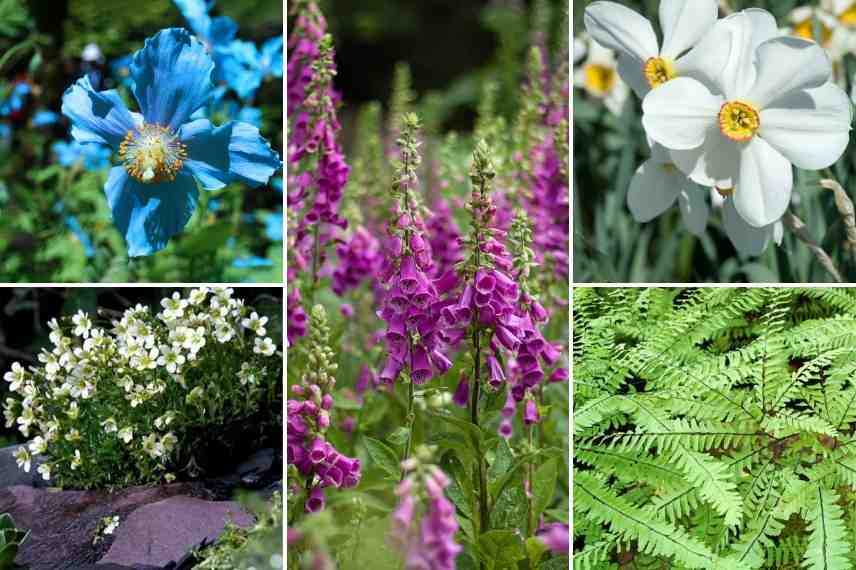
Himalayan blue poppy, Saxifrage ‘Pixie White’, foxgloves, Narcissus poeticus, Adiantum aleuticum ‘Imbricatum’
- In a sunny rockery: dwarf conifers break the uniformity of low alpine plant beds (Juniperus horizontalis, Picea ‘Nidiformis’, Pinus mugo ‘Mughus’), as do heathers. Grey, velvety, or thick and waxy foliage withstands both sun and cold: numerous Sedums and sempervivums (houseleeks), Diantus alpinus, Anemone alpina (Alpine pasque flower), wormwoods, shrubby cinquefoils, of low or spreading habit. Read: 7 golden conifers for rockeries
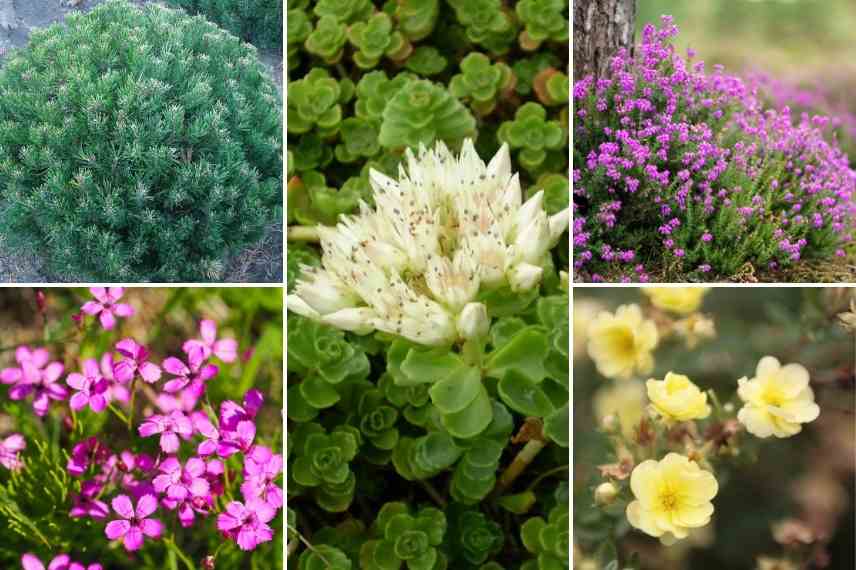
Pinus mugo ‘Mughus’ (Photo: M. Bolin), Dianthus alpinus, Sedum spurium, heather, Potentilla ‘Lemon Meringue’
- In a shady rockery: Saxifrages, Hepatica nobilis, Adiatum pedatum, Epimediums… Avoid broad foliage that may be damaged during violent summer storms.
- Grasses: they are essential, chosen to be tall and evergreen, to provide structure. Covered in snow, they enhance your garden. Choose varieties with the strongest stems: Miscanthus, Calamagrostis x acutiflora.
- And exotic plants? it seems incongruous to want to plant an exotic plant in a garden in a cold climate, as they are often associated with warm climates. However, in arid regions of the globe, they endure significant night frosts. In your area, below 500 m altitude, well-exposed (sunny slope), in well-drained soil, at the top of a sloping area, sheltered by rocks, some cacti adapt quite well to snow, such as Opuntias (down to -25°C). Yuccas, Echinocereus and Agave neomexicana in dry soil can withstand temperatures of -15°C to -20°C.
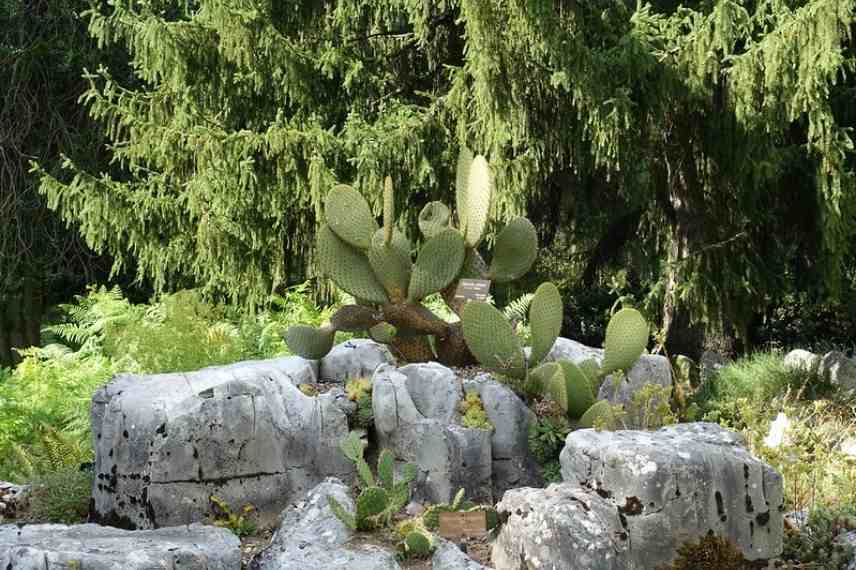
A cactus in the botanical alpine garden of Geneva (Photo: G. Vellut)
In the vegetable garden and orchard
In cold climates, you experience frost from November to May. You have less time to sow, transplant, and plant your crops: make use of tunnels, frames, or greenhouses to gain a few degrees… and weeks!
In the orchard, choose varieties that are well resistant to frost, especially those with late flowering and quick fruiting: apple trees (‘Astrakan’, ‘Belle de Boskoop’, ‘Golden Delicious’), pear trees (‘Beurré Hardy’, ‘Guyot’), plum trees (‘Thames Cross’), hazel (‘Merveille de Bollwiller’). The quince, which flowers late in May, is also recommended (Cydonia oblonga ‘Aromatnaya’). Among soft fruits, currants and raspberries are quite hardy, and blueberries, mountain plants, are particularly suitable.
Many herbs are also completely hardy, so take advantage of them: Thymus serpyllum, Salvia officinalis, Borago officinalis, chives, mint…
Finally, remember that in the vegetable garden and orchard, the duration of summer sunlight is a huge asset for your crops, and the winter cold protects you from diseases and pests, a gardener’s bane.
→To read: Vegetable garden in the East: which vegetables to grow?, How to create a vegetable garden in the mountains?, 11 fruit trees very resistant to winter cold and 5 leafy vegetables for mountain vegetable gardens.
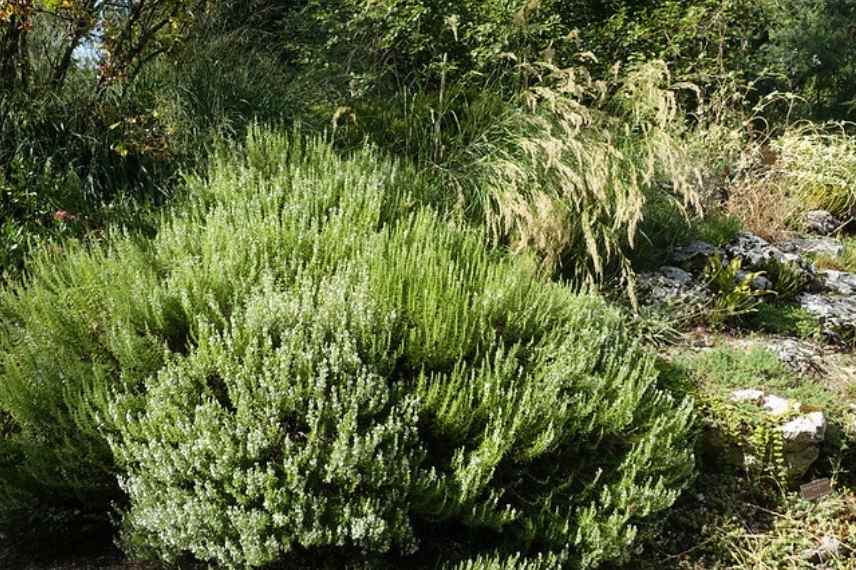
Rosemary and grasses, Botanical Garden Geneva (Photo: G. Vellut)
To find out more
France boasts stunning alpine gardens. Here are some refreshing walking ideas for summer, scattered across France: Haut Chitelet Alpine Garden (Alsace, over 1200 m above sea level), Tourmalet Alpine Botanical Garden (Hautes-Pyrénées), Lautaret Alpine Botanical Garden (Hautes-Alpes, at 2100 m above sea level)… and for Parisians longing for Vosges forests, the Albert Kahn Garden and the alpine garden at the Jardin des Plantes.
French books to have on hand for your landscaping:
- Flowers of the Alps, 400 species. Xaver FINKELZELLER. 2012. Ed. Ulmer
- Berchigranges. Joëlle and Gilles LE SCANFF-MAYER. 2008. Ed. Ulmer
- Mountain Gardens and Vegetable Plots. Igerbault Snezana. 2012. Ed. Rouergue
Escape with Alexandra to the Haut Chitelet Garden, the botanical garden in Grenoble, and the Lautaret Alpine Botanical Garden!
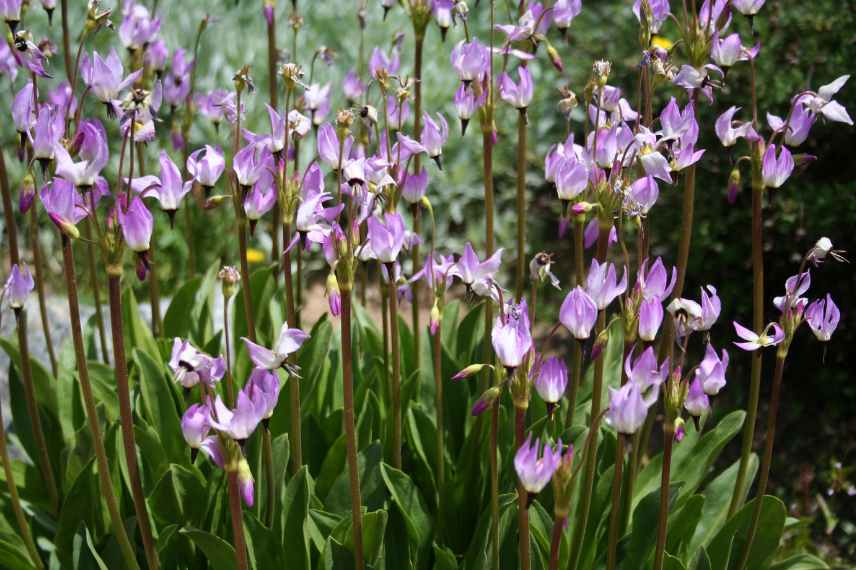
Dodecatheon redolens at Lautaret Botanical Garden
- Subscribe!
- Contents
Comments