




























Choosing an Aronia
Depending on the height, the colour of the berries, or the autumn foliage.
Contents
Aronia is a North American deciduous bush appreciated for its spring flowering, edible berries, and foliage that takes on lovely red or orange hues in autumn. It forms a bush of highly variable size (50 cm to 3 m tall depending on the varieties) and bears lovely clusters of white or pink flowers in spring, which are melliferous. These are followed by the appearance of berries, red or black, particularly rich in antioxidants and vitamins. Aronias come in several species and varieties, distinguished notably by their size and the colour of their berries… Discover how to choose among them and find the ideal variety for your garden!
And to learn all about growing Aronia, check out our complete guide: “Aronia: Planting, Pruning and Maintenance”

According to height
The largest Aronias:
These Aronias reach heights between 1.5 m and 3 m. They should be grown in open ground and can be planted individually, in free and wild hedges, or in a shrub bed. Feel free to plant them together in groups of 3 to 5 young plants of the same variety.
- Aronia arbutifolia ‘Brilliant’ : this red-berried Aronia forms a bush that reaches up to 3 m in height at ripeness. It bears dark green leaves that turn fiery red in autumn.
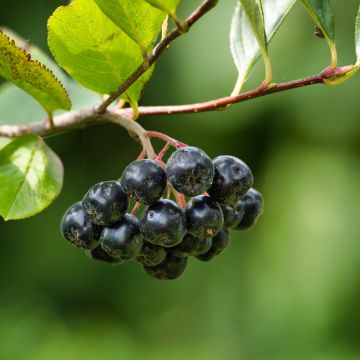
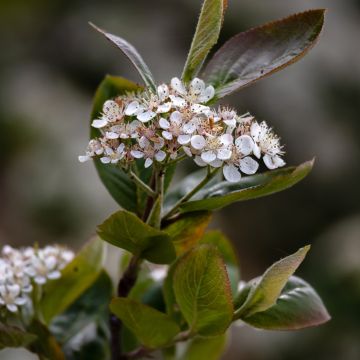
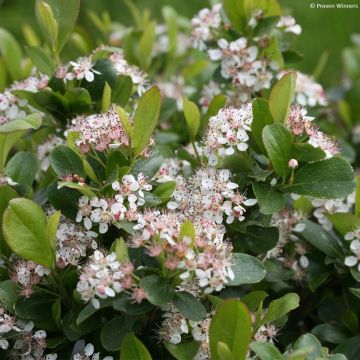
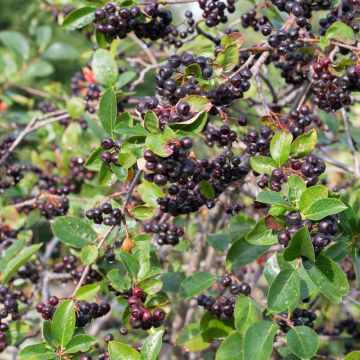
- Aronia melanocarpa : it forms a spreading bush that can reach up to 2 m in height, with a spread of 2.5 to 3 m. In spring, it bears white to pale pink flowers, about 2 cm in diameter, followed by black berries in autumn.
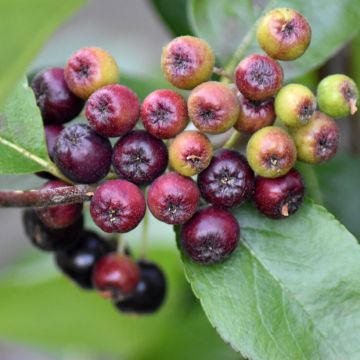
- Aronia prunifolia ‘Viking’: this variety has been selected for its large purplish-black fruits, borne on an upright bush, 1.5 to 2 m tall with a spread of about 1.5 m.
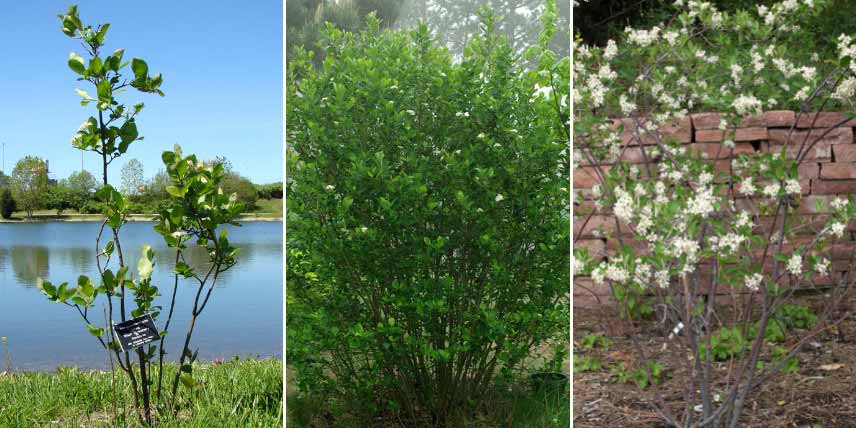
Aronia prunifolia ‘Viking’, Aronia melanocarpa and Aronia arbutifolia ‘Brilliant’ (photos: Dan Keck / Babij / Andrey Zharkikh)
The smallest Aronias:
They are particularly suited for small spaces and city gardens, and can even be grown in a large pot or container, for example on a terrace.
- Aronia melanocarpa ‘Revontuli Mound’ : this Aronia is distinguished by its particularly low and spreading habit, as it does not exceed 50 cm in height with a spread of 75 cm.
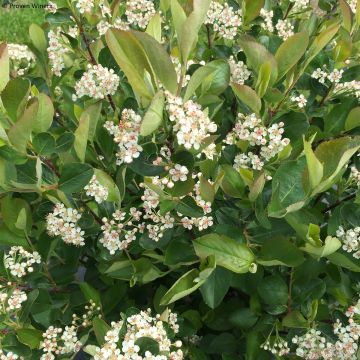
- Aronia melanocarpa ‘Hugin’: it forms a compact bush of about 1 m in all directions and offers clusters of small white flowers in spring, followed by edible black berries in autumn.
Read also
Aronia: planting, pruning and careAccording to the colour of the berries
Red-berried Aronias:
- Aronia arbutifolia ‘Brilliant’: this variety (as well as the species type and other varieties of Aronia arbutifolia) is distinguished by its bright red, highly decorative fruits. Although edible, they are less tasty than those of black-berried aronias. It forms a large bush about 3 m high and 2 m wide, and is also valued for its foliage, which turns a brilliant red in autumn.
Black-berried Aronias:
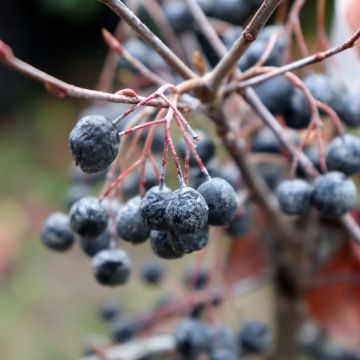
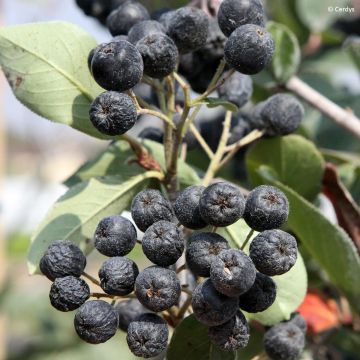
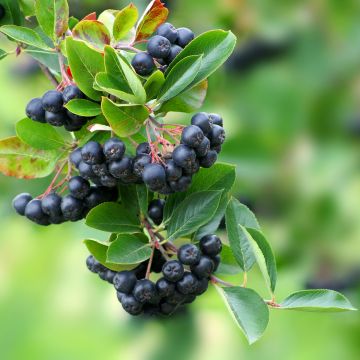
- Aronia melanocarpa: this is indeed the meaning of its species name (melanos: “black”, karpos: “fruit”). It forms a bush about 2 m high, appreciated for both its ornamental qualities and its edible berries. Gathered in corymbs, they are shiny black and attached to the branches by red petioles. Aronia melanocarpa is available in many varieties.
- Aronia prunifolia: this Aronia forms a bush that reaches between 1.5 m and 2 m high, offering white flower bouquets in spring, followed by edible black fruits. There are several varieties selected for their generous fruiting: ‘Nero’, ‘Viking’, and ‘Aron’.
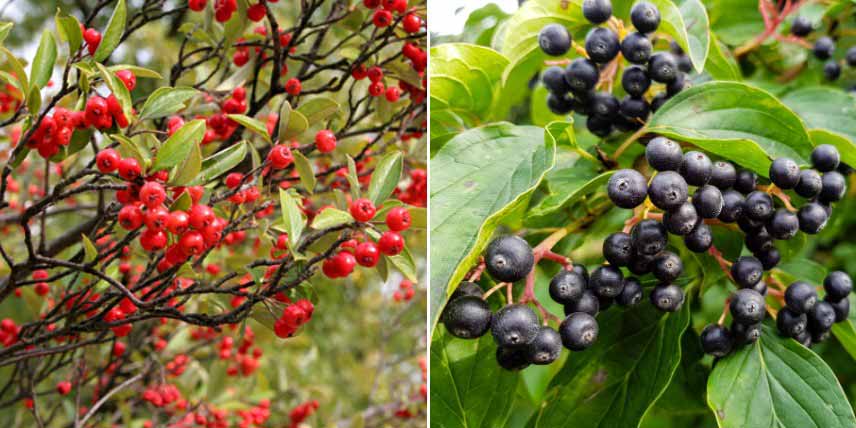
Aronia arbutifolia and Aronia melanocarpa
Discover other Aronia
View all →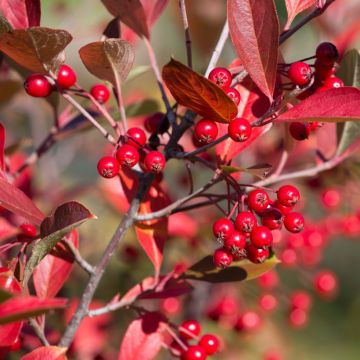
Available in 2 sizes
Available in 2 sizes
Available in 2 sizes
Available in 2 sizes
Available in 1 sizes
Available in 1 sizes
Available in 1 sizes
Available in 1 sizes
Available in 1 sizes
Available in 1 sizes
Depending on the use
For edible fruits:
The fruits of Aronia can be consumed fresh or used in pastries, syrups, jams, and jellies. They are particularly interesting from a nutritional standpoint, being rich in vitamins B and C, minerals, and antioxidants. Although Aronia arbutifolia, A. melanocarpa, and A. prunifolia all produce edible berries, the black-fruited varieties are the most prized for their flavour. Avoid Aronia arbutifolia, as its fruits are less tasty.
- Aronia prunifolia ‘Nero’: this is one of the most commonly consumed varieties. It has been selected for its large fruits (1.5 cm in diameter) with a sweet flavour.
- Aronia prunifolia ‘Viking’: it also offers generous fruiting, with large black fruits.
- Aronia melanocarpa ‘Autumn Magic’: it is appealing for both its edible black berries, which have a blackcurrant flavour, and its stunning autumn foliage.
Feel free to pair these Aronias with other edible fruiting bushes: blueberries, blackcurrants, raspberries, honeyberries (Lonicera kamtschatica), Goji…
There are also Sorbaronias: hybrids resulting from a cross-breeding between Aronia and the rowan tree, Sorbus aucuparia. These bushes reach heights of 3 to 4 m and are valued for their large fruits with a sweet and tangy flavour.
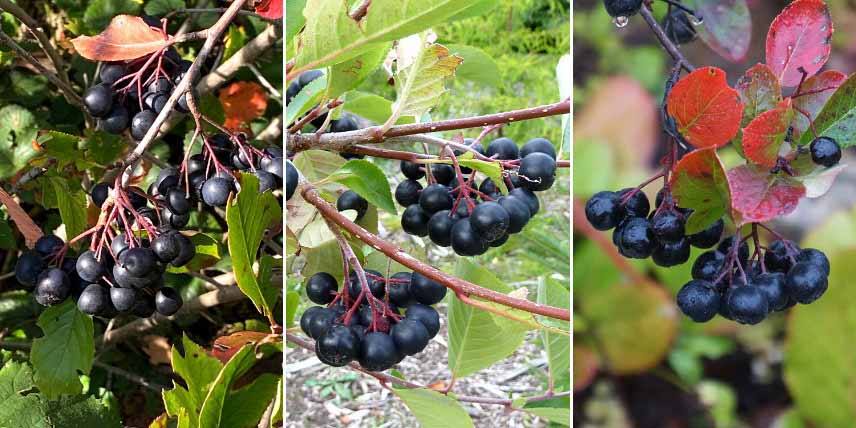
Aronia prunifolia ‘Nero’ (photo: Tauralbus), Aronia prunifolia ‘Viking’ (W. Cutler) and Aronia melanocarpa ‘Autumn Magic’
For beautiful autumn colours:
- Aronia arbutifolia ‘Brilliant’: very decorative, this aronia offers dark green foliage that turns bright red in autumn. It also bears clusters of white flowers in spring, followed by red fruits.
- Aronia melanocarpa ‘Autumn Magic’: it forms a bushy shrub with dark green leaves that turn orange and then purplish-red in autumn before falling. Its spring flowering, which is white to pale pink, is followed by the appearance of black berries. More generally, all Aronia melanocarpa (species and varieties) display beautiful orange hues in autumn.
Create a vibrant autumn garden with these aronias, alongside other shrubs with lovely autumn colours: Parrotia persica, Japanese maples, Euonymus alatus (winged euonymus), dogwoods…
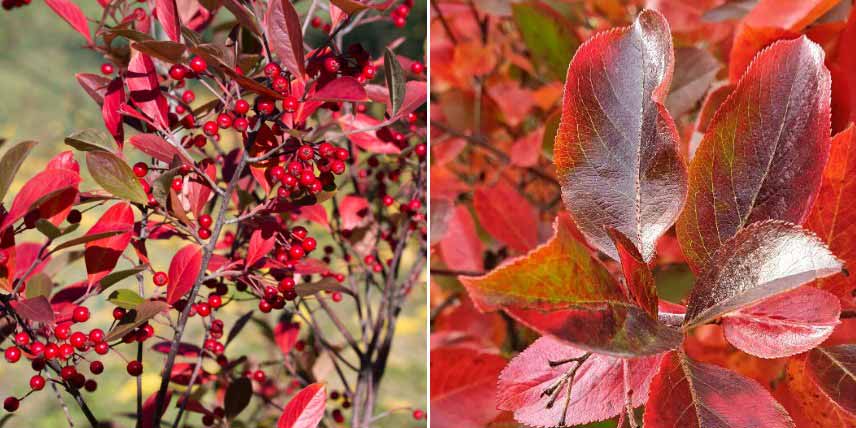
Aronia arbutifolia ‘Brilliant’ and Aronia melanocarpa (photo: AnnCatrin Blyckerts)
- Subscribe!
- Contents
Comments