
Euonymus alatus - Burning Bush

Euonymus alatus - Burning Bush

Euonymus alatus - Burning Bush

Euonymus alatus - Burning Bush

Euonymus alatus - Burning Bush

Euonymus alatus - Burning Bush

Euonymus alatus - Burning Bush

Euonymus alatus - Burning Bush

Euonymus alatus - Burning Bush

Euonymus alatus - Burning Bush

Euonymus alatus - Burning Bush

Euonymus alatus - Burning Bush

Euonymus alatus - Burning Bush
Euonymus alatus - Burning Bush
Euonymus alatus
Winged spindle, winged euonymus, burning bush
Beautiful plant that matches the description. The scarlet autumn colors are magnificent. Can't wait for it to grow bigger.
Anne-Laure , 27/10/2025
Back-to-school special offer!
Get €10 off for every €50 you spend! And get up to €40 off on a single order.
How does it work?
1. Shop your favourites
Add your favourite plants to your basket. For every €50 you spend (excluding delivery charges, store credit and the plastic-free option), you’ll receive a €10 voucher.
€50 spent = €10 voucher
€100 spent = €20 voucher
€150 spent = €30 voucher
€200 spent = €40 voucher
2. Place your order
Once your basket reaches one of the spending thresholds, place your order. You can even choose your delivery date!
3. Receive your voucher
As soon as your order has been shipped, you’ll receive an email containing your personal voucher code and its value.
4. Use it on your next order
Your voucher is valid for 90 days from the date you receive it. It can be used once only, on a new order worth at least the value of the voucher, excluding delivery charges.
Please note: Vouchers can be combined with other offers, but cannot be split or refunded.
Home or relay delivery (depending on size and destination)
Important: You may be charged customs duties by your country’s customs authorities upon delivery.
Schedule delivery date
and select date in basket
This plant carries a 24 months recovery warranty
More information
We guarantee the quality of our plants for a full growing cycle, and will replace at our expense any plant that fails to recover under normal climatic and planting conditions.

Does this plant fit my garden?
Set up your Plantfit profile →
Description
Euonymus alatus, le fusain ailé, est l’un des meilleurs arbustes pour donner de la couleur au jardin en automne. Son feuillage caduc se colore de rose vif, rouge écarlate, cramoisi et pourpre, tandis que mûrissent ses petits fruits rouges et orange. En hiver, on peut admirer ses branches garnies d’étroites ailes de liège un peu insolites. Très rustique, facile à cultiver à peu près partout, résistant à la sécheresse estivale une fois bien enraciné, il demande peu de soins et conserve naturellement un beau port ample et buissonnant.
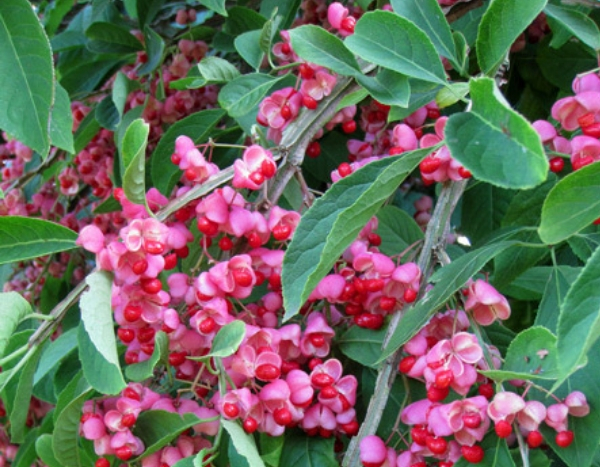
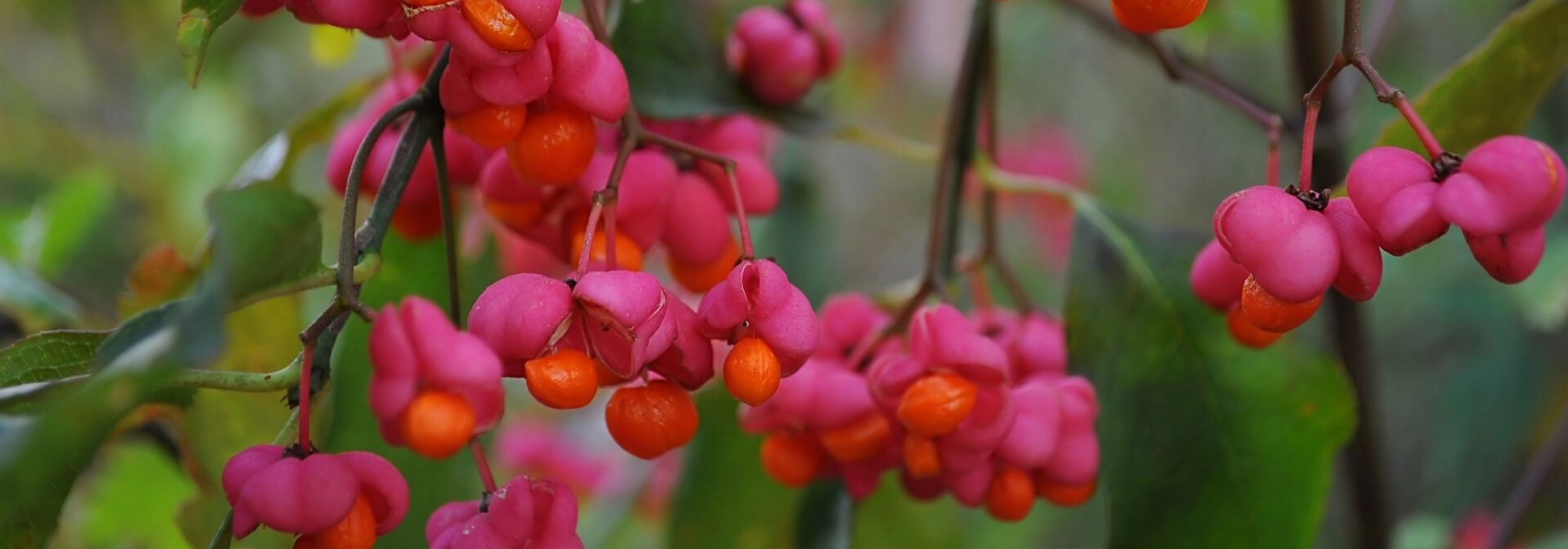
L’Euonymus alatus est une espèce botanique de la famille des Célastracées, originaire d’une vaste région comprise entre le sud de la Sibérie, la Chine, la péninsule coréenne et le Japon. Dans son milieu naturel, il pousse dans les forêts claires, les fourrés et en lisière de bois. L’arbuste présente un port buissonnant, large et étalé, moins régulier que celui du cultivar ‘Compactus’. Sa croissance est plutôt lente. Il mesure 2 m à 2,50 m de hauteur et presque autant d’envergure après de nombreuses années ; ce fusain peut approcher 3 m de haut dans de très bonnes conditions. Ses branches portent deux à quatre bandes de liège minces et saillantes, à l’origine de son nom de fusain ailé. Les feuilles opposées, ovales et finement dentées, mesurent 5 à 8 cm de longueur. D'un vert moyen au printemps et en été, elles prennent des couleurs automnales particulièrement intenses lorsque l’arbuste reçoit suffisamment de soleil. En mai et juin apparaissent de petites fleurs verdâtres réunies en bouquets discrets. Elles sont suivies par la formation de capsules rouge pourpré, larges de près de 1 cm, qui s’ouvrent en automne en dévoilant des graines entourées d’une enveloppe orange vif. Ces fruits décoratifs sont recherchés par les oiseaux. Ce bel arbuste résiste jusqu’à –25 °C en pointe.
Le fusain ailé est particulièrement beau en sujet isolé, sur une pelouse ou devant un écran de feuillage persistant qui sublime ses couleurs automnales. Il trouve également sa place dans une haie libre ou un grand massif arbustif, dans un jardin anglais, naturaliste ou japonisant. Inspirez-vous de la nature : dans les forêts mixtes des monts Qinling, en Chine, l’Euonymus alatus pousse notamment avec le rosier multiflore (Rosa multiflora), la spirée de Fritsch (Spiraea fritschiana) et l'Abelia dielsii. Ces arbustes y accompagnent par ailleurs le noisetier hétérophylle (Corylus heterophylla) et des trèfles en arbre tels que le Lespedeza bicolor. Dans les forêts du nord-est de ce grand pays, il accompagne le pin de Corée, le noisetier de Mandchourie, le seringat de Schrenck et la vigne de l’Amour. Au Japon, on le rencontre avec des chênes, des bouleaux, des érables japonais, l'arbre à caramel, le Magnolia kobus, le Cornus controversa, l’Aralia elata et plusieurs viornes asiatiques.
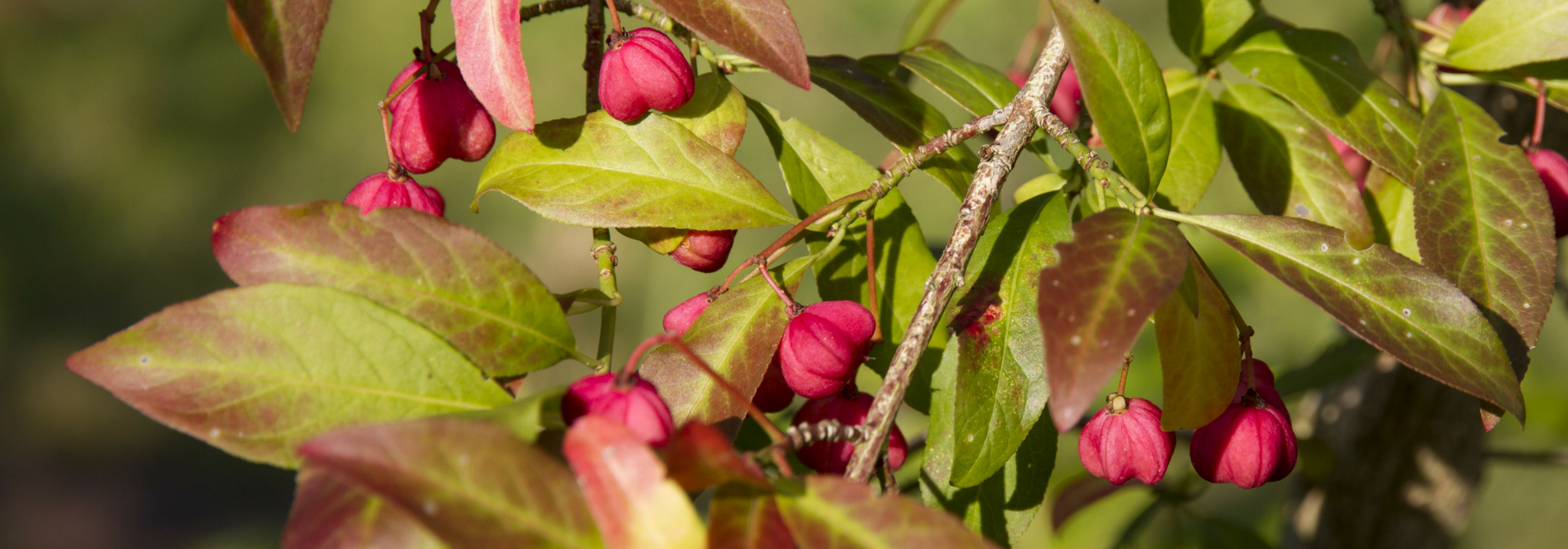
Euonymus alatus - Burning Bush in pictures


Plant habit
Flowering
Foliage
Botanical data
Euonymus
alatus
Celastraceae
Winged spindle, winged euonymus, burning bush
Russia, China, Southeast Asia
Planting and care
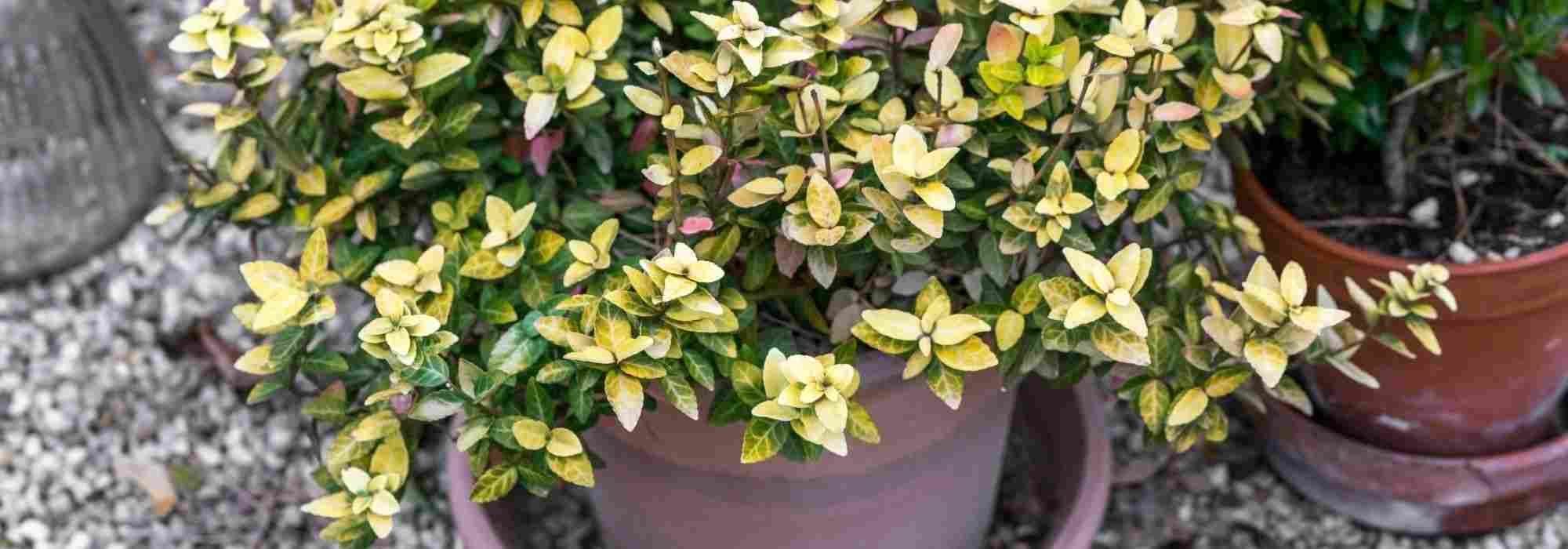
Euonymus alatus is best planted from September to November or from February to April, when there is no risk of frost. In Mediterranean regions, plant it in September or October instead, when the rains return. The sun encourages the most vivid autumn colours, but partial shade is well tolerated, particularly in a hot climate. This shrub grows in ordinary soil, whether acid, neutral or chalky, and whether silty, clayey or stony, provided that water does not stagnate around the roots. Regular watering is useful during the first two summers. Once rooted, it tolerates dry spells well, although a prolonged drought can cause premature leaf drop. No fertiliser is necessary; a little compost is enough in very poor soil. In an informal hedge, a spacing of 1.5 to 2 m allows each shrub to develop its natural habit.
Planting period
Intended location
Care
Planting & care advice
-
-
-

-
-
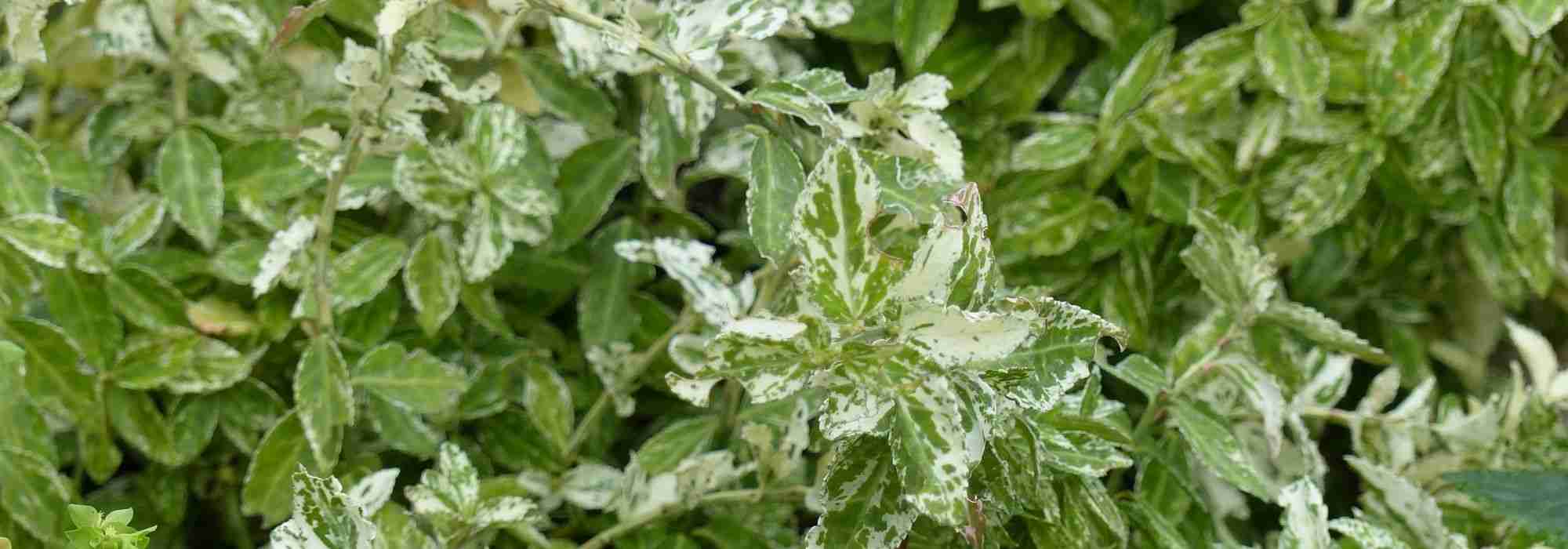
-
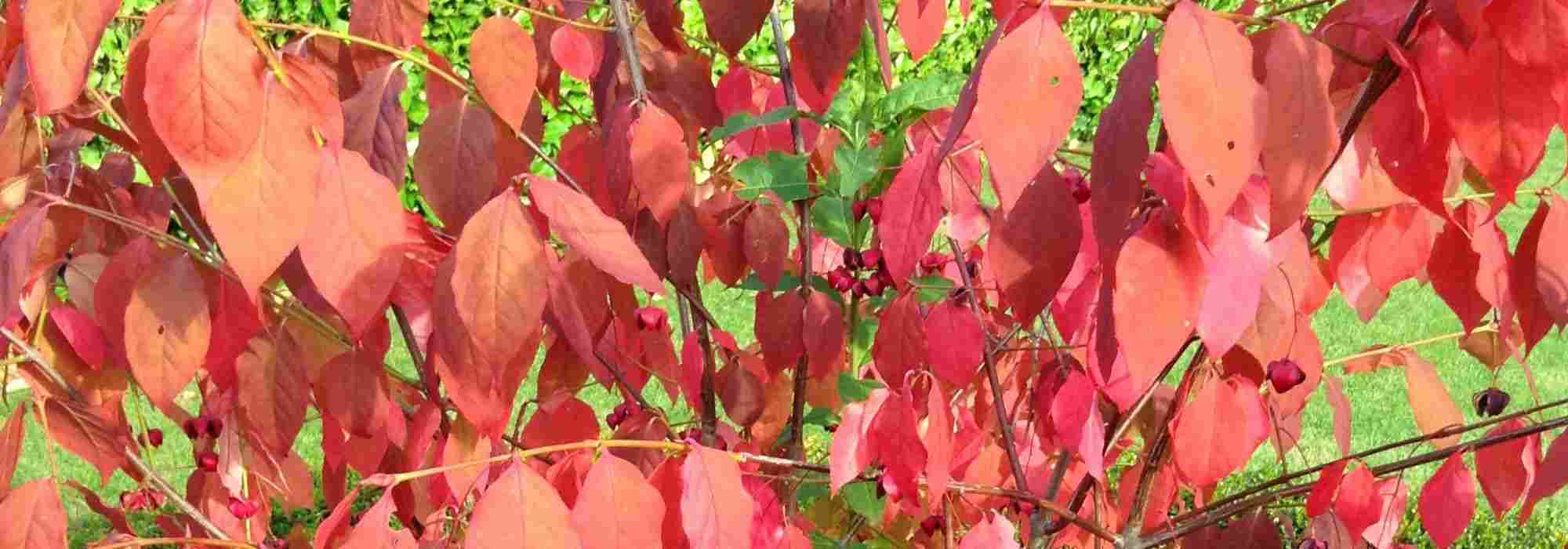
-
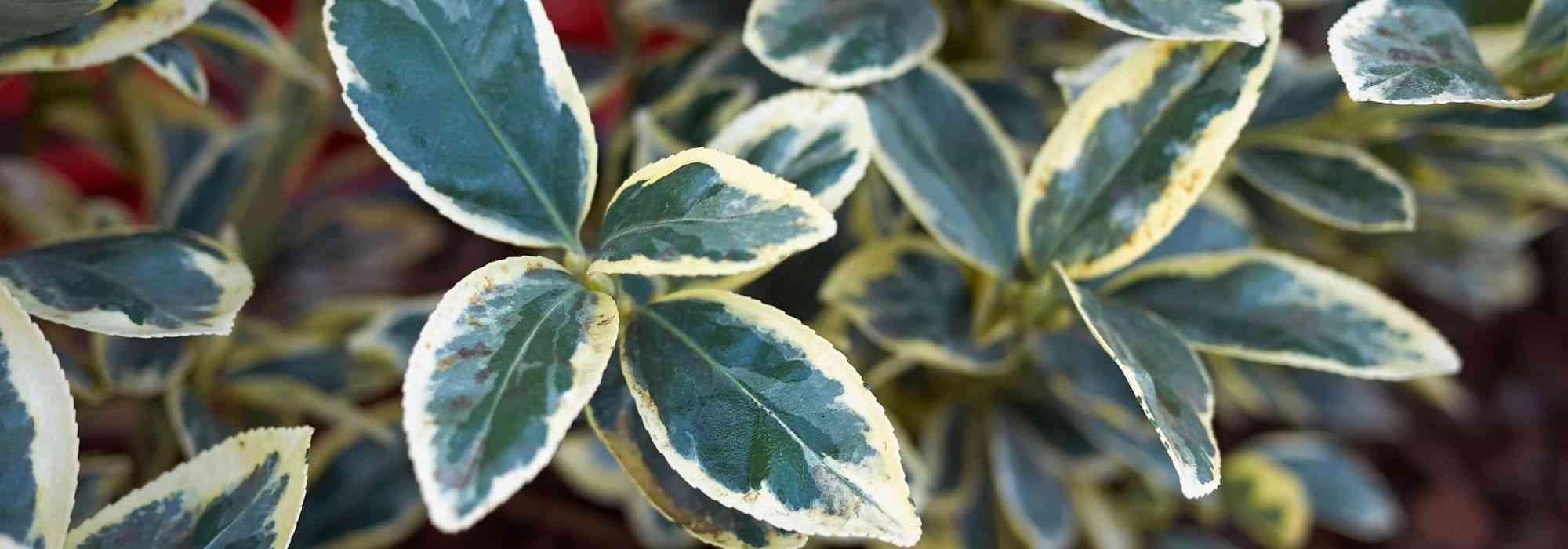
-
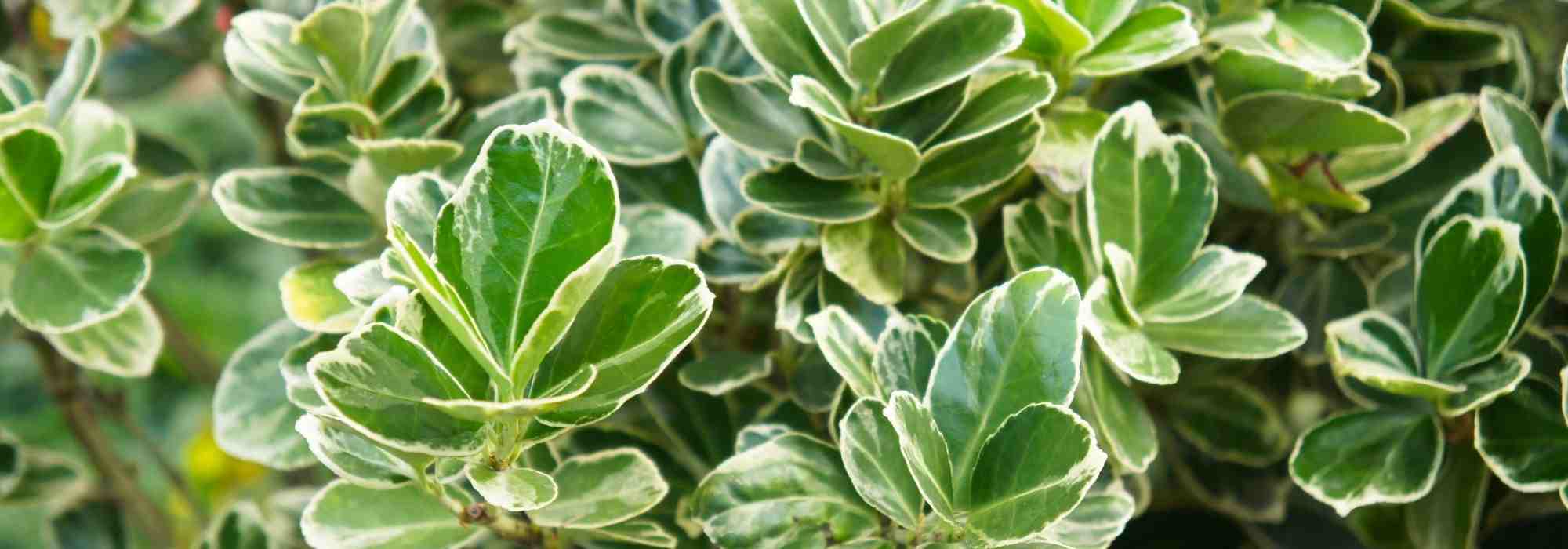
-
, onOrder confirmed
Reply from on Promesse de fleurs
Recently viewed products
Haven't found what you were looking for?
Hardiness is the lowest winter temperature a plant can endure without suffering serious damage or even dying. However, hardiness is affected by location (a sheltered area, such as a patio), protection (winter cover) and soil type (hardiness is improved by well-drained soil).
In temperate climates, pruning of spring-flowering shrubs (forsythia, spireas, etc.) should be done just after flowering.
Pruning of summer-flowering shrubs (Indian Lilac, Perovskia, etc.) can be done in winter or spring.
In cold regions as well as with frost-sensitive plants, avoid pruning too early when severe frosts may still occur.
The harvesting period indicated on our website applies to countries and regions in USDA zone 8 (France, England, Ireland, the Netherlands).
In colder areas (Scandinavia, Poland, Austria...) fruit and vegetable harvests are likely to be delayed by 3-4 weeks.
In warmer areas (Italy, Spain, Greece, etc.), harvesting will probably take place earlier, depending on weather conditions.
The sowing periods indicated on our website apply to countries and regions within USDA Zone 8 (France, UK, Ireland, Netherlands).
In colder areas (Scandinavia, Poland, Austria...), delay any outdoor sowing by 3-4 weeks, or sow under glass.
In warmer climes (Italy, Spain, Greece, etc.), bring outdoor sowing forward by a few weeks.
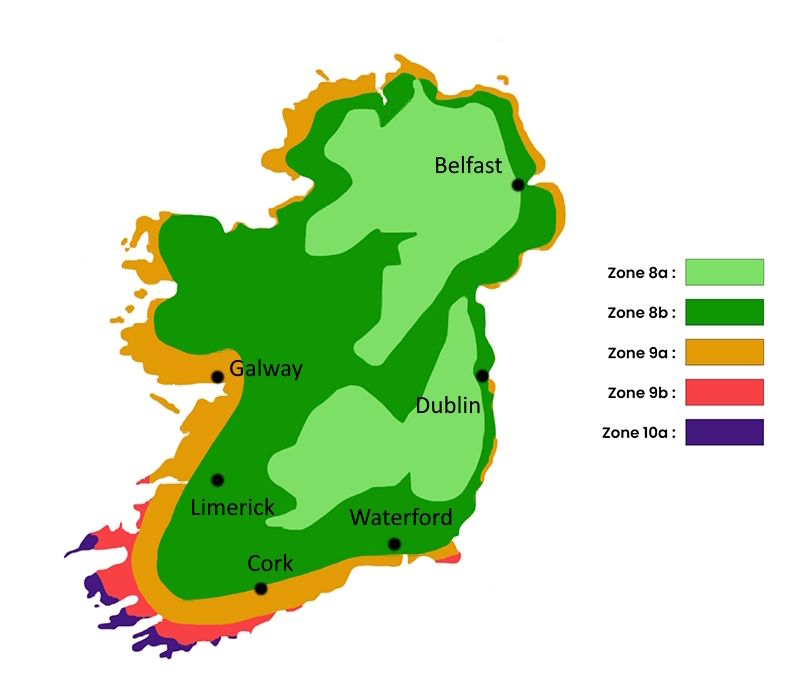
The planting period indicated on our website applies to regions in USDA Zone 9a (East Coast and Midlands: Dublin, Wexford, Waterford, Kilkenny, Portlaoise). It will vary depending on where you live:
- On the west coast and in the north-west (Galway, Limerick, Sligo, Donegal, Westport), delay planting by 1 to 2 weeks in spring and bring it forward by 1 to 2 weeks in autumn compared to the dates given, preferably choosing periods without strong winds.
- In the inland hills and plateaus (Wicklow Mountains, Macgillycuddy’s Reeks, Connemara, Killarney), it is best to plant in spring (April–May) or autumn (September–October), avoiding periods of waterlogged soil in winter and strong winds, which pose the main risk to newly planted trees in these areas.
The flowering period indicated on our website applies to regions in USDA Zone 9a, such as the East Coast and Midlands, including Dublin, Wexford, Waterford, Kilkenny and Portlaoise.
This will vary depending on where you live:
- On the west coast and in the northwest (Galway, Limerick, Sligo, Donegal and Westport), it will be delayed by one to two weeks compared to the given dates, due to stronger Atlantic winds and less spring sunshine.
- In the inland hills and plateaus (the Wicklow Mountains, the Macgillycuddy's Reeks, Connemara and Killarney), flowering will be delayed by two to three weeks. Flowering mainly occurs between May and July, with the limiting factors being less frost and more of the excessive humidity, strong winds and lack of sunshine that are characteristic of these areas.
Shipping country and language
Your country of residence may be:
Your country of residence is:
For a better user experience on our website, you can select:
Your shipping country:
-
 Austria
-
 Belgium
-
 Bosnia & Herzegovina
-
 Bulgaria
-
 Croatia
-
 Cyprus
-
 Czechia
-
 Denmark
-
 Estonia
-
 Finland
-
 France
-
 Germany
-
 Greece
-
 Hungary
-
 Iceland
-
 Ireland
-
 Italy
-
 Latvia
-
 Liechtenstein
-
 Lithuania
-
 Luxembourg
-
 Malta
-
 Netherlands
-
 Poland
-
 Portugal
-
 Romania
-
 Serbia
-
 Slovakia
-
 Slovenia
-
 Spain
-
 Sweden
-
 Switzerland
Language:
-
French
-
 English
-
Spanish
-
Italian
-
German
-
Portuguese
-
Dutch
-
Finnish
My Account
Hello
My wish lists
My cart
Log in / Register
Existing customer?
This form is protected by reCAPTCHA - the Google Privacy Policy and Terms of Service apply.
New customer?
Create an account to track your orders, access our customer service and, if you wish, make the most of our upcoming offers.