





























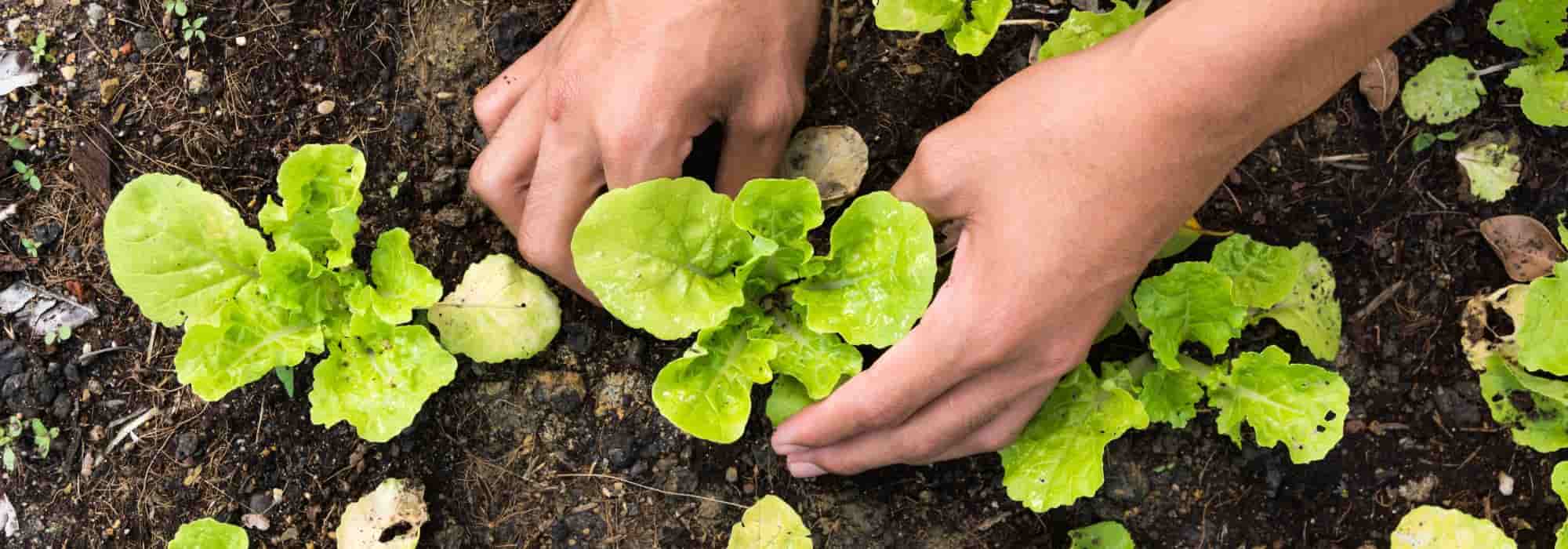
All the vegetables to grow in spring in the vegetable garden
Spring is the key season in the vegetable garden. So get ready for your sowing and planting!
Contents
On the calendar, spring begins on 20 March and ends on 21 June with the summer solstice. Spring is primarily a time of awakening for nature: trees, bushes, and perennial plants emerge from their winter dormancy. They burst forth with their buds, bloom their flowers, and form the first fruits. The soil warms up, the rays of the sun become more comforting, and the days grow longer… In short, it’s time to reinvest in your vegetable garden, as spring is also the key season for sowing and planting. The summer harvests will indeed depend on this spring.
However, spring is also a season of contrasts. The sun can shine during the day, while night frosts can wipe out young shoots in an instant. In some regions with later winters, gardeners patiently await the Ice Saints to plant the more delicate vegetables.
That said, to have a productive vegetable garden, it is essential to sow or plant certain vegetables between March and May. So grab your trowels and seeders, here is the list of vegetables to grow in the vegetable garden this spring.

Root vegetables to grow in spring
Root vegetables are those whose roots or underground organs are consumed. Most of these vegetables are sown directly in the ground, as they cannot be transplanted. This is an advantage because the range of seed varieties for each species is much broader than the plants offered as plug plants or in pots. This allows for a variety of shapes, colours, and textures. Additionally, by staggering the sowings and planting in small quantities each time, you will achieve more sustainable and longer-lasting harvests.
Spring is the ideal season to sow many of these root vegetables. However, for certain species, you must wait until the soil is sufficiently warmed and, above all, well-drained.
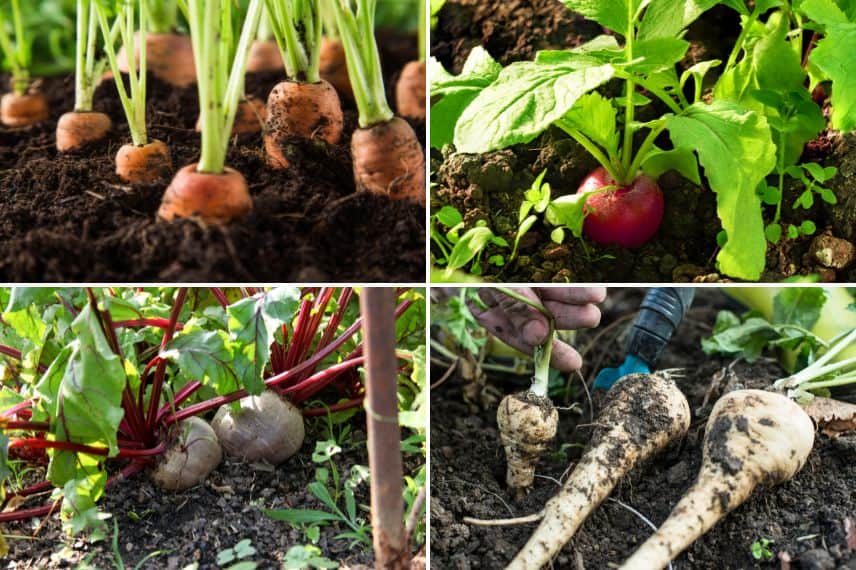
Carrots
In the ground, for a seasonal crop, carrots (Daucus carota) are sown between March and April to hope for a harvest between July and September. If you have enough space, do not hesitate to stagger the sowings and select orange, yellow, or white varieties.
Where to sow?
Carrots prefer humid, temperate climates and soils rich in organic matter, rather cool and light, deep, and especially well-tilled. Carrots dislike stony soils where the roots become deformed. Similarly, very heavy soils are not suitable for them (unless you choose round carrots).
A sunny location is preferable.
How to sow?
- Work the soil deeply, weed carefully, and remove all stones
- Rake to level the soil and eliminate any remaining stones and plant debris
- Draw deep furrows of 1 to 2 cm, spaced 25 cm apart
- Sow thinly and cover with a fine layer of soil (you can mix your carrot seeds with sand for lighter sowing)
- Firm down with the back of the rake
- Water with a fine spray.
And after?
Keep the soil moist until the seeds germinate and thin out to every 8 to 10 cm.
For further reading: Carrot: sowing, growing, and harvesting in the vegetable garden
Radishes
Whether elongated or round, red, white, pink, yellow, or bicolour, radishes (Raphanus sativus) are essential in vegetable gardens due to their ease of cultivation. Moreover, their very rapid growth allows for a variety of flavours by multiplying the varieties. Ideally, in spring, radishes are sown in April, May, and June, every two weeks.
Where to sow?
Radishes prefer light, well-drained, and fairly fertile soils. In spring, they should be planted in a very sunny location, and the soil must remain cool.
How to sow?
Radishes are sown in rows, spaced 20 cm apart, or broadcast, at a depth of 1 cm for round radishes and 2 to 3 cm for long radishes. Then, cover with a fine layer of soil and firm down with the back of the rake. The first watering should be done with a very fine spray to avoid displacing the seeds.
Seed tapes are perfect for those who tend to sow too thickly!
And after?
The soil should be kept moist with regular watering. Thinning out will remove weak or overcrowded plants.
For further reading: Radish: sowing, growing, and harvesting
Beetroot
Beetroot (Beta vulgaris) produces beautiful roots that are elongated, globular, or flattened. It is a biennial plant grown as an annual, which is sensitive to frost. Therefore, for a seasonal crop in the ground, you should wait until mid-April to sow (sowing can continue until July). You can thus harvest as early as July.
Where to sow?
Beetroot prefers deep, rather cool, and especially rich soils. Therefore, you should add well-rotted manure or well-decomposed compost to the soil before sowing. Additionally, you can add a bit of wood ash or a fertiliser rich in potash. The location can be sunny or partially shaded.
How to sow?
- Work and loosen the soil well with a fork
- Draw lines spaced 30 cm apart, 1 to 2 cm deep
- Sow one seed every 5 cm
- Cover with a fine layer of soil and firm down with the back of the rake
- Water with a fine spray
And after?
Water to keep the soil moist and thin out, keeping only the strongest plants every 15 to 20 cm.
For further reading: Beetroot: sowing, planting, growing, and harvesting
Parsnip
Parsnip (Pastinaca sativa) is a winter root vegetable from the same family as carrots. Its roots are elongated, slightly twisted, and cream-coloured. It has a unique flavour and is delicious when puréed, made into chips, or braised like turnips and carrots. Parsnips are sown in the ground from March to the end of May, and they particularly enjoy humid oceanic climates. Harvesting occurs from July and continues into winter.
Where to sow?
Parsnips require deep, stone-free, fertile, and cool soil, somewhat heavy and deep. They thrive in sunny conditions but appreciate mild, humid climates.
How to sow?
- Work the soil deeply with a fork or broad fork
- Add a bit of compost
- Level with a rake to remove stones and plant debris
- Draw furrows 1 cm deep, spaced 30 to 40 cm apart
- Sow one seed every 3 cm
- Cover with fine soil, firm lightly, and water with a fine spray
And after?
Water to keep the soil moist. Thinning out should occur at 3 or 4 leaves, every 10 to 15 cm.
For further reading: Parsnip: sowing, growing, harvesting, storing
Sun vegetables to plant in spring
Spring is also the season for planting vegetables that brighten our summer tables. You can either buy them in pots or plug plants, or you may have taken the precaution of sowing them indoors as early as February or March, depending on the regions. Indeed, these summer-harvest vegetables are sensitive to cold and should only be planted outdoors when the risk of frost has completely passed, typically from mid-April to mid-May depending on the climate.
Among these sun-loving vegetables to plant in spring, we can mention tomatoes, courgettes, aubergines, peppers and chillies, melons, cucumbers, and gherkins. All require a very sunny position and fertile, well-drained, rather deep soil. 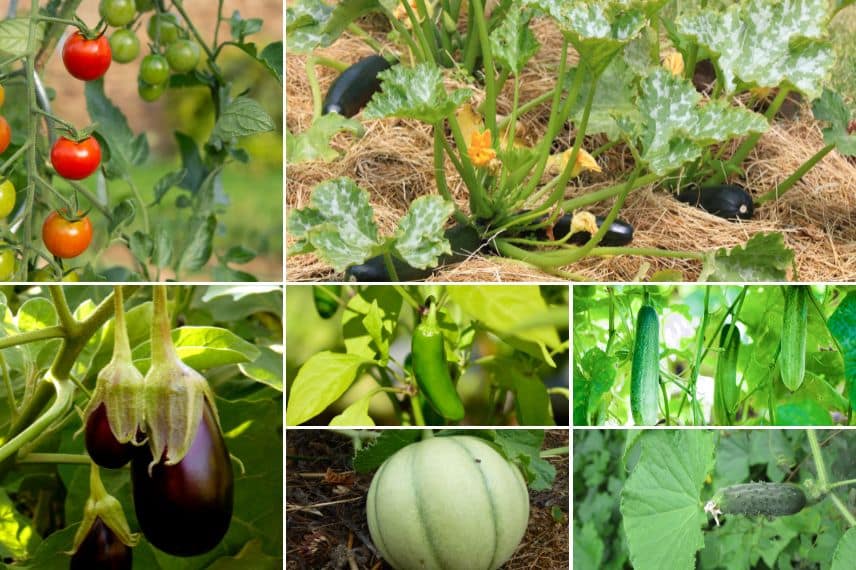
It is very important to respect the planting distances for each of these vegetables to ensure their proper development and especially to limit the risk of fungal diseases. Watering should be regular throughout the growing season. By adding mulch around their base, you will reduce the need for watering while maintaining a certain level of moisture.
Similarly, most of these vegetables need to be pruned or pinched to encourage fruiting. I explain everything in my article: Pruning Summer Vegetables: Why and How?
Feel free to consult our growing guides for each of these vegetables.
Discover other Vegetable gardens
View all →
Available in 1 sizes
Available in 1 sizes
Available in 1 sizes
Available in 1 sizes

Available in 1 sizes
Available in 1 sizes
Available in 1 sizes
Available in 1 sizes
Available in 1 sizes
Fabaceae or former legumes
Green beans or shelling beans, dwarf or climbing, peas and sugar snap peas, chickpeas, lentils, broad beans, and garden soybeans are also sown in spring, from March to the end of May (for most of them). Rich in protein, these vegetables deserve a prominent place in the vegetable garden for their abundant production, nutritional qualities, and the benefits they provide to the soil. Indeed, the nodosities present on their roots have the ability to fix atmospheric nitrogen and return it to the soil. This is therefore a benefit for neighbouring crops and future crops.
Their cultivation is relatively simple, and these vegetables require little care compared to other vegetable plants.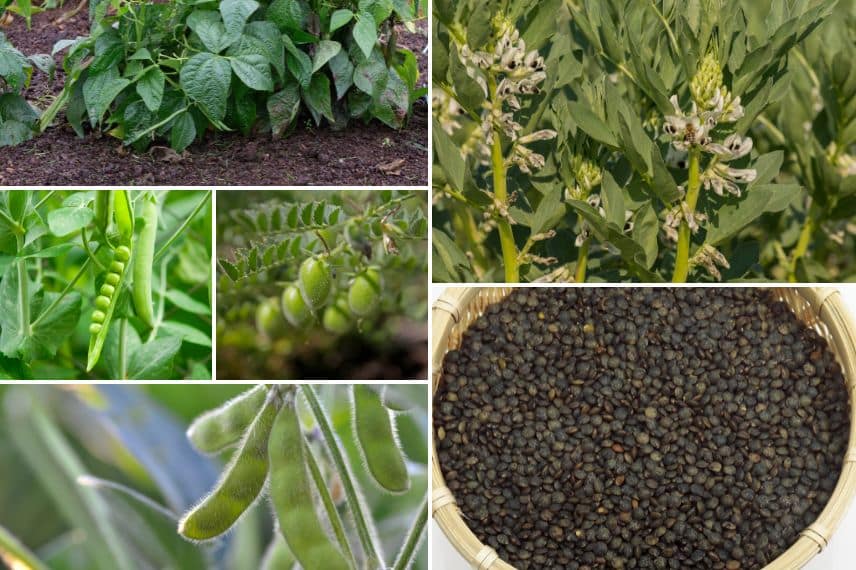
Beans and peas prefer light, cool, and fertile soils. Broad beans have a preference for deep soils but are not very demanding, lentils grow in all soils as long as they are light, while chickpeas thrive in loose, sandy soils. All need sunlight.
Our cultivation guides will provide you with more detailed information on sowing and planting, maintenance, and harvesting.
Other vegetables to plant in spring
Spring is also the planting season for potatoes (from April to June, coinciding with the flowering of lilacs), sweet potatoes (March), artichokes (between March and April), asparagus (April-May), cardoons (in May), Daubenton cabbage (from April to June), Chinese artichokes (May) and chards.
In spring, between April and the end of May, remember to sow broccoli, Brussels sprouts, cauliflower, cabbages and kale, kohlrabi, spring spinach, and salsify (March to May)…
You can also sow lettuces, some chicories like endive, rocket, and sweet corn (May).
Squashes, pumpkins and other gourds are also sown in spring, in April, under cover and in pots, or directly in the ground from mid-May.
You can consult our plant sheets for more information on the growing conditions for each of the mentioned vegetables.
- Subscribe!
- Contents

Comments