





























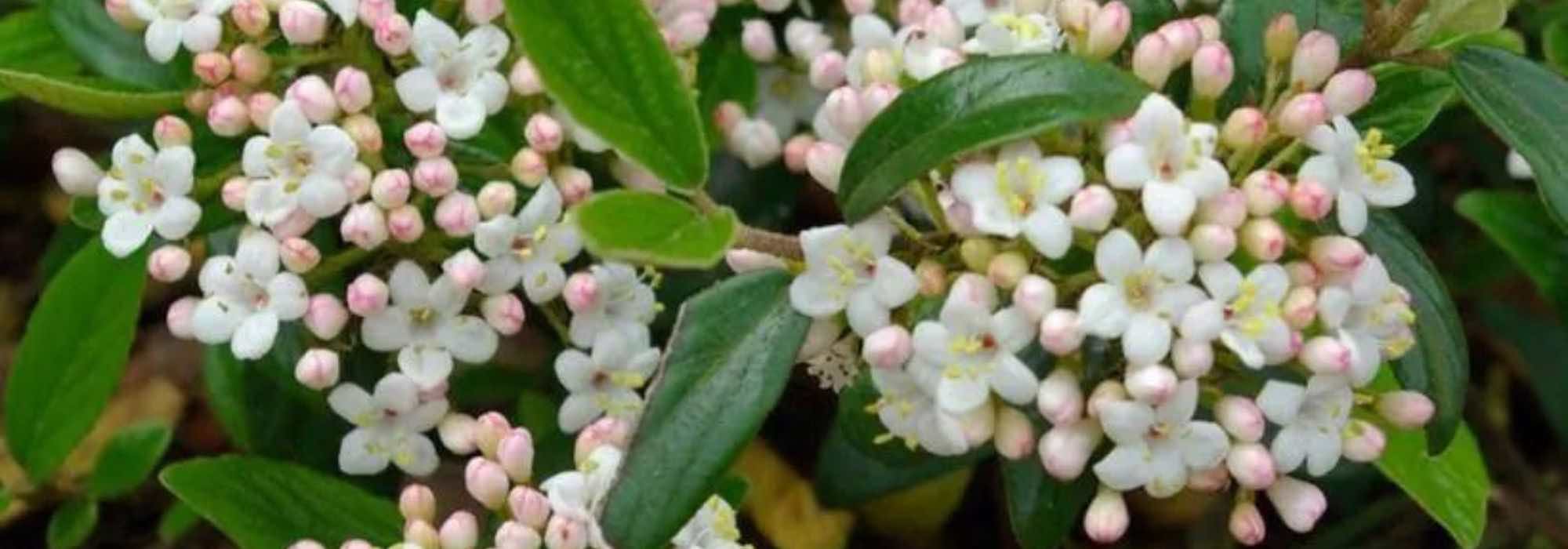
7 Viburnums for small gardens or containers
Our selection of dwarf or small Viburnum, which will fit seamlessly into urban gardens, on terraces or balconies
Contents
If viburnums are so popular in gardens, it’s due to their numerous ornamental qualities. Generous flowering, evergreen or autumn-coloured foliage, and even decorative fruiting… These bushes charmingly and easily dress the different seasons.
In terms of shape, most Viburnum reach between 2 and 4 metres in height, like the Viburnum opulus ‘Roseum’ or the wayfaring tree. However, there are smaller varieties that can easily be grown in small spaces or in pots. Here are our 7 favourite viburnums if you’re short on space in the garden, on the terrace, or the balcony!
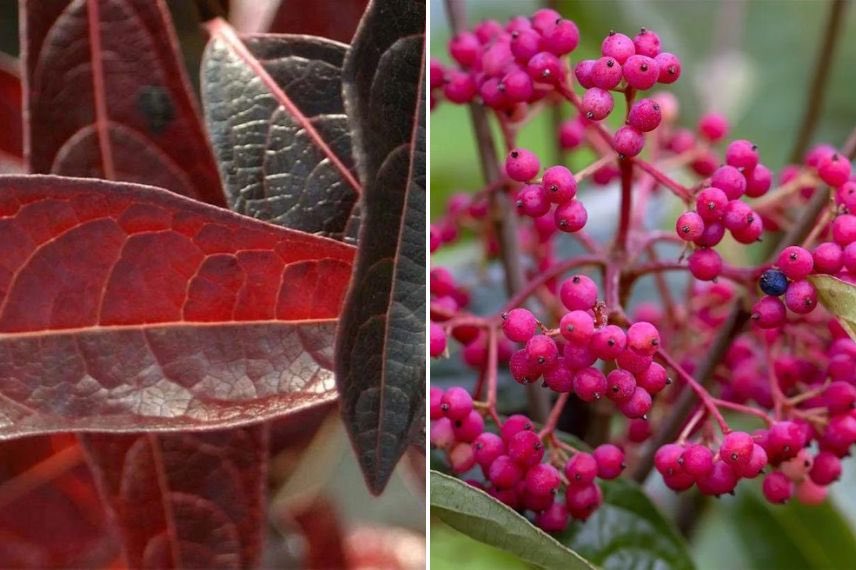
Viburnum nudum ‘Brandywine’: beautiful autumn foliage and decorative fruiting in winter
The cultivar ‘Brandywine’ is a delightful viburnum, ornamental in almost all seasons:
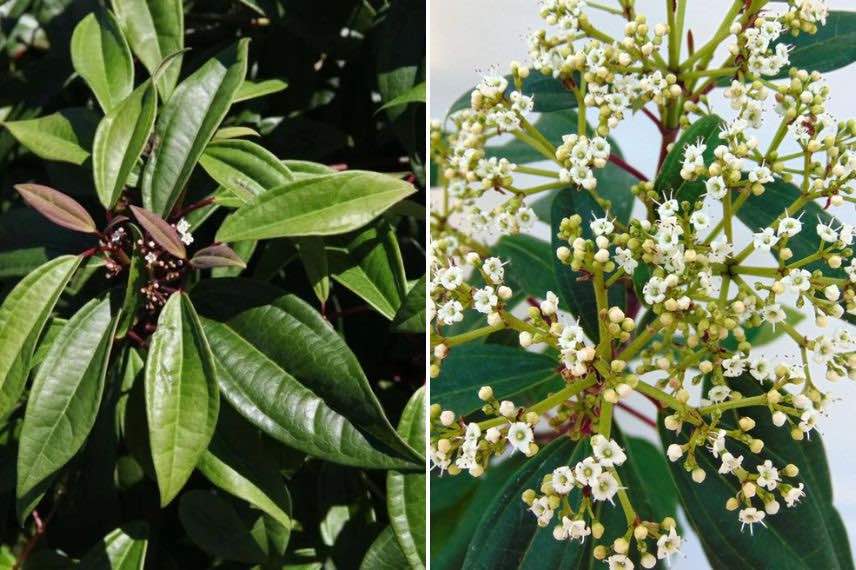
- At the end of spring, it produces first beautiful flattened corymbs of flowers, measuring between 10 and 15 cm in diameter. They display a bright white and inevitably attract pollinating insects.
- In autumn, its foliage changes colour, shifting from dark green to purplish red. In mild climates, experiencing only light frosts, it may even be evergreen.
- In winter, lovely decorative berries in clusters take over. They brighten the cold season with their vivid pink colours, later turning dark blue and almost blackish purple.
Its compact shape reaches only 1.60 metres in all directions, making it suitable for even small spaces. Plant this viburnum in a sunny or partially shaded position, in most soils that remain cool (moist but not waterlogged).
The natural charm of ‘Brandywine’ will be perfect for adding a rustic touch. Plant it in a pot, in a border, or in a free-standing hedge. Pair it with a snowberry that has flowering and fruiting in similar tones (Symphoricarpos doorenbosii ‘Magical Candy’ for example). Add a Deutzia, which will precede their flowering (‘Strawberry Fields’, Deutzia elegantissima ‘Rosealind’) for a very soft decor.
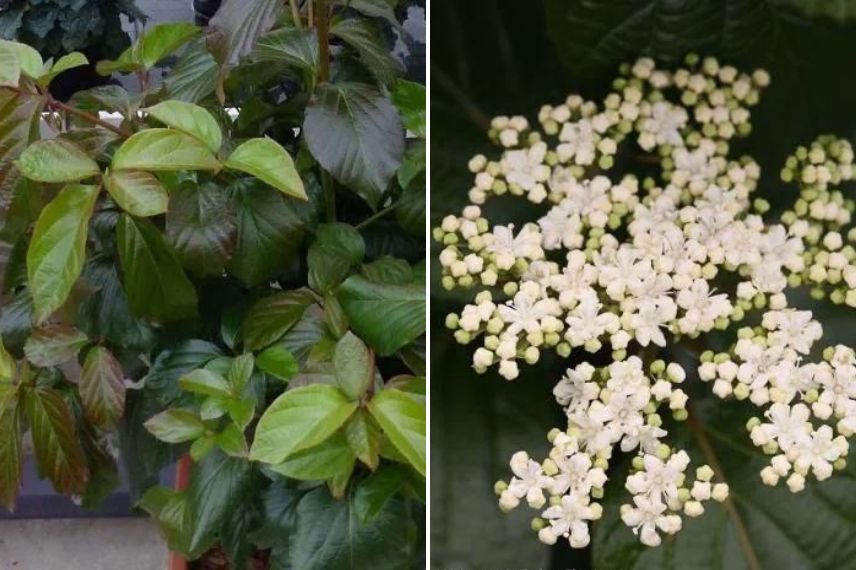
Viburnum ‘Shiny Dancer’: one of the smallest viburnums available
‘Shiny Dancer’ is a hybrid viburnum with a bushy, rounded, and dense habit. It will thrive in small spaces, as it only reaches 80 cm in all directions.
This Viburnum blooms in the heart of spring in May, for 2 to 3 weeks. It reveals large clusters of pure white flowers. The foliage is semi-evergreen and offers an evolving colour palette. The young shoots are initially red at the bud burst period, then take on a beautiful glossy, waxy green. In autumn, the leaves display stunning reddish to purplish hues. In winter, small red, then black berries will provide colour and light, delighting the birds.
Plant ‘Shiny Dancer’ in any soil that remains cool, on a terrace, balcony, or in a courtyard. It will thrive both in the ground and in pots.
For a magnificent autumn display, pair this viburnum with an Hydrangea macrophylla ‘Julisa’, whose foliage turns red in autumn. Add a Physocarpus opulifolius ‘Perspektiva’, with its leaves that redden over time.
Viburnum ‘Eskimo’: beautiful snowball-shaped inflorescences
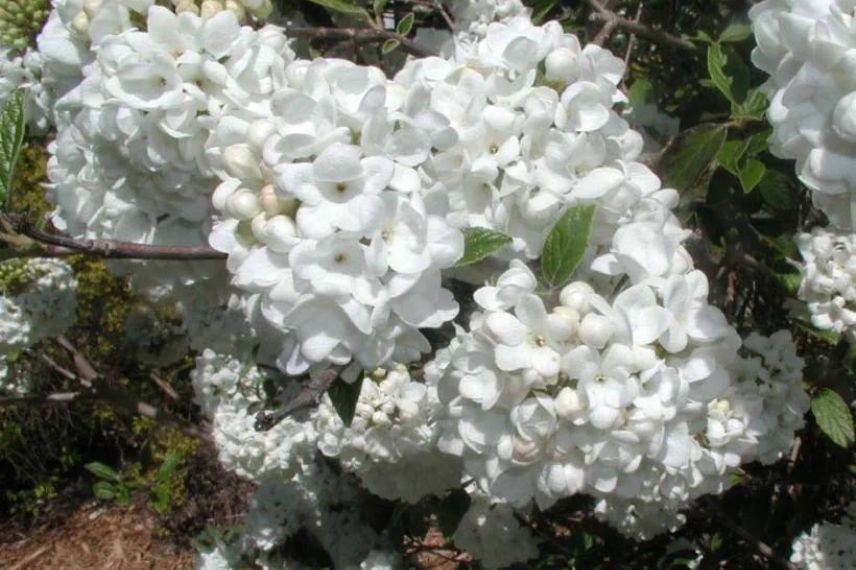
In spring, between April and May, ‘Eskimo’ delights us with a remarkable flowering display. It produces adorable spherical inflorescences of pure white, resembling real snowballs. They measure nearly 10 cm in diameter. Numerous and generous, they gently bend the branches under their weight.
But its ornamental qualities do not stop there. In autumn, the foliage takes centre stage, donning shades of purplish red. The fruiting, in the form of decorative red berries, then takes over during the cold season.
This small bush with slow growth reaches only 1 metre in all directions, making it an ideal candidate for pot cultivation or small spaces.
This hybrid Viburnum is just as easy to grow as its relatives. It thrives in full sun or partial shade and will be perfect for adorning terraces, balconies, or urban gardens. Plant it as a standalone to showcase it beautifully, or alongside other spring-flowering shrubs in soft tones. Consider the dwarf mock orange ‘Little White Love’ with its pure white double flowers, as well as a dwarf lilac (Syringa meyeri ‘Flowerfesta Pink’ or ‘Flowerfesta Purple’) in pink or purple tones.
Read also
Viburnum: 8 successful pairing ideasViburnum burkwoodii ‘Conoy’: a small floriferous and fragrant bush
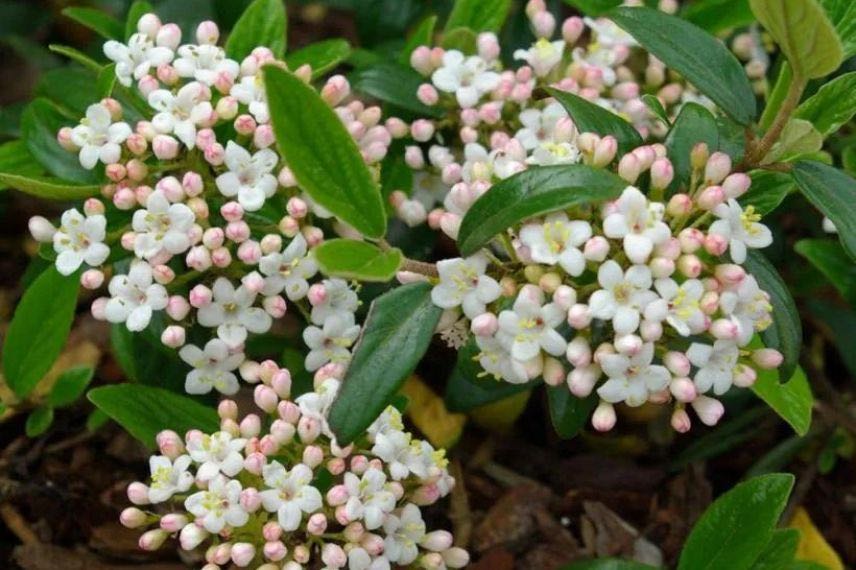
The Burkwood viburnum ‘Conoy’ reveals itself in spring, between April and May. It produces pink flower buds that gradually open into white flowers. These are gathered in a bouquet of about 10 cm in diameter. Fragrant, they exude notes of orange blossom.
The foliage, a glossy dark green, takes on lovely coppery hues in autumn. Our bush is also adorned with small red berries that turn black over time.
Its spherical and compact shape, reaching 1.5 metres in all directions, allows it to fit into any small space. Slow-growing, it will thrive for many years in a container or pot, perfect for greening up terraces, balconies, patios, etc. In any case, place it near pathways to fully enjoy its fragrance.
Grow it in full sun or partial shade in any ordinary soil that remains cool.
Alongside it, for a fragrant atmosphere for many months, plant an abelia such as ‘White Surprise’ and a rose such as ’Scentimental’ or ‘Princesse de Galles’.
Viburnum plicatum ‘Kilimanjaro’: a lovely pyramidal habit to add height
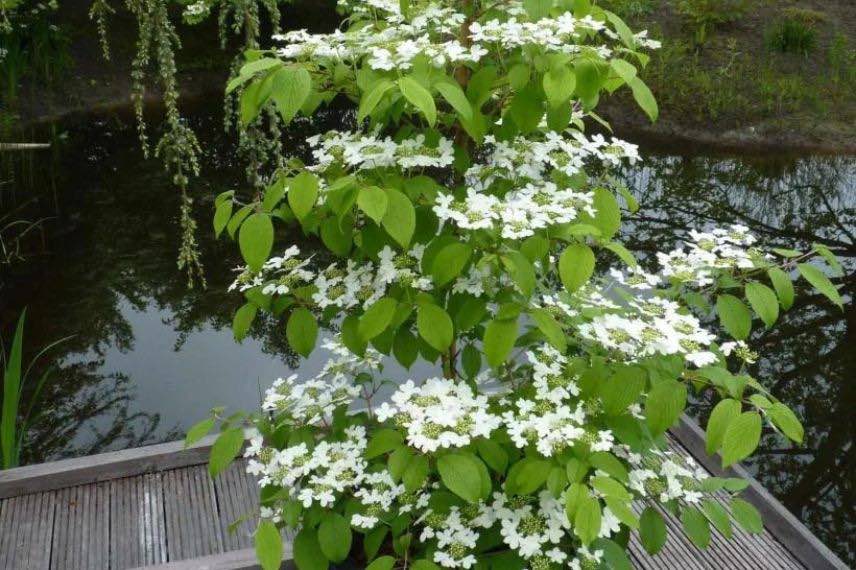
This Chinese viburnum stands out for its habit, adding a beautiful touch of verticality. Pyramid-shaped and narrow, its silhouette reaches about 1.8 metres in height and 1 metre in spread. It will be ideal in a large container, providing structure in small gardens, on a terrace, or a balcony.
During the spring flowering, this Viburnum resembles a delicately snow-covered mountain, which certainly earns it the name ‘Kilimanjaro’. It is adorned with flat corymbs of flowers, white tinged with green, which appear on its horizontal branches. Its flowering is reminiscent of certain hydrangeas. It gives way to clusters of decorative red berries.
Like some of its relatives, it takes on beautiful colours in autumn: its dark green, glossy foliage then turns yellow, dark red, and purple. Winter reveals its bare branches arranged in tiers, with a somewhat Japanese appearance, making it ornamental almost all year round.
For associations, play with decorative fruiting alongside a Callicarpa, a Berberis, or a symphorine.
Viburnum tinus ‘Gwenlian’: an ornamental evergreen foliage in all seasons
The laurustinus is a reliable choice for the garden. ‘Gwenlian’ stands out for its small size, around 1.5 metres in all directions. These dimensions, combined with a slow growth rate and a well-compact habit, make it an ideal candidate for container, pot, and small space cultivation.
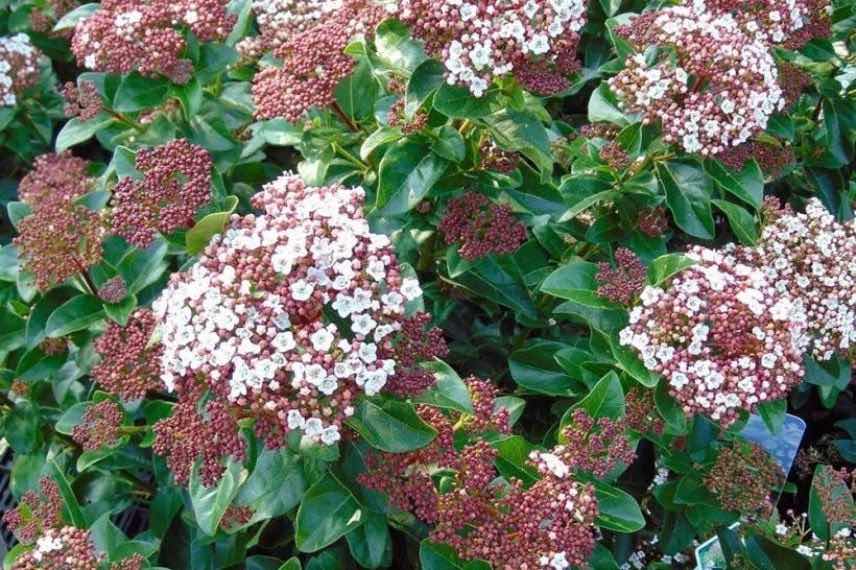
Its flowering generously brightens the cold season: from November to early spring, it unveils beautiful flat inflorescences. On these corymbs, pink flower buds are accompanied for a time by delicate white-pink blooms. This flowering is slightly fragrant and appreciated by insects. It gives way to small decorative metallic blue fruits, which feed the birds.
Another advantage: its evergreen foliage allows it to remain green and dense all year round.
Easy to care for, this laurustinus will thrive in all exposures, even shaded ones. It will tolerate all types of soil, including calcareous or dry soils. A tolerant bush, ideal for beginner gardeners! Only very wet soils in winter and frosts above -12°C may affect it.
To create a lasting green screen, pair it with other evergreen shrubs, such as a Sarcococca that will also flower in winter and a small oleaster (Elaeagnus ebbingei ‘Eleador’). A small Mexican orange blossom (‘White Dazzler’, ‘Apple Blossom’) will take over the flowering in spring.
Viburnum davidii ‘Angustifolium’: a beautiful groundcover cushion for small spaces
The David’s viburnum ‘Angustifolium’ offers a spreading and stocky silhouette, wider than it is tall. It measures approximately 80 cm in height and 1.20 metres in spread. This viburnum can thus be used as groundcover in small gardens, or grown in a large container on the terrace or balcony.
Evergreen, it has the advantage of retaining its glossy dark green foliage in all seasons. The young shoots and petioles display a contrasting dark red hue. Flowering occurs in spring, between April and May. ‘Angustifolium’ then reveals small white flowers in discreet clusters. These precede the formation of decorative berries, which vary in colour from black to turquoise blue. These fruits remain in place at least until autumn.
Plant this Viburnum in both sun and shade, in soil that remains cool and is low in lime. Reserve it for regions where frosts do not exceed -15°C.
As companions, offer it heather soil shrubs that also appreciate rather acidic soils. Consider camellias and rhododendrons.
- Subscribe!
- Contents

Comments