





























7 Collection primroses to Discover
Remarkable and floriferous
Contents
Primroses are flowers commonly found in woods, along roadsides, or in gardens. But did you know that there are very elegant and subtle primroses, which are rarely planted or sought after by collectors? If you’re keen to explore this little-known world, here’s our selection to discover stunning collector’s primroses or those that are seldom seen. Perfect for creating an original garden or balcony.

The primrose – Primula vialii, a woodland orchid vibe
La Primula vialii is a flower that is both strange and charming, as it resembles more an orchid than a primrose. This is sure to pique the curiosity of collectors! This Asian plant is adorned with a rosette of pale green villous leaves, curled at the edges and deciduous. In June and July, 40 cm tall flower spikes emerge from it. They bear a conical spike of carmine red flowers in the form of buds, which bloom into mauve pink. These flowers open from the bottom upwards, creating a curious bicoloured cone during mid-flowering.
This perennial primrose is demanding yet very hardy. It thrives in partial shade, in acidic, moist, light, and very humus-bearing soil, without excess water in winter. It is an ideal plant to delicately flower the edges of a pond, a cool rockery in the shade, or the edge of a woodland. As its lifespan is a few years, it is advisable to divide it every year or allow it to self-seed.
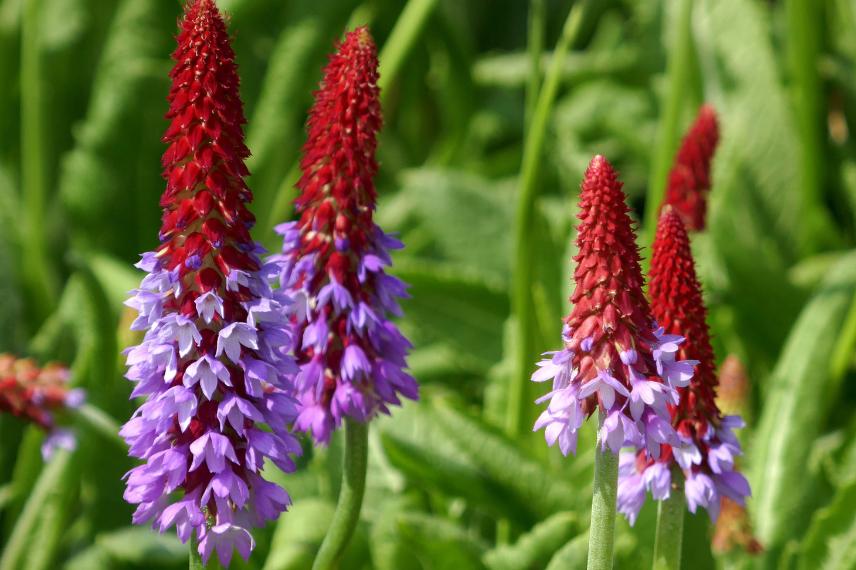
Primula vialii
The candelabra primrose – Primula bulleyana, elegant and delicate
The candelabra primrose – Primula bulleyana adds a touch of lightness and elegance to a garden. This Asian primrose features bright orange tubular flowers arranged in multiple ranks, hence its name candelabra primrose. In June and July, it produces tall stems of 60 cm bearing rings of small tubular flowers clustered in tight bouquets. The buds are red and then open to orange in a gradient of warm tones. The oblong leaves, measuring 10 to 25 cm, are crinkled and veined, forming rosettes. They are dark green with a slight bluish tint and are deciduous.
A perennial and hardy plant, Primula bulleyana thrives in partial shade and prefers neutral to acidic, cool to moist soil, light like the humus found in woodlands. It is particularly spectacular when planted en masse. Position it in a well-ventilated area free from plant competition, on the banks of a pond, in a clear and moist woodland, or in a cool shady rockery.
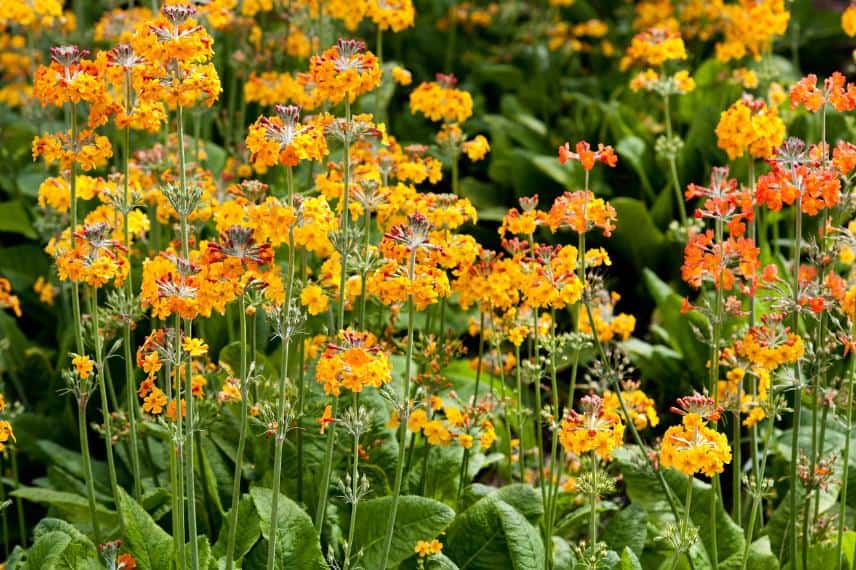
Primula bulleyana
The candelabra primrose – Primula pulverulenta, the delicacy of purple-red
Highly ornamental, the candelabra primrose – Primula pulverulenta remains uncommon in our gardens and that’s a pity, as it is delightful. In June and July, it produces small bouquets of tubular flowers in a purplish-red. They are arranged in tiers on the stem, which measures 60 cm and is covered in a white bloom, contrasting with the colour of the flowers. The slender, dentate leaves are about twenty centimetres long and form a rosette. They are light green to acid green and deciduous.
Primula pulverulenta is native to China and grows in damp meadows at altitude in the Sichuan region. It thrives in partial shade or shade, in cool to moist, fertile, humus-bearing soil that is neutral to acidic, with little lime, even clayey. You can plant it on the banks of a pond or stream to create a lovely floral display. It can also be grown in pots in a substrate that is always moist and rich in organic matter. This hardy perennial can withstand temperatures down to -15°C. You can divide it in autumn and rejuvenate the shoots every three years. Another cultivation tip: do not plant it too deeply to avoid “crown rot.”
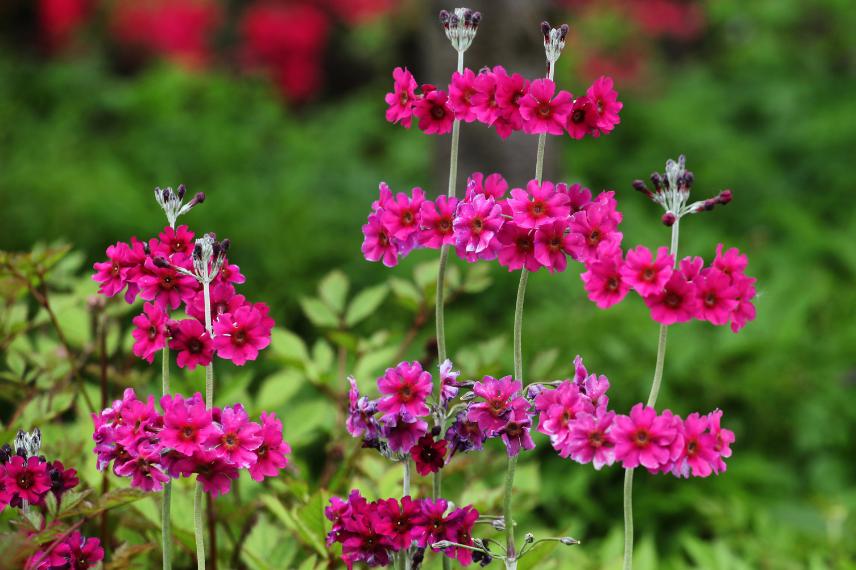
Primula pulverulenta
Read also
Primroses: the easiest to growThe pink primrose – Primula rosea grandiflora, the beauty of vibrant pink
With its generous bright pink flowering, the Primula rosea grandiflora deserves to be known. It is an improvement on a small Himalayan primrose known as the pink primrose. It is more vigorous and floriferous than its ancestor. In March and April, this plant produces numerous clusters of bright pink flowers with yellow centres, before the appearance of its large, crinkled leaves of a rich green. The clusters contain 4 to 12 flowers measuring 2.5 to 3 cm in diameter, which open in cups. It reaches a height of 15 cm, and its deciduous leaves measure 15 to 20 cm.
Very perennial, Primula rosea grandiflora enjoys soils that are always cool to moist and prefers sunny to partially shaded exposures. A lovely flower to place in a cool rockery or near water features. It tolerates clayey or marshy substrates and does not like overly dense shade or scorching sun.
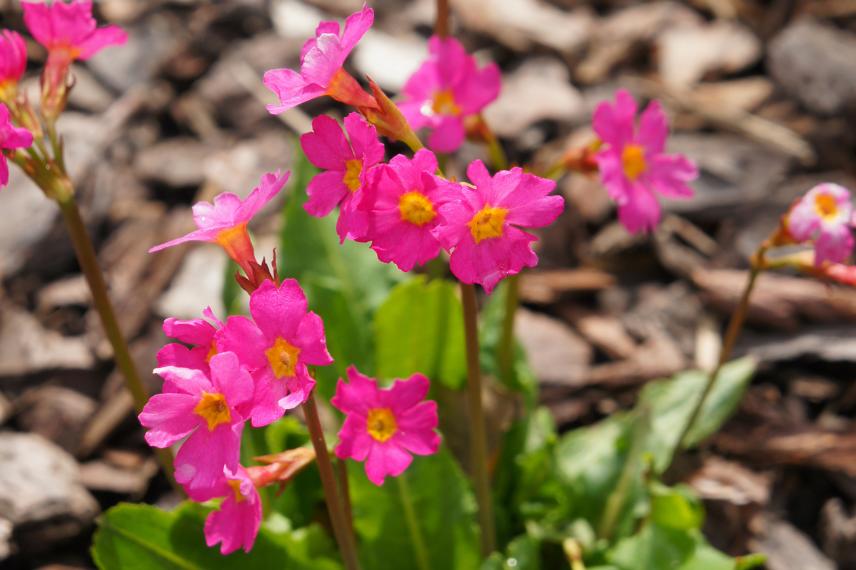
Primula rosea Grandiflora
The candelabra primrose – Primula beesiana, with crowns of purple-pink flowers.
The candelabra primrose – Primula beesiana is a subspecies of Primula bulleyana. It grows naturally in the damp meadows of western China. It produces, from May to July, lovely crowns of purple-pink flowers with golden centres, arranged in tiers on its long 60 cm stem. The flowers are slightly fragrant. The elongated, veined leaves are a beautiful light green and form a rosette. They are deciduous.
Very hardy, Primula beesiana is easy to grow in cool, moist, deep, humus-bearing soil. It thrives in full sun or partial shade, at the edges of water bodies or in a damp woodland. To achieve a beautiful flowering display, divide the clumps in autumn and rejuvenate the plants every three years.
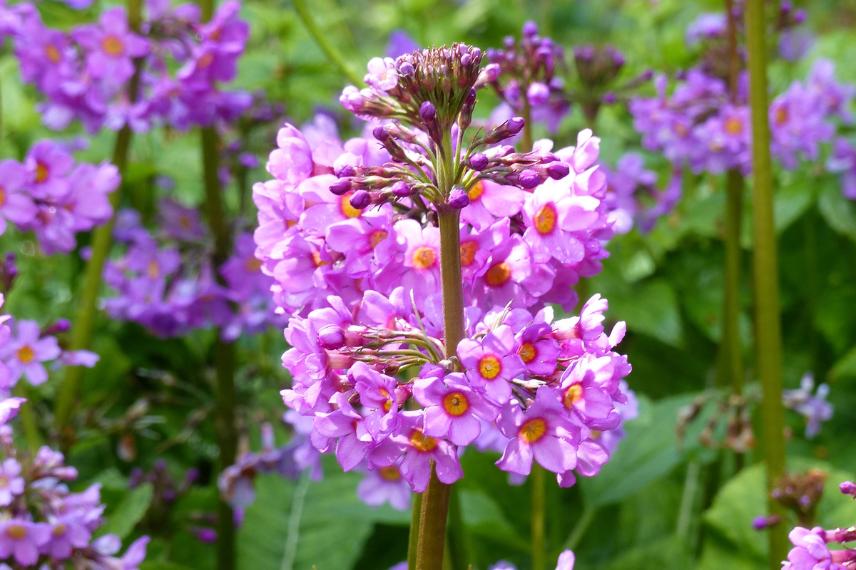
Primula beesiana
Tibetan primrose – Primula florindae, a fragrant giant
Another discovery to make, the Tibetan primrose – Primula florindae is one of the largest and most fragrant primroses. From June to August, it bears umbel clusters of sulphur-yellow bell-shaped flowers on its 70 cm tall stem. Fragrant, the flowers droop downwards and contrast with the large rosette of bright green ovate leaves that adorn the base. Deciduous, the foliage is crinkled and abruptly narrowed at the base to form a long petiolate.
This perennial with a wild charm enjoys sun and cool, clayey soils, but not waterlogged ones. Perfect for the edges of a water feature or waterlogged areas! It has a relatively short lifespan, which is why it is best to leave the faded flowers in place so they can produce seeds and the plant can self-seed.
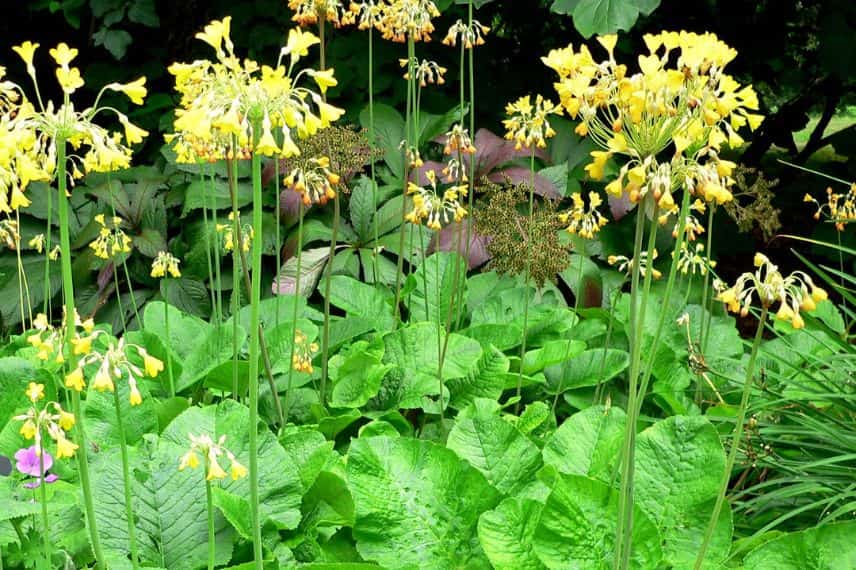
Primula florindae
The primrose – Primula secundiflora, with garnet-red bells
The primrose – Primula secundiflora is a collector’s plant. In June and July, it produces charming clusters of bell-shaped, pendulous flowers in a deep garnet to ruby red colour. With its unique hue and flower stalks reaching up to 80 cm, it certainly catches the eye. The clusters consist of 5 to 20 flowers, resembling those of campanulas. It has rosettes of narrow, crinkled leaves in a lovely light green, which are deciduous.
Native to the high mountains of China, Primula secundiflora grows in Sichuan and Yunnan at high altitudes. Hardy down to -20°C, it prefers a moist, humus-bearing, light soil and a sunny or partially shaded position. It thrives near ponds or small waterfalls. This perennial botanical species requires some care. Do not plant it too deeply, as the crown may rot. Avoid scratching the soil where it is planted to prevent damaging the dormant buds. You can divide large clumps in autumn and rejuvenate the plants every 3 years.
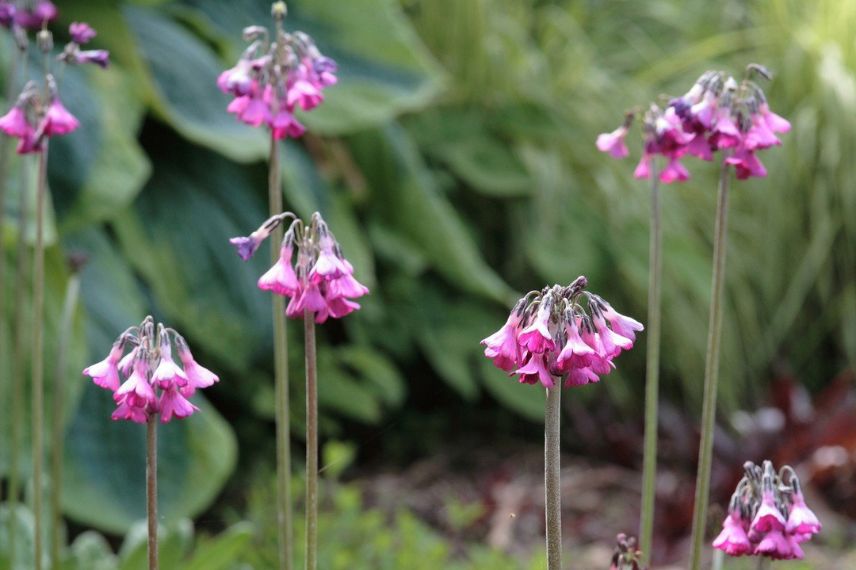
Primula secundiflora
For further reading
There are many other original primroses, such as the black primrose – Primula elatior ‘Black Laced’, the primrose – Primula polyantha ‘Tie Dye’ striped with blue and white, or the graceful primrose – Primula sieboldii ‘Dancing Ladies’. To continue this exploration, you can browse our complete range of primroses to find one that suits your desires.
- Subscribe!
- Contents
Comments