





























5 Cacti and succulents that withstand cold and drought
Plants that withstand both winter frosts and drought
Contents
With climate change, heatwaves and dry spells are becoming more frequent. To adapt, many gardeners are turning to undemanding plants that can withstand a lack of water. Cacti and succulents are among these queen plants that can easily endure arid conditions. They naturally possess the ability to store juice in their tissues (hence their nickname “succulent plants”). This allows them to go without water for several days, or even weeks.
These dromedary plants are often associated with blazing sun and scorching heat. But did you know that some species also tolerate cold very well? For this, they only require cultivation in light, well-drained soil and protection from winter rains. They are therefore not limited to southern gardens or pot cultivation!
Here is our selection of hardy cacti and succulents that can tolerate both drought and frosts down to approximately -10°C to -15°C.

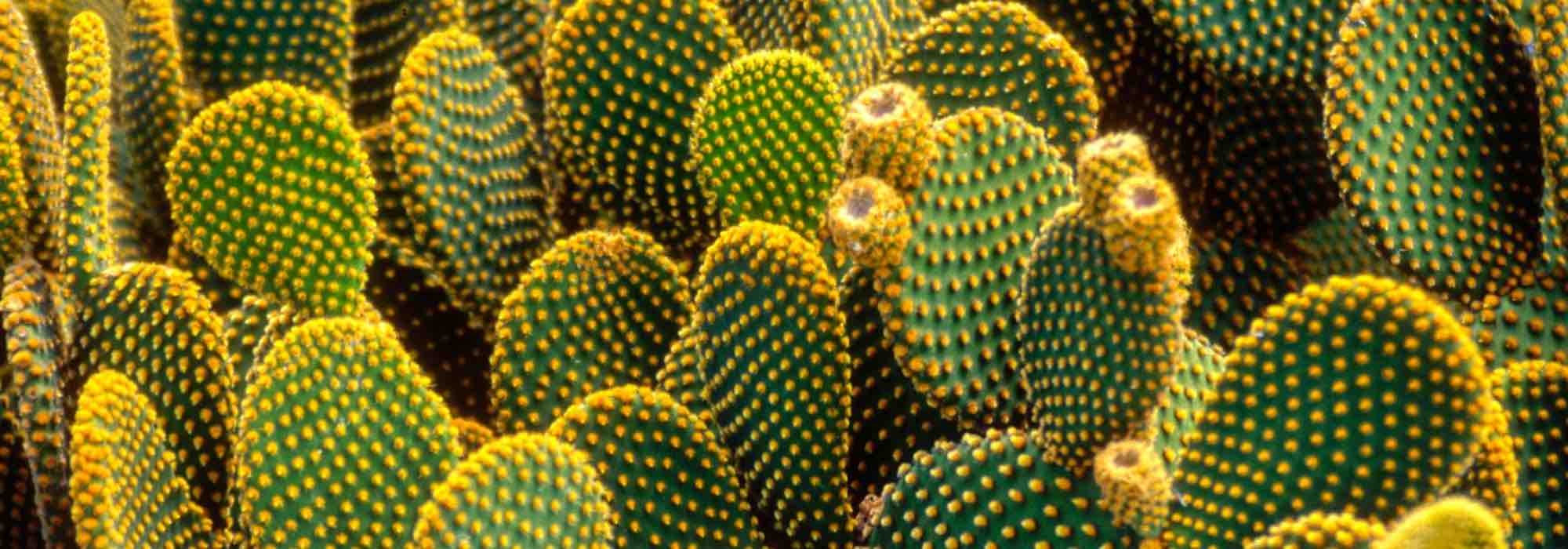
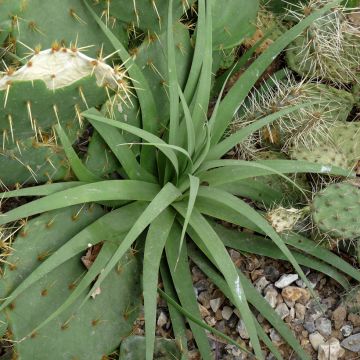
The prickly pear cacti Opuntias egelmannii
They are among the most well-known cacti, with their flat, spiky, fleshy pads: these are the Opuntias! Among them, we can mention the famous Prickly Pear (Opuntia ficus-indica), which produces edible fruits.
Originating from the arid regions of South or North America, they are of course very drought-resistant perennial plants, perfectly tolerating poor, dry soils. However, some species are also quite hardy, withstanding temperatures of around -15 to -20 °C. This is the case for Opuntia engelmannii, which proves to be a true outdoor cactus suitable for most of our regions. The typical variety can tolerate frosts of -15° to -18°C without protection, provided it is given perfectly drained soil (that does not retain excess water). Its substrate should therefore be stony, rocky, or sandy. Other cultivars offer a similar cold resistance:
- the Opuntia engelmannii ‘Lindheimeri’, with its lovely bright orange flowers (hardiness down to -15°C);
- ‘Rastrera’, with pale yellow or pink flowers turning orange as they fade (hardiness down to -20°C);
- ‘Linguiformis’, which blooms in yellow-orange (hardiness down to -15°C).
The spring or summer flowering then gives way to lovely colourful fruits, more prized for their decorative appearance than for their taste.
Easy to grow and virtually maintenance-free, the prickly pear cacti will thrive in sunny or partially shaded locations in southern France. Ensure a sheltered spot from the wind, as well as protection from prevailing rains and snow, to allow them to winter without issues.
These Opuntias will fit perfectly into rockeries, dry slopes, or mineral beds. They are ideal candidates for dry gardens, exotic-looking gardens, or contemporary graphic gardens. Thanks to their tolerance to sea spray, they are also perfect for seaside gardens. Prefer planting in the ground rather than in pots, to allow for better natural resistance to winter cold.
To learn more: Opuntia, prickly pear cactus: planting, growing, and care.
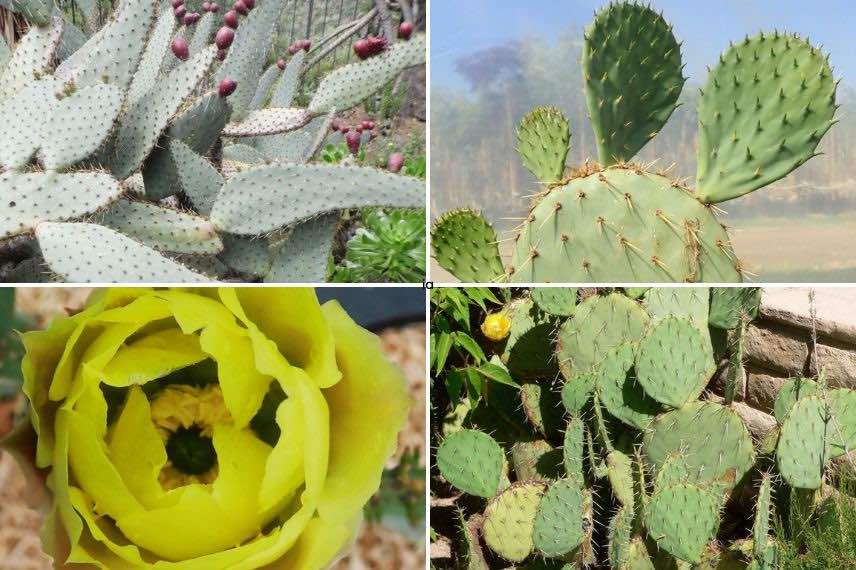
Clockwise: Opuntia engelmannii var. linguiformis, Opuntia engelmannii var. rastrera, Opuntia engelmannii, then the flower of var. rastrera
Houseleeks or Sempervivum
Houseleeks or Sempervivum are among those plants that boast numerous advantages. They can be cultivated even by beginner gardeners. These undemanding succulents are indeed easy to care for, tolerating many challenging conditions: lack of water, drought, poor and ungrateful soil, shallow substrate, and minimal maintenance. They are also frost-resistant succulents. From their montane origins, they have acquired excellent hardiness, withstanding temperatures between -15 to -25 °C without winter protection.
In terms of aesthetics, houseleeks are valued for their graphic foliage, consisting of adorable fleshy evergreen rosettes in varying colours. The summer flowering is equally charming, revealing small star-shaped flowers that are typically pink, red, or yellow.
For example, consider trying:
- the Sempervivum ‘Commander Hay’, with its evolving bicolour foliage;
- ‘Chick Charms® Cotton Candy’, with its astonishing rosettes featuring a cottony centre;
- ‘Dark Beauty’, with foliage so dark purple it appears almost black;
- ‘Chick Charms® Gold Nugget’, with vibrant rosettes blending gold, orange, and red;
- ‘Silberkarneol’, with red-pink leaves covered in fine white bristles.
Sempervivum make perfect outdoor or indoor plants. They will find their place anywhere: in pots or bowls, in borders, in rockeries, atop a wall, etc. Position them in sunny or partially shaded locations, in well-drained soil (where water does not stagnate). In terms of watering, they will be satisfied with natural rainwater, even if scarce.
To learn more: Sempervivum, houseleek: planting, growing, and care.
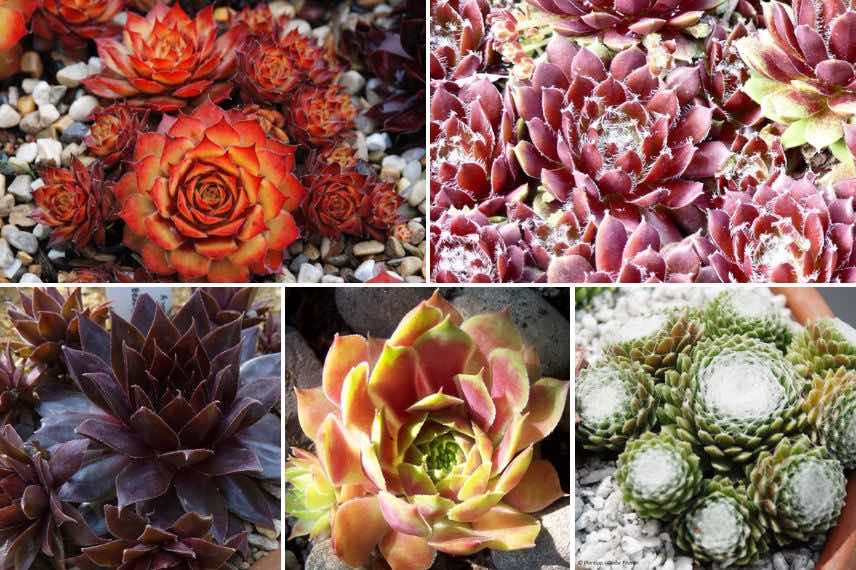
Sempervivum ‘Chick Charms Gold Nugget’, Sempervivum ‘Silberkarneol’, Sempervivum ‘Chick Charms Cotton Candy’, Sempervivum ‘Commander Hay’, Sempervivum ‘Dark Beauty’
Discover other Cacti and succulents
View all →
Available in 0 sizes
Available in 1 sizes
Available in 1 sizes
Available in 1 sizes
Available in 1 sizes
Available in 1 sizes
Available in 1 sizes
Available in 2 sizes
Available in 1 sizes
Available in 2 sizes
Agave havardiana and Agave montana
Agave havardiana and Agave montana both originate from the mountains of Mexico, which explains their natural resistance to severe frosts. Cousins of the popular Agave americana, they have the advantage of being significantly hardier. The Agave montana can withstand temperatures as low as -20°C, while the Agave havardiana tolerates -17°C, and can even endure down to -23°C under particularly careful conditions. To help these exotic plants survive the winter, protect them from excess moisture (winter rains or heavy soils that retain water).
Agaves are valued for their beautiful graphic rosette foliage, made up of broad, leathery leaves. The Agave montana produces leaves of a vibrant green, delicately covered with a white frost. They feature contrasting copper-orange thorns. This plant reaches a height of 1 metre and a spread of 1.20 metres. In contrast, the Agave havardiana has toothed leaves in shades of grey-green-blue and produces numerous offsets. It grows to 50 cm in height and 70 cm in spread.
Their slow growth lasts several years, culminating in a long and impressive flowering display.
These outdoor plants, as resistant to frost as they are to sun and drought, are easy to grow. Plant them in a well-sunny location, in soil that is absolutely well-drained and even poor, to allow water to flow away. Once established, they will go without water for several weeks, enduring intense heatwaves and dry spells. Agaves will add a touch of exoticism to rockeries, slopes, or mineral beds.
For more information: Agave: planting, growing, and care.
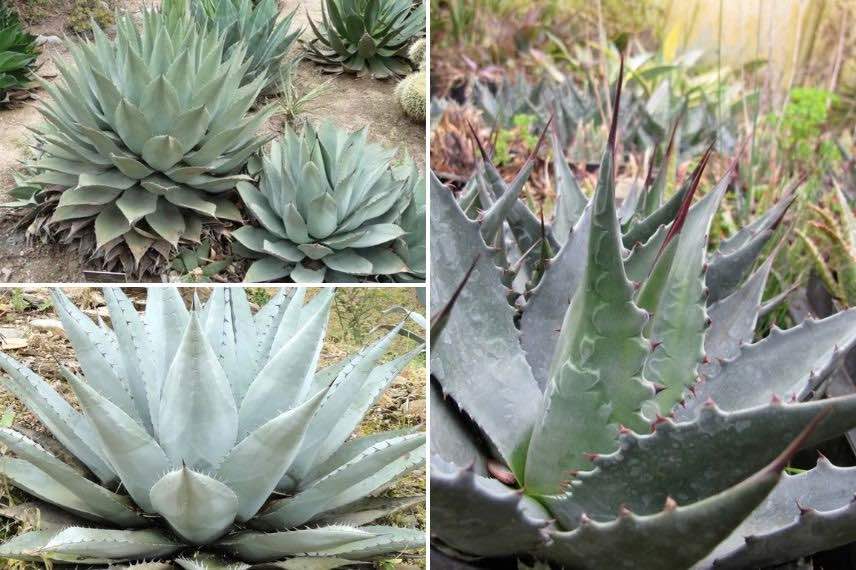
Agave havardiana on the left and Agave montana on the right
Read also
10 hardy plants for an exotic dry gardenHesperaloe parviflora
The Hesperaloe parviflora also belongs to the Agavaceae family. It is commonly known as Red Yucca, referring to its relation to these sword-shaped foliage plants.
This hardy perennial hails from the Texan mountains, where it regularly experiences severe frosts and winter snowfall. This explains its ability to withstand temperatures down to -12 to -15°C, provided it is protected from heavy rain and grown in perfectly drained soil.
However, as the Hesperaloe parviflora naturally lives in the desert, it is also accustomed to extreme heat and arid conditions. It will therefore tolerate drought and our scorching summer temperatures.
In terms of aesthetics, its evergreen rosette foliage consists of tough, slender green leaves edged with remarkable twisted filaments. But it is especially its flowering that deserves recognition: in summer, even under intense heat, it reveals long flower spikes bearing small, vibrant coral-red flowers. A flowering as beautiful as it is appreciated by pollinating insects!
The Red Yucca is thus a perfect flowering succulent for outdoors. Its rather modest silhouette reaches 1.2 metres in height and 60 cm in spread. It is an ideal candidate for dry or xerophilous gardens. It can be used as a dense groundcover, to structure a border, in a gravel bed, or in a rock garden. Provide it with a sunny location.
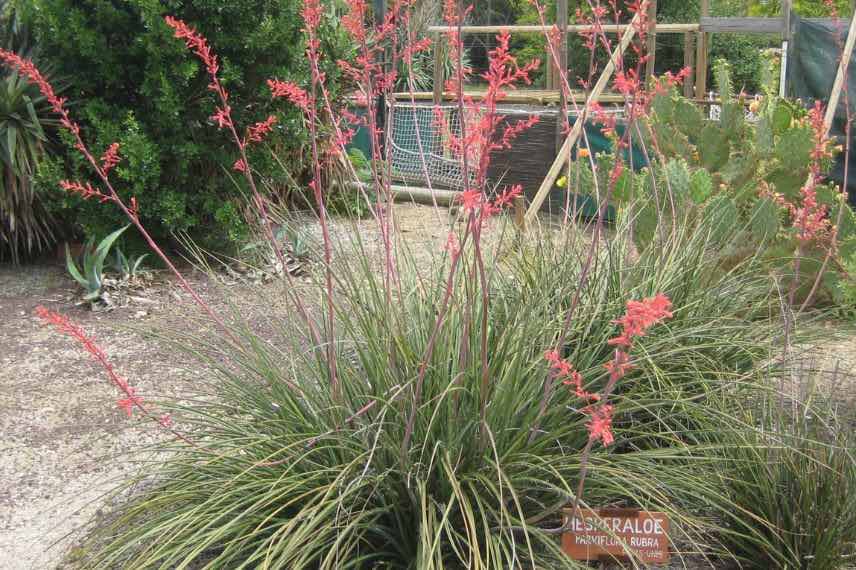
Hesperaloe parviflora
Aloe striatula
The Aloe striatula is the hardiest of the shrub Aloes. Native to the mountains of South Africa, it grows up to 2,000 metres in altitude, which explains its good cold resistance. This succulent can indeed withstand frosts down to -10, or even -12°C in dry, well-drained soil. The aerial parts may be destroyed by the cold, but our Aloe can regrow from its stump when the warm weather returns.
This Aloe produces long, narrow green leaves that remain in place all year round. At the end of spring, it reveals long floral spikes bearing generous spikes of lemon-yellow flowers. Over time, it will reach a height of 1.5 metres with a spread of 2 metres. A bit more compact, the variety ‘ArticJungle’ forms a lovely bush of 1.5 metres in all directions.
For its qualities, this Aloe striatula has also received an “Award of Garden Merit” from the prestigious Royal Horticultural Society.
Provide it with a warm, sunny location in light soil that allows water to drain away without stagnating. Gravelly, sandy, poor, arid, and even calcareous substrates pose no problems for it. Of course, it is a very drought-resistant perennial, but also tolerant of sea spray. This tolerance makes it ideal for Mediterranean gardens, but not exclusively. It will add an exotic touch anywhere, whether grown in a gravel bed or as a specimen plant on sloping or dry ground.
To learn more: Aloes: planting, growing, and care.
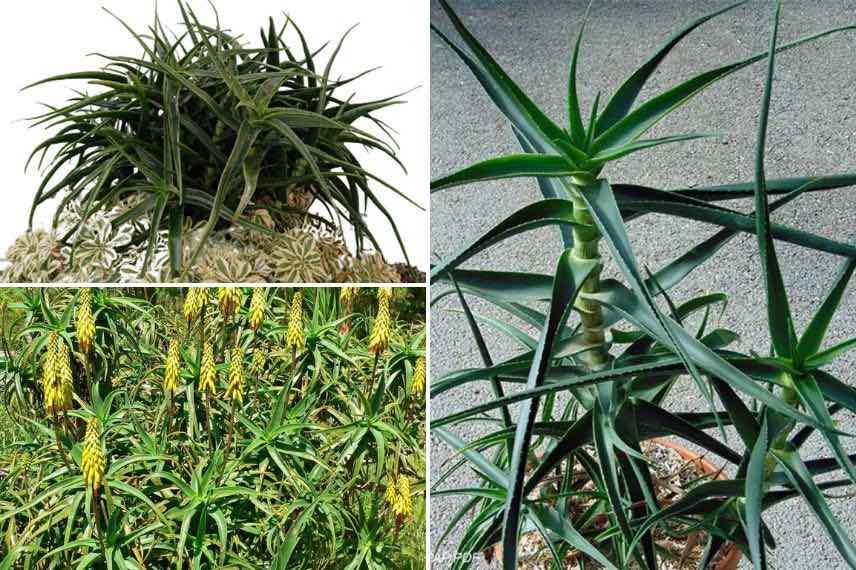
Top left, the ‘ArcticJungle’ form. Aloe striatula in pot and in flower in the ground.
- Subscribe!
- Contents

Comments