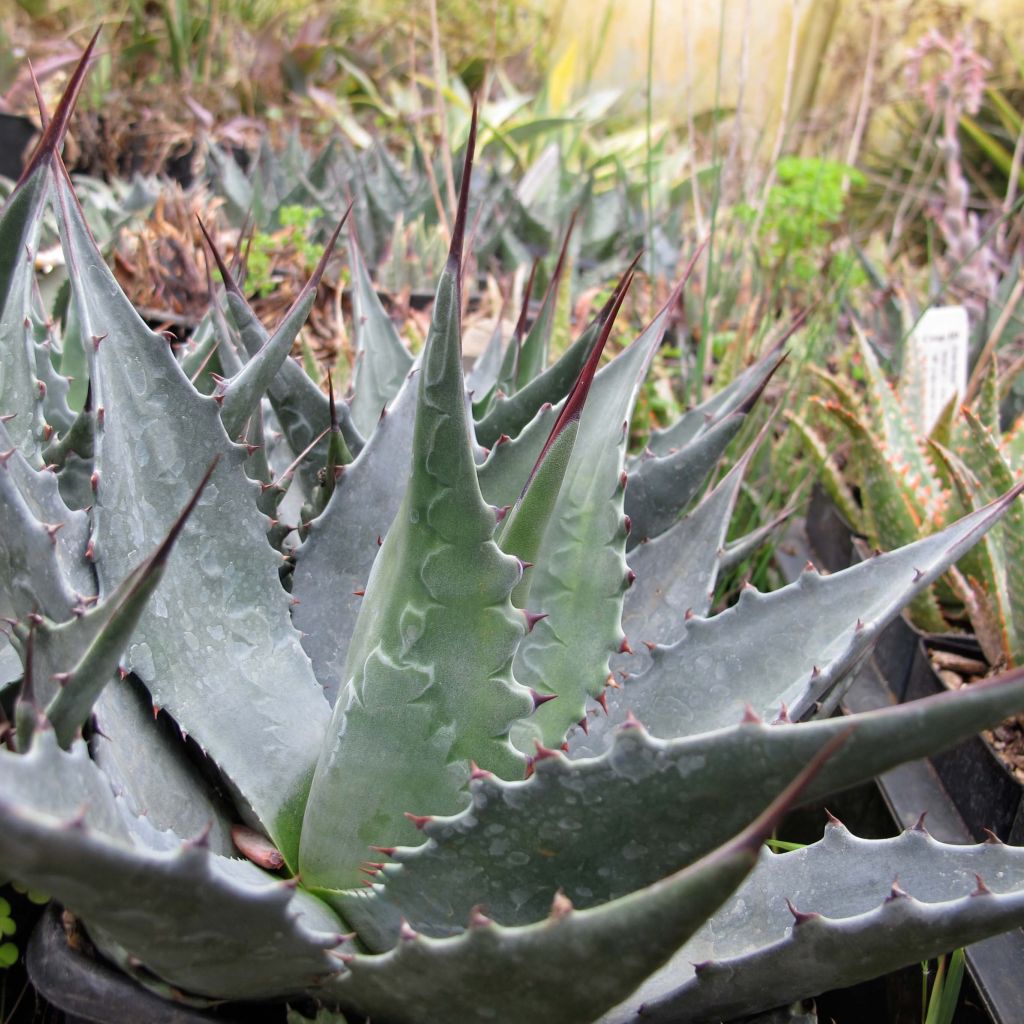
Agave montana
Agave montana
Agave montana
Mountain agave
Agaves bought last year, with terrible rainfall and a cold winter on waterlogged soil (in Normandy).... they held up very well, without any damage. I bought another Montana this year which seems to be well rooted...
Annick, 17/11/2025
Back-to-school special offer!
Get €10 off for every €50 you spend! And get up to €40 off on a single order.
How does it work?
1. Shop your favourites
Add your favourite plants to your basket. For every €50 you spend (excluding delivery charges, store credit and the plastic-free option), you’ll receive a €10 voucher.
€50 spent = €10 voucher
€100 spent = €20 voucher
€150 spent = €30 voucher
€200 spent = €40 voucher
2. Place your order
Once your basket reaches one of the spending thresholds, place your order. You can even choose your delivery date!
3. Receive your voucher
As soon as your order has been shipped, you’ll receive an email containing your personal voucher code and its value.
4. Use it on your next order
Your voucher is valid for 90 days from the date you receive it. It can be used once only, on a new order worth at least the value of the voucher, excluding delivery charges.
Please note: Vouchers can be combined with other offers, but cannot be split or refunded.
Home or relay delivery (depending on size and destination)
Important: You may be charged customs duties by your country’s customs authorities upon delivery.
Schedule delivery date
and select date in basket
This plant carries a 12 months recovery warranty
More information
We guarantee the quality of our plants for a full growing cycle, and will replace at our expense any plant that fails to recover under normal climatic and planting conditions.
Does this plant fit my garden?
Set up your Plantfit profile →
Description
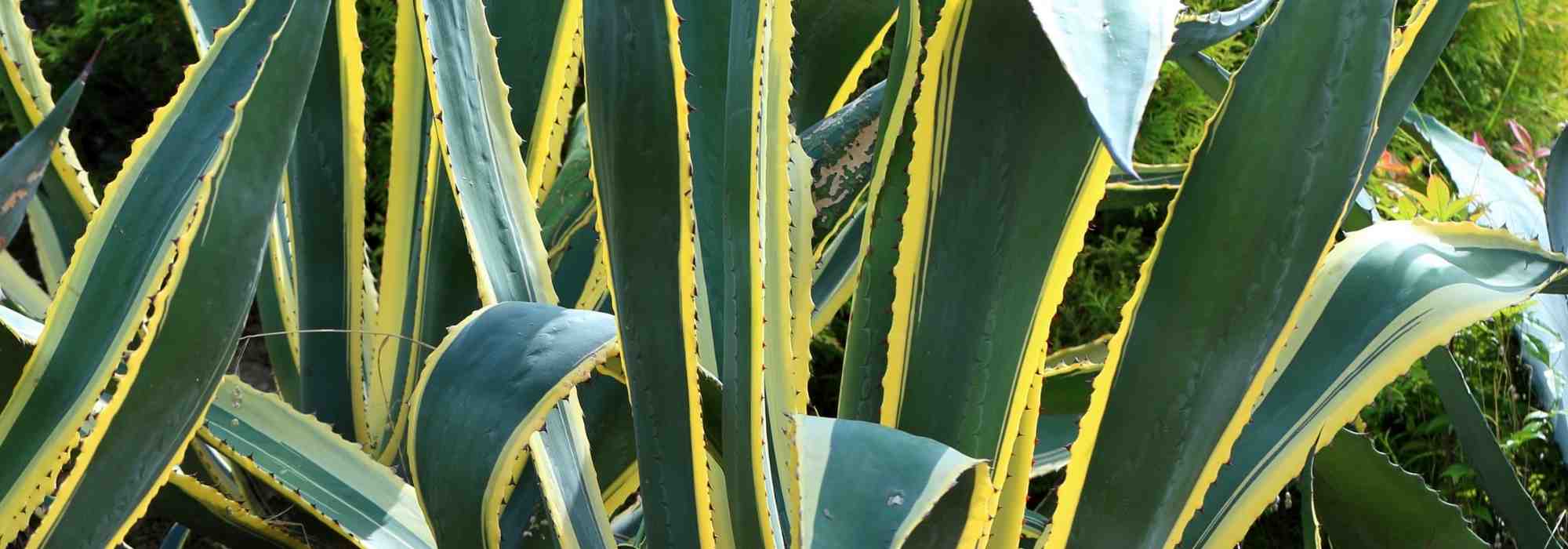
Agave montana, or Mountain Agave, is not a desert plant but a robust mountain species that is quite easy to acclimatise in our gardens. Its hardiness is often highlighted, which is quite exceptional for a plant with such an exotic appearance, but its resistance to intense frost is only confirmed if the plant is grown in perfectly drained soil and under a dry climate, without winter rains. This rare species reproduces only by sowing. It charms with the beautiful contrast of colours offered by its large leaves, which are partially powdered with white and adorned with lateral and terminal spines of a coppery orange. Its rosette blooms like a flower, in a regular cup shape, composed of numerous overlapping leaves. With a fierce armour that requires a certain distance from high-traffic areas, it possesses a unique architectural presence that can be enjoyed in full sun or partial shade, in a large rock garden, on a slope, or in an elevated bed, in most regions.
While recognising agaves can sometimes be a specialist affair, Agave montana presents unique characteristics that make it difficult to confuse with any other plant.
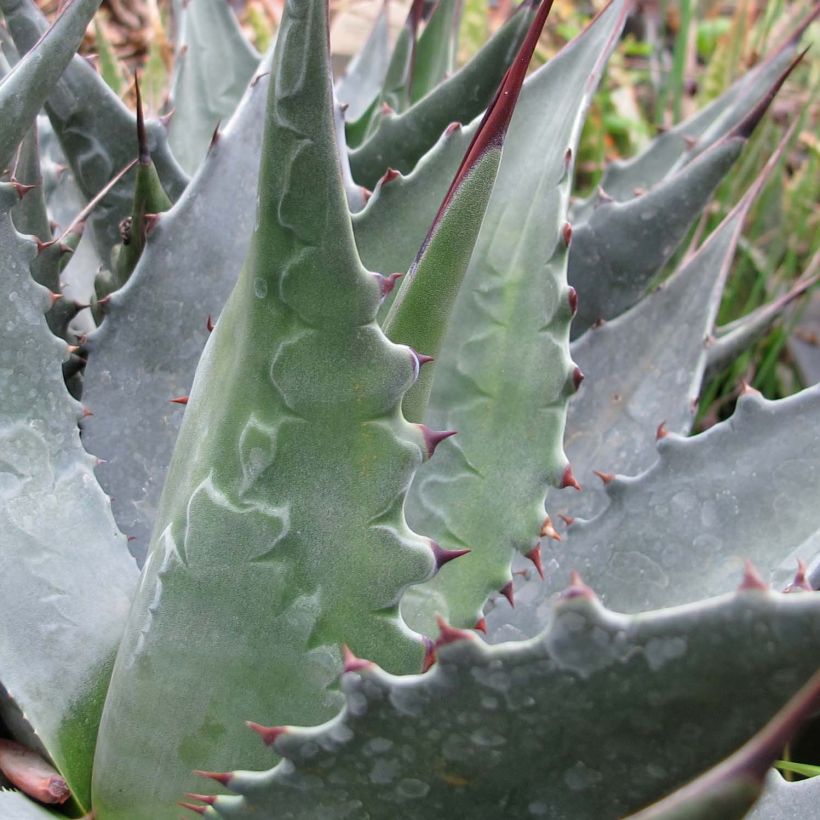
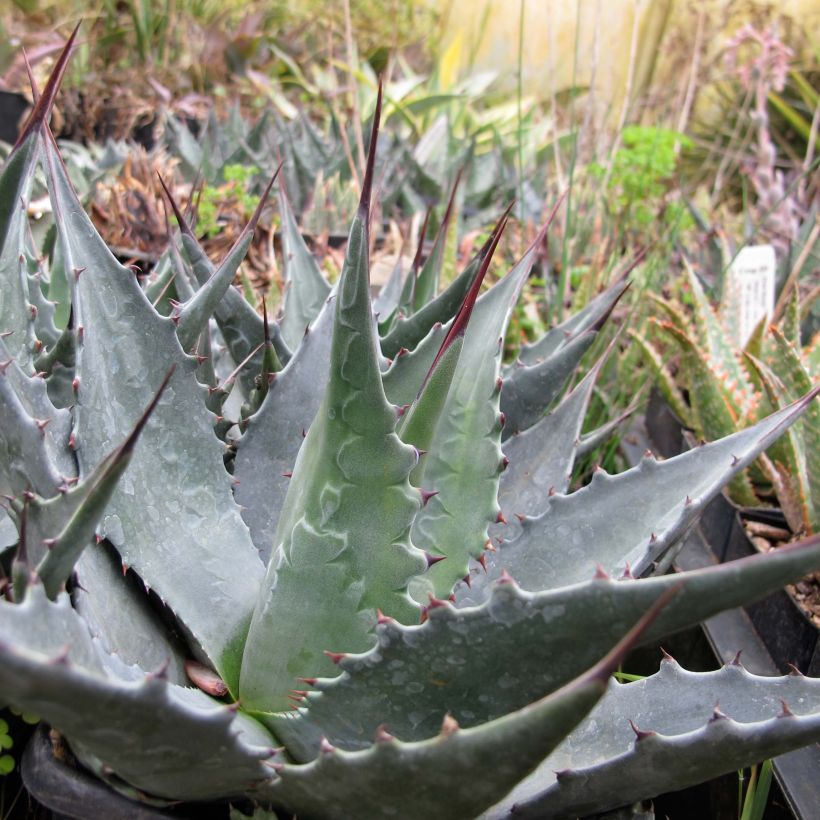
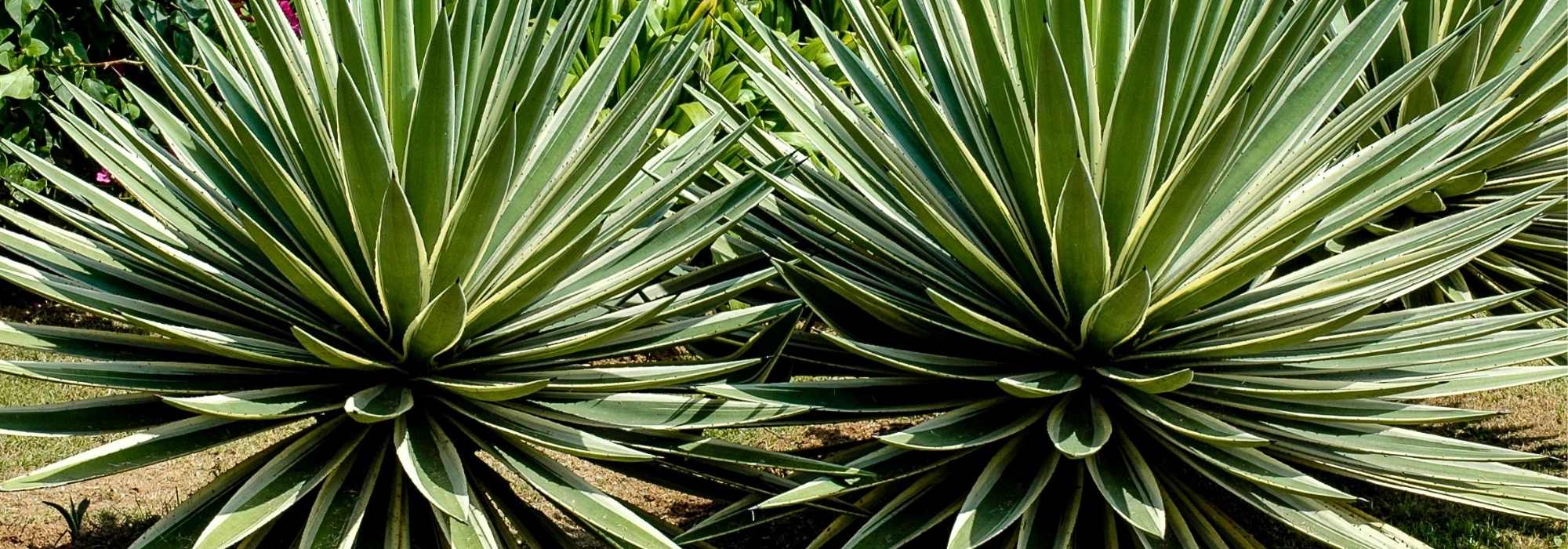
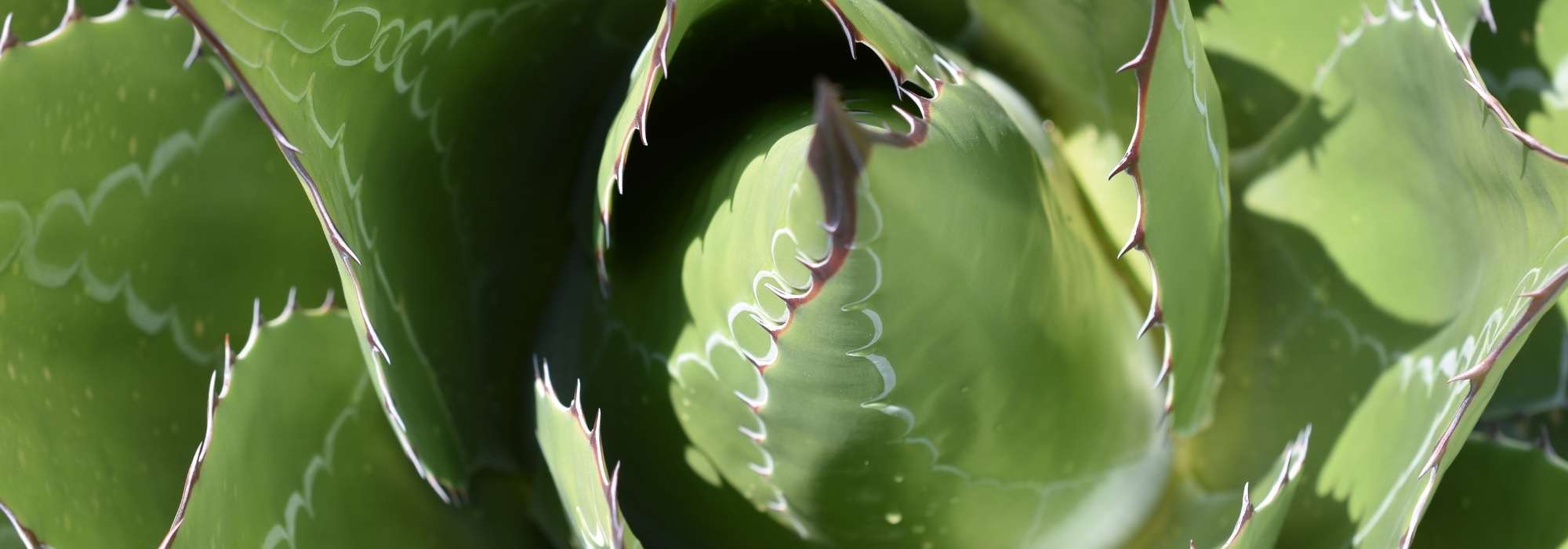
Discovered in the late 90s growing between 3000 and 3500m (9843ft and 11483ft) altitude in the clear understory of mountains located in northeastern Mexico, it is a rather slow-growing botanical species belonging to the Asparagaceae family (formerly Agavaceae), just like yuccas or tuberose. This perennial succulent plant has rhizomes that generally reproduce through its seeds and never produces daughter rosettes. It is almost devoid of aerial stems. Its dense rosette, in the shape of an upright cup, will reach an average height of 1m (3ft) and a diameter of 1.2m (4ft) at maturity. It is composed of bright green leaves, whose base is irregularly covered with a white bloom, forming wavelets of light on the plant's epidermis. They are wide at the base, rather concave, upright, and taper with an acute angle towards the tip. The end of each leaf terminates in a long spine of coppery orange colour. The edge of the leaves is provided with regularly spaced spines of the same orange tone. When a rosette is mature, after many years, it produces a floral stem that can reach a height of 3m (10ft). It bears a few horizontal branches. The branches bear flat and spherical panicles. The rosette, characterised as semelparous, dies after flowering, which lasts several months.
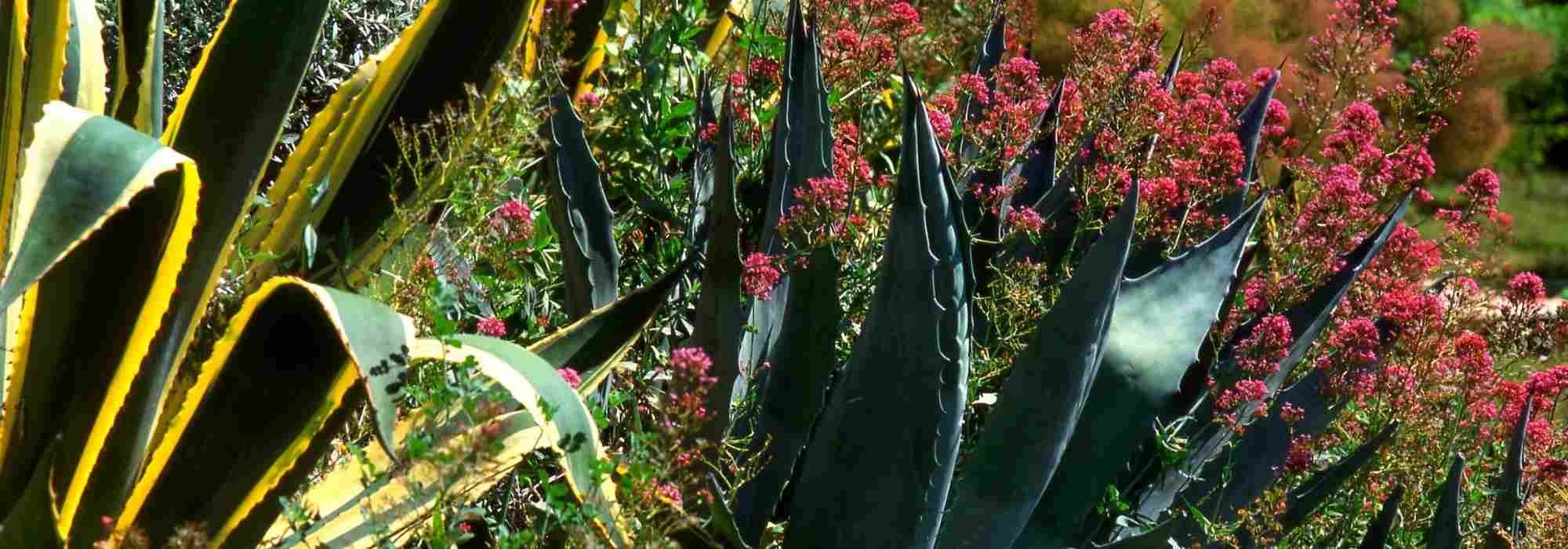
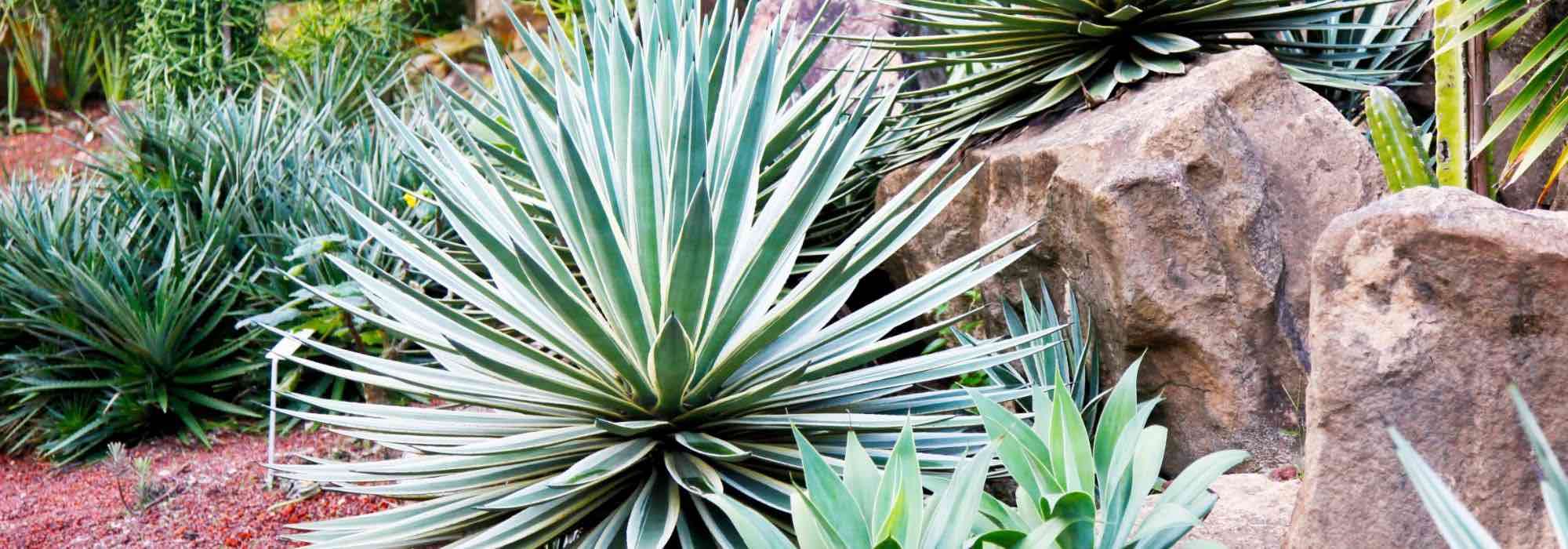
This very hardy agave will find its place in a large rock garden, a south-facing slope, or at the edges of a dry garden, where its remarkably architectural silhouette will stand out against a mineral backdrop, punctuated by some wild grasses such as Stipa ichu or Stipa gigantea. It can be planted with all kinds of hardy plants with exotic looks, such as Prickly Pears and other Opuntias, Ferula communis, and quite hardy columnar cacti (Cleistocactus strausii, Cylindropuntia imbricata), which are all equally undemanding plants. A good way to highlight agaves is to place ground cover plants for dry soil at their feet: evening primroses, Osteospermum, dwarf artemisias, Ceratostigma plumbaginoides, and Delosperma cooperi, whose foliage will cover the gap left by a dead plant. This agave can also be cultivated in a pot on a terrace, among a collection of cacti, by carefully choosing the sunniest spot. Remember to keep this beautiful plant away from high-traffic areas and young children!
Agave is also an edible plant, used in Mexico to make mescal, an alcoholic beverage obtained by fermenting its sugar-rich juice. It is also used in traditional medicine in Mexico, Brazil, and India, and it has proven antifungal properties. Its inflorescences are very attractive to many pollinating insects.
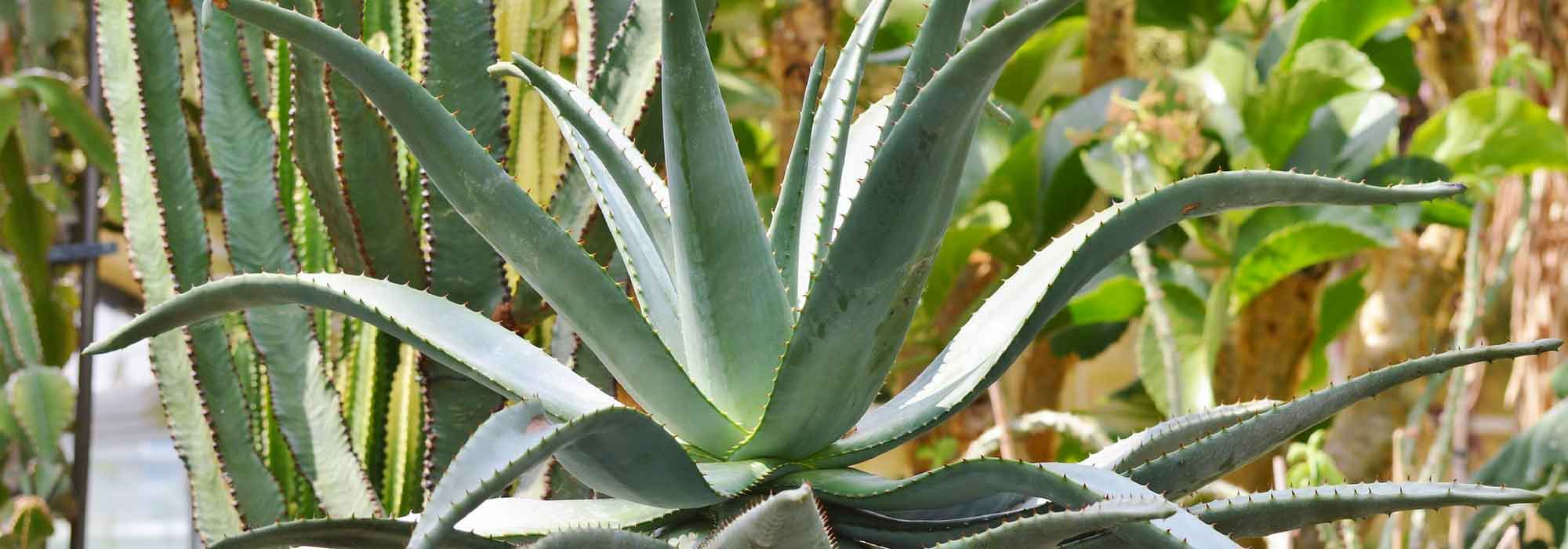
Agave montana in pictures
Flowering
Foliage
Plant habit
Botanical data
Agave
montana
Asparagaceae
Mountain agave
North America
Planting and care
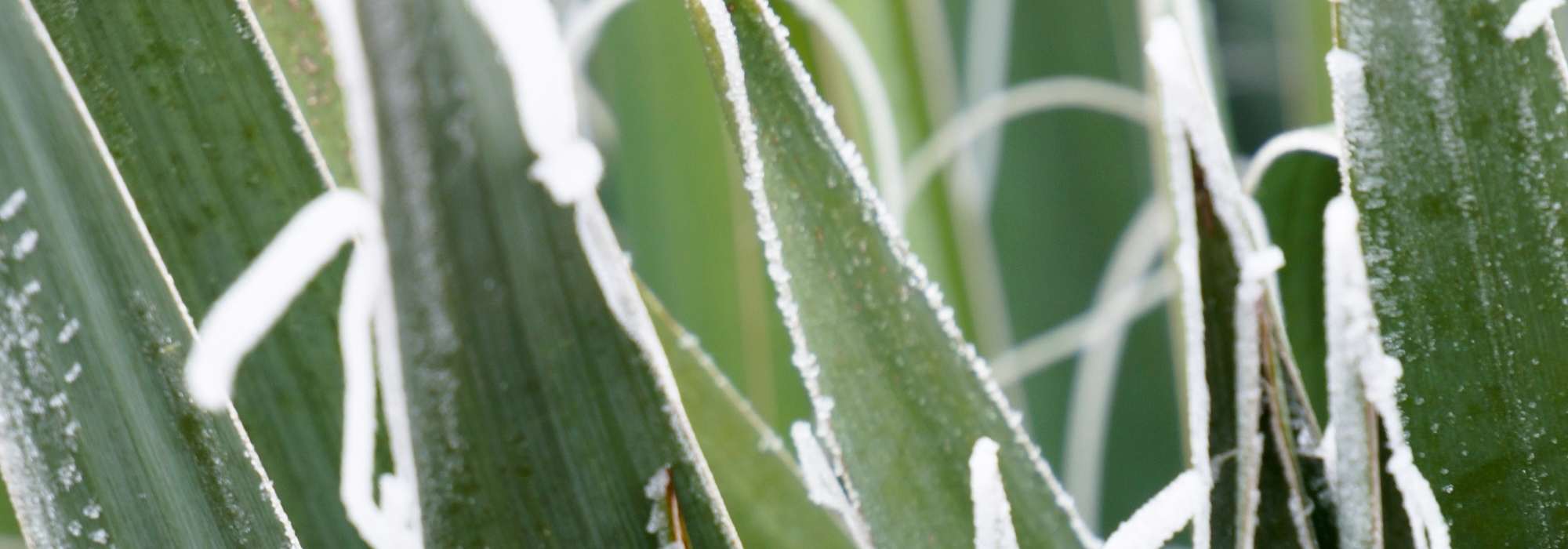
Plant Agave montana in full sun or even in partial shade, in clear undergrowth. It will thrive on a slope or a dry embankment, in preferably poor, very rocky, sandy, acidic, neutral or calcareous soil, which is very well-drained. The plant is remarkably hardy in dry soil, but it cannot tolerate excess humidity, which is common in clayey and heavy soils, combined with severe cold and winter rains. As it tolerates dry soils well in summer, you can consider digging a 50cm (20in) hole, filling it with a mixture of stones and light soil, and planting the agave in it, with the collar isolated from stagnant water. Abundant but spaced watering will suit it perfectly to help it establish. The drier the soil, the more it will resist frost, up to about -20°C (-4°F).
Pot cultivation:
As the plant has quite significant growth, it can be grown in a large pot (preferably terracotta) on a terrace or balcony, in a light substrate such as cactus soil, with particularly careful drainage. It will then be easy to store the pot away from humidity, under a shelter or in a bright, airy, minimally heated space (between 0 to -5°C (32 to 23°F)). Reduce or even stop watering in winter. The plant can spend April to October outdoors. When you take it out, gradually acclimatise it to the sun to avoid leaf burn by placing it in partial shade for 2 to 3 weeks before facing full sun.
Propagation by sowing fresh seeds.
Planting period
Intended location
Care
Planting & care advice

-
, onOrder confirmed
Reply from on Promesse de fleurs
Recently viewed products
Haven't found what you were looking for?
Hardiness is the lowest winter temperature a plant can endure without suffering serious damage or even dying. However, hardiness is affected by location (a sheltered area, such as a patio), protection (winter cover) and soil type (hardiness is improved by well-drained soil).
In temperate climates, pruning of spring-flowering shrubs (forsythia, spireas, etc.) should be done just after flowering.
Pruning of summer-flowering shrubs (Indian Lilac, Perovskia, etc.) can be done in winter or spring.
In cold regions as well as with frost-sensitive plants, avoid pruning too early when severe frosts may still occur.
The harvesting period indicated on our website applies to countries and regions in USDA zone 8 (France, England, Ireland, the Netherlands).
In colder areas (Scandinavia, Poland, Austria...) fruit and vegetable harvests are likely to be delayed by 3-4 weeks.
In warmer areas (Italy, Spain, Greece, etc.), harvesting will probably take place earlier, depending on weather conditions.
The sowing periods indicated on our website apply to countries and regions within USDA Zone 8 (France, UK, Ireland, Netherlands).
In colder areas (Scandinavia, Poland, Austria...), delay any outdoor sowing by 3-4 weeks, or sow under glass.
In warmer climes (Italy, Spain, Greece, etc.), bring outdoor sowing forward by a few weeks.
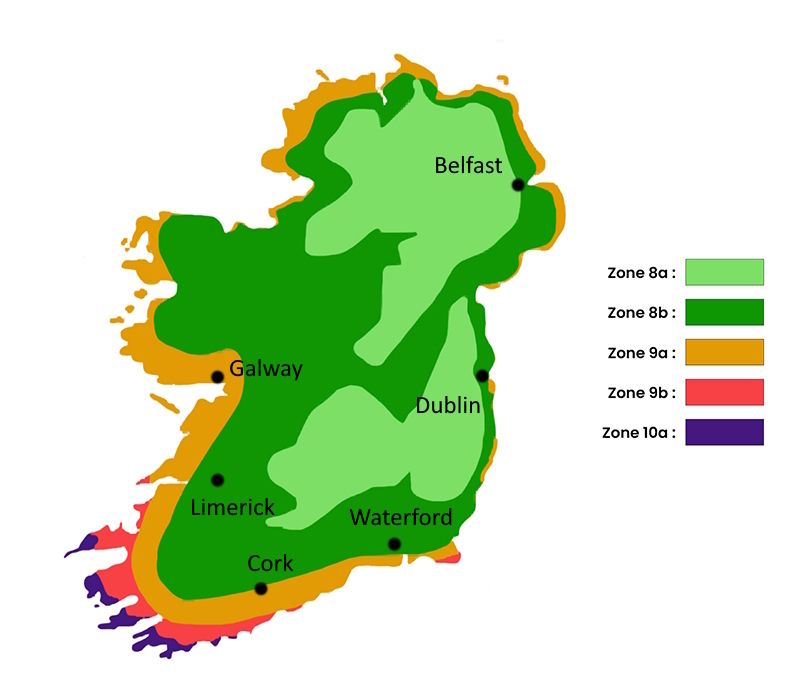
The planting period indicated on our website applies to regions in USDA Zone 9a (East Coast and Midlands: Dublin, Wexford, Waterford, Kilkenny, Portlaoise). It will vary depending on where you live:
- On the west coast and in the north-west (Galway, Limerick, Sligo, Donegal, Westport), delay planting by 1 to 2 weeks in spring and bring it forward by 1 to 2 weeks in autumn compared to the dates given, preferably choosing periods without strong winds.
- In the inland hills and plateaus (Wicklow Mountains, Macgillycuddy’s Reeks, Connemara, Killarney), it is best to plant in spring (April–May) or autumn (September–October), avoiding periods of waterlogged soil in winter and strong winds, which pose the main risk to newly planted trees in these areas.
The flowering period indicated on our website applies to regions in USDA Zone 9a, such as the East Coast and Midlands, including Dublin, Wexford, Waterford, Kilkenny and Portlaoise.
This will vary depending on where you live:
- On the west coast and in the northwest (Galway, Limerick, Sligo, Donegal and Westport), it will be delayed by one to two weeks compared to the given dates, due to stronger Atlantic winds and less spring sunshine.
- In the inland hills and plateaus (the Wicklow Mountains, the Macgillycuddy's Reeks, Connemara and Killarney), flowering will be delayed by two to three weeks. Flowering mainly occurs between May and July, with the limiting factors being less frost and more of the excessive humidity, strong winds and lack of sunshine that are characteristic of these areas.
Shipping country and language
Your country of residence may be:
Your country of residence is:
For a better user experience on our website, you can select:
Your shipping country:
-
 Austria
-
 Belgium
-
 Bosnia & Herzegovina
-
 Bulgaria
-
 Croatia
-
 Cyprus
-
 Czechia
-
 Denmark
-
 Estonia
-
 Finland
-
 France
-
 Germany
-
 Greece
-
 Hungary
-
 Iceland
-
 Ireland
-
 Italy
Italy
-
 Latvia
-
 Liechtenstein
-
 Lithuania
-
 Luxembourg
-
 Malta
Malta
-
 Netherlands
-
 Poland
-
 Portugal
-
 Romania
-
 Serbia
-
 Slovakia
-
 Slovenia
-
 Spain
Spain
-
 Sweden
-
 Switzerland
Language:
-
French
-
 English
-
Spanish
-
Italian
-
German
-
Portuguese
-
Dutch
-
Finnish
My Account
Hello
My wish lists
My cart
Log in / Register
Existing customer?
This form is protected by reCAPTCHA - the Google Privacy Policy and Terms of Service apply.
New customer?
Create an account to track your orders, access our customer service and, if you wish, make the most of our upcoming offers.