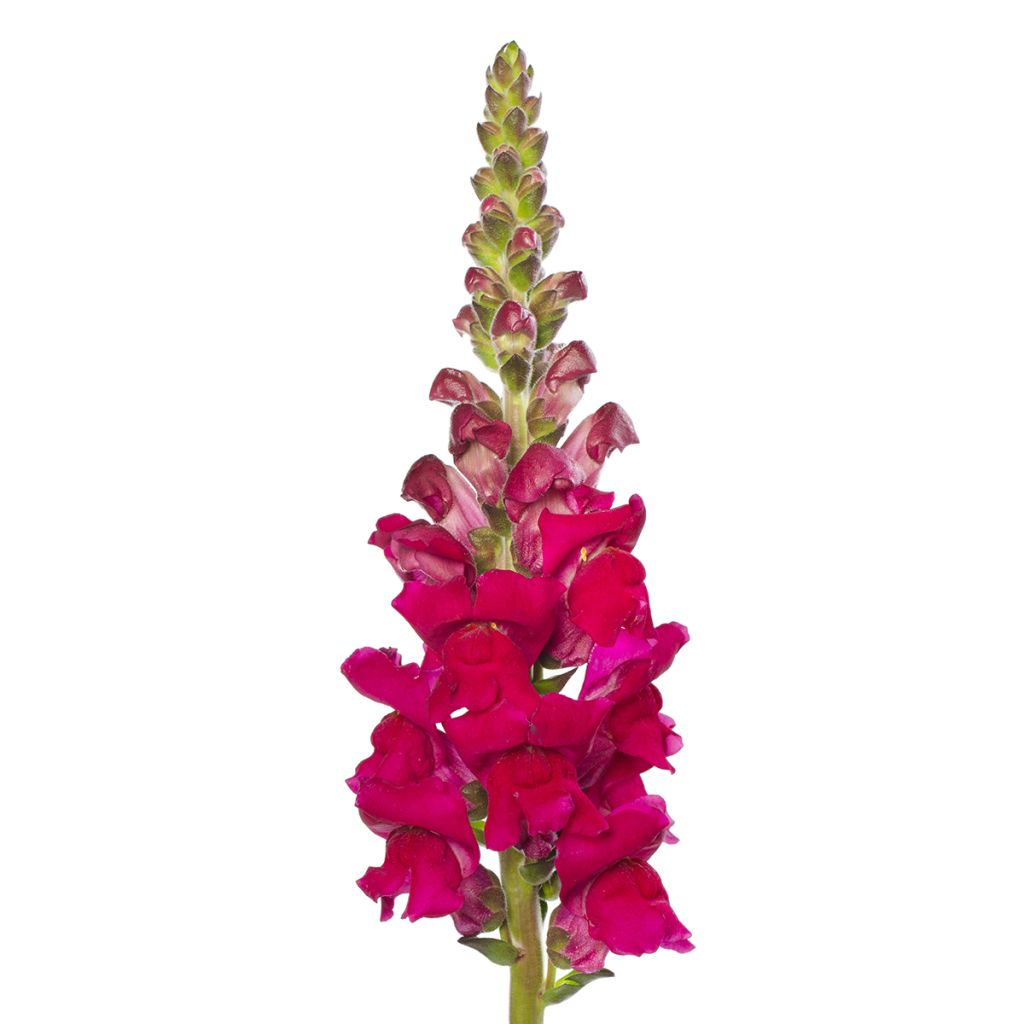
Snapdragon Orleans Lilac seeds - Antirrhinum x maju
Snapdragon Orleans Lilac seeds - Antirrhinum x maju
Antirrhinum x majus 'Orleans Lilac'
Snapdragon, Garden Snapdragon
Back-to-school special offer!
Get €10 off for every €50 you spend! And get up to €40 off on a single order.
How does it work?
1. Shop your favourites
Add your favourite plants to your basket. For every €50 you spend (excluding delivery charges, store credit and the plastic-free option), you’ll receive a €10 voucher.
€50 spent = €10 voucher
€100 spent = €20 voucher
€150 spent = €30 voucher
€200 spent = €40 voucher
2. Place your order
Once your basket reaches one of the spending thresholds, place your order. You can even choose your delivery date!
3. Receive your voucher
As soon as your order has been shipped, you’ll receive an email containing your personal voucher code and its value.
4. Use it on your next order
Your voucher is valid for 90 days from the date you receive it. It can be used once only, on a new order worth at least the value of the voucher, excluding delivery charges.
Please note: Vouchers can be combined with other offers, but cannot be split or refunded.
Home or relay delivery (depending on size and destination)
Important: You may be charged customs duties by your country’s customs authorities upon delivery.
Schedule delivery date,
and select date in basket
This plant carries a 6 months recovery warranty
More information
We guarantee the quality of our plants for a full growing cycle, and will replace at our expense any plant that fails to recover under normal climatic and planting conditions.
Does this plant fit my garden?
Set up your Plantfit profile →
Description
L'Antirrhinum majus ‘Orleans Lilac’ F1 est une excellente variété de muflier pour la saison chaude : elle produit des épis floraux de couleur lilas réguliers, portés par des tiges droites, parfaites pour le jardin comme pour la fleur coupée. Cette sélection se plante du début du printemps au début de l'été, pour une floraison soutenue de juin à septembre, aussi bien en pleine terre que sous un tunnel léger.
L'Antirrhinum majus appartient à la famille des Plantaginacées (anciennement rangé parmi les Scrofulariacées). Cette espèce botanique est originaire du pourtour méditerranéen occidental, du sud-centre de la France et des Pyrénées orientales jusqu’au nord-est de l’Espagne et aux Baléares.
Cette variété ‘Orleans Lilac’ F1 fait partie de la série Orleans d'Evanthia Genetics, un hybride F1 moderne sélectionné pour des hampes florales longues, une uniformité de floraison et un cycle court en conditions de jours longs et de forte luminosité ; le code « III–IV » indique que la floraison a lieu de la fin du printemps jusqu'à l'été.
La plante présente un port érigé, ramifié à partir de la base ; en pleine terre, les sujets atteignent 66 à 86 cm de haut, selon les conditions de culture et la technique de pincement. En pot, avec un pincement des jeunes plants à 4–6 feuilles, on obtient des sujets plus trapus, souvent autour de 40–60 cm, tout en favorisant des ramifications florifères. Les tiges sont fermes, elles deviennent parfois légèrement lignifiées vers la base en fin de saison. Le feuillage est caduc, vert moyen ; les feuilles, lancéolées à ovales, mesurent en moyenne 1 à 7 cm de long et sont disposées de façon spiralée sur les tiges.
Les inflorescences sont des épis terminaux denses ; chaque fleur mesure 3,5 à 4,5 cm de long et présente deux lèvres bien marquées. ‘Orleans Lilac’ donne des épis bien remplis, à dominante lilas pourpré sur la partie haute et fleurit durant 8 à 12 semaines après plantation. La période de floraison s’étend de fin mai-juin jusqu’à septembre selon la date du semis. Les fleurs sont légèrement parfumées et très mellifères ; la pollinisation est assurée notamment par les bourdons capables d’ouvrir la « gueule » de la fleur. Après la floraison, la plante produit des capsules contenant de très nombreuses graines fines. Les tiges coupées se gardent en moyenne une semaine (7 à 10 jours) dans l'eau fraîche.
Semez ce muflier 'Orléans' sous abri en fin d’hiver pour repiquer les plantes au soleil dans un sol léger, frais, mais bien drainé. Les séries comme 'Orléans' sont idéales pour garnir les massifs d’été et le carré de fleurs à couper ; espacez vos plants de 25–30 cm, paillez pour conserver l’humidité et pincez tôt pour multiplier les hampes. En pot, choisissez un contenant d’au moins 30 cm de diamètre avec un substrat riche et drainant, tuteurez si l’emplacement est venté.
Les teintes lilas se marient particulièrement bien avec des roses abricotés, des blancs et des verts anis : créez de belles compositions avec le Cosmos ‘Apricot Lemonade’, l'Ammi majus 'Queen of Africa', et le Zinnia ‘Queeny Lime Orange’ pour faire des bouquets tout l’été. Dans un massif, associez ce muflier 'Orleans Lilac' à la sauge arbustive ‘Hot Lips’ ou au Gaura lindheimeri ‘Whirling Butterflies’ et glissez quelques plants de Dahlia ‘Café au Lait’.
Attention, graines réservées aux jardiniers très expérimentés ayant l'habitude de semer des graines très fines. Ces graines sont aussi fines que de la poussière, à peine visibles à l'œil nu.
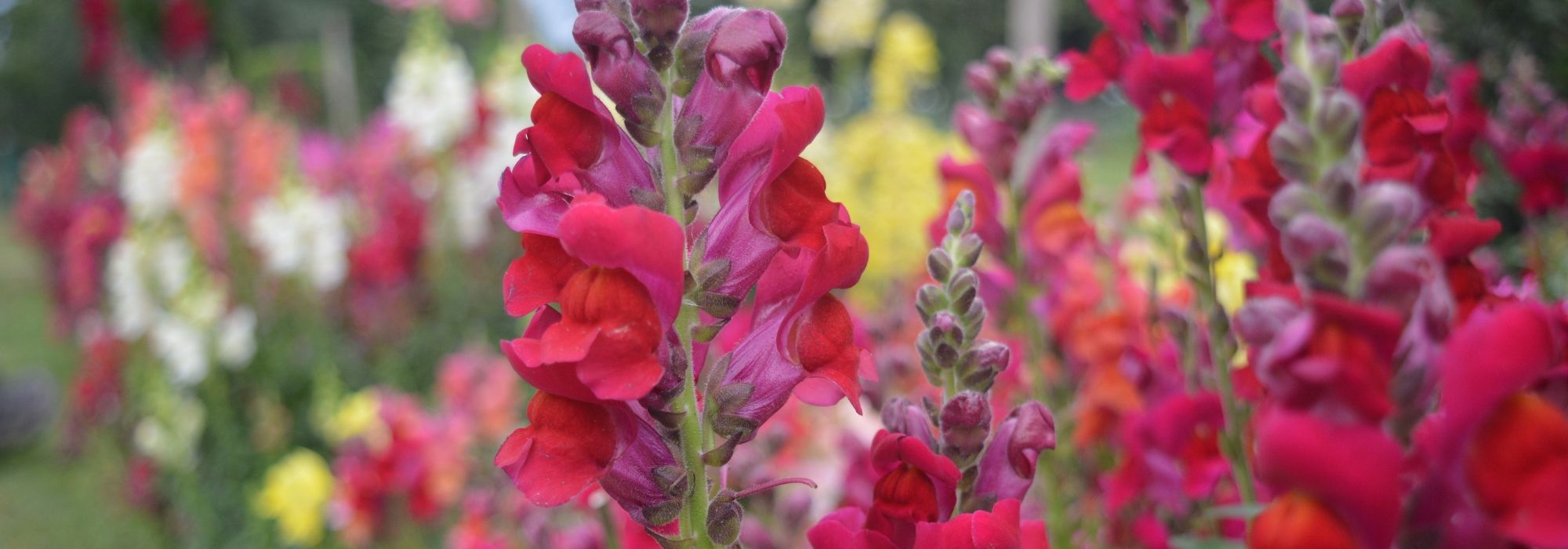
Snapdragon Orleans Lilac seeds - Antirrhinum x maju in pictures
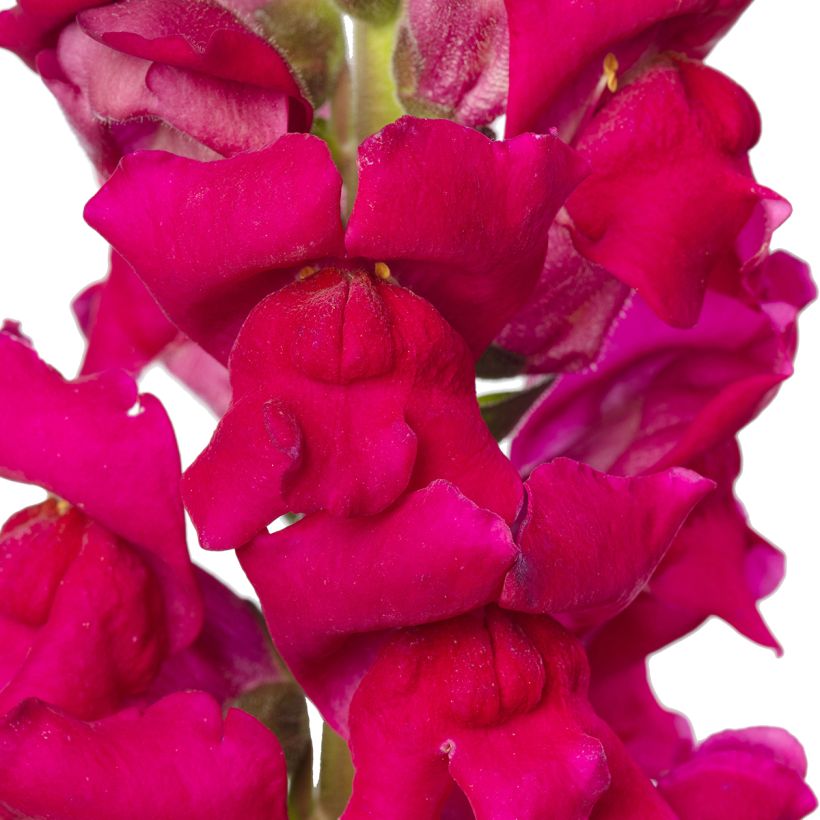
Flowering
Foliage
Plant habit
Botanical data
Antirrhinum
x majus
'Orleans Lilac'
Plantaginaceae
Snapdragon, Garden Snapdragon
Cultivar or hybrid
Planting and care
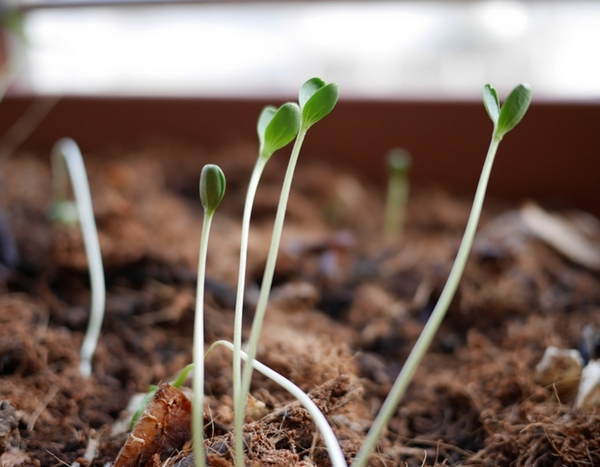
Sow Antirrhinum majus F1 'Orleans Lilac IV' from February-March to May on the surface of a well-drained special sowing compost. Do not cover the seeds, as light aids germination. Place your tray or box in a mini greenhouse or plastic bag, maintaining an ideal temperature of 20-24°C until germination, which usually takes 7 to 14 days. Transplant the young plants when they are large enough to handle into 8 cm pots or containers. Gradually acclimatise the plants to cooler conditions for a few weeks before planting them out in the open ground after all risk of frost has passed, spacing them 25 to 30 cm apart. Flowering begins 100 to 110 days after sowing.
Snapdragons thrive in fertile, well-drained, deeply cultivated soils and in full sun. The great snapdragon is not very hardy (-6°C), so it is often grown as an annual or biennial. However, it is not uncommon for snapdragons to survive several mild winters, but they then become more susceptible to rust... To try to preserve a beautiful variety, protect the plants from severe frost in winter by ensuring good soil drainage and covering the stumps with a thick carpet of leaves or dry herbs: they will regrow in spring and flower earlier.
Sowing period
Intended location
Planting & care advice
-
-

-
-

-

-

-

-

This item has not been reviewed yet - be the first to leave a review about it.
Recently viewed products
Haven't found what you were looking for?
Hardiness is the lowest winter temperature a plant can endure without suffering serious damage or even dying. However, hardiness is affected by location (a sheltered area, such as a patio), protection (winter cover) and soil type (hardiness is improved by well-drained soil).
In temperate climates, pruning of spring-flowering shrubs (forsythia, spireas, etc.) should be done just after flowering.
Pruning of summer-flowering shrubs (Indian Lilac, Perovskia, etc.) can be done in winter or spring.
In cold regions as well as with frost-sensitive plants, avoid pruning too early when severe frosts may still occur.
The harvesting period indicated on our website applies to countries and regions in USDA zone 8 (France, England, Ireland, the Netherlands).
In colder areas (Scandinavia, Poland, Austria...) fruit and vegetable harvests are likely to be delayed by 3-4 weeks.
In warmer areas (Italy, Spain, Greece, etc.), harvesting will probably take place earlier, depending on weather conditions.
The sowing periods indicated on our website apply to countries and regions within USDA Zone 8 (France, UK, Ireland, Netherlands).
In colder areas (Scandinavia, Poland, Austria...), delay any outdoor sowing by 3-4 weeks, or sow under glass.
In warmer climes (Italy, Spain, Greece, etc.), bring outdoor sowing forward by a few weeks.
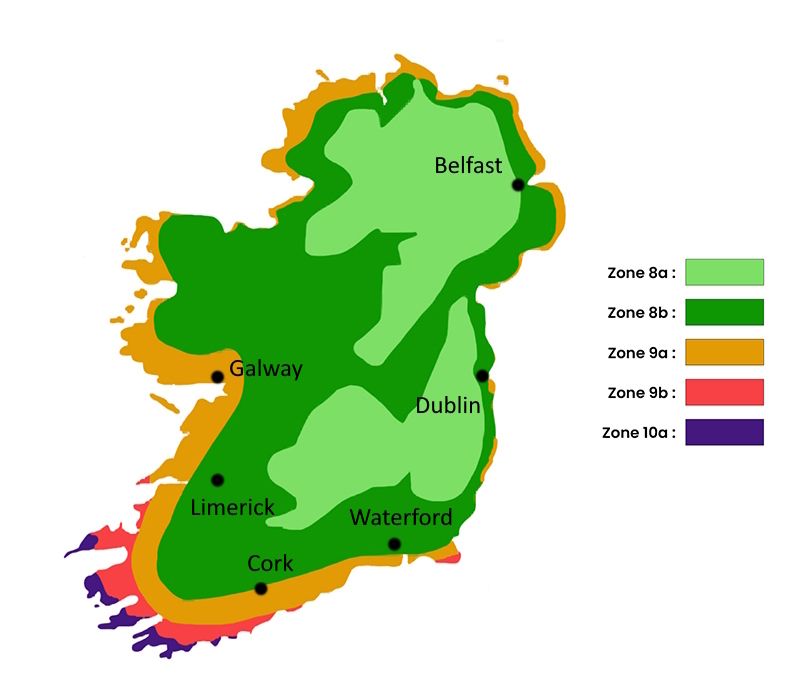
The planting period indicated on our website applies to regions in USDA Zone 9a (East Coast and Midlands: Dublin, Wexford, Waterford, Kilkenny, Portlaoise). It will vary depending on where you live:
- On the west coast and in the north-west (Galway, Limerick, Sligo, Donegal, Westport), delay planting by 1 to 2 weeks in spring and bring it forward by 1 to 2 weeks in autumn compared to the dates given, preferably choosing periods without strong winds.
- In the inland hills and plateaus (Wicklow Mountains, Macgillycuddy’s Reeks, Connemara, Killarney), it is best to plant in spring (April–May) or autumn (September–October), avoiding periods of waterlogged soil in winter and strong winds, which pose the main risk to newly planted trees in these areas.
The flowering period indicated on our website applies to regions in USDA Zone 9a, such as the East Coast and Midlands, including Dublin, Wexford, Waterford, Kilkenny and Portlaoise.
This will vary depending on where you live:
- On the west coast and in the northwest (Galway, Limerick, Sligo, Donegal and Westport), it will be delayed by one to two weeks compared to the given dates, due to stronger Atlantic winds and less spring sunshine.
- In the inland hills and plateaus (the Wicklow Mountains, the Macgillycuddy's Reeks, Connemara and Killarney), flowering will be delayed by two to three weeks. Flowering mainly occurs between May and July, with the limiting factors being less frost and more of the excessive humidity, strong winds and lack of sunshine that are characteristic of these areas.
Shipping country and language
Your country of residence may be:
Your country of residence is:
For a better user experience on our website, you can select:
Your shipping country:
-
 Austria
-
 Belgium
-
 Bosnia & Herzegovina
-
 Bulgaria
-
 Croatia
-
 Cyprus
-
 Czechia
-
 Denmark
-
 Estonia
-
 Finland
-
 France
-
 Germany
-
 Greece
-
 Hungary
-
 Iceland
-
 Ireland
-
 Italy
Italy
-
 Latvia
-
 Liechtenstein
-
 Lithuania
-
 Luxembourg
-
 Malta
Malta
-
 Netherlands
-
 Poland
-
 Portugal
-
 Romania
-
 Serbia
-
 Slovakia
-
 Slovenia
-
 Spain
Spain
-
 Sweden
-
 Switzerland
Language:
-
French
-
 English
-
Spanish
-
Italian
-
German
-
Portuguese
-
Dutch
-
Finnish
My Account
Hello
My wish lists
My cart
Log in / Register
Existing customer?
This form is protected by reCAPTCHA - the Google Privacy Policy and Terms of Service apply.
New customer?
Create an account to track your orders, access our customer service and, if you wish, make the most of our upcoming offers.