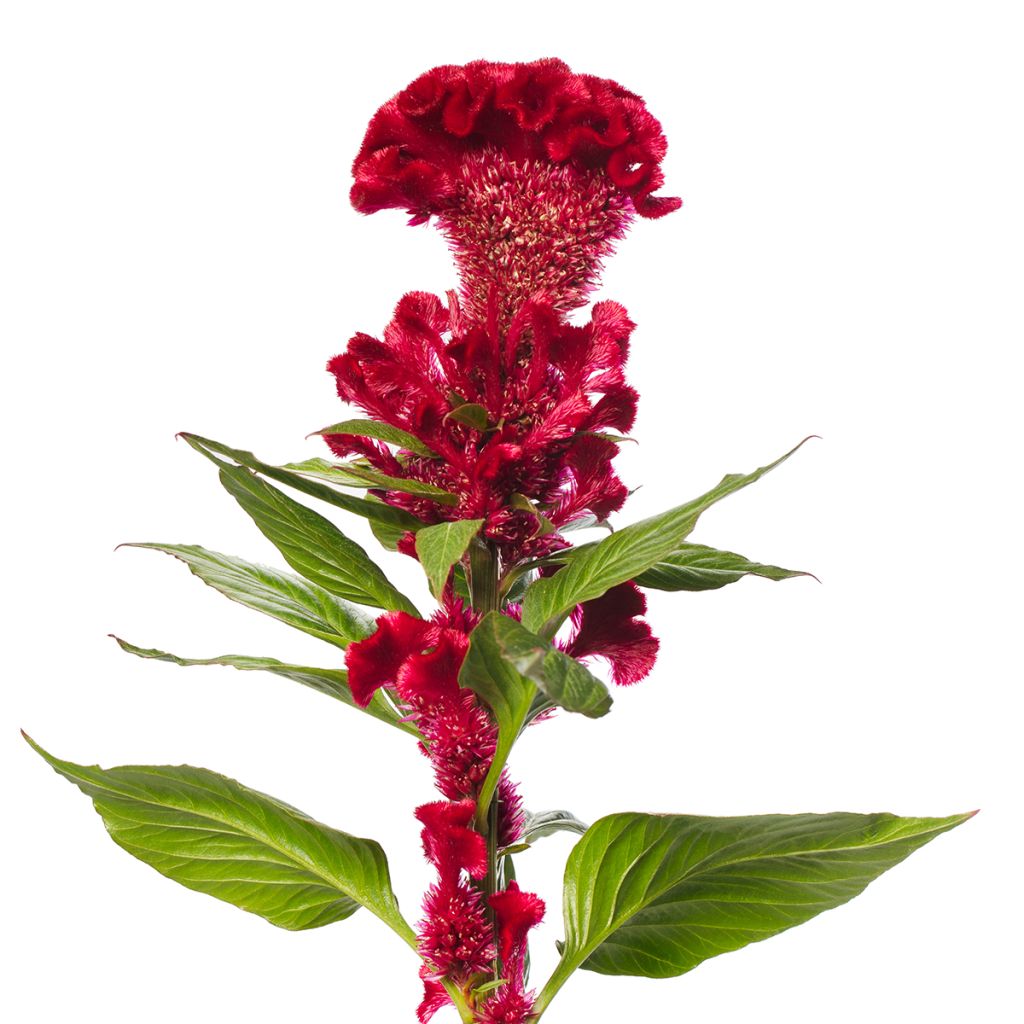
Celosia cristata Red Jack seeds - Crested Cock's-comb
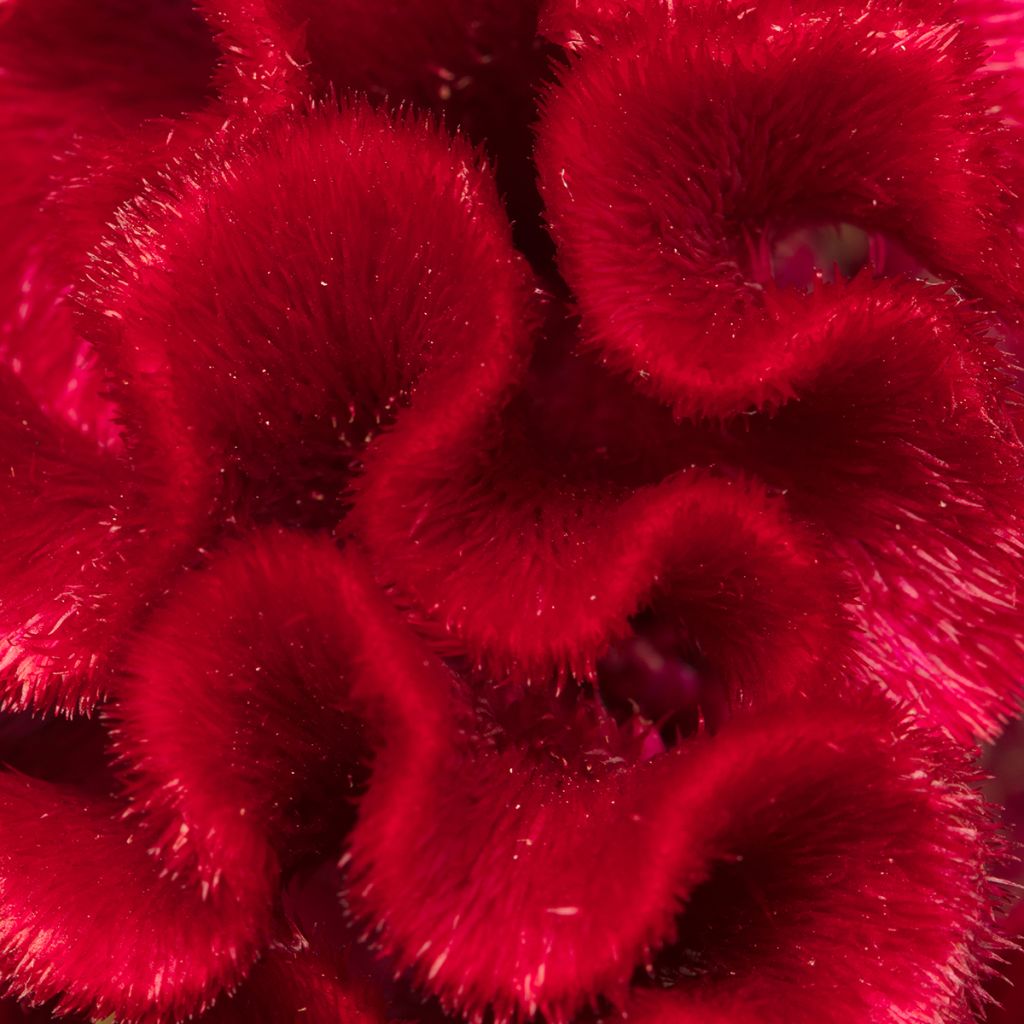
Celosia cristata Red Jack seeds - Crested Cock's-comb
Celosia cristata Red Jack seeds - Crested Cock's-comb
Celosia argentea Cristata Group (Jack series) 'Red Jack'
Crested Cock's-comb
Back-to-school special offer!
Get €10 off for every €50 you spend! And get up to €40 off on a single order.
How does it work?
1. Shop your favourites
Add your favourite plants to your basket. For every €50 you spend (excluding delivery charges, store credit and the plastic-free option), you’ll receive a €10 voucher.
€50 spent = €10 voucher
€100 spent = €20 voucher
€150 spent = €30 voucher
€200 spent = €40 voucher
2. Place your order
Once your basket reaches one of the spending thresholds, place your order. You can even choose your delivery date!
3. Receive your voucher
As soon as your order has been shipped, you’ll receive an email containing your personal voucher code and its value.
4. Use it on your next order
Your voucher is valid for 90 days from the date you receive it. It can be used once only, on a new order worth at least the value of the voucher, excluding delivery charges.
Please note: Vouchers can be combined with other offers, but cannot be split or refunded.
Home or relay delivery (depending on size and destination)
Important: You may be charged customs duties by your country’s customs authorities upon delivery.
Schedule delivery date
and select date in basket
This plant carries a 6 months recovery warranty
More information
We guarantee the quality of our plants for a full growing cycle, and will replace at our expense any plant that fails to recover under normal climatic and planting conditions.
Does this plant fit my garden?
Set up your Plantfit profile →
Description
La Celosia argentea var. cristata ‘Red Jack’, ou Célosie crête-de-coq 'Red Jack', est une valeur sûre pour les bouquets et les massifs saisonniers. Sa crête veloutée rouge, joliment festonnée, s’étire tout le long de la tige. Elle offre des hampes florales généreuses, originales autant qu'élégantes, faciles à travailler en vase et superbes aussi en fleurs séchées. On la cultive comme une annuelle, au chaud : elle prospère en plein soleil, en sol riche et bien drainé, et fleurit sans relâche de l'été jusqu’à l’automne.
Cette plante appartient à la famille des Amaranthacées. Elle descend de la Celosia argentea var. cristata. L’origine de la forme cristata est probablement asiatique, avec une longue histoire de culture en Inde, en Birmanie et en Chine ; l’espèce C. argentea est largement répandue et naturalisée dans les régions tropicales et subtropicales.
‘Red Jack’ fait partie de la série Jack, développée par Evanthia aux Pays-Bas pour la fleur coupée ; elle se caractérise par une crête frangée allongée et par de nombreuses petites inflorescences le long d’une tige « bien remplie ». Le cycle cultural, de la plantation à la récolte, est d’environ 9 à 13 semaines sous abri chauffé.
Dotée d'un port très nettement dressé, la plante présente une croissance rapide du printemps à l'été. En pleine terre ou sous abri, sa hauteur oscille entre 0,80 m et 1,20 m ; elle sera plus compacte en pot. Les tiges sont glabres, vertes à rougeâtres. Les feuilles sont de forme lancéolée à ovale-lancéolée, elles mesurent 8 à 15 cm de long. Leur coloris est un vert franc parfois teinté de bronze.
L’inflorescence est fasciée en crête veloutée, épaisse, finement ondulée, et d’un rouge soutenu chez ‘Red Jack’. La crête principale est accompagnée de nombreuses petites fleurs colorées le long de la tige. La floraison s'étale de juillet à octobre, et souvent jusqu’aux premières gelées. Avec un semis très précoce sous abri, les premières tiges peuvent apparaître fin juin. Les fleurs fraîches tiennent jusqu'à 2 semaines en vase ; les tiges suspendues la tête en bas se sèchent très bien.
‘Red Jack’ s'installe dans un massif ensoleillé, mais aussi dans une zone du potager destinée aux fleurs à couper. Installez-la aussi dans de grands pots de 15 à 20 litres pour obtenir des tiges droites ; pincez tôt si vous souhaitez plus de ramifications, ou laissez un axe unique pour obtenir de longues tiges de fleuriste. Dans les massifs d’été, mariez cette célosie 'Red Jack' à de grands zinnias ‘Queen Red Lime’, aux amarantes ‘Fat Spike' rouges et vertes ou au cosmos ‘Rubenza’.
Le nom de genre Celosia vient du grec kēlós (« brûlé »), en référence aux teintes ardentes des inflorescences ; l’épithète argentea évoque des bractées blanchâtres, et cristata signifie « crêtée ». Longtemps cultivée près des temples en Inde et en Asie du Sud-Est, la crête-de-coq a aussi des usages alimentaires : feuilles et jeunes pousses se consomment comme un légume proche de l’amarante, connu en Afrique de l’Ouest sous le nom de Lagos spinach.
Report an error about the product description
Celosia cristata Red Jack seeds - Crested Cock's-comb in pictures
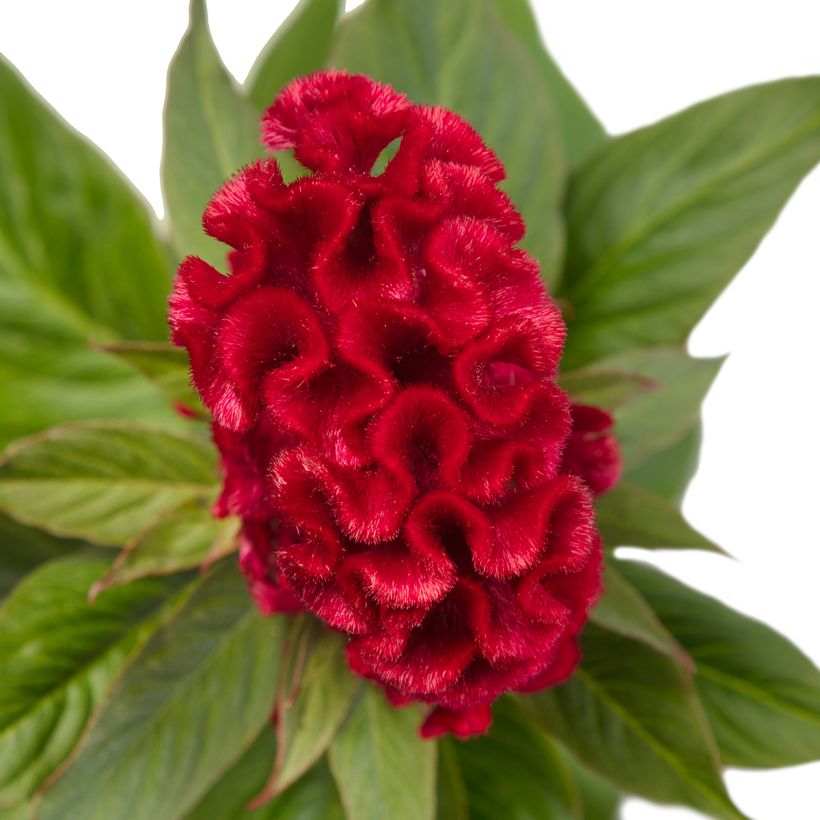
Flowering
Foliage
Plant habit
Botanical data
Celosia
argentea
'Red Jack'
Amarantaceae
Crested Cock's-comb
Celosia argentea var. cristata 'Red Jack'
Cultivar or hybrid
Planting and care
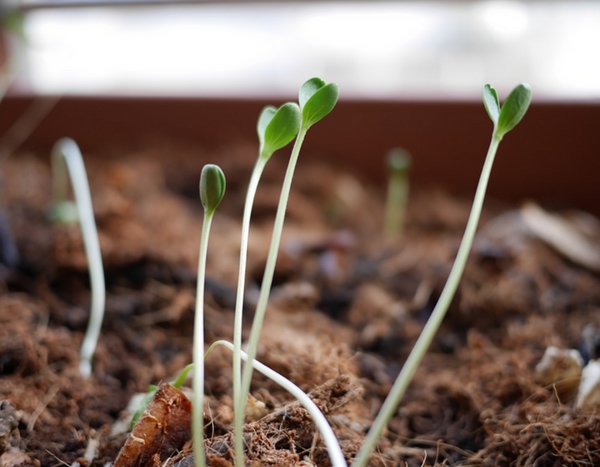
Sow 'Red Jack' cockscomb Celosia from February to April in a seed tray, in warmth.
Use a fine special sowing compost, sow on the surface as the seeds are photosensitive, press down very lightly, moisten with a fine spray or by capillary action and, if needed, sprinkle with a thin layer of vermiculite.
Maintain a temperature of 22 to 25°C under bright light without direct sunlight; germination occurs in 7 to 14 days. Transplant at the two to three true leaf stage into pots and continue cultivation at 17 to 20°C, keeping the substrate moist but not waterlogged.
Begin hardening of the young plants ten to fifteen days before planting and avoid temperatures below 15°C.
Plant in open ground in late May or early June, in full sun, in a well-drained and fertile soil with a pH between 6.0 and 6.4, enriched with mature compost.
To obtain long stems for cutting, space the plants 12 to 15 cm apart and do not pinch; allow eight to thirteen weeks of cultivation before the first cuts.
In flower beds, a light pinching of the plants at 15 to 20 cm can encourage branching. Water regularly during hot periods, hoe or mulch to maintain soil moisture, and provide a net or thin stake in windy sites to obtain straight stems.
Sowing period
Intended location
Planting & care advice
-

-
-
-
-

-

-

-

This item has not been reviewed yet - be the first to leave a review about it.
Haven't found what you were looking for?
Hardiness is the lowest winter temperature a plant can endure without suffering serious damage or even dying. However, hardiness is affected by location (a sheltered area, such as a patio), protection (winter cover) and soil type (hardiness is improved by well-drained soil).
In temperate climates, pruning of spring-flowering shrubs (forsythia, spireas, etc.) should be done just after flowering.
Pruning of summer-flowering shrubs (Indian Lilac, Perovskia, etc.) can be done in winter or spring.
In cold regions as well as with frost-sensitive plants, avoid pruning too early when severe frosts may still occur.
The sowing periods indicated on our website apply to countries and regions within USDA Zone 8 (France, UK, Ireland, Netherlands).
In colder areas (Scandinavia, Poland, Austria...), delay any outdoor sowing by 3-4 weeks, or sow under glass.
In warmer climes (Italy, Spain, Greece, etc.), bring outdoor sowing forward by a few weeks.
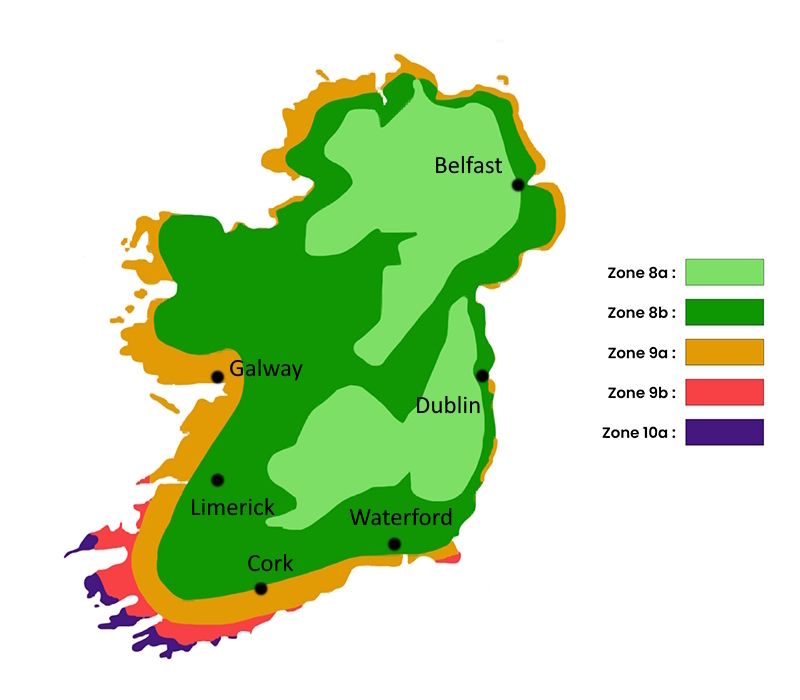
The planting period indicated on our website applies to regions in USDA Zone 9a (East Coast and Midlands: Dublin, Wexford, Waterford, Kilkenny, Portlaoise). It will vary depending on where you live:
- On the west coast and in the north-west (Galway, Limerick, Sligo, Donegal, Westport), delay planting by 1 to 2 weeks in spring and bring it forward by 1 to 2 weeks in autumn compared to the dates given, preferably choosing periods without strong winds.
- In the inland hills and plateaus (Wicklow Mountains, Macgillycuddy’s Reeks, Connemara, Killarney), it is best to plant in spring (April–May) or autumn (September–October), avoiding periods of waterlogged soil in winter and strong winds, which pose the main risk to newly planted trees in these areas.
The flowering period indicated on our website applies to regions in USDA Zone 9a, such as the East Coast and Midlands, including Dublin, Wexford, Waterford, Kilkenny and Portlaoise.
This will vary depending on where you live:
- On the west coast and in the northwest (Galway, Limerick, Sligo, Donegal and Westport), it will be delayed by one to two weeks compared to the given dates, due to stronger Atlantic winds and less spring sunshine.
- In the inland hills and plateaus (the Wicklow Mountains, the Macgillycuddy's Reeks, Connemara and Killarney), flowering will be delayed by two to three weeks. Flowering mainly occurs between May and July, with the limiting factors being less frost and more of the excessive humidity, strong winds and lack of sunshine that are characteristic of these areas.
The harvest period stated on our website applies to regions in USDA zones 8b to 9a (East, South-East and southern coast: Eastern Leinster, County Wexford and County Waterford, Cork region: Dublin, Wexford, Waterford, Kilkenny, Cork). It will vary depending on where you live:
- In the Midlands and the inland plains: the Middle Shannon Valley, Westmeath, Offaly, Longford, Cavan and Monaghan (Athlone, Mullingar, Tullamore, Longford, Cavan, Monaghan), in USDA zones 8a to 8b, the harvest will be delayed by 1 to 2 weeks compared with the dates given. Far from the moderating influence of the sea, these plains experience late frosts right up until the end of spring. The heavy, peaty soils warm slowly here, and damp patches form pockets of frost. Wait until the soil has dried out and warmed up before planting, and protect young plants with a fleece on clear nights.
- In the Atlantic West and North-West: Kerry, Clare, Galway, Connemara, Mayo, Sligo and Donegal (Killarney, Ennis, Galway, Westport, Sligo, Letterkenny), in USDA zones 8b to 10a, the harvest will be delayed by 1 to 3 weeks compared with the dates given. Summers here are cloudier, rainier and windier than in the east, which slows down ripening and encourages late blight and other fungal diseases. Kerry and Clare are at the lower end of the range, whilst Mayo and Donegal, which are cooler and more exposed, are at the upper end. However, the mild coastal winters mean that leafy vegetables and root vegetables can be harvested at dates close to those indicated, or even earlier: shelter crops from the wind with hedges and grow heat-loving plants in greenhouses or polytunnels.
- In the highlands, above 200 m: the Wicklow Mountains, Macgillycuddy’s Reeks, the Galtee and Comeragh ranges, the Twelve Bens in Connemara and the Donegal highlands, in USDA zones 7b to 8a, the harvest will be delayed by 2 to 4 weeks compared with the dates given, depending on the altitude, taking care to beat the first early frosts, which may occur as early as the start of autumn. Wind, constant damp and late frosts lasting into early summer significantly shorten the growing season. Opt for sheltered, south-facing slopes, early-maturing varieties and growing under cover.
Depending on your garden’s aspect, these variations can range from one to two weeks. A frost-prone valley floor delays the harvest, whilst a south-facing wall brings it forward.
Shipping country and language
Your country of residence may be:
Your country of residence is:
For a better user experience on our website, you can select:
Your shipping country:
-
 Austria
-
 Belgium
-
 Bosnia & Herzegovina
-
 Bulgaria
-
 Croatia
-
 Cyprus
-
 Czechia
-
 Denmark
-
 Estonia
-
 Finland
-
 France
-
 Germany
-
 Greece
-
 Hungary
-
 Iceland
-
 Ireland
-
 Italy
-
 Latvia
-
 Liechtenstein
-
 Lithuania
-
 Luxembourg
-
 Malta
-
 Netherlands
-
 Poland
-
 Portugal
-
 Romania
-
 Serbia
-
 Slovakia
-
 Slovenia
-
 Spain
-
 Sweden
-
 Switzerland
Language:
-
French
-
 English
-
Spanish
-
Italian
-
German
-
Portuguese
-
Dutch
-
Finnish
-
[pl]
My Account
Hello
My wish lists
My cart
Log in / Register
Existing customer?
This form is protected by reCAPTCHA - the Google Privacy Policy and Terms of Service apply.
New customer?
Create an account to track your orders, access our customer service and, if you wish, make the most of our upcoming offers.