






























Willow in the garden: Ideas and inspiration
A quaint, old-fashioned lifestyle for the terrace and garden
Contents
Adding a touch of soul to the garden is easy with willow wicker, the flexible material derived from the willow, used for millennia in our Western cultures. It’s making a strong comeback in garden design, and it’s also because it now comes in a wide range of stylish items, made from rattan or sea rush, or even imitations in synthetic fibres.
Discover the full potential and deliciously retro elegance of willow wicker for our green sanctuaries!
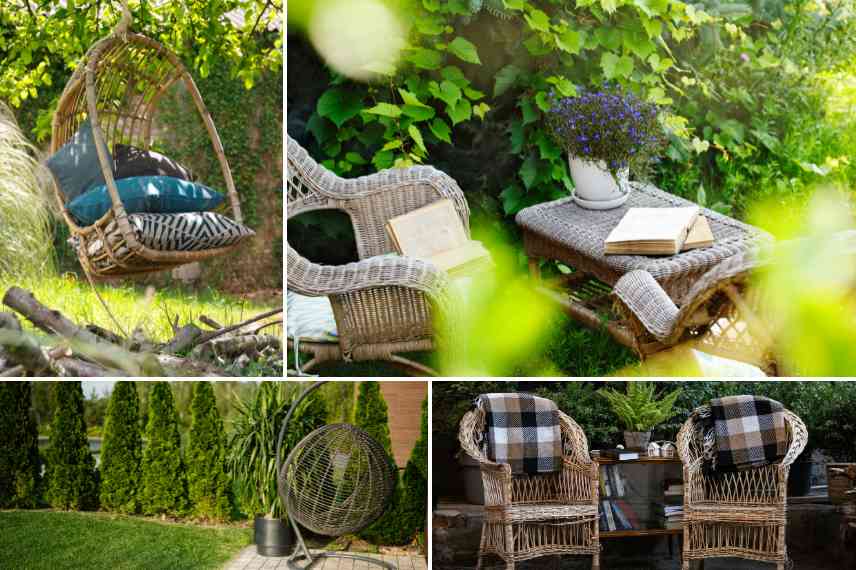
From traditional design to modern updates, willow wicker is making a comeback in our gardens!

Wicker: emergence in garden design and the benefits of the material
Willow comes from this year’s shoots of some willow varieties, such as Salix viminalis, certainly the most supple, but also from other species such as red willow which basket-makers cut in winter, between November and December.
Unlike rattan with which it is sometimes confused, willow is finer, more suited to forming objects and lightweight structures. Rattan comes from palms and often blends bamboo; it is stronger for making chairs.

The weaving of willow, or wickerwork, an ancient craft
Willow has been used since antiquity for the art of basketry, mainly for baskets and utilitarian objects. But it is particularly in the Middle Ages that willow became commonly used in Europe for the manufacture of fences and trellises in monastic gardens and castle gardens. The monk gardeners were particularly skilled in the art of weaving willow to create functional and decorative structures.
During the Renaissance, garden art experienced significant growth in Italy and France, and willow, valued for its aesthetic, continued to be used to create garden structures increasingly elaborate. Left aside for a few centuries, willow enjoyed a genuine revival of popularity in the Victorian era. In England in particular, but also in France, willow is everywhere in garden furniture, arbours and trellises.
Today, willow is making a strong comeback in interior decoration, but also in garden art for its natural look, a true ‘outdoor’ trend, from fences to giant sculptures, including furniture and supports for climbing plants. It has evolved and is now even reproduced synthetically.
Which willows to use for willow weaving?
The fragile willow (Salix fragilis), the Salix viminalis or basket willow, the golden willow (Salix alba ‘Vitellina’), the red willow (Salix purpurea), the brown willow (Salix triandra), the white willow (Salix alba) lend themselves well to weaving and to various garden uses.
Advantages and drawbacks of willow
- A natural material that is very on-trend, full of charm in schemes ;
- Light, it is practical and easily portable for a mobile garden ;
- Finally, it is flexible, supple, manageable, easy to work with and allows weaving to create patterns of varying complexity ;
- A renewable, eco-friendly material, willow growing in every cold and temperate country of the northern hemisphere ;
- Its colour nuances, depending on the willow species or whether it is painted, and ageing, make it a very interesting material.
But…
- Its main weakness: willow deteriorates clearly in the presence of moisture and if left outdoors in the rain, becoming greyish and more fragile. Garden seating in willow or rattan is clearly reserved for meticulous people ;
- It requires appropriate maintenance and has limited durability compared with newer outdoor garden materials ;
- It can become brittle on certain rounded shapes and lack strength for some uses.
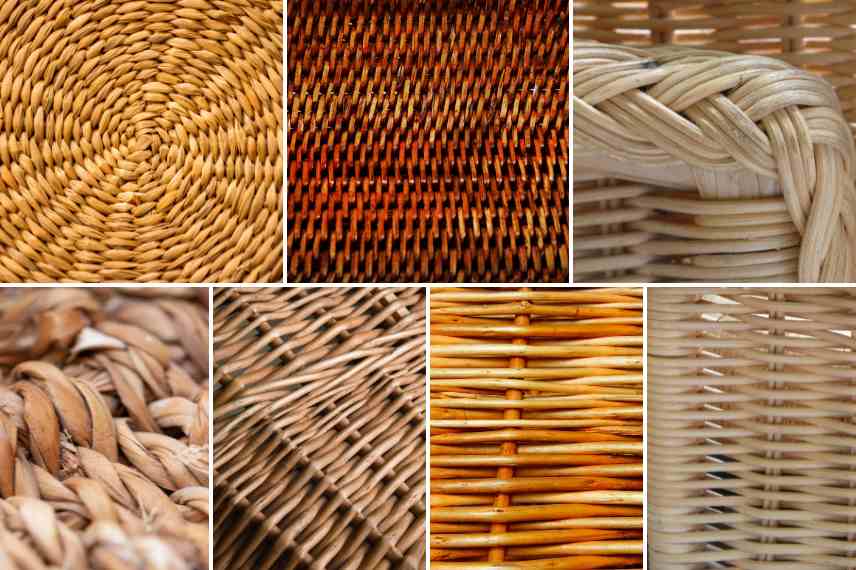
The colours of willow are varied. It sometimes blends with braided plant fibres, as shown bottom left
Willow cultivation and pruning
Willow prefers moist, rich, deep and well-drained soils, often found near water sources. It even tolerates waterlogged soils and can be planted in a flood-prone garden. A temperate climate suits it perfectly, and a full sun exposure is preferable for its development. Planting is ideally carried out between October and February, by cuttings or bare roots. The willow is particularly useful for holding soil in place and stabilising erosion along banks and waterways or as a bocage hedge. Beyond this soil-stabilising effect, it enhances biodiversity by providing a source of food for many species and the overall health of natural landscapes.
Willow upkeep includes regular watering, especially during dry periods as it needs moisture, and it requires annual pruning.
Winter pruning is essential to maintain the vigor of the plants and to promote the production of new shoots, often coloured. In white willow (Salix alba) and basket willow (Salix viminalis), it encourages the production of long, straight new shoots. For purple willow (purple osier, Salix purpurea), pruning will be somewhat less severe than for white willow. For all these willows, pollarding is practised, which yields long, flexible stems. Then, the stems are soaked in 10 cm of water or in a soaking trough, to maintain their hydration and flexibility, essential for basketry. The raw willow will, for its part, be cleaned and peeled before drying.
→ Learn more in our comprehensive guide: Willow, Salix: plant, prune and maintain.
Willow, for which garden?
With its retro charm, willow wicker finds its way into all natural-style gardens… but not only! Its simplicity and its neutral colour, golden or warm, blend seamlessly into a garden.
- In a country garden or a cottage garden: this garden makes full use of willow-wicker styling, in rustic settings, with wattle fencing and baskets, both utilitarian and decorative when left around the garden;
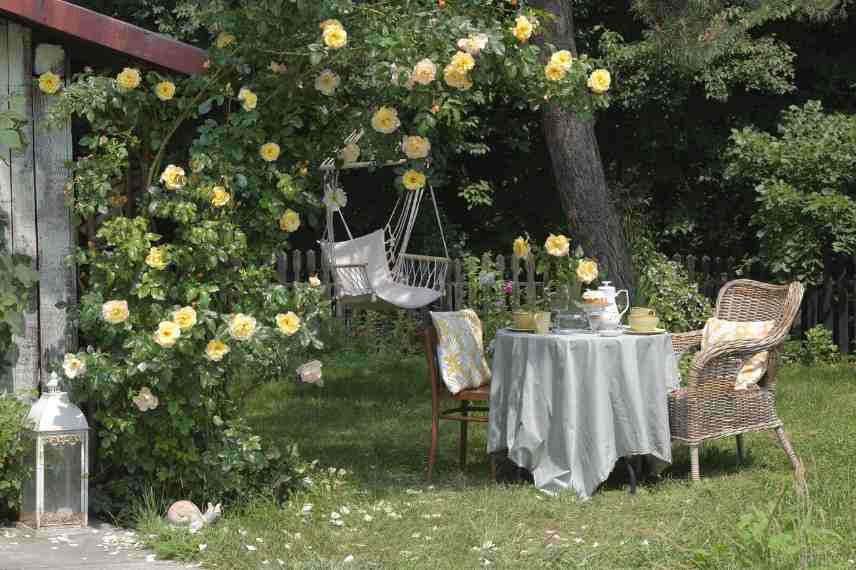
- In a naturalistic garden: willow wicker is in total osmosis there, adding plant life to nature tamed, yet with a free appearance. It appears in borders, barriers, living willow hedges or wicker tunnels;
- In an English garden: willow wicker is included in small touches, and charming details such as tontines, protective cloches for lettuce;
- In a Bohemian garden: it showcases the retro-chic side of willow wicker or rattan. It is echoed on chairs, arches; the impression of a cocoon is reinforced with warm fairy lights;
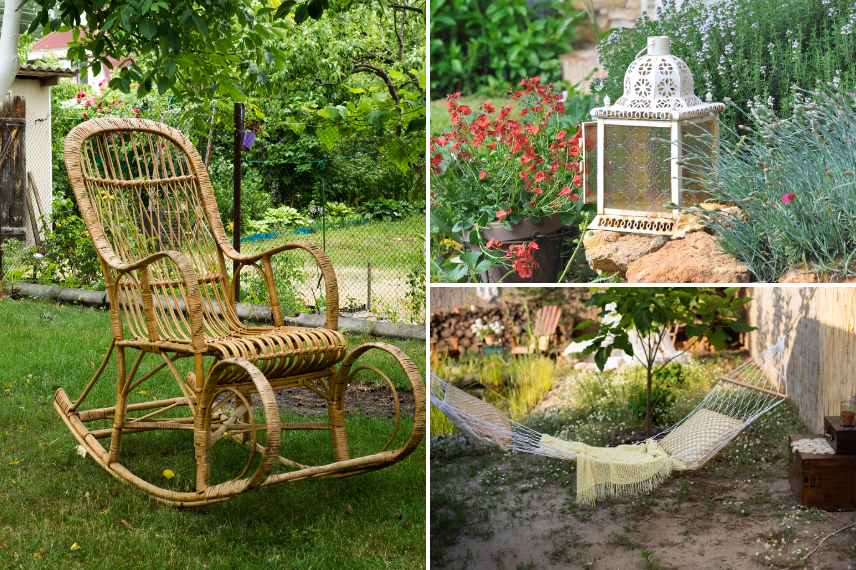
- In an exotic garden: paired with tropical plants, the legendary Emmanuelle chair and the colonial-look wicker recreate a transporting escape;

Emmanuelle chair (Photo: Astrid – Le Bon Coin)
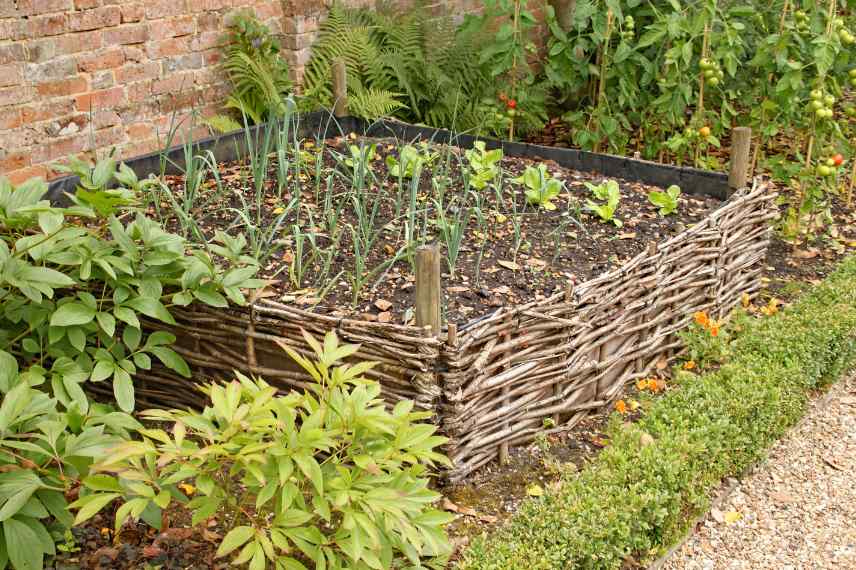
- In the vegetable garden, with the raised beds that are best bordered with woven willow wicker, forming practical and decorative borders.
- On a terrace, provided you bring the chairs inside in case of rain: you can opt for a Parisian bistro style or a countryside chic vibe!
- In a contemporary garden, where willow wicker updates itself into ovoid shapes, such as egg chairs or designer pendants, and furniture often made of synthetic willow allows easy use.

The many uses of willow in the garden
Decorative or utilitarian, willow wicker is found in many parts of the garden, often starting with the terrace…
- Seating and garden furniture: willow wicker brings vintage charm to romantic terraces or when a very natural style is desired. Rattan is also a star, appearing as armchairs, stools, coffee tables, hanging chairs or benches. This same furniture can be used indoors and outdoors in vintage or Scandinavian decor.

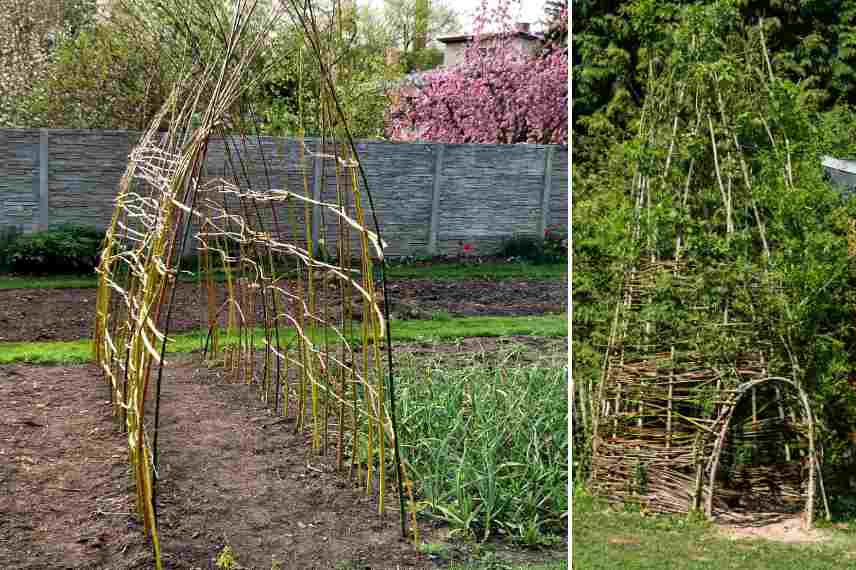
- Arches, pergolas, labyrinths and tunnels: willow wicker can replace hazel or chestnut to form light structures or more screening ones. Shapes are numerous: ogival, freely inspired by the Middle Ages, arched for tunnels, etc. All these structures allow either to create a passage from one scene to another, or to elegantly support large perennials in the beds.

Salix viminalis, used dry to form a pretty arch, or living for this long tunnel

Willow hut at Biddulph Grange Garden, England (©Daderot – Wikimedia Commons)
- Living willow hut: an igloo‑style, perfectly round hut that children love, with an entrance you can open more or less to transform it into a hideaway or a small garden lounge. Learn more in our article How to make a living willow hut? ;
- Pleached hedge (or pleached) – more or less openwork, drawing on ancestral living hedge craft;
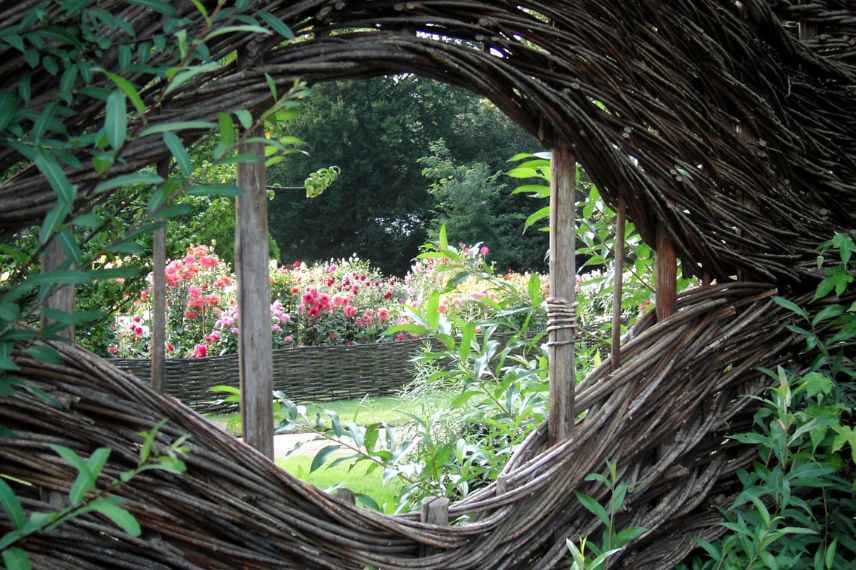
- Fences and palisades: forming a kind of canisse, willow wicker is a good material for creating light and rustic palisades and fences that will last at least five years (we speak of plessis with horizontal or vertical lathing). Below is a living willow barrier.

We can even create openwork boundaries with an eye, as shown in this very pretty example:
- Teepees and tontines for climbing plants: with interwoven braids, willow wicker gives climbing plants a secure grip for many climbers in the garden and the allotment.
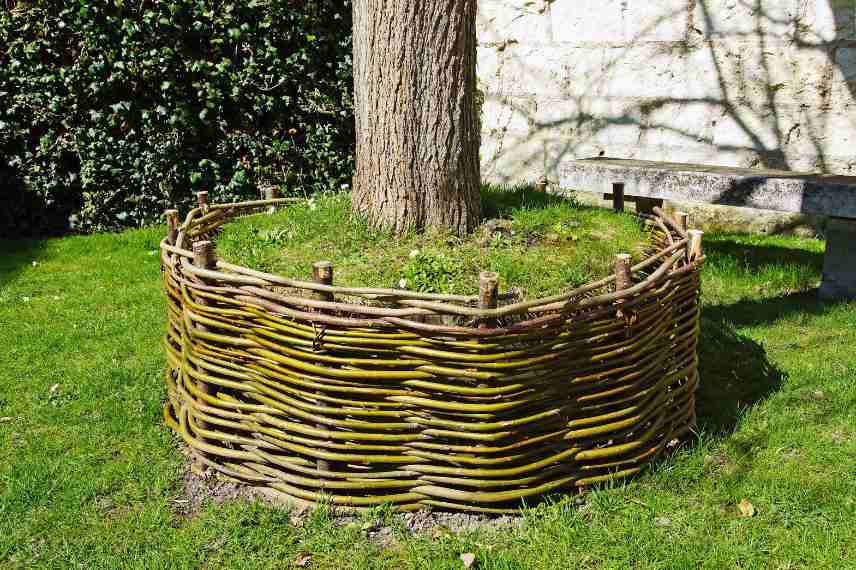
- Bed borders: woven willow wicker reviving medieval plessage (also called pleissis) provides very pretty finishes around beds and at the boundary of a lawn or a gravel path. These works become charming supports for expansive plants.
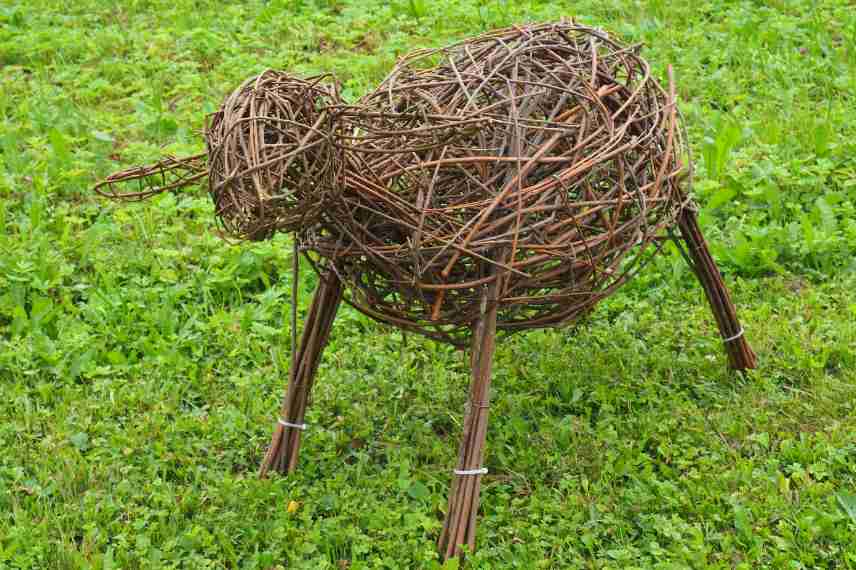
- Nature sculptures: crafting sheep, rabbits, birds, giant spheres or XXL figurative silhouettes, thanks to the flexibility of the prepared branches.
- Earth-retaining features, for example for plantings and borders
- Baskets: obviously handy for harvests from the vegetable garden or the cut-flower garden, and you can leave them wherever you like around the garden, for a decorative effect on a table, on a tripod…
- Small decorative objects: there are plenty, such as cachepots and window boxes, lanterns, bird cages, feeders, candle holders, hangings…
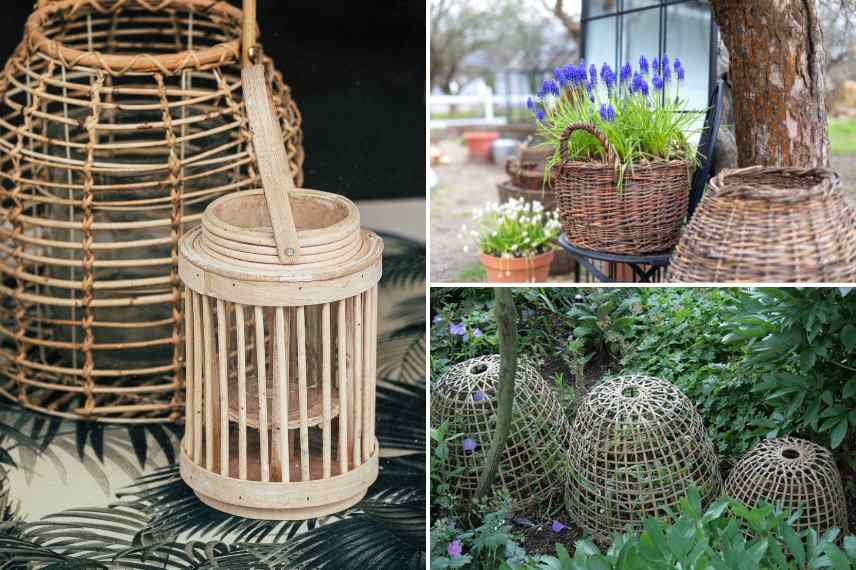
Photo Karen Roe
→ Learn more in our tutorials: How to make a wicker plant support? and Basketry: the art of weaving plants.
Caring for willow
Rattan and wicker are fragile and are not suitable for staying outside permanently. I would even say they are better suited to meticulous people, especially when it comes to charming, vintage, second-hand furniture.
Have you fallen for beautiful vintage meridiennes?
My tip: bring them inside every evening or cover them to protect them from dew and any moisture that could damage them. A nourishing maintenance should be carried out at least once a year (in spring) and in autumn before storing them, using a mixture of linseed oil, turpentine and water.
A stain? Lukewarm water with black soap is sufficient to clean the wicker, using a soft cloth that will not damage its natural fibres. Leave to dry in the shade.
My tip: before winter, as soon as chairs and deck chairs are no longer used, ensure the wicker is completely dry before storage to prevent mould.
Find inspiration
If the Internet is teeming with finds on sites like Pinterest, there’s nothing better than visiting a few gardens to glean a thousand ideas! Beyond private gardens near you and vegetable plots, I would recommend the Jardin de Stéphane Marie in the Cotentin in France, the ephemeral gardens at Chaumont-sur-Loire*, or the Prieuré d’Orsan in Cher.
Books have also taken up the subject, many in French or English.
* The Chaumont-sur-Loire International Garden Festival is the occasion to find plenty of inspiration in its ephemeral gardens. Check our visits across different years: I visited the Chaumont-sur-Loire International Garden Festival; Chaumont-sur-Loire International Garden Festival 2024: the garden, a source of life …
Where can I find willow for weaving?
Apart from buying ready-made items, you may want to obtain willow for making your own creations or taking up basketry, the weaving of willow itself. To do this, several options:
- Harvest willow at home in winter if you have planted willows for basketry and other suitable species (see above);
- Get in touch with a willow producer (willow grower or osierist) in your region who typically has bundles for sale from November: willow varieties are selected according to local terroir, and are offered as fresh willow (live willow) or dry willow.
- Simply ask a neighbour who has a few willows in their garden;
- Keep a close eye on pollarded willows in your area if you live near a watercourse, river or wetlands, by checking with your local council.
- Basketry courses have multiplied in recent years. You can often find good options by browsing plant fairs, where willow basketry workshops from exhibitors in the region are on show.
- Subscribe!
- Contents

Comments