





























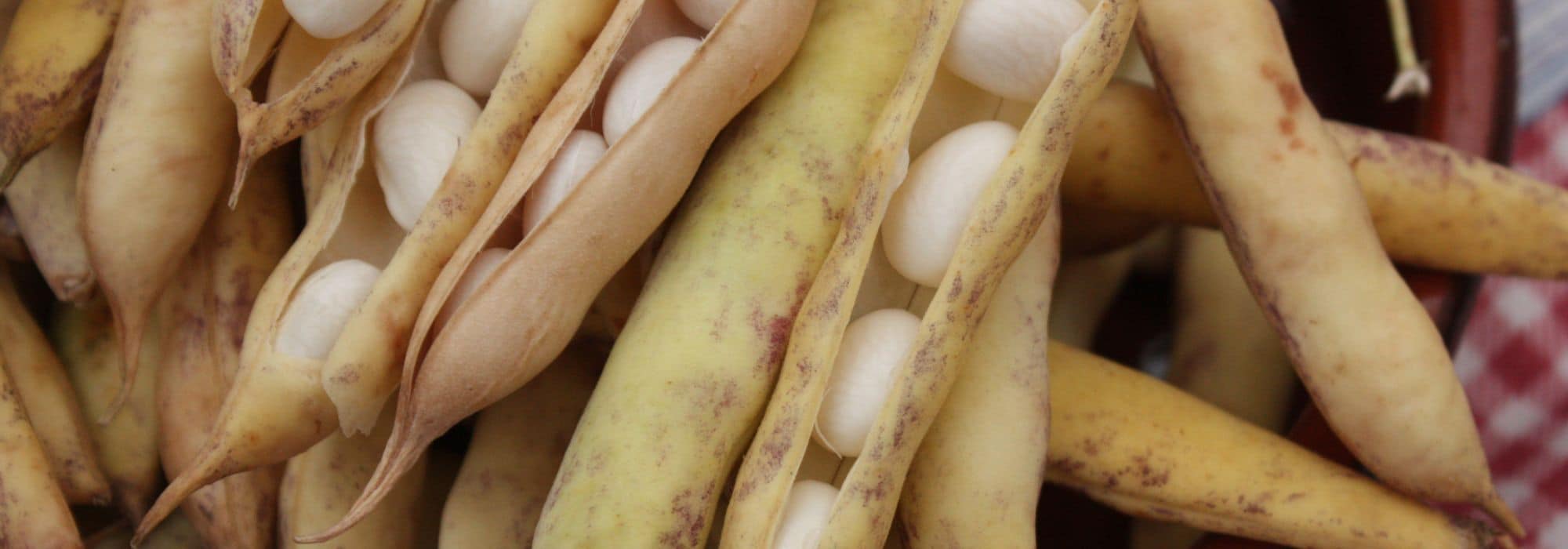
White Beans: 6 Varieties to Grow in the Vegetable Garden
Overview of Different Varieties of Shelling Beans to Consider
Contents
Legume known for its nutritional benefits, the white bean, also known as dry bean or shelling bean, is rich in protein, fibre, and minerals. It is a filling vegetable that can be cooked in countless ways. In fact, each region of France has managed to incorporate the white bean into a traditional local recipe.
In the vegetable garden, the white bean can be grown throughout France, in light, well-drained, fertile soil, in a sunny location. It is sown as soon as the risk of frost has passed, from mid-April to mid-July, to be harvested in late summer or autumn. Not very demanding, the white bean will still need staking (at least for climbing varieties), regular weeding, and watering if the weather is dry.
While growing the white bean is quite simple, choosing the best varieties is less so. For there are many, differing in terms of consumption method, yield, flavour, hardiness, or disease resistance. Discover my selection of 6 varieties of white beans to grow in the vegetable garden.
The 'Cocagne', an improved 'coco de Paimpol' with an unmatched flavour
Coco de Paimpol, have you heard of it? It’s a shelling white bean that has held a controlled designation of origin (AOP) since 1998, cultivated in a specific territory, that of the north-western Finistère coast, around Paimpol. Recognisable by its straw-yellow skin and purple marbling on its pod, this white bean is enjoyed semi-dry.
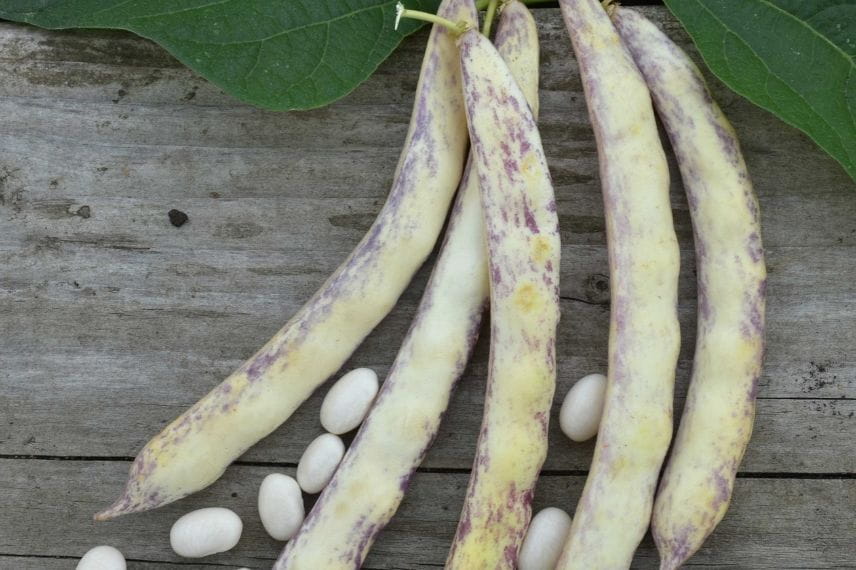
Bean ‘Cocagne’ (©La Ferme de Sainte-Marthe)
This variety ‘Cocagne’ is an improvement on the Coco de Paimpol, inheriting its cream-yellow pod veined with violet and its round, slightly elongated ivory-white seeds, as well as its exceptional flavour and tenderness. Its flat pods can reach 12 to 15 cm in length and contain 5 to 6 seeds with particularly thin skins. But it has many other advantages:
- It is a variety especially known for its superior productivity compared to Coco de Paimpol: one kilogram of pods yields 500 g of seeds
- It can be consumed dry or semi-dry and freezes very well
- It benefits from a very early harvest, from mid-July to October (for sowing between April and mid-July)
- It is a variety resistant to blight and mosaic, two common diseases in shelling beans.
Read also
How to grow dry beans?The 'Michelet', a very versatile white bean
Among the shelling white beans, the ‘Michelet long pod’ variety stands out for its versatility. It is indeed a bean that can be consumed in various ways: fresh, semi-dry, or dry. This allows it to be used in numerous culinary preparations, in salads or purées, in stews or fricassees.
Depending on how you wish to enjoy it, the harvest will occur at different times: when the light green pod turns yellow, it is time to pick them for fresh or semi-dry consumption. If you want to eat them dry, you must wait for the pod to brown and become parchment-like. The harvest therefore spans from July to October.
This variety also has the unique feature of producing very long pods (15 to 16 cm), straight and flat, containing 6 to 7 large, white, veined, kidney-shaped seeds. Furthermore, it is a highly productive variety that withstands heat well. Being a dwarf variety, it is less prone to lodging.
Discover other Beans
View all →
Available in 0 sizes

Available in 1 sizes
Available in 1 sizes
Available in 1 sizes
Available in 1 sizes
Available in 1 sizes
Available in 1 sizes
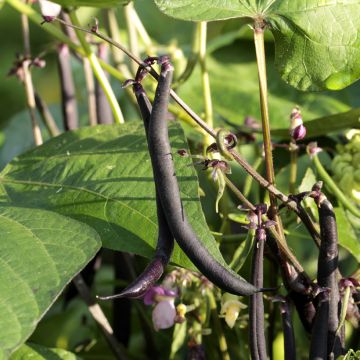
Available in 1 sizes
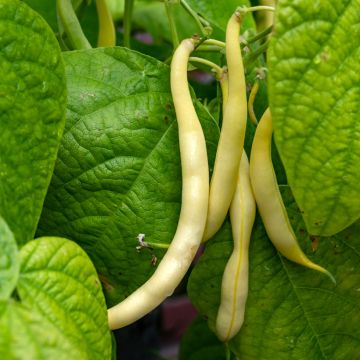
Available in 1 sizes
Available in 1 sizes
The 'Flambo', a highly productive white bean
The ‘Flambo’ variety is a type of white bean that initially captivates with the beauty of its pods and seeds. The long, broad pods (12 to 18 cm) are indeed cream white delicately marbled with red. As for the kidney-shaped seeds, they display the same white colour and are speckled with pale pink. This pale pink hue is also found on the flowers, adding an aesthetic touch to the vegetable garden.
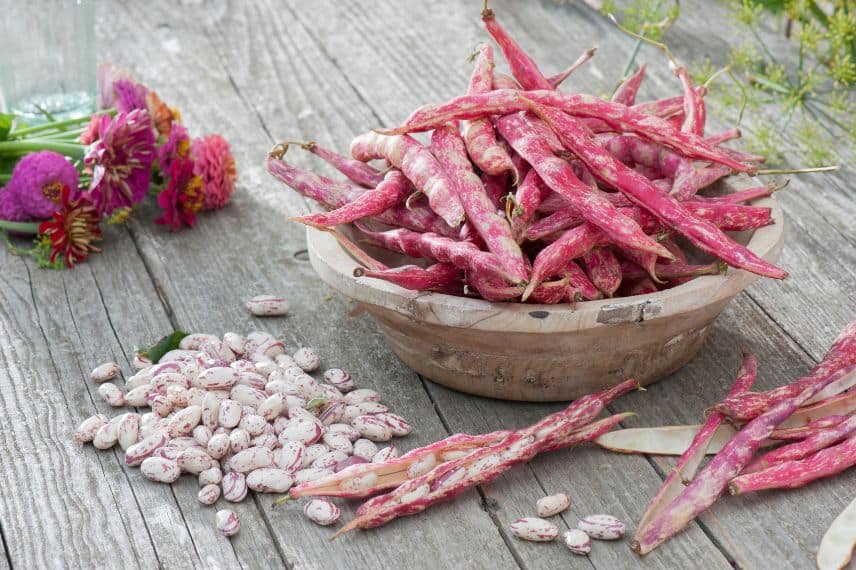
White bean ‘Flambo’ (©Friedrich Strauss Biosphoto)
But it is primarily the productivity of ‘Flambo’ that makes it an exceptional white bean. A cross between the ‘Blason’ and ‘Big Borlotto’ varieties from which it has inherited its markings, this white bean is repeat flowering. This means that the more you harvest, the more it produces. Two to three harvests can thus follow one another from June to October. This is a quality it shares with ‘Big Borlotto’, a variety also very repeat flowering, well-known among Italians as it is used in minestrone.
The seeds of the ‘Flambo’ variety can be consumed fresh, dried, or semi-dried. As a gardener, you can even enjoy them in all three forms by harvesting at different times: when the pods turn yellow, they can be eaten fresh or semi-dried. And when the red-marbled pods are dry, the seeds are also dry.
Read also
Growing beans: tips and tricksThe ‘Alaric’, a Tarbais-type bean ideal for cassoulet
To make a cassoulet, you need beans that remain tender and creamy in the mouth after long simmering. On this point, everyone agrees! For I have no intention of stirring up disputes among the enthusiasts of cassoulet from Castelnaudary, Toulouse, Carcassonne, or Montauban!
In short, it is as a gardener that I judge the quality of this regional variety of white shelling bean from the South-West! ‘Alaric’ is indeed renowned for the creaminess of its seed and the tenderness of its epidermis. It is, in fact, the only approved and certified seed for the production of the Tarbais bean IGP and Label Rouge!
This variety offers long pods filled with 4 to 6 kidney-shaped, long and flat grains, which hold up very well during cooking. They can be consumed fresh or dried. ‘Alaric’ is a climbing variety that is sown from April to July for a harvest in September-October. It is one of those famous varieties that can be grown up maize. But it is especially its exceptional culinary and taste quality that stands out!
The 'Red-Eyed Spirit', a shelling bean to choose for its aesthetics
Also known as ‘Sister’s Navel’, the variety ‘Saint-Esprit à œil rouge’ is distinguished by its atypical kidney-shaped grains, white marked with a wine-red spot. Upon closer inspection, these maculate markings resemble angel wings or a cross, hence its religious names! These grains will certainly make an impression on a plate. Moreover, they boast a delicious chestnut flavour, tender flesh, and a skin so thin it seems non-existent. These grains can be consumed semi-dry or dry. It is also renowned for being very digestible, a rare quality among shelling beans!
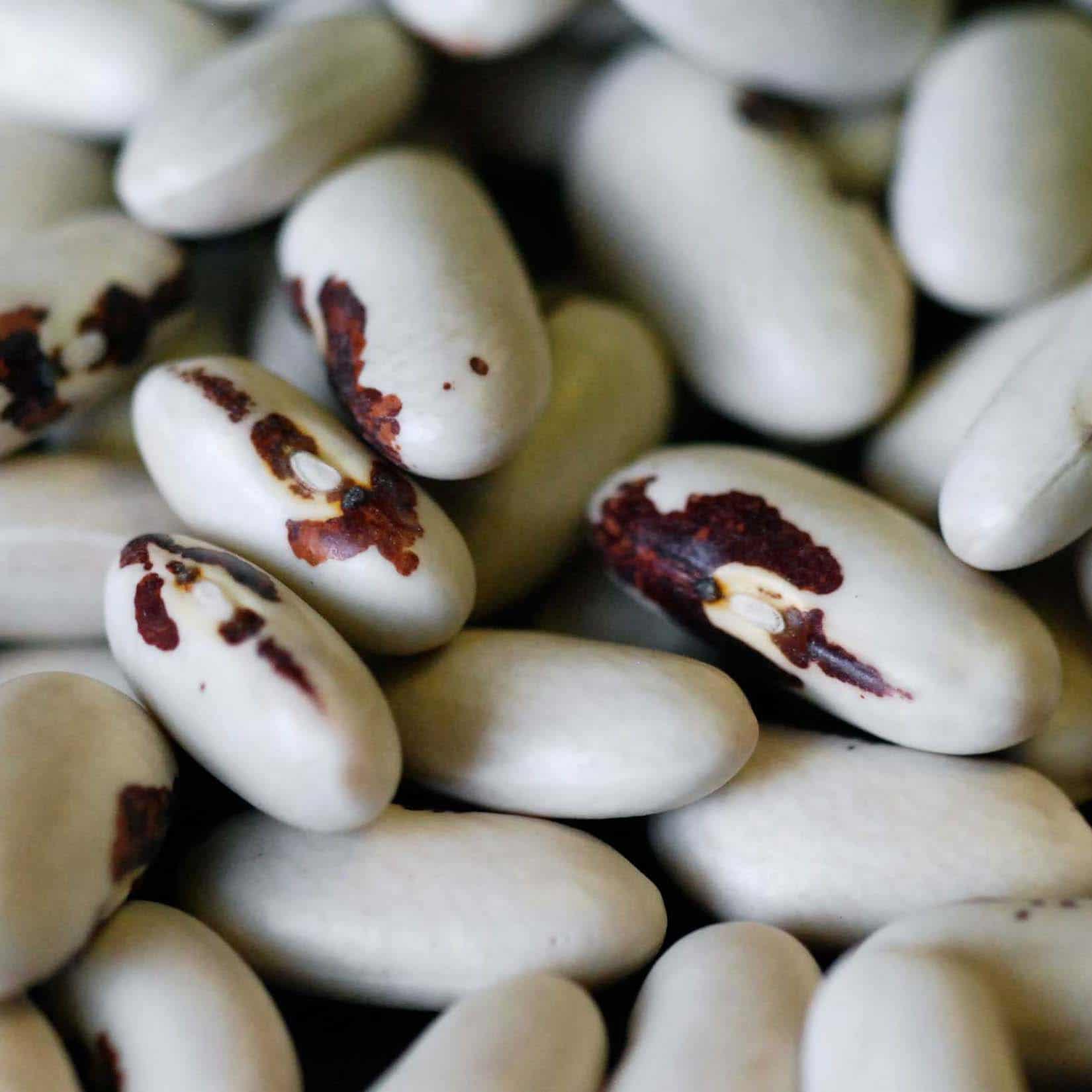
As for the light green pods, which are very lightly tinted, they are about 16 to 18 cm long.
‘Saint-Esprit à œil rouge’ is an old dwarf variety, notable for its hardiness, productivity, and vigour.
The 'Flajoly', a shelling bean perfect for freezing
Certainly, it may not be a shelling white bean per se, but a flageolet. Nevertheless, it deserves the full attention of gardeners as it is a shelling bean that adapts very well to freezing. It is also suitable for storage.
Improved and early variety of the type ‘Flageolet Vert’, ‘Flajoly’ is a dwarf variety with reduced growth that produces large, wide, long and plump pods, which are very easy to shell due to their size. They release between 7 and 8 large green grains, of excellent culinary and taste quality.
This variety is also distinguished by its high yield, significantly superior to that of its parent, the ‘Flageolet Vert’. It is sown from April to mid-July for a harvest that spans from mid-July to October.
- Subscribe!
- Contents
![[products category="haricots-a-ecosser"]](https://www.promessedefleurs.ie/blogwp/wp-content/uploads/2023/03/Haricots-blancs-6-varietes-a-cultiver-au-potager.png "White beans: 6 varieties to grow in the vegetable garden")
Comments