





























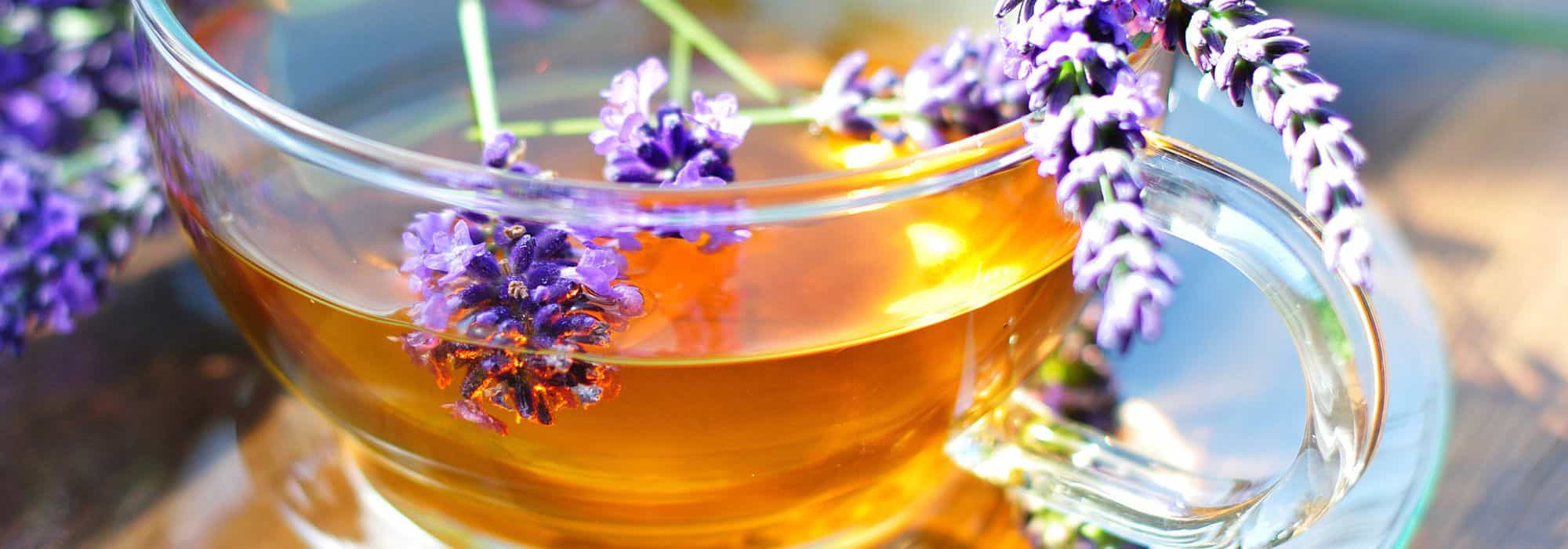
Waste-not herbal teas
Tips and recipe ideas for homemade infusions
Contents
In all seasons, it is very easy to make delicious herbal teas or infusions, simply using our garden plants, foraged herbs, or even by saving some peelings. This ensures that we have natural plants, free from chemical treatments and without producing any waste. Moreover, making your own herbal teas is both economical and ecological (goodbye to transport from the other side of the world!). You can even create your own recipes to vary the pleasures or according to the medicinal properties of the plants.
Discover our tips and recipe ideas for making zero-waste homemade herbal teas.
Plant, pick, harvest or collect
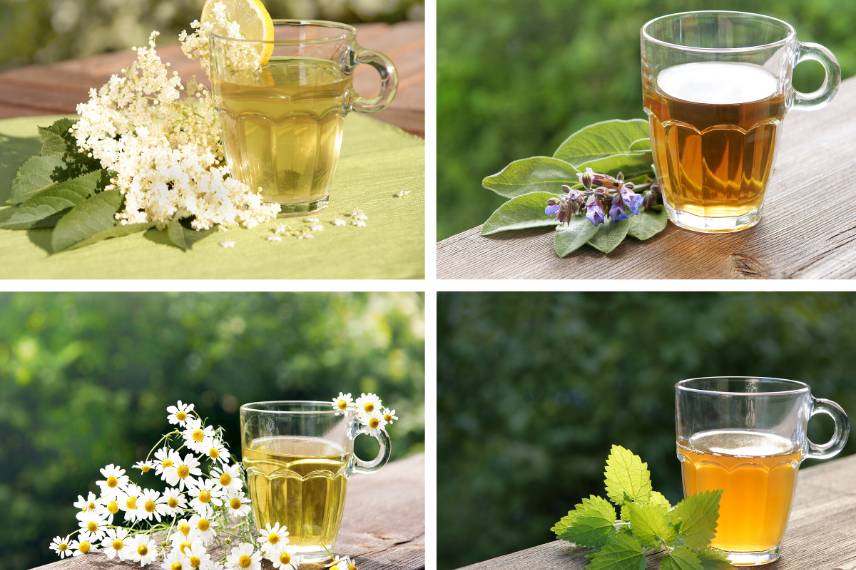
If you are fortunate enough to have a large garden, terrace, or balcony, it is very easy to plant a few perennials from which you can harvest leaves and flowers to concoct your favourite drinks. For example, you can install herb plants, as useful in cooking as in preparing herbal teas, such as thyme, sage, mint, fennel, anise, verbena, chamomile, lemon balm, rosemary, and even lavender. These plants will adapt well in a flowerbed, border, a corner of the vegetable garden, or even in pots on a balcony.
Note: there are many varieties of the same plant, with nuanced tastes and flavours. For example, there are about a hundred varieties of mint, including peppermint, which has a very strong menthol aroma, while lemon mint exudes a very pleasant lemony scent.
When it comes to flowers, consider dandelions, cornflowers, marigolds, orange flowers, rose petals, and mallow.
If you have a bit of space, you can plant bushes, such as lilac or Hibiscus syriacus, whose flowers flavour infusions. You will also appreciate blackcurrant bushes, raspberry plants, and mulberries for their fruits and leaves that can be used in infusions.
And why not use the peels of your citrus trees to add tangy flavours to your infusions? Simply collect the peels and dry them. Simple and tasty! Similarly, cherry stalks, once dried, are highly valued for their diuretic properties. Likewise, some dried fruits or peels add delightful flavours and aromas to herbal teas, such as apple or pear.
While out and about, you can gather the leaves and fruits of brambles (Rubus fruticosus), the hips of a wild rose (Rosa canina), nettles, or the flowers of a lime tree.
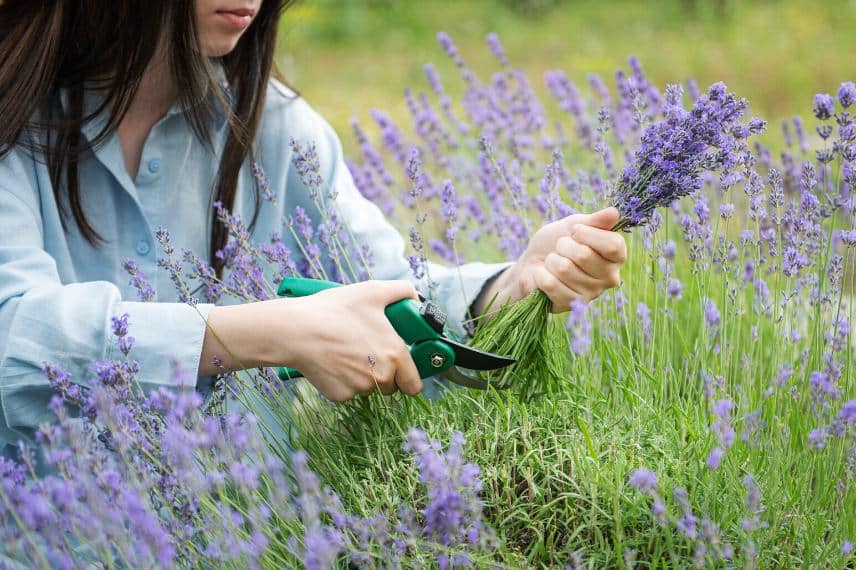
Some precautions:
- Only harvest plants that you are certain you can identify.
- Avoid harvesting plants near roads, railways, and in fields frequented by livestock.
- Only use plants that have not been treated with pesticides. For fruits, especially citrus, only buy products from organic cultivation.
Read also
How to dry hibiscus flowers?Use, dry and store
Once harvested, rinse your precious harvests under a stream of water to remove dust, small insects, and other impurities. You can then use the fresh leaves and flowers directly in infusions or dry them for storage for several months, allowing you to enjoy them all year round.
There are several drying techniques, such as:
- Sun drying, which involves spreading the harvest on a grid and placing it outdoors during the hot summer days for 2 to 6 days.
- Bundle drying allows you to gather 5 to 10 stems together like a bouquet with a string. Then, simply hang the bouquet upside down in a dark, airy room for 7 to 20 days.
- Oven drying enables you to dry leaves, flowers, as well as roots, peels, and fruits in all seasons. Spread the ingredients on parchment paper. Preheat your oven to 90°C for 20 minutes, then turn it off and place the tray of leaves and flowers inside. Leave them to dry for 1 hour. Repeat the process if necessary.
- Dehydrator drying makes it easy to dry fruits, roots, leaves, and flowers. Simply spread your ingredients in a thin layer, set the temperature to 35°C, and leave them for several hours (generally between 8 to 18 hours depending on the type of plant).
In all cases, your leaves, flowers, and fruits should feel dry and crisp to the touch, with no signs of moisture for proper preservation.
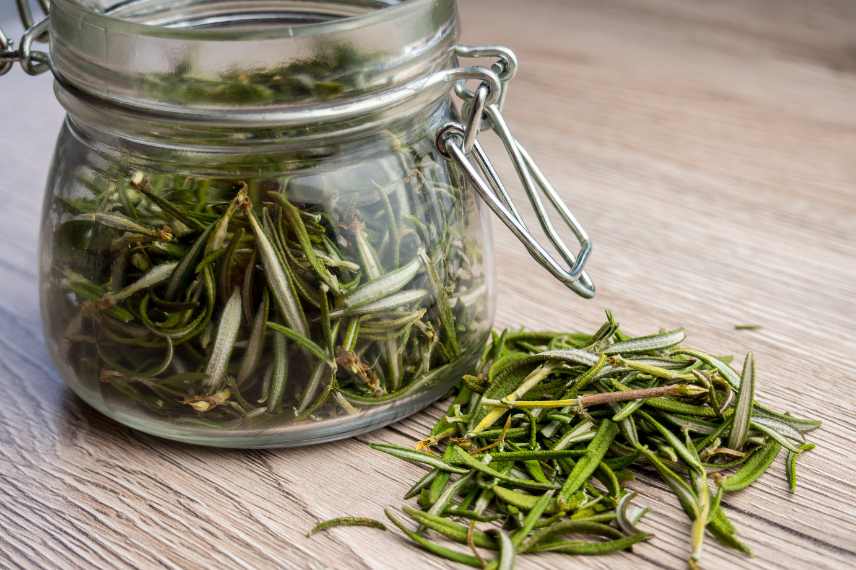
Storage can be done either in an airtight jar or in kraft paper bags. Keep your dried plants in a dry place, preferably away from light. Don’t forget to label each jar with its contents and the date of harvest.
Combining plants to create your own herbal teas
Certainly, one can make very simple infusions using just a single variety of plant, such as thyme or mint infusion, but it must be said that mixing leaves and different flowers allows for delightful flavour combinations. Don’t hesitate to play the apprentice herbalist by creating your own blends. For example, dried apple and cinnamon pair wonderfully, as do thyme and lemon peel.
You can even combine plants with similar medicinal properties to enhance their effectiveness. For instance, dandelion root and chicory root have similar diuretic properties and work well together in a detox infusion.
Ingrid’s tip: generally, I prefer to store a single variety of plant per jar and create a different blend according to my desires and mood for each cup of infusion.
Read also
6 essential mintsWinter thyme herbal tea
Ingredients:
- Hips from wild rose;
- Some thyme;
- Some rosemary.
- Optional: a teaspoon of honey and the juice of half a lemon or the zest of its dried bark.
Preparation:
- Mix equal parts of the hips, thyme leaves, and rosemary.
- Pour one to two teaspoons of your mixture into 250 ml of cold water in a saucepan.
- Place the saucepan over low heat, then stop cooking at the first signs of simmering water.
- Cover the saucepan with a lid and let it steep for 5 to 10 minutes.
- Strain your infusion and pour your drink into a cup.
- You can add, if desired, a teaspoon of honey and the juice of half a lemon, especially in case of sore throat. You can replace the lemon juice with a bit of dried lemon peel.
→ Feel free to read our tutorial: “How to dry your own hips?“.
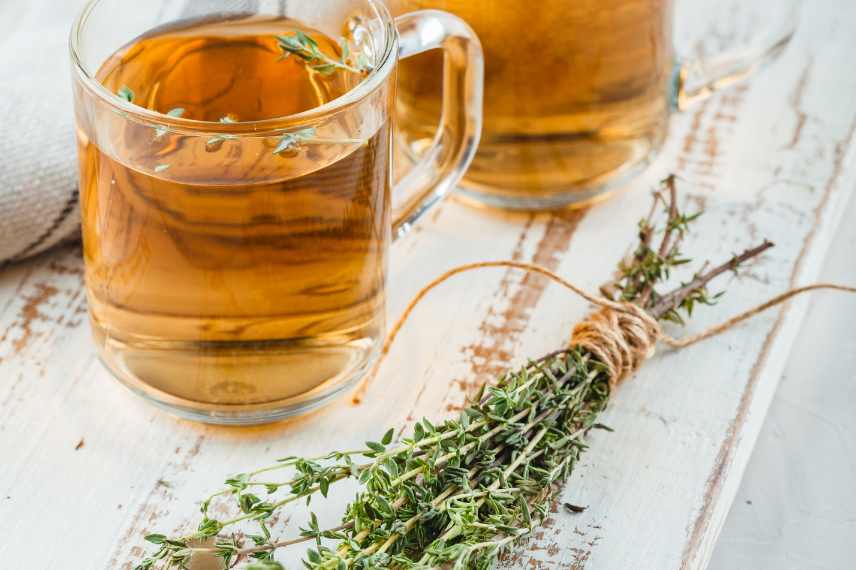
A detox tea for spring
Ingredients:
- Dried dandelion roots
- Dried nettle leaves
- Dried or fresh lemon balm leaves
- Fresh or dried elderflower.
Preparation:
- Mix equal parts of lemon balm with dried nettle leaves, elderflower, and a few small pieces of dried dandelion root.
- In a saucepan, pour 250 ml of cold water with one to two teaspoons of your plant mixture.
- Place the saucepan over low heat, then stop cooking at the first signs of simmering water.
- Cover the saucepan and let it steep for 5 to 10 minutes.
- Strain the infusion, then pour it into your cup.
- Enjoy.
→ Feel free to read our tutorial: “How to dry lemon balm leaves?”
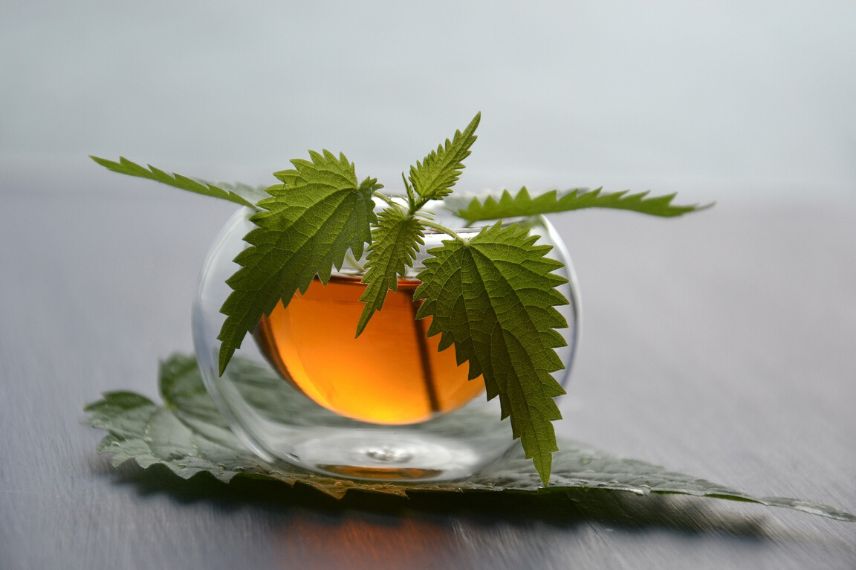
A summer lavender herbal tea
Ingredients:
- Dried lavender flowers
- Dried lemongrass leaves
- Dried coriander berries
Preparation:
- Mix equal parts of lavender inflorescences and lemongrass leaves (tip: finely chop the lemongrass beforehand to make mixing easier).
- Add a few coriander seeds.
- Pour one to two teaspoons of this mixture into your saucepan, then add 250 ml of cold water.
- Place the saucepan over low heat until the water begins to simmer. Then, stop the cooking.
- Let it steep for 5 to 10 minutes, covering the saucepan with a lid.
- Strain and pour the infusion into your cup.
- Enjoy.
→ Feel free to read our tutorial: “How to dry lavender?” and “How to make lavender tea?”
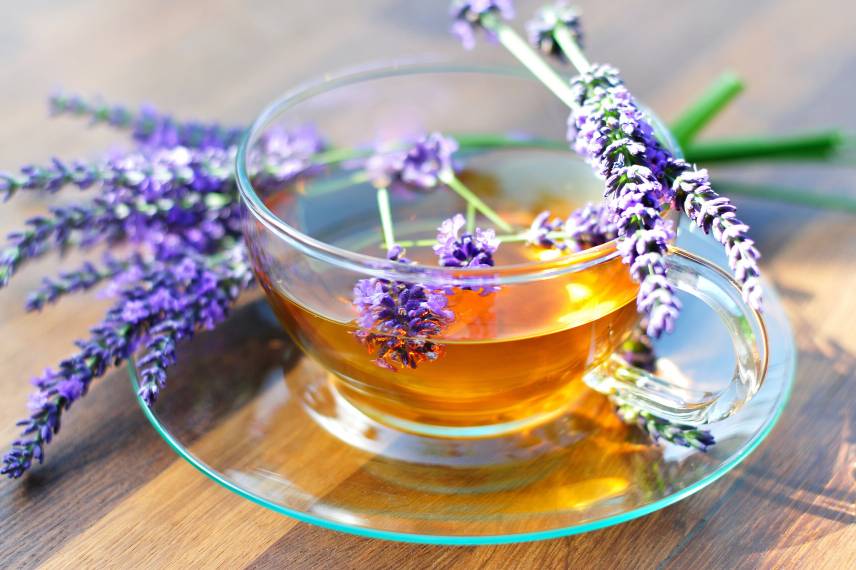
Autumn citrus herbal tea
Ingredients:
- Dried citrus tree peels, such as lemon, yuzu, orange, or clementines;
- Some dehydrated ginger peels;
- The dry peel of one apple;
- Fennel seeds or green anise, or a piece of cinnamon bark;
- optional: a teaspoon of honey.
Preparation:
- If not done yet, finely chop the apple and ginger peels.
- Add dried citrus tree peels to taste.
- You can also add some fennel seeds or green anise, or crumbled cinnamon bark.
- Mix and place one to two teaspoons of this mixture in a saucepan.
- Add 250 ml of cold water, then place the saucepan over low heat until it starts to simmer.
- Turn off the heat and cover the saucepan to let it infuse for 5 to 10 minutes.
- Strain the infusion and pour the liquid into a cup.
- Enjoy.
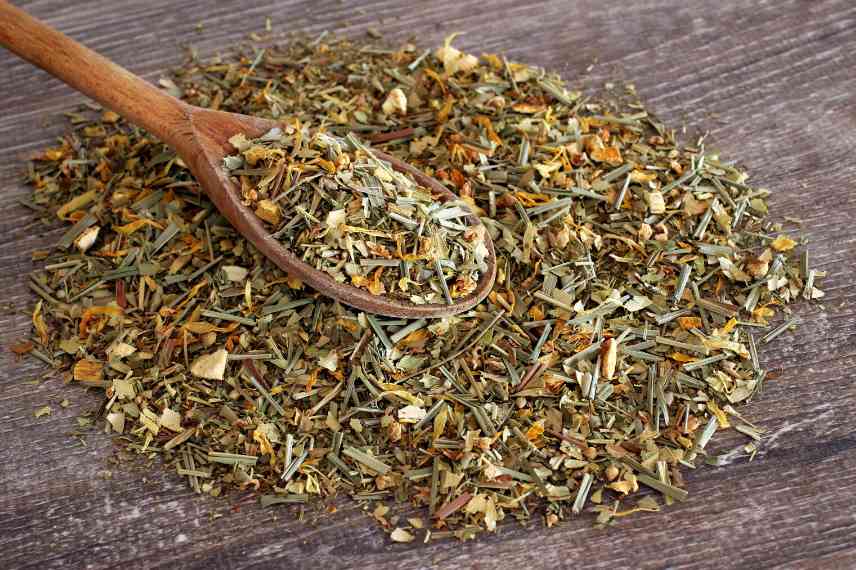
What to do with my leftover tea?
For a truly zero-waste herbal tea, don’t hesitate to compost your infusion leftovers or scatter them at the base of your plants in the garden. They will enrich the soil as they decompose. However, be cautious with citrus tree leftovers, which can only be composted in a very large bin, but in small quantities. Do not place citrus tree leftovers directly in the worm compost for the well-being of your little worms.
- Subscribe!
- Contents
![[recipe title="Homemade Herbal Tea"]
Ingredients:
- 2 tbsp {glossary}dried chamomile flowers{/glossary}
- 1 tbsp {glossary}dried peppermint leaves{/glossary}
- 1 tbsp {glossary}dried lemon balm{/glossary}
- 1 tbsp {glossary}dried lavender flowers{/glossary}
- 1 cinnamon stick
- 4 cups water
- Honey (optional)
Instructions:
1. In a saucepan, bring the water to a boil.
2. Add all the dried herbs and the cinnamon stick.
3. Reduce heat and let simmer for 5-10 minutes.
4. Remove from heat and let steep for another 5 minutes.
5. Strain the tea into cups.
6. Sweeten with honey if desired.
7. Enjoy your homemade herbal tea!
This soothing herbal tea blend is perfect for relaxing and unwinding after a long day in the garden. Feel free to adjust the quantities of each herb to suit your taste preferences. Happy sipping!](https://www.promessedefleurs.ie/blogwp/wp-content/uploads/2023/01/Les-tisanes-anti-gaspi.png "The anti-waste herbal teas")
Comments