





























Vegetables to sow and plant in autumn
There’s still work to be done in the vegetable garden in late autumn!
Contents
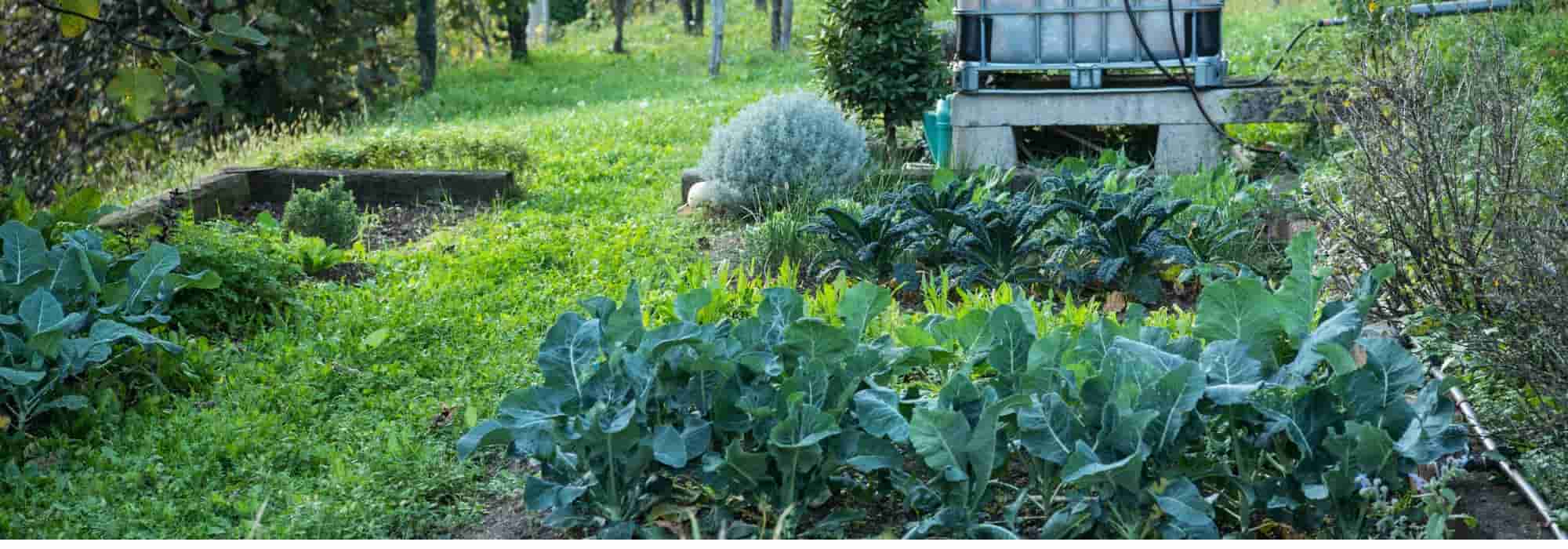
The summer vegetable garden buzz is over! The sun is still shining, but the days are shorter and cooler, the leaves of deciduous trees and shrubs have donned their bright, fiery colours and begin to swirl in the breeze. The firewood, a promise of cosy flames in the fireplace, has dried well. On the table are the squashes, the cabbages, the crosnes and the rutabagas, these autumn vegetables. Undeniably, autumn is well and truly here, and the gardener is starting to catch their breath. That said, it is not yet time to put away the gardening tools and the seed drill for winter. Yes indeed, even in autumn, there is still time to sow and plant a few vegetables in the vegetable patch!
Let’s discover together which vegetables can be sown and planted in the vegetable patch for an autumn or winter harvest, or even a spring harvest for some.

Representatives of the Liliaceae (Alliaceae)
Alliums, with numerous health benefits, garlic, onions and shallots know how to add that little extra flavour to our dishes. Often used as aromatics or condiments, alliums are mostly bulbous plants. Some are fairly easy to sow; others require a certain amount of patience, and it is best to plant bulblets.
Certain species of these alliums are sown or planted in autumn, between September and November.
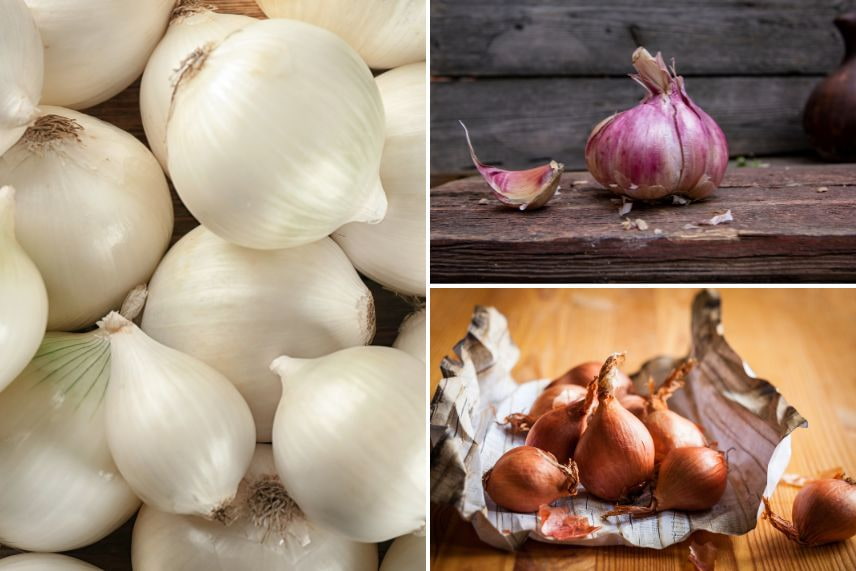
White garlic and purple garlic
In autumn, the strongest‑flavoured garlics are planted, since pink garlic is planted in spring. Between October and December (outside the frost period), we will therefore plant the bulblets of white garlic and purple garlic. Garlic multiplies only by planting bulblets.
White and purple garlic require a light, well‑loosened, perfectly drained soil. Indeed, garlic fears excess moisture that will rot its bulb. If the soil is too heavy, it is advised to plant the bulblets on a mound about fifteen centimetres high. Likewise, do not plant garlic in soil that has recently received organic manure or compost. It also needs a sunny location.
Garlic is planted in furrows, spaced 20 cm apart, at a depth of 2 to 3 cm.
Harvesting takes place from June to July.
Which variety to plant ?
- White garlic ‘Therador’: early white garlic that is very productive
White onion
In regions with mild winters or under glass elsewhere, it is possible to sow white onions between the end of summer and the start of autumn. September is the ideal month to sow these onions, which will be harvested at the very start of the following spring. Like garlic, onions do not tolerate stagnant moisture or too‑fresh manures.
The onion is sown in furrows spaced 25 cm apart, at a depth of 2 to 3 cm.
Which variety to plant ?
- White onion ‘Hâtif de Paris’: large round and flattened silvery‑white bulb
- White onion from Rebouillon: small silvery‑white bulbs perfect for confits and compotes
Grey shallot
Grey shallot is also planted in autumn, from October to January, in full sun. Again, bulblets are planted in light, perfectly drained soil, without adding manure, compost or organic fertilisers. The harvest will take place in July.
Winter spinach
Spinach is sown in spring by some gardeners, but in hot weather it bolts quickly to seed. An autumn sowing is therefore ideal in that the soil is still warm, but the temperatures encourage spinach to bolt less. Ideally, winter spinach is sown from late August to late September, possibly in October and November under glass. Spinach seeds germinate from as low as 7°C, and it is typically a vegetable to sow in autumn. But you will need to choose short-day varieties.
Spinach is sown in furrows, spaced 30 cm apart, or broadcast, in a cool, firm soil rich in organic matter. It should be well-drained. For an autumn sowing, favour a sunny location. Sow at a depth of about 3 to 4 cm and firm with the back of the rake. Thereafter, spinach should be watered moderately to keep the soil moist.
Harvest is leaf by leaf throughout autumn and winter, since spinach is hardy down to -6°C.
Which varieties to choose?
- Spinach ‘Winter Giant’: a very hardy and highly productive variety with large dark-green leaves
- Spinach ‘Apollo’: a variety with excellent yield and thick, fleshy leaves
- Spinach ‘Samos F1’: a high-yielding variety with broad, fleshy leaves
Lamb's lettuce
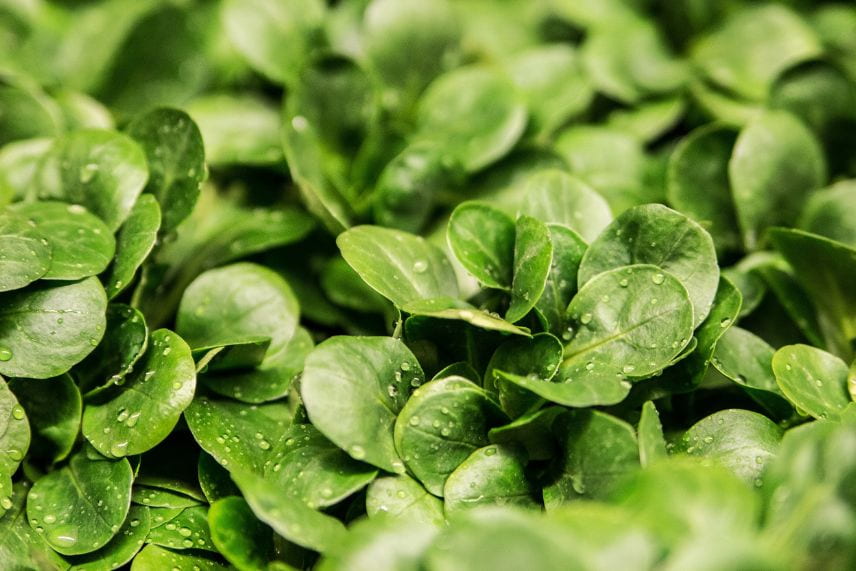
Lamb’s lettuce is a vegetable plant that is sown at the end of summer. Sowing continues until October, or even November in regions with mild winters. The harvest time will depend on the variety. Thus, large-seeded Lamb’s lettuce are sown mainly in August for a harvest about two months later. Whereas small-seeded Lamb’s lettuce, less early, are sown more in September and October, but you will need to wait to harvest them, three to five months later.
Lamb’s lettuce is sown in all soils, preferably firm, cool and well-drained. Partial shade suits it perfectly. You can thus sow it in the shade of leeks and cabbages already in the garden.
Which varieties to choose?
- Verte de Cambrai: a late variety but very frost-hardy
- Coquille de Louviers: a very early variety and very frost-hardy
- Verte d’Étampes: a hardy variety with light-green leaves
Alençon watercress
Haven’t you heard of Alenois watercress? It’s a fast-growing vegetable that deserves a place in the vegetable plots. With its distinctive, peppery and tangy flavour, it’s ideal in salads, in soups or to accompany steamed potatoes. But it is, above all, much easier to grow than its cousin, fountain watercress.
Alenois watercress is undemanding and can be sown until October, in open ground in light, cool and humus-bearing soil that may be worn out. It can be grown in full sun or in partial shade, depending on the region. Sowing is done broadcast or in rows, 10 cm apart, at a depth of 3 to 5 cm. Germination occurs in two to three days at 18°C.
Leaves are harvested as needed, about a month after sowing.
Which varieties to choose?
- The common Alenois watercress: it’s an early and productive variety
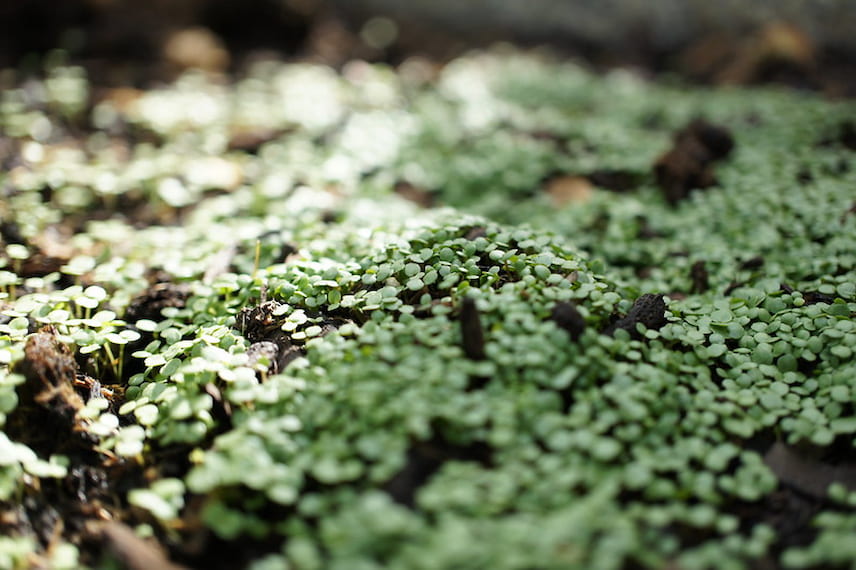
- The curly Alenois watercress : a variety with bright green, curled leaves
Salads
If the largest batch of lettuces is grown and harvested in spring and summer, others are later and are sown in autumn. And in particular the curly chicory and the escaroles. We can indeed sow these two salad varieties from mid-August to mid-October for a harvest in early winter. However, a minimum temperature of 15 °C is required for the seeds to germinate.
For autumn sowing, curly chicory and escaroles thrive in a sunny position, in deep, loose and friable soil, rich in well-decomposed organic matter. The seeds will be sown broadcast or in rows, only lightly covered with potting soil. The seedlings are then transplanted one month after sowing.
Which varieties to choose?
- The scarole chicory ‘La Cornet d’Anjou’: a variety with whole, crisp leaves
- The scarole chicory ‘Cornet de Bordeaux’: a very frost-hardy variety
- The scarole chicory ‘La Grosse bouclée’: a variety with large heads and yellow heart
- The curly chicory ‘d’hiver de Provence’: a hardy variety with crinkled leaves
- The curly chicory ‘Fine de Ruffec’: a cold-tolerant variety with crinkled and crisp leaves
- The curly chicory ‘Wallonne’: a very frost-hardy variety
Some lettuce can also be sown in autumn, usually under cover. So go ahead and sow the lettuce Appia or the lettuce Brune d’hiver in September for a mid-winter harvest.
Root vegetables
Among root vegetables, some readily withstand winter’s rigours to be harvested and enjoyed in spring. Among these vegetables, parsnips and Jerusalem artichokes grown in open ground, and carrots grown under cover (greenhouse, Nantes tunnel or over-wintering fleece). All are sown between September and October–November.
The parsnip, a close cousin of the carrot, is a cream-coloured vegetable with an elongated shape. It prefers cool, slightly heavy, deep soils. It performs very well in regions with a mild, moist climate and is planted in full sun. Seeds are sown in rows, spaced 30–40 cm apart, and germinate after about 3 weeks.
The Jerusalem artichoke is a very hardy perennial that can reach 2.5 m in height. Its tubers offer knobbly, rounded or ovate shapes, ranging in colour from yellow to red. Its flavour is reminiscent of the artichoke. The tubers are planted in September and October in full sun in dry, light soil, rich in humus and well-drained. Choose its location carefully as it tends to spread. 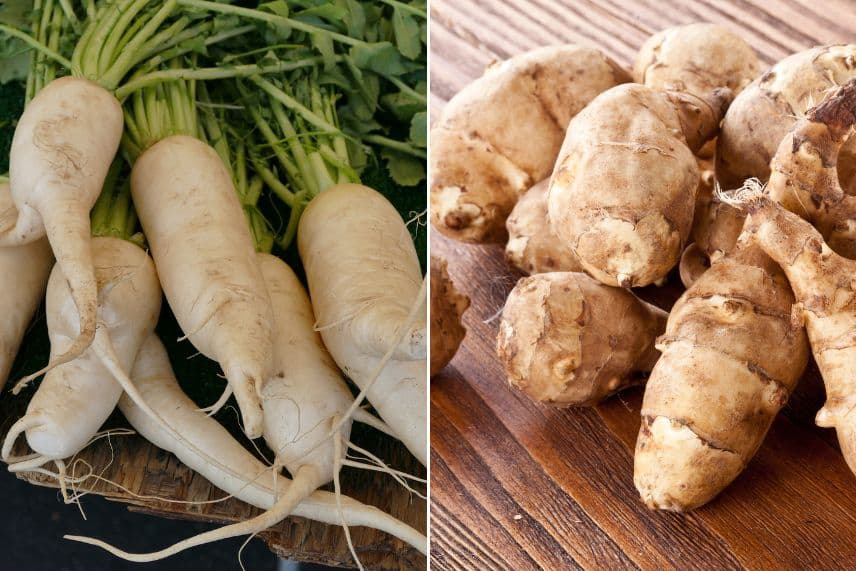
Carrots can be sown in mild-climate regions under cover. It is advisable to favour varieties such as the yellow carrot ‘Obtuse du Doubs’, the Amsterdam carrot and the Nantes carrot.
Tuberous chervil
Here’s a forgotten vegetable that deserves a proper comeback in the kitchen garden. The tuberous chervil is a biennial plant whose taproot is eaten. It offers a chestnut and hazelnut flavour.
Tuberous chervil is sown from September to November in humus-rich, well-tilled and cool soil. It is sown in rows 20 cm apart, and harvest takes place in June–July. 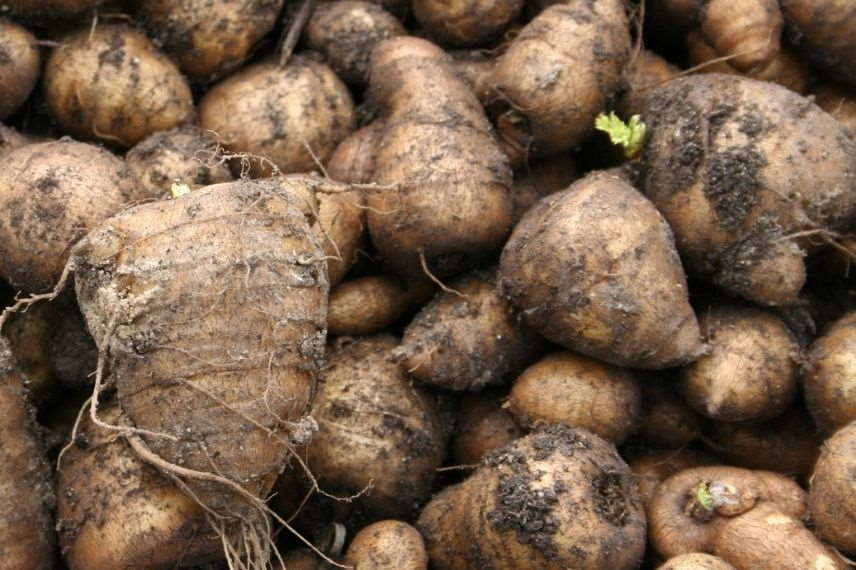
- Subscribe!
- Contents

Comments