





























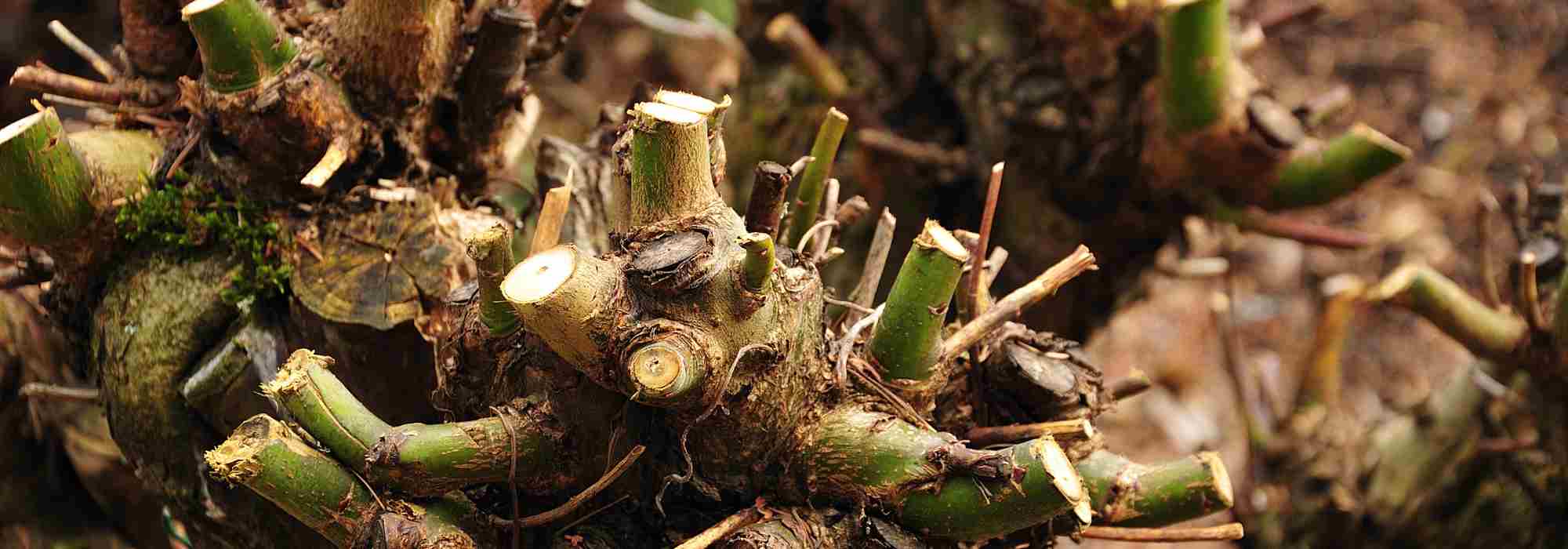
The pollarding of trees and bushes
a sometimes necessary operation
Contents
Rejuvenation pruning is a rather drastic operation for a bush or a tree that involves removing almost all the vegetative part of the plant. This allows for the rejuvenation of a bush that flowers less or is becoming bare or gives a fresh start to a tree suffering from disease or completely unbalanced. Rejuvenation pruning is not something to be taken lightly and should not be done too often or on just any species.
→ Why practice rejuvenation pruning? How and when to carry it out? We’ll tell you everything in this advice sheet.
What is coppicing?
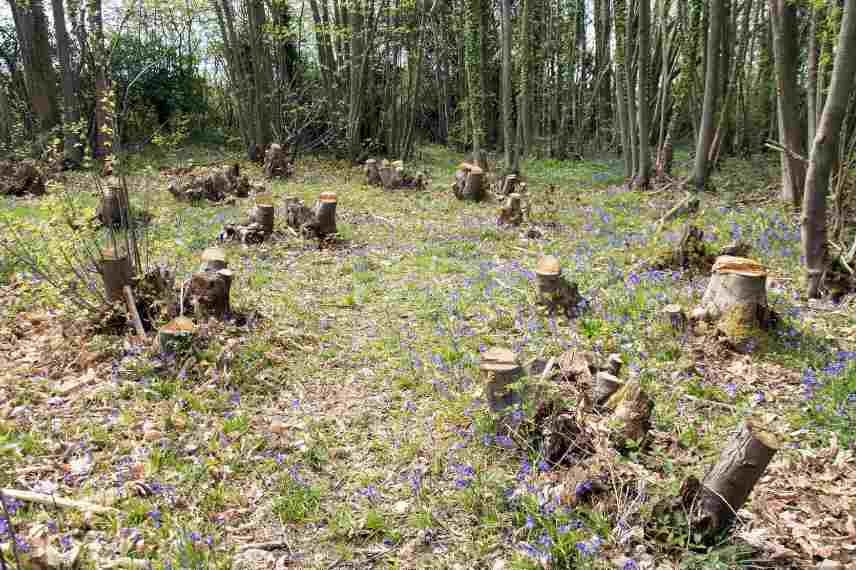
Coppicing is a drastic rejuvenation pruning operation for trees and bushes. It involves removing the aerial part of a woody plant. Pruning will be done to about 10/15 cm from the soil for bushes and 30 cm for trees, close to the collar. This action will either provoke the emergence of new shoots from the stump or the growth of suckers directly from the running roots.
Although some woody plants tolerate it quite well (see point 4), it is a rather drastic operation that will only be carried out in rare cases for trees. In contrast, some bushes benefit from being coppiced regularly, such as willows or coloured dogwoods, for example.
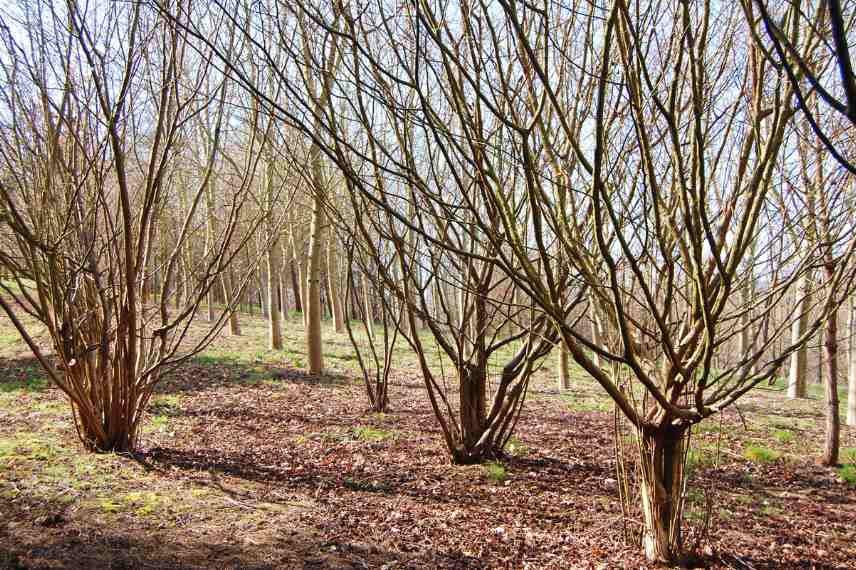
Coppicing can be done at planting or when the tree is very young. It will then grow in a coppiced form: a sort of bush with multiple trunks. Some are stunning when treated this way, as Gwenaëlle indicates in her article on the most beautiful coppiced bushes.
Why carry out a topping?
With Shrubs
- Cutting back encourages the plant to produce vigorous and highly floriferous young shoots: for example, with crape myrtle, Lagerstroemia, Laburnum, and Buddleja… However, be aware that the shrub generally does not flower in the year of cutting back.
- Cutting back also allows for the production of very colourful young stems: for example, with some willows (Salix ‘Mount Aso’) and decorative dogwoods.
- Cutting back can reduce the bulk of a shrub by limiting its height and making it more compact.
- Cutting back is also a technique to try when a shrub becomes bare at the base. This will help it to branch out and improve its overall appearance.
- In the context of re-grafting, cutting back can also be performed, for example, on an apple tree. Once cut below the graft point, several grafts will be inserted into the cambium (the part just behind the bark) to regenerate the tree or change the variety. However, this is a relatively rare practice.
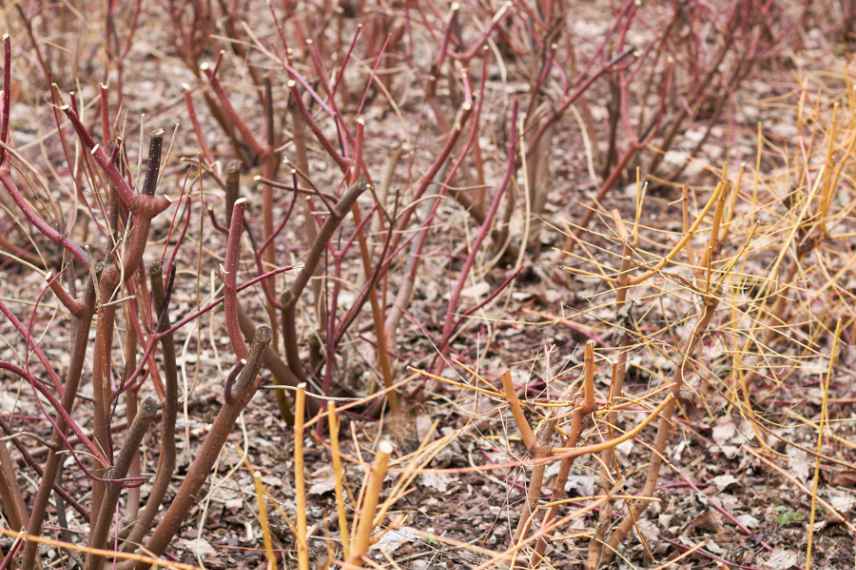
Cornus alba cut back at the end of winter
With Trees
- Cutting back is a practice to be carried out on certain trees to create a coppice, meaning a tree that will grow as a bush with multiple trunks. Height growth will be reduced, but the tree will take up more space in width. This can be done with willow, hornbeam, Cercis, magnolia, and more.
- A cutting back will help control the height growth of certain trees such as Eucalyptus or Mimosa.
- Cutting back can sometimes be a solution to save a tree affected by diseases or climatic issues (lightning, frost, storm…)
Discover other Large specimen trees
View all →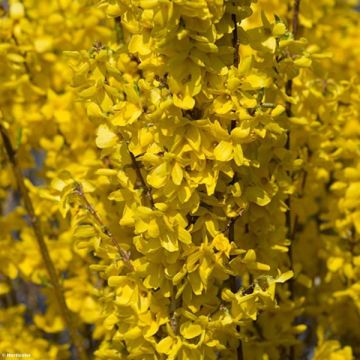
Available in 3 sizes
Available in 4 sizes

Available in 5 sizes
Available in 6 sizes
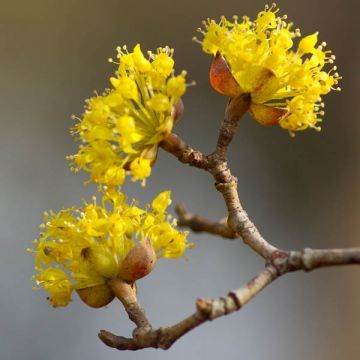
Available in 6 sizes
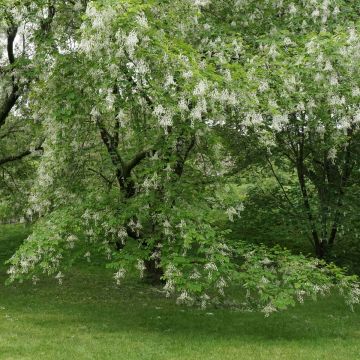
Available in 3 sizes
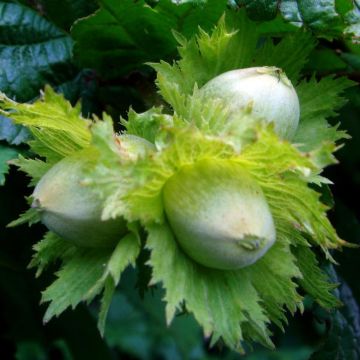
Available in 4 sizes
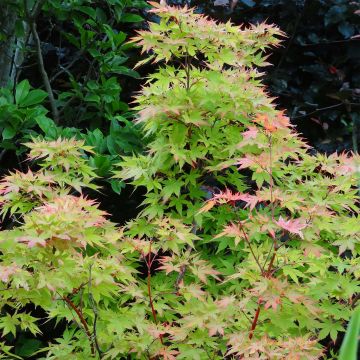
Available in 3 sizes
Available in 5 sizes
Available in 4 sizes
When and how to proceed?
Stumping is carried out during the dormant period, from November to March, excluding frost periods. However, it is best to perform this pruning before the bud burst in spring, specifically in February-March.
Attention! Trees with high sap flow, such as maples, birches, or walnuts, are exceptions. They should be stumped rather at the end of summer (August-September), avoiding periods of intense heat.
For bushes
Depending on the size of the branches and shoots, you will need either a pruning shear, a branch cutter or pruner, or a pruning saw. Remember that your cutting tools must be disinfected before pruning and should always be sharp.
All branches, small or large, should be cut back to 10-15 cm above the ground. This operation can be done every 5 years for bushes, sometimes more frequently depending on the species.
Subsequently, a good supply of well-decomposed compost, ground horn, or even a bit of nettle manure will be beneficial to give the plant a boost and help it initiate its new growth.
For trees
Unless you decided at planting to proceed with stumping to obtain a coppiced tree, you will need to work with a petrol or battery chainsaw. Remember that working with a chainsaw can be dangerous. Call in a professional, or if you attempt the operation yourself, ensure you have all the required protective gear: safety goggles, a helmet with ear protection, and cut-resistant trousers (gloves are optional, as you are expected to have both hands on the chainsaw).
For the stumping of a tree, cut the trunk at 30 cm above the ground, making a sloped cut. This operation is exceptional for a tree and will often only be done once in its lifetime.
Please note: each cut should be made at an angle so that water can run off to the ground and not stagnate on the stump and branches. This will help prevent fungal diseases. You may also apply a healing paste to large wounds.
Which woody plants tolerate it?
Among the bushes, those that tolerate coppicing well are: forsythia, buddleia, decorative wood cornus, small willows, Pittosporum, Camellias, Choisya, Rhododendrons, dog roses, viburnums…
Among the trees, those that tolerate coppicing well are: Cercis, Magnolia, birches, catalpa, ash, hornbeam, chestnut, alder, poplar, maples, Morus, lindens… and even some conifers, such as Sequoia sempervirens, Taxodium, Metasequoia, Araucaria and common Yew.
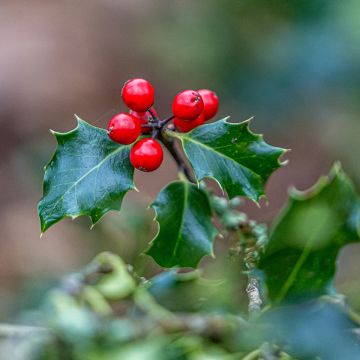
Note that some trees and bushes dislike coppicing. This is the case for Thuja, beech, cypress, Prunus in general (cherry, almond, plum, peach…) although there are exceptions, gorse, cistus, witch hazel, holly, pieris…
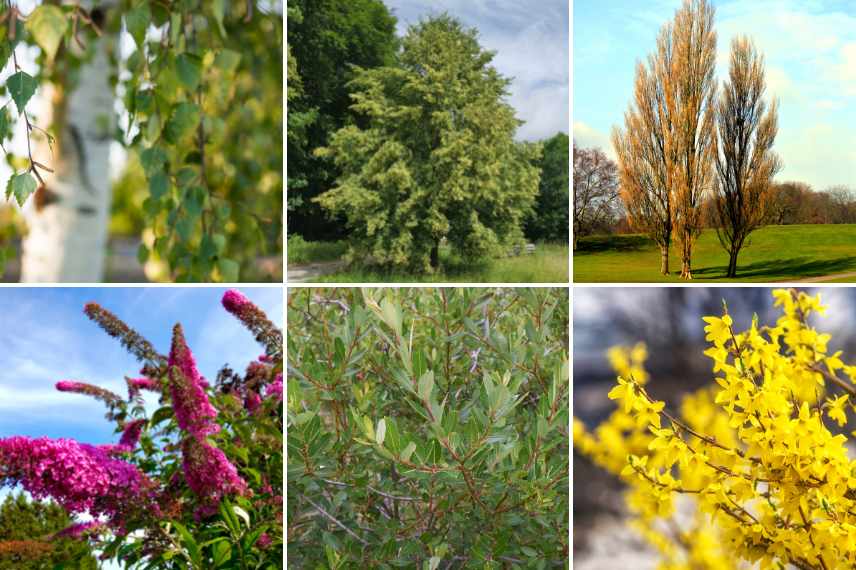
Among the woody plants that are not resistant to coppicing: birch, lime, poplar, butterfly tree, small willows and forsythia
- Subscribe!
- Contents
Comments