





























The best long-lasting flowers and foliage for your cut flower bouquets
Our selection for long-lasting flowers in vase
Contents
Creating cut flower arrangements with plants from the garden is one of the small pleasures of a gardener, ensuring a personal and delightful bouquet. However, flowers are ephemeral, especially when cut for display in a vase. We often seek the flower that will last the longest in a bouquet to enjoy it indoors. This doesn’t take into account the foliage and other fruits that accompany them in a very elegant way.
So, which flowers and foliage are the stars of our long-lasting bouquets? Which should we favour to keep our arrangements as fresh as possible? Here are those that have excellent vase life, perfect for planting in the garden for stunning floral displays almost all year round!
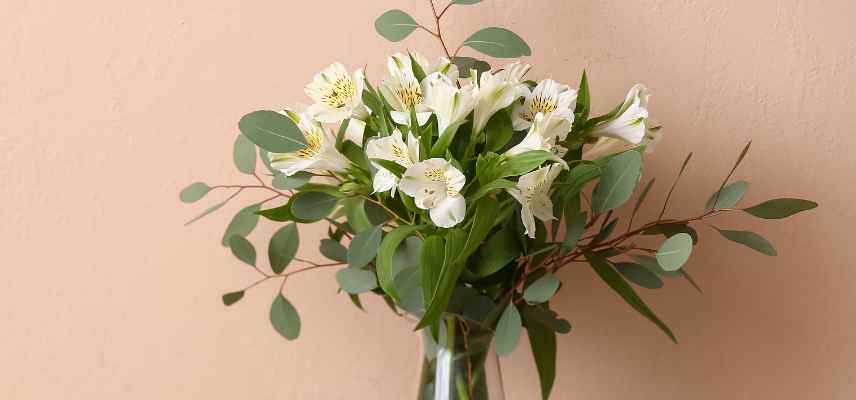
The winning duo: Alstroemerias and Eucalyptus

The best flowers for long-lasting cut flower arrangements
The petals of flowers, fragile and delicate, suffer the most in a vase, so we seek flowers that have a maximum lifespan once cut, remaining beautiful without wilting or falling. These are often flowers with sturdy stems that can hold water well. Among the flowers that last around ten to fifteen days:
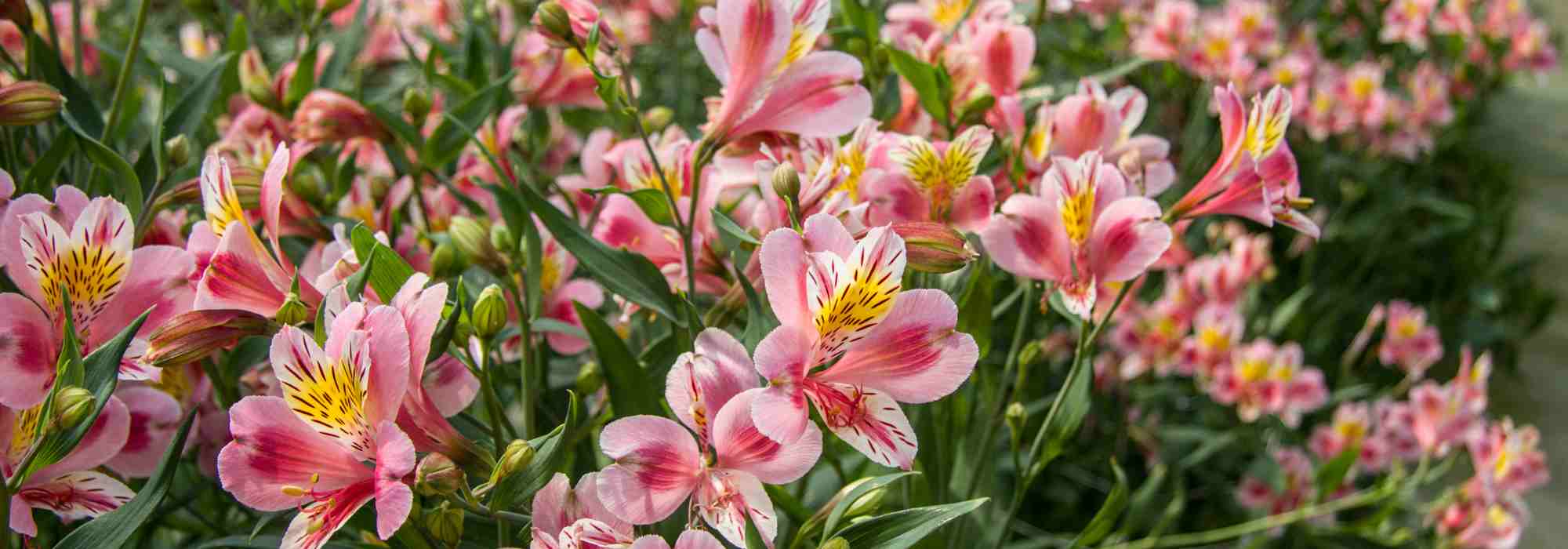
- Alstroemeria: this is the long-lasting flower for your bouquets, staying fresh and vibrant for over 15 days. This is why it is widely used by florists. The Inca lilies are appreciated for their very long flowering period, from late spring to autumn, when care is taken to remove faded stems. The trumpet-shaped flowers are charming, often striated, and come in many colours and sizes.
- Carnations have firm stems that retain moisture well, making them last nicely in a vase. They renew for a long time in the garden, with their fringed corolla in white, pink, or red, making them perfect for summer bouquets.
- Gypsophila, highly valued by florists, is used among flowers in bouquets. It brings lightness and delicacy to any bouquet with its mist of tiny white flowers, pairing wonderfully with roses and eucalyptus leaves. Its sturdy stem captures water well, keeping it fresh for at least two weeks.
- Statice (or Limonium) is another interesting flower (often used for dried bouquets) that has excellent vase longevity.
- Ranunculus: a delightful floral millefeuille, also favoured by florists, and for good reason, it holds up remarkably well in a vase.
- Gladiolus, with its thick stem, effectively retains water in the vase, contributing to its longevity. It adds height to a bouquet. Simply mix it with some lanceolate or upright foliage.
- Strelitzia: an exotic flower of stature and strong personality for an exotic bouquet. This tropical beauty, sensitive to cold, is best grown along the Atlantic coast or in the Mediterranean, or in a pot to be sheltered. Its sturdy stem allows for a beautiful display in a vase.
- Roses: the queens of flowers, prized in bouquets for their elegance, are very durable with their strong stems and thick petals, provided they are cut when just barely open.
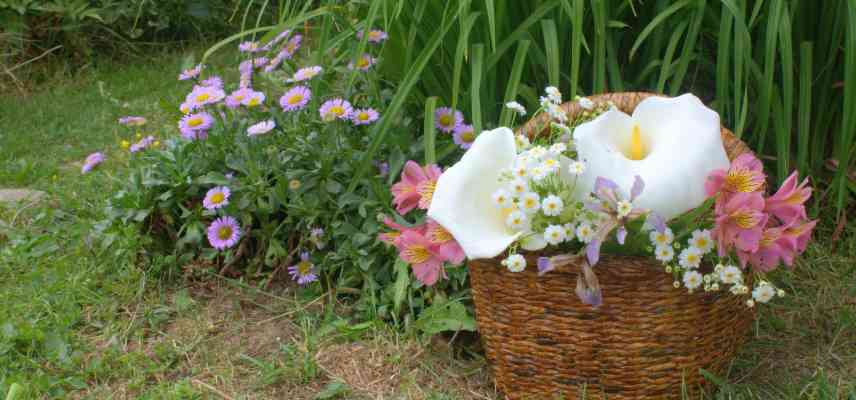
- Calla Lily: a classic of spring bouquets, exuding elegance on its own! Like the rose, the Calla should be cut when still slightly closed to enjoy it for longer. Its fibrous stem requires careful monitoring of the vase water, replacing it very often.
- Stokesia is another beautiful cut flower, equally lovely in a bouquet as in an English or naturalistic garden, with its mauve or white flowers resembling cornflowers.
- Freesia: this small spring bulb grown in mild climates is an ideal flower for long-lasting bouquets. It comes in cream, yellow, orange, mauve, red, or pink. For a highly fragrant bouquet, choose varieties with white, yellow, or cream flowers.
- Japanese Iris (Iris ensata) and Hellebores also make excellent vase subjects in late winter and spring.
- Celosias, with their ultra-colourful and atypical flame-like flowers, surprisingly hold up well in a vase, provided the water quantity is limited.
- Shrub flowers: with their semi-woody or woody stems, they hold up very well in bouquets and add volume. The Camelia and the Japanese Quince add a touch of sophistication to a winter bouquet, forsythia brings a lot of light, and hydrangeas create stunning summer bouquets.
The most beautiful foliage for long-lasting cut flower arrangements
Without foliage… no beautiful bouquet! They are the essential touch of greenery that enhances the flowering by adding volume, a play of texture, and vibrant or bluish greens. For the most durable bouquet possible, it is advisable to select evergreen foliage, more or less tough, on woody or semi-woody stems or branches, which have the ability to last long in a vase. Position them around the edge or in the centre of the bouquet, mixed with the flowers. Take inspiration from the foliage offered by your florist:
- Ivy (Hedera helix): a foliage that should always be considered, easy to obtain from the garden or in hedges in the wild. Ivy retains water well, and its semi-woody stems do not cloud the water. It is synonymous with romance and suits almost all bouquets. Varieties can be found with more or less pronounced veins, with small or large leaves. Let it cascade down the vase for added effect. In winter, enjoy its particularly ornamental inflorescences!
- Pittosporum tenuifolium: this beautiful New Zealand shrub is very often found in coastal gardens. Its tiny, undulating, variegated or green leaves work wonders in bouquets, as they help to blur the composition. The fine branches are often black, creating a beautiful contrast in the bouquet. Pittosporum can be pruned, but be careful not to cut into the old wood, only trimming semi-woody stems.
- Eucalyptus: a classic in bouquets with its unique bluish colour and instantly recognisable shape. Among florists, it is the round-leaved Eucalyptus gunnii (the ‘Silver Dollar’ variety) that is favoured, but a more elongated foliage is also stunning and very elegant. Its leaves are covered with a fine layer of wax that preserves moisture, contributing to their longevity in a vase. It looks superb mixed with roses, or less sophisticatedly with chrysanthemums, and adds a bohemian touch with hydrangeas. It’s the go-to foliage!
- Twisted hazel (Corylus avellana ‘Contorta’) and the twisted willow: original branches that can be used interchangeably throughout the four seasons.
- Japanese spindle: it may seem ordinary, but it is a perfect companion in a vase, bringing a fresh green note with its glossy leaves. By choosing a variegated cultivar, you can create very bright bouquets.
- Skimmia: this beautiful shrub blends with all types of bouquets and adds roundness and shine. It can be replaced by Photinia.
- Butcher’s broom or Ruscus aculeatus: with a stiff appearance, it creates a beautiful effect in a vase, paired with lighter flowers or roses.
- Mahonia: take advantage of a pruning at the end of flowering to add a touch of originality to winter bouquets. Even the stems bearing the fruits can create a unique bouquet.
- Also try Laurustinus (perhaps with a beautiful variegated variety like Viburnum tinus ‘Variegatum’), bay laurel, Cotoneaster, or rosemary for rustic bouquets. They are perfect for enriching interseason bouquets!
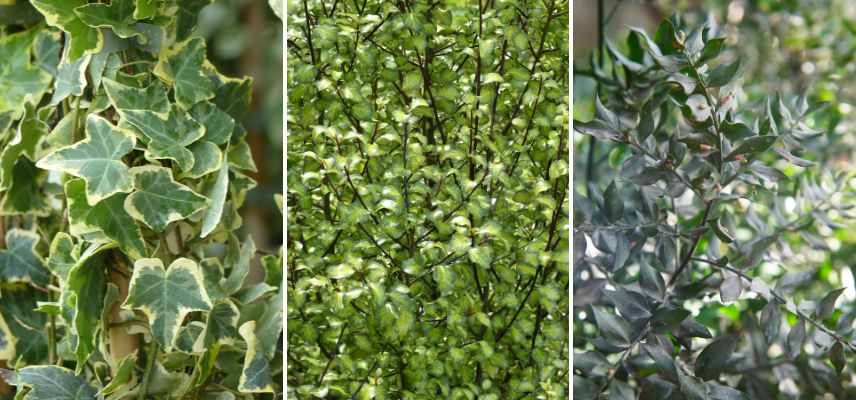
Hedera helix ‘Goldchild’, Pittosporum tenuifolium ‘Abbotsbury Gold’ and Ruscus aculeatus
Don't forget fructifications and branches!
Some branches and fruits add an incomparable charm to winter and even summer bouquets. When it comes to branches, however, be sure to clean any twigs that are not smooth to avoid dirtying the vase water.
Try the flowers that emerge on naked wood, such as the Japanese quince (Chaenomeles), as well as winter viburnums. Their simplicity is matched only by their refinement, and the flowers last really long in a vase. The willow or the contorted hazel and catkins are just as beautiful bare as they are leafy, allowing for creativity in winter bouquets, just like the dogwoods. Finally, among the most beautiful long-lasting fruits in a vase are Hypericum inodorum with its small coloured balls, the ivy with green inflorescences that turn almost black, the berries of laurel tin or Viburnum davidii, dark and standing out well alongside pastel or pink flowers, and the Clerodendron.
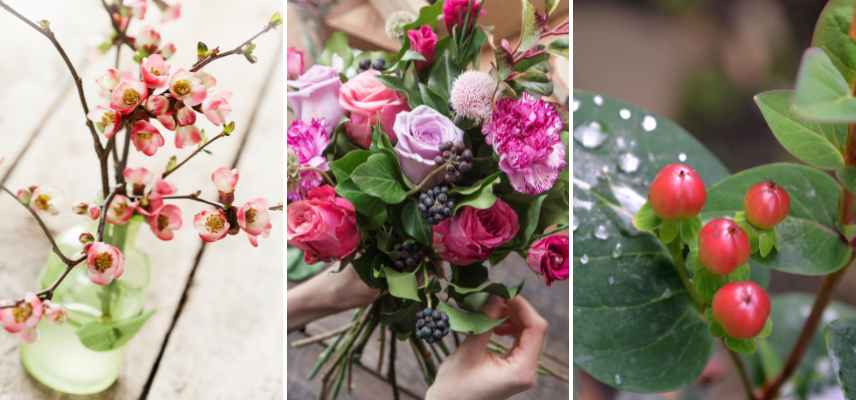
Japanese quince, ivy fruits and Hypericum inodorum
Read also
The best Dahlias for bouquetsSome tips to extend the lifespan of cut flower arrangements
Before making a bouquet, it’s useful to take a few precautions to give flowers and foliage the best chance of lasting a little longer in a vase:
- Pick your flowers and leaves early in the morning: while they are fresh, benefiting from the dew or a coolness that is beneficial to them. Avoid picking them after rain, which can damage and dirty them.
- Choose a few buds, especially for peonies, roses, or camellias, which will gradually bloom in the vase, but never fully open.
- Cut the stems of the flowers at an angle: by trimming the base of the stems at an angle, you slightly increase the surface area for water absorption and prolong the freshness of the flowers (a slant of at least 2 cm on thicker stems).
- Remove any leaves that would be submerged in water: they accelerate the decomposition of the flowers. Using tools from floral art and floristry, you can achieve smooth stems (leaf stripper or thorn remover).
- For branches, crush the end of the stem to make it more receptive to absorbing water.
- Choose a vase that is large enough to accommodate a big bouquet from the garden; cut flowers and foliage will have more water available.
- Fill with water at room temperature.
- Change the water in the vase regularly: about every 2 or 3 days, to reduce the proliferation of bacteria and provide fresh water for your flowers. At this time, cut each stem slightly at an angle and rinse the vase.
- Choose a cool location for your bouquet: avoid placing the vase on a sunny windowsill or near a radiator or air conditioning. Cut flowers need coolness to last well. Avoid placing them next to a fruit bowl.
- If desired, you can dissolve a sachet or liquid flower preservative, available from some florist websites. Less expensive solutions include dissolving a teaspoon of sugar or bleach… using a light hand. A simple and clever grandmother’s trick!
And you? What are your favourite plants and tips for long-lasting home bouquets?
- Subscribe!
- Contents
Comments