





























Self-seeding vegetables and herbs
Perennial vegetable plants
Contents
One is accustomed to managing their vegetable garden by planning sowing, rotations, and nourishing the soil before replanting each year. Be aware that there are also vegetable plants that continue their cycle autonomously, without intervention, reappearing each year. After going to seed, nature takes care of germinating these little reservoirs of life the following year. Cost-effective, these plants require little to no maintenance. Planting self-sowing vegetable plants, such as perennial vegetables, is part of the basic principles of permaculture.
→ Discover self-sowing vegetables and aromatic plants in our article, to consider your vegetable garden differently.
Preamble
Beyond the plants we will list in this article, known for self-seeding easily and reliably in the garden, it is also possible to occasionally observe spontaneous sowings of vegetables such as lettuces left to go to seed, carrots, parsley, and tomatoes that, after being carelessly left on the ground, reappear the following year.
If you notice a large cucurbit growing near your compost after throwing in squash seeds, this new plant is likely the result of cross-pollination (if you have grown several varieties), and the fruit is often disappointing.
To achieve spontaneous sowings, do not plant “F1 hybrid” vegetables. The seeds from these vegetables obtained after harvest are not stable and produce new plants with defective characteristics. They are not designed to replicate perfectly, but rather to ensure you buy seeds each year.
Be careful, while spontaneously self-seeding plants can be delightful in the vegetable garden and garden, they can sometimes become very invasive. For some, this is not a problem, as their root system is shallow, and you can always remove them easily. Others, like fennel for example, have a deep taproot and are very difficult to dislodge.
Spontaneous means they can be wanderers and appear in places you did not expect, but if you wish to move them, they do not always tolerate transplantation; this depends on the species. Be flexible with Mother Nature!
For other plants, it is better to collect the seeds yourself and transplant them later, in pots sheltered (like tomatoes, for example), or directly in the ground. But we are no longer talking about spontaneous sowing in this case. For some herbs like coriander, you can try both: collect some of the seeds and leave the others on the plant to see the result.
In practice, to have spontaneous sowings, you must allow your plant to flower and go to seed. Seeds that fall to the ground or are dispersed will germinate to establish new plants a few months later.
One last thing: some plants are perennials, while others are annuals or biennials. Wild garlic, for example, is perennial and reproduces through its bulbs in the soil, but it also reproduces through spontaneous sowing after flowering. Annuals produce and flower in the first year, go to seed, and die, having ensured that these seeds are left to reappear the following year. Biennials also produce in the first year of planting, but do not flower until the following year. They thus remain in place for two years before ensuring their propagation.
→ Pay close attention to the Latin name of the plants to ensure you have the correct edible species.
Self-seeding vegetables
Very interesting for those who follow the principles of permaculture, these vegetables require almost no maintenance. It is worth noting that Garden Orach, Swiss Chard, and Chenopods contain oxalic acid, like spinach, so they should be consumed in moderation (but who eats spinach every day?).
Garden Orach or Atriplex hortensis (annual)
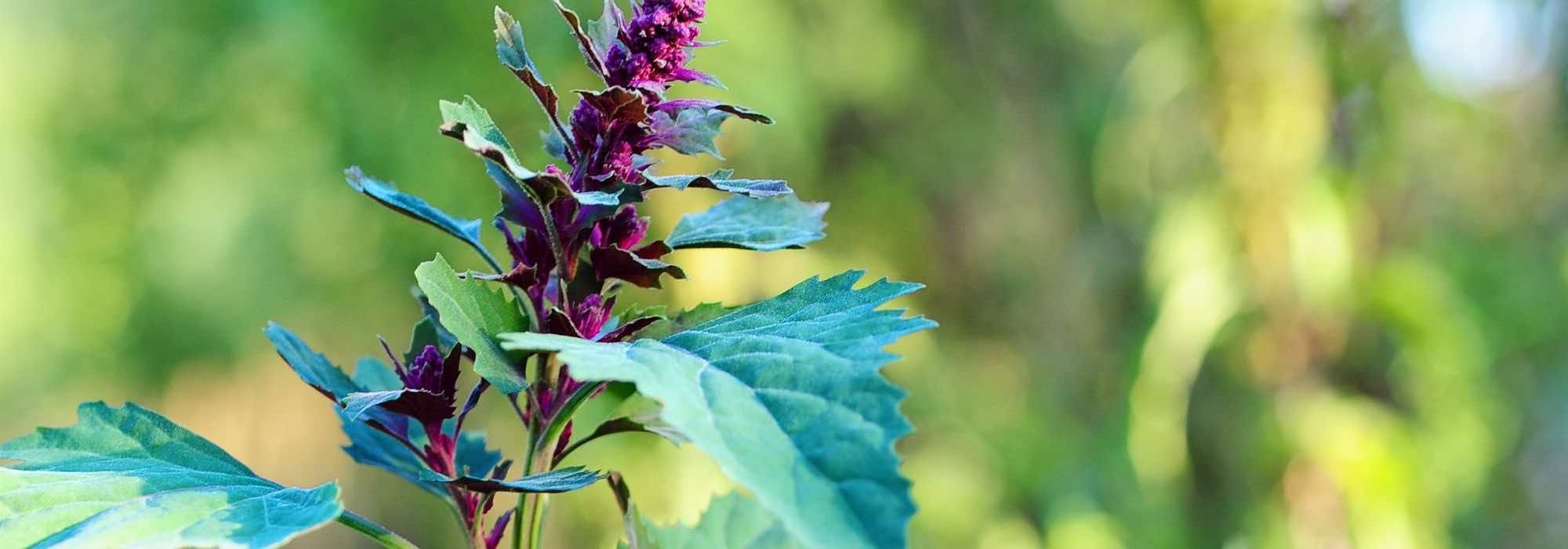
The large leaves of orach are consumed like spinach, although their taste is more pronounced. It also has ornamental qualities, especially the red orach, known for the lovely shape of its triangular leaves, its ramified stems, and its clustered flowers. It goes to seed in hot weather, so it is useful to stagger sowing over time. Nutritionally, it is rich in vitamin C and minerals.
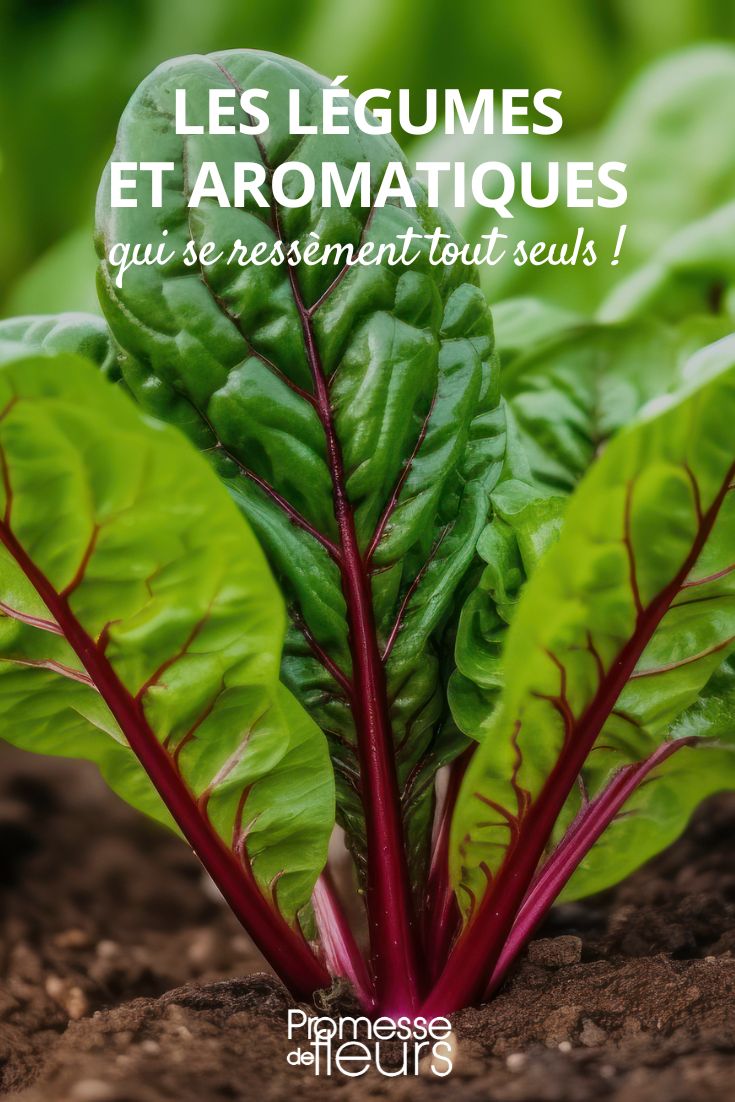
Swiss Chard, Beet or Beta vulgaris (biennial)
Also known as Chard and Leaf Beet, this vegetable has edible leaves and stalks (central veins). The leaves are quickly cooked, like spinach, while the stalks are cooked a bit longer, often in gratins. The varieties with coloured stalks (yellow, red, green) are very attractive in the vegetable garden, especially in a mix. They have thinner stalks than the white-stalked varieties.
Giant Chenopod or Chenopodium giganteum (annual)
Another vegetable to be consumed like spinach, raw or cooked, and with the same nutritional qualities, the Giant Chenopod is rich in vitamins A and C, calcium, and iron. It has a milder flavour than spinach. Its stems can also be cooked, like asparagus. It is very ornamental and grows well in shade in rich soil.

Orach, Giant Chenopod, Colourful Chards
Garden Cress or Barbarea verna (biennial)
Also known as Land Cress (Barbarea verna or Barbarea praecox), the Garden Cress has a delicious flavour, spicier than Watercress, making it interesting for adding some zing to a salad or for making a peppery soup. It is rich in vitamins A, B, C, E, and PP and provides many minerals, including iron.
Strawberry Spinach or Chenopodium capitatum (annual)
The Strawberry Spinach is an unusual vegetable plant whose leaves, with a hazelnut flavour, can be eaten raw or cooked, and whose small fruits, resembling clusters of raspberries, taste like beetroot (are you following?).
Vegetable Oyster or Mertensia maritima (hardy perennial)
Very decorative, the Mertensia maritima features beautiful bluish foliage and summer bell-shaped flowers in blue-violet. Its fleshy leaves, with an unusual texture reminiscent of succulents, have a pronounced salty taste. They can be enjoyed raw, in salads, or with fish dishes.

Garden Cress, Strawberry Spinach, Vegetable Oyster
Cuban Purslane or Claytonia perfoliata (annual)
This Winter Purslane, from the same botanical family as purslane, produces similar leaves: crunchy and fleshy, with a mild flavour. However, it is more decorative than purslane, with its spoon-shaped leaves and floral stems appearing to pass through the leaves. It is best consumed raw, in salads, until late autumn, when salads become scarce.
Rocket or Eruca sativa (annual)
Well known to gardeners and cooks for about fifteen years, Rocket is a vegetable plant consumed in salads, harvested as needed from the plants in the garden. There are two species: Eruca sativa or cultivated rocket and Diplotaxis ericoides or wild rocket. Personally, I have a clear preference for the latter, but its taste is definitely spicier. Both are grown and used in the same way. They are rich in iron and vitamin C.
Winged Tetragonia or Tetragonia tetragonoides (annual)
Also known as New Zealand spinach, but belonging to the Aizoaceae family, the Winged Tetragonia is another vegetable plant consumed for its fleshy leaves, which have a distinctive salty flavour. They can be enjoyed raw or quickly cooked (like spinach once again). It is drought-resistant and does not go to seed quickly when it gets hot. It is revitalising and refreshing, rich in vitamins and minerals. It grows easily in the wild in China, New Zealand, and Réunion Island.
 Winter Purslane, Rocket, Winged Tetragonia[/caption>
Also, let’s mention:
- Wild Chicory, Capuchin Beard or Cichorium intybus, whose leaves, flower buds, and root are consumed in chicory drink (biennial).
- Edible Chrysanthemum or Chrysanthemum coronarium (widely consumed in China), whose leaves and flowers are eaten (annual).
- Brown Mustard or Brassica juncea, spicy in salads (biennial).
Self-seeding aromatic plants
Wild Garlic or Allium ursinum (perennial)
Wild Garlic is also used as a vegetable, similar to sorrel in an omelette for example, but its most well-known “recipe” is more condiment-like and aromatic with the famous wild garlic pesto. This plant, with its delicate yet powerful garlicky taste, can be easily foraged in woodlands during spring, provided it is not confused with the toxic lily of the valley, which is similar. It grows easily in the garden, where it quietly colonises a woodland space.
Agastache or Agastache foeniculum (perennial)
Agastache, also known as anise hyssop, is a condiment plant with ornamental value. Its aniseed flavour is used in cooking, and its dried leaves can be made into herbal tea. A frost-sensitive perennial, it self-seeds in our regions.
Common Borage or Borago officinalis (annual)
Common Borage produces beautiful blue flowers in summer that can be used fresh in herbal tea or as a salad decoration. Its leaves, with a slight cucumber taste, can also be consumed in salads or herbal teas, either fresh or dried. It is very easy to grow from seed and is melliferous.
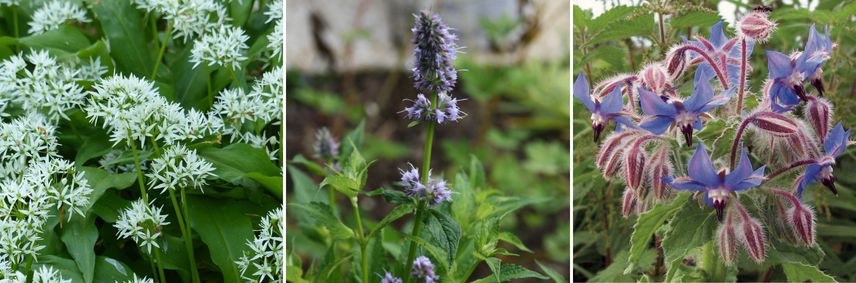
Wild Garlic, Agastache, Borage
Plantain Cornucopia or Plantago coronopus (biennial)
Plantain Cornucopia sits halfway between salad and condiment herb. Its slightly salty leaves are used in mesclun salads or quickly cooked. This herb, known for its medicinal properties, can also be applied or rubbed on burns, small cuts, and insect bites.
Marigold or Calendula officinalis (annual)
Marigold is a plant of great value with multiple uses. A dye plant used for pigments, it also has various properties that make it useful in cosmetology, pharmacology, and homeopathy. In cooking, its flowers colour rice dishes, stews, soups, and herbal teas. Fresh, it flavours cheeses, salads, and butter. Additionally, in the vegetable garden, this plant repels nematodes and attracts many pollinating insects.
Fennel or Foeniculum vulgare (perennial)
Fennel, or Foeniculum vulgare, is the wild form of fennel and does not produce bulbs. Its leaves are used as an aromatic plant, similar to dill. Its aromatic seeds are crushed to flavour dishes, marinades, and pickling brines. Ornamental, it can be planted in both the vegetable garden and perennial borders, where its light, airy, and fragrant foliage is appreciated. However, be cautious; while it self-seeds readily, it can spread extensively and be difficult to remove. Cut the flower heads before they set seed if you do not want it to spread.
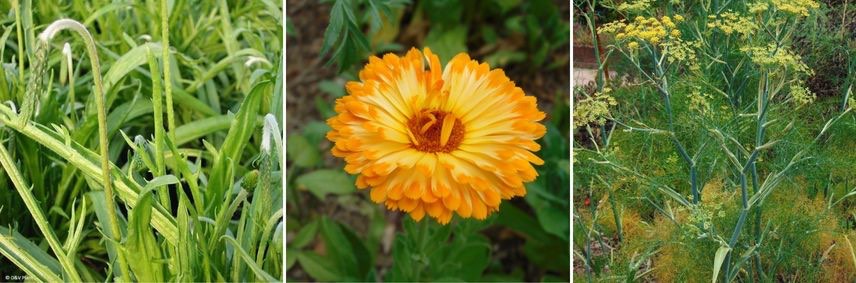
Plantain Cornucopia, Marigold, Fennel
- Subscribe!
- Contents
Comments