





























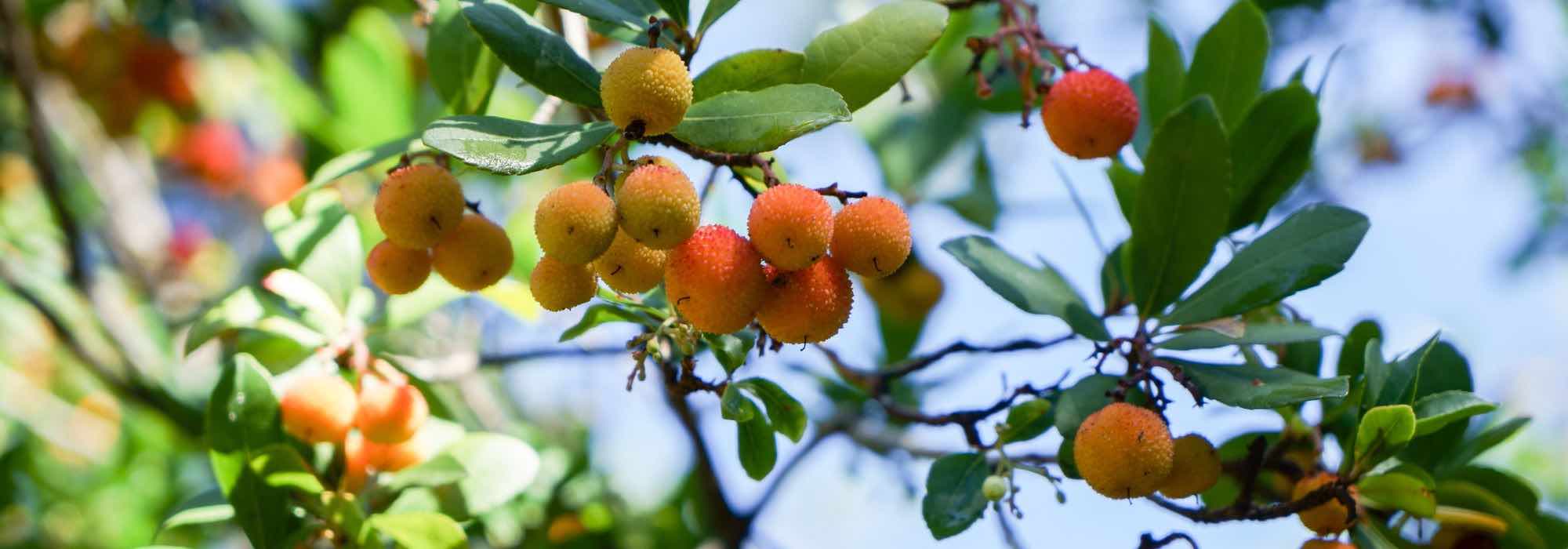
Protecting and wintering the strawberry tree
Our tips and practical advice
Contents
The strawberry tree, and its most well-known species Arbutus unedo, is a Mediterranean bush that captivates gardeners with its evergreen foliage and decorative small fruits. Although it is relatively hardy, able to withstand temperatures of -12 °C to -15 °C, a poorly protected strawberry tree may suffer during cold and prolonged winters, especially in continental climates. This article guides you through all the steps to prepare, protect, and winter your strawberry tree, ensuring it remains healthy until spring. With a few simple actions, preserve your strawberry tree, whether it is in the ground or in a pot.
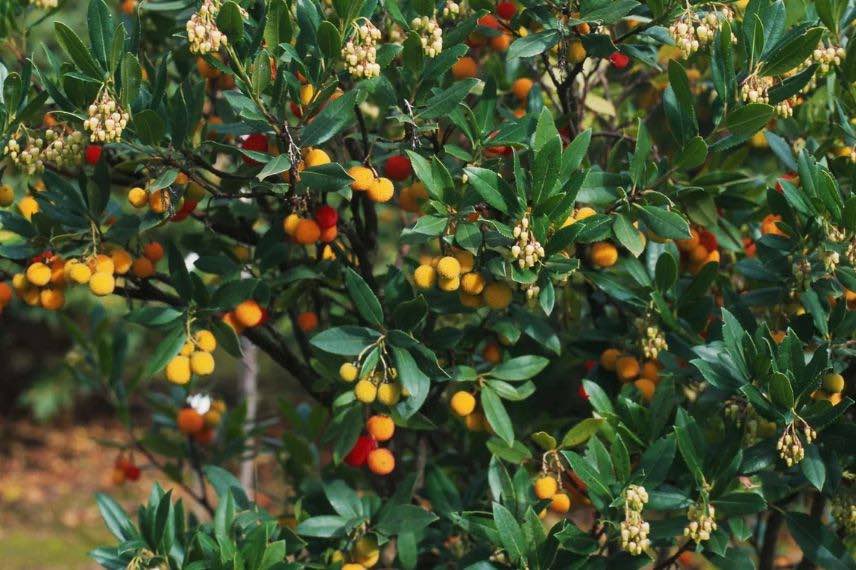

Knowing the hardiness and needs of the strawberry tree
The strawberry tree can generally withstand low temperatures, between -12 °C and -15 °C, making it a fairly robust Mediterranean plant compared to other species. However, despite its hardiness, it can suffer if cold spells are prolonged or if temperatures fluctuate dramatically.
To help it survive the winter in good conditions, especially in colder and northern regions, it is advisable to plant it in a sheltered spot away from cold winds, ideally against a wall facing south or south-west. This orientation allows it to capture and store the sun’s warmth during the day, providing further protection for the plant at night.
The strawberry tree prefers well-drained soil, as stagnant moisture poses a greater risk to it than cold. In winter, poorly drained soil retains water, which can cause frost at the root level and damage the plant. Ensuring these planting and exposure conditions allows the strawberry tree to better withstand the low winter temperatures.
Prepare the strawberry tree before winter arrives
To prepare the strawberry tree before winter arrives, start by adjusting watering in autumn. It is recommended to moderate water supply to prevent the soil from becoming too wet. A slight reduction in watering at the end of the season also helps the plant prepare for its winter rest, without risking excess moisture.
Mulching at the base of the strawberry tree is essential to protect it from frost. Apply a layer of organic mulch, such as bark, fallen leaves, or hemp pales, for example, around the base of the plant. This insulating blanket helps maintain a stable temperature at the root level, thus protecting them from extreme temperature fluctuations.
In some cases, light pruning may be considered to reduce wind resistance. This advice is particularly useful if your strawberry tree is planted in a particularly exposed location. Maintenance pruning in autumn helps prevent cold winds from damaging the branches. However, it is best to avoid severe pruning to prevent weakening the plant just before winter.
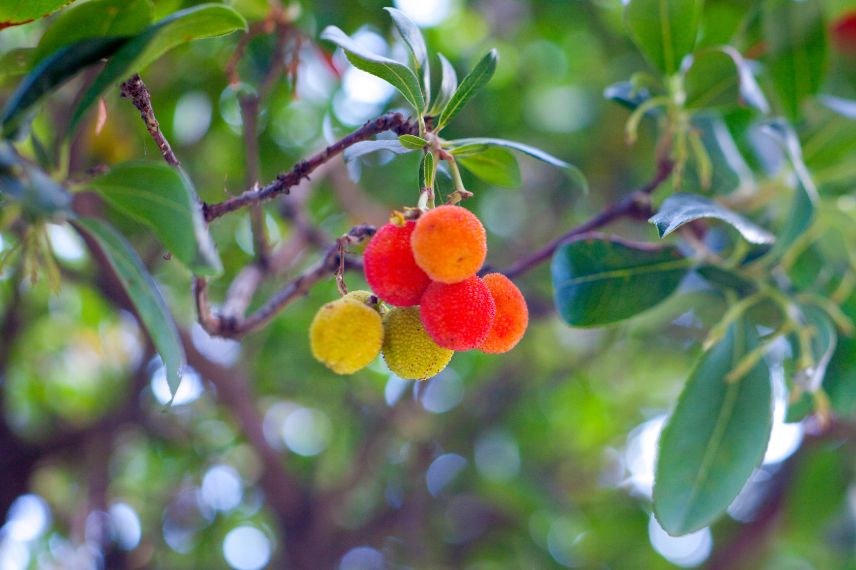
Techniques for protecting strawberry trees from cold in the ground
To effectively protect the strawberry tree from the cold, several protection techniques in addition to mulching can be implemented in winter depending on the severity of the forecasted cold spells:
- The use of a fleece is one of the most common methods, effective for protecting the aerial parts, which are more sensitive to the cold than the stump. In case of a significant drop in temperatures, wrap the fleece around the strawberry tree, ensuring not to tighten the foliage to allow for good air circulation. This lightweight and breathable fabric provides additional insulation against the cold while allowing the plant to breathe and letting in some light. It is recommended to install the fleece as soon as temperatures drop below -5 °C and to remove it as soon as the weather warms up to avoid condensation. Install this fleece so that it completely covers the plant, but make sure not to compress the branches to prevent structural damage.
- At the base of the strawberry tree, reinforce the mulching by adding an extra layer if necessary, especially if you expect a prolonged frost period. The mulch not only protects the roots from the cold but also helps retain moisture, thus avoiding thermal shocks. An effective layer of mulch for frost is around 5 to 10 cm thick.
- For young strawberry trees, winter protection is particularly crucial, as they are more vulnerable to low temperatures during their first years of growth. Protect them even in the case of light or moderate frost.
Read also
Arbutus: diseases and treatmentsSpecific tips for growing strawberry trees in pots
Potted strawberry trees require special attention in winter, as their roots are more exposed to the cold than those of strawberry trees in the ground.
Young shrub
Ideally, for a young shrub recently planted, whose cold resistance is lower, it is best to bring the pot into a sheltered space if temperatures drop below -5 °C. A bright, unheated place, such as a conservatory or cold greenhouse, is ideal. This solution allows the strawberry tree to stay protected from severe frosts while benefiting from light. In the first years after planting, apply protective measures as soon as frost is forecast, even light frost.
Adult shrub
If you live in an area where winters are harsh (temperatures below -10° C), it is important to protect your strawberry tree, even though the strawberry tree is a relatively hardy Mediterranean shrub. It is generally considered that potted plants lose 2° C of hardiness compared to a plant in the ground.
For a mature plant in a heavier pot, if you cannot move the pot, there are a few solutions to protect the roots.
The pot itself can be affected by freezing temperatures, especially if it is made of terracotta, which is more susceptible to cracking due to frost. To protect the pot and the roots, wrap the pot with insulating material, such as hessian or bubble wrap, to prevent the cold from penetrating to the roots. By insulating the walls of the pot, you reduce the risk of root frost while maintaining a certain temperature stability in the substrate. Secure this protection with string or elastic bands to keep it in place.
An additional interesting and effective method is to place polystyrene sheets between the ground and the pot, to insulate the pot from the cold coming from the ground.
If you do not move the pot, then apply the techniques explained above for plants in the ground, with mulching and winter fleece.
Also, be sure to reduce watering in winter for potted plants to avoid stagnant moisture, which can freeze and damage the roots, especially since the plant has low needs during this resting season and the compost stays moist longer. Water a moved strawberry tree indoors only once a month or at most every 15 days.
If the pot remains outside, water moderately, only when the substrate is completely dry. Too much moisture combined with cold could cause the roots to rot. If the pot is exposed to rain, ensure it does not remain waterlogged, as this can be fatal during freezing periods.
What to do in case of late frost?
In spring, it is important to remain vigilant against late frosts, which can damage the young shoots of the strawberry tree. The buds and new leaves, being more tender, are particularly sensitive to sudden drops in temperature. Keep an eye on the weather forecasts and, if a frost is predicted, put back a temporary protective cover to shield these young parts. Often, it is sufficient to cover the plant overnight and remove the protection as soon as temperatures rise in the morning.
Once the risk of frost has passed, remove any protection permanently and check the overall condition of the strawberry tree. Prune the branches damaged by the cold or those that did not withstand winter well to encourage vigorous growth in spring. You can also add some well-decomposed compost or an organic fertiliser at the base of the plant to help it recover and stimulate its growth.
- Subscribe!
- Contents
Comments