





























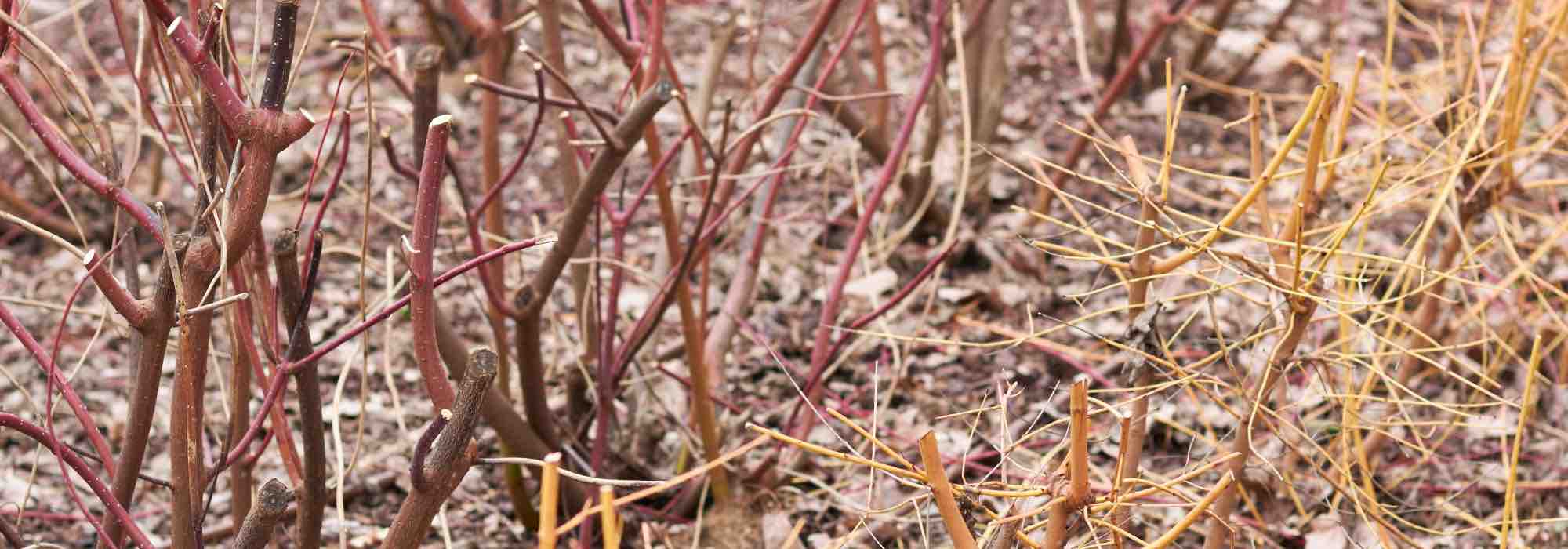
Propagating in winter: which plants to choose and how to proceed?
Plants that propagate easily during the cold season and the various techniques of propagation by cuttings
Contents
When we want to propagate our plants by cuttings, spring or autumn are often presented as the most favourable times. However, it is entirely possible to propagate certain plants during the cold season.
Here are some examples of great plants to easily and freely propagate while waiting for the return of warmer days, as well as the methods for propagation by cuttings to follow in winter.

The benefits of winter cuttings
Some plants find, during this cold period, favourable conditions for their recovery. Propagation by cuttings in winter requires significantly less care and attention (watering, for example) from gardeners. The weather conditions limit the risks of root desiccation, allowing them to develop gently.
There is little to do in the garden during winter, which leaves plenty of time to focus on cuttings. You can certainly take advantage of your autumn prunings to reuse the cut branches for your future cuttings.
In return, you will generally need a sheltered place from frost and bad weather to successfully carry out your winter cuttings (except for a few cuttings possible in open ground). The recovery will be a bit slower than with spring propagation, but it will be prompt as soon as milder temperatures return.
Read also
5 Ways to multiply your plants for freeHow to propagate garden plants in winter?
Cuttings from hardwood
These cuttings are taken during the plant’s dormant period, which is why they are also referred to as “dormant wood cuttings.” They are taken from deciduous plants, which lose their leaves in autumn, but also from evergreen plants.
- Cut woody stems (that have turned brown and hardened) about fifteen centimetres long. Make a slanting cut at the end of the branches, just below a node (the attachment point of a leaf or branch). Choose stems from the current year. Always use sharp, disinfected cutting tools.
- Trim the top of the stem, which often remains too soft.
- For evergreen species (which retain their foliage), remove the leaves from the base, leaving about 5 at the top of the stem.
- Dip the base of the stem in rooting hormone (optional).
- Prepare a pot filled with suitable potting mix.
- Moisten the substrate well using a spray bottle, ideally filled with rainwater.
- Using a pencil, make a hole for your cutting.
- Plant the stem two-thirds deep (leaving any remaining leaves above the surface).
- Firm the soil with your fingers to ensure it adheres to the cutting. You can place 2 to 3 stems in one pot to reduce the risk of failure.
- Optionally, place a cloche over your cutting to recreate a warm, humid environment conducive to rooting (a plastic bottle with the bottom cut off or a freezer bag can also work).
Necessary materials:
- pruning shears, knife or grafting tool;
- pots (conventional or biodegradable);
- special cutting and sowing substrate (finer than universal potting soil) or a mix of potting soil and sand or drainage materials (gravel, clay balls…);
- pencil;
- spray bottle;
- cloche (optional);
- rooting hormones (optional).
Root cuttings
Some perennials with a substantial stump can be propagated using this method.
- Carefully dig up some roots from the chosen plant by gently lifting the stump with a fork.
- Cut healthy, fleshy sections into pieces about 5 cm long.
- Quickly cover the roots of the mother plant with soil to prevent drying out.
- Prepare a pot (or a tray) filled with suitable potting mix for cuttings.
- Place the root samples in the substrate, keeping them horizontal.
- Cover with substrate and gently firm with your fingers.
- Moisten everything well using a spray bottle, ideally filled with rainwater.
Necessary materials:
- fork;
- cutting tool (pruning shear, knife or grafting tool);
- pots or tray;
- special cutting and sowing substrate or a mix of potting soil with sand;
- spray bottle.
Leaf cuttings
In some cases, it is possible to propagate using leaf cuttings, particularly with certain perennials or succulents.
- Detach mature, healthy leaves from the mother plant by cutting them with a clean tool.
- Prepare a pot (or a tray) filled with light potting mix for cuttings.
- Moisten the substrate well using a spray bottle, ideally filled with rainwater.
- Gently bury the leaves three-quarters deep.
- Firm with your fingers to ensure the substrate adheres to the leaf.
Necessary materials:
- knife or grafting tool;
- pots;
- special cutting and sowing substrate or a mix of potting soil with sand;
- spray bottle.
Care for winter cuttings
Place your cuttings in a sheltered location, in a frost-free area that is bright but protected from direct sunlight.
In terms of care, simply ensure the substrate remains slightly moist. In the following spring, you may see the first signs of growth (new shoots). You can then transplant your cuttings into individual pots before planting them in the ground the following autumn, provided they are sufficiently vigorous (well-developed shoots and roots).
Bushes and shrubs to propagate during the cold season
Many evergreen or deciduous bushes can be propagated by cuttings from hardwood during winter.
Willow
Willows have the advantage of rooting easily, which almost always ensures the success of their cuttings. Prefer cuttings from osier willows or weeping willows in winter. Proceed between November and March, by propagating from hardwood.
Note that it is possible to propagate willow directly in the ground. You can also place the stems in a glass of water beforehand, until the first rootlets develop. The resulting liquid (willow water) can be used as a substitute for plant hormones. The concentration of salicylic acid present in the bark of willows indeed promotes the rooting of plants.

You can start stem cuttings in water
Buxus
The buxus is an iconic evergreen shrub of French gardens. It offers a compact silhouette that withstands pruning well. It allows for the creation of true plant sculptures and dense hedges. This shrub can be propagated easily at the end of winter, between February and March.
Laurel
The laurels offer a great diversity of evergreen species. Whether it is rose laurel, bay laurel, or Portuguese laurel, they all lend themselves well to winter propagation.
Elder
Elders are deciduous shrubs. We appreciate them for their flowering in fragrant umbels and their sometimes edible berries. They can also be propagated from hardwood in winter.
Forsythia
Forsythias brighten the garden in spring with their golden flowering. These are deciduous shrubs, perfect for creating a hedge, but they also make excellent standalone specimens. Once propagated, they will require sunlight, soil rich in organic matter, and should remain fairly moist (never completely drying out).
Dogwood
Conifers
Conifers root slowly, which is why a cutting in winter will be beneficial.
Other shrubs for winter propagation
This list is certainly not exhaustive. Also consider spireas, old roses, rosemaries, buddleias, hydrangeas, cotoneasters, and syringas, etc.
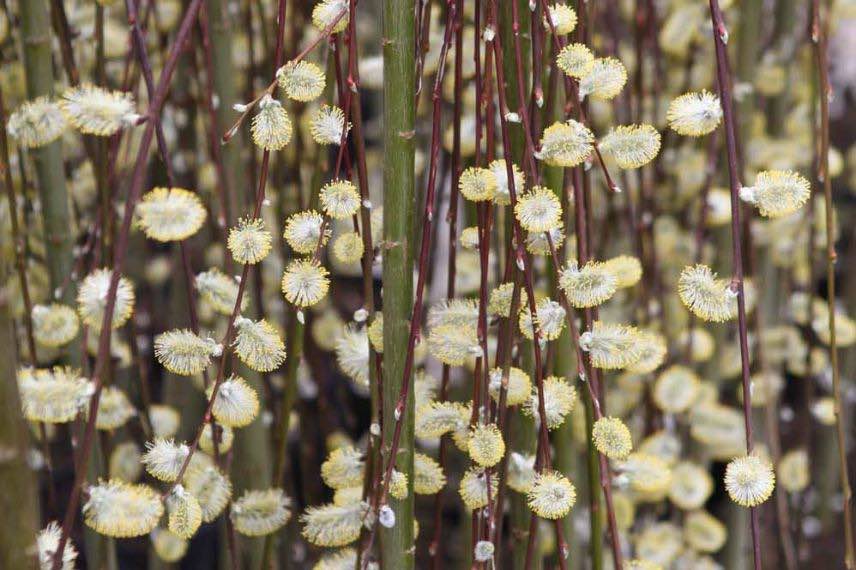
Willow propagates easily in winter
Read also
15 easy-to-propagate bushesOther easy plants to propagate in winter
Fruit trees
Small fruit trees are excellent candidates for winter propagation by cuttings, such as currant bushes, blackcurrant bushes, or raspberry plants. Ideally, proceed in January or February. The cuttings usually take root by the following spring. This is a cheap and simple way to obtain new fruit plants, for example, to create a productive hedge or for pot cultivation on the terrace and balcony.
Once the leaves have fallen, it is also possible to propagate the vine in winter, between November and December. We recommend placing your vine cuttings outdoors, in a sheltered spot away from prevailing rain and wind. A period of cold is indeed necessary to allow the plant to thrive in spring. Transplanting will take place the following autumn.
Fig trees are also among the fruit trees that are easy to propagate in winter using hardwood cuttings.
Perennials
Some perennials will appreciate being propagated by cuttings in winter. This is the case for heucheras, plants valued for their colourful foliage. Propagate leaf cuttings from evergreen varieties.
Primroses, as well as violets and sweet William, are also simple flowering perennials to propagate in winter, which can take root by the following spring. Take cuttings of about 5 to 8 cm, following the same principle as for dormant wood cuttings.
Indoor plants
You can try propagating leaf cuttings from some of your indoor plants in winter, provided you offer them enough warmth and ensure they do not receive too much water. This is particularly an easy multiplication technique with succulents (Crassula ovata, Aeonium, Kalanchoe, etc.).
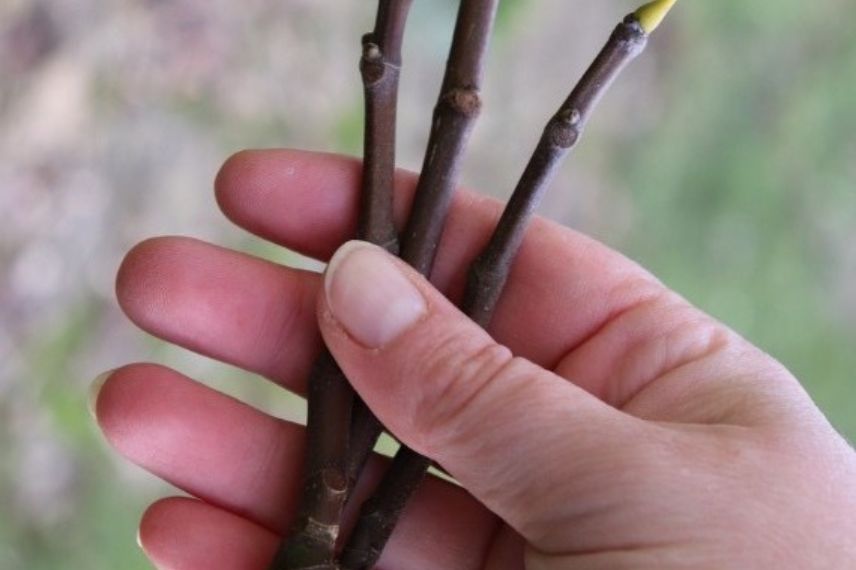
The fig tree is propagated in winter using hardwood cuttings
- Subscribe!
- Contents

Comments