





























Potted pomegranate: planting, pruning, and watering
For an exotic touch in your garden or on the terrace
Contents
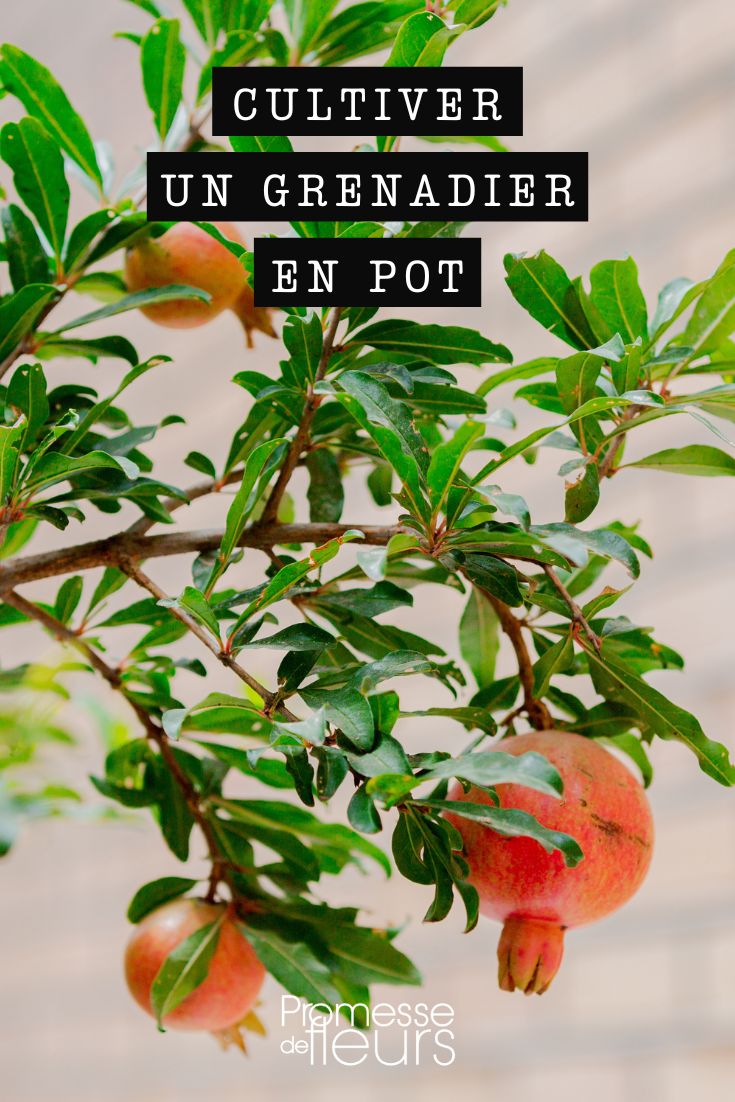
With its lovely crumpled flowers in vermilion red, bright orange, or variegated hues that adorn its foliage throughout summer, from May to August, the pomegranate is a charming ornamental bush. But that’s not its only asset; its leaves also take on different shades throughout the seasons: reddish in spring, soft green in summer, and orange and gold in autumn, before falling in winter. Typical of the Mediterranean region, the pomegranate thrives in areas with a warm and sunny climate, while tolerating negative temperatures down to -12 to -15°C. It adds an exotic touch and can be grown in a garden or in a pot, allowing it to be brought indoors during winter if necessary. Discover all our tips for planting, growing, and maintaining a pomegranate in a pot.
Which varieties should be prioritised?
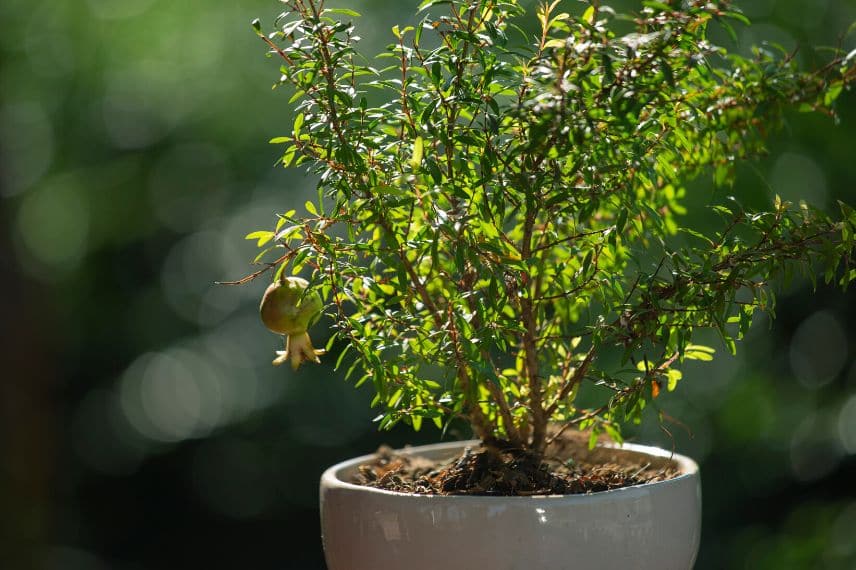
- For pot cultivation, favour dwarf varieties such as Punica granatum Nana which reaches a height of 1 metre at ripeness.
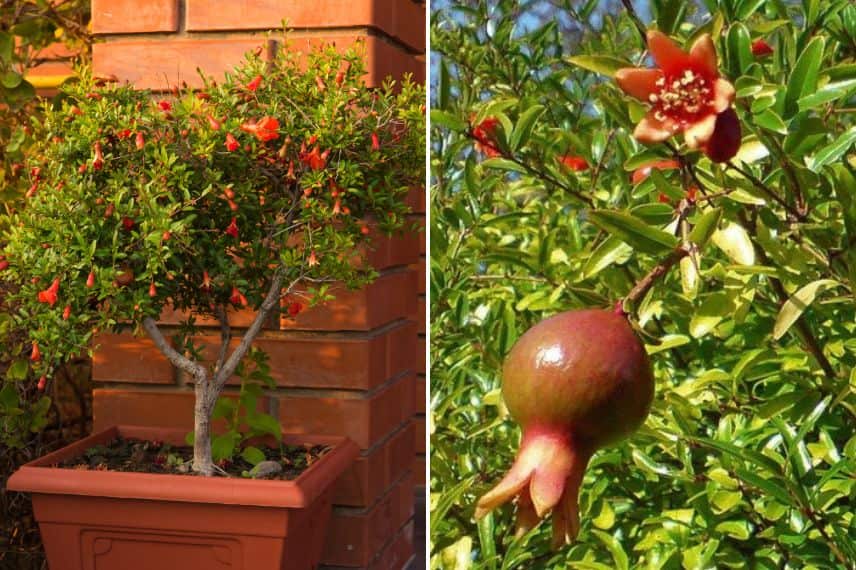
- As pomegranates grow slowly, you can also grow in pots the Punica granatum California Sunset, which offers variegated double flowers in salmon, orange, and cream and climbs up to 3 metres, or the Punica granatum Maxima Rubra which produces large bright orange-red double flowers and reaches a height of 3.5 metres at ripeness.
- If you want to plant a fruiting pomegranate in a pot, you can consider the Punica granatum Black Fruit which produces black fruits in autumn and grows up to 3.5 metres tall. Other interesting fruiting pomegranate varieties that do not exceed 3 to 4 metres in height include the Punica granatum Malissi and the Punica granatum Wonderful. To bear fruit, however, the pomegranate needs a long, warm summer.
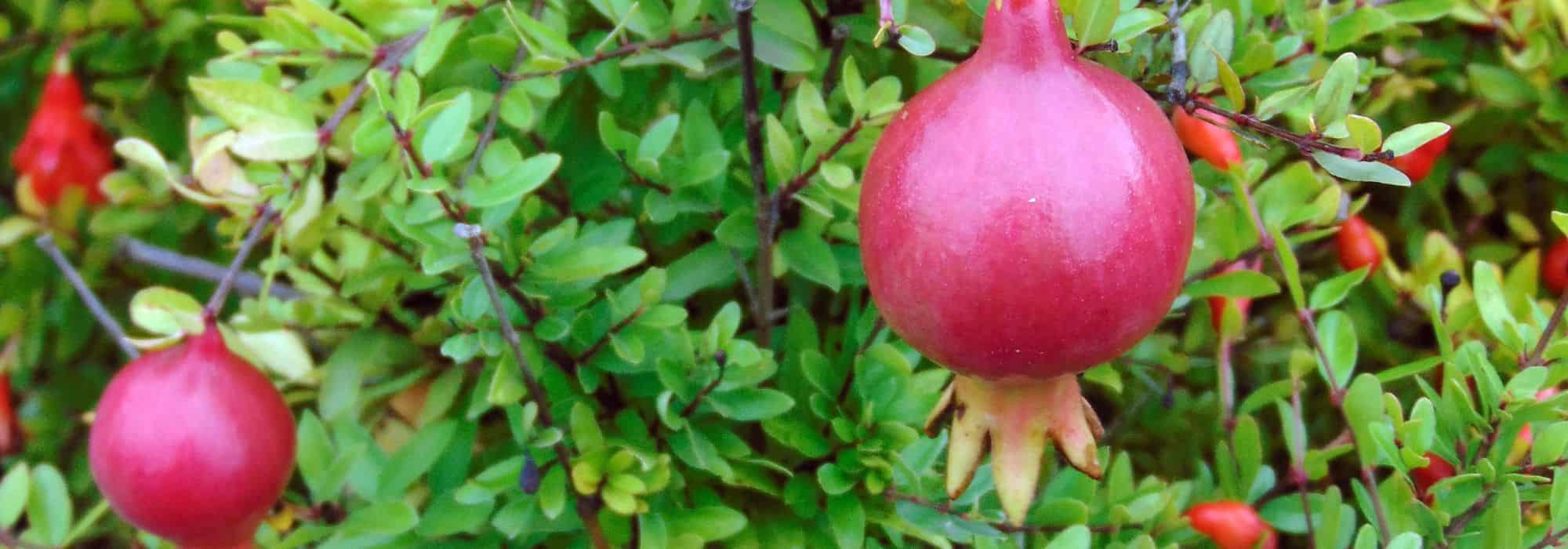
Punica granatum Nana
What type and size of pot?
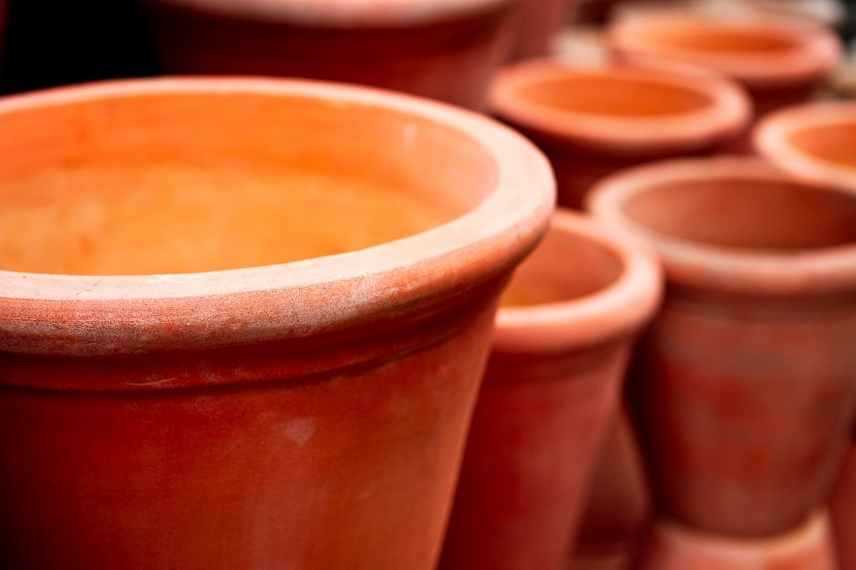
- You can use any type of pot, made of wood, clay, or plastic, but a clay pot allows for better aeration of the plant.
- Ensure a pot or container is sufficiently wide, similar to those used in an orangery, with a depth at least twice that of the root ball you are going to plant.
What substrate?
Undemanding, the pomegranate is satisfied with any substrate: clayey, poor, stony, calcareous, or dry, as long as it ensures good drainage.
Where to place the pomegranate tree?
Native to Turkey and India, the pomegranate is cultivated in the Mediterranean Basin as well as in North Africa. It thrives in sunlight and warmth. Plant it in a very sunny location and sheltered from the north wind, for example against a wall.
When to plant it?
Plant pomegranate preferably after the first frosts between April and May in regions with cold winters and in autumn in Mediterranean climate areas.
How to plant it?
- Soak the root ball in water to thoroughly moisten it
- Take a drainage pot and place a drainage layer of gravel, sand, or clay balls 5 cm thick.
- Add soil or potting mix that you can mix with a bit of sand and compost.
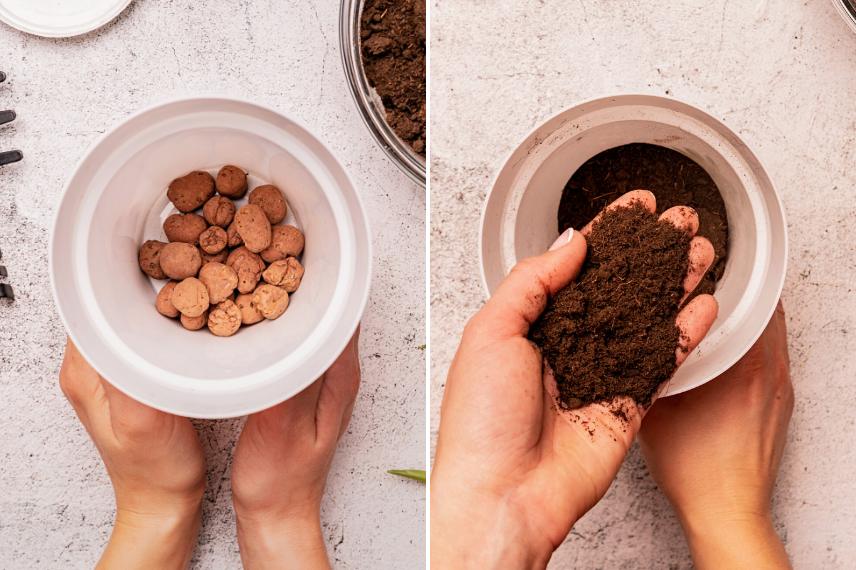
Place a layer of clay balls, then add the substrate
- Place the pomegranate in the centre of the pot, fill in with the remaining potting mix and compact to eliminate any air pockets.
- Water generously and mulch to keep the base cool in summer.
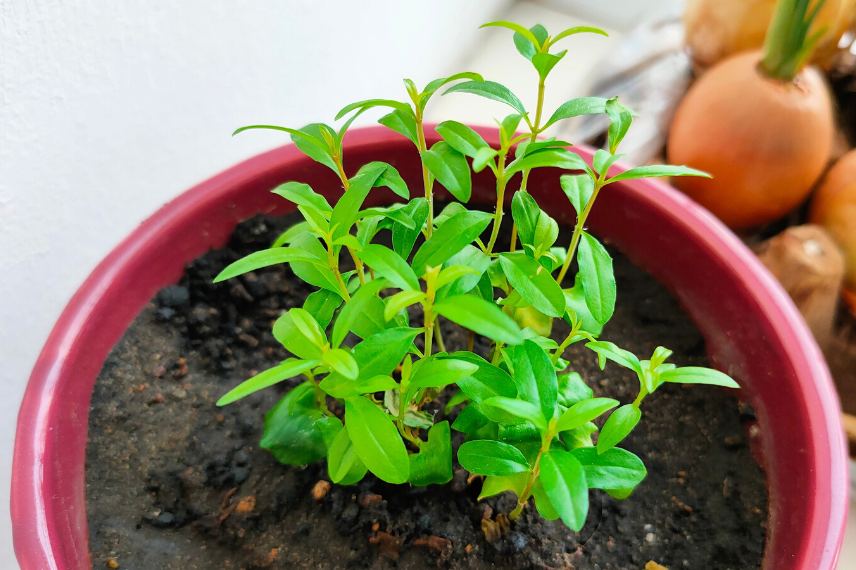
Young pomegranate plant in a pot
Maintenance, pruning and care
Watering
Water the potted pomegranate regularly and deeply as its water needs are significant, and potted plants are more prone to drying out than those in the ground. Allow the soil to dry on the surface between waterings.
Fertilisation
Apply manure, compost, or fertiliser in spring or autumn for a flowering pomegranate. For a fruiting pomegranate, add fertiliser for fruit bushes like that for tomatoes during the growing season.
Pruning
- Allow the pomegranate to grow freely in the first few years. You can then lightly prune it in spring, when growth resumes.
- Using disinfected and well-sharpened pruning shears, remove dead wood and crossing branches.
- You can also slightly shorten the branches to direct flowering towards the centre of the bush. Cut at an angle 0.5 to 1 cm above a leaf or bud.
Wintering
- The pomegranate can withstand negative temperatures down to -12 to -15°C. If you live in a region with harsh winters, bring the pot indoors to a cool but frost-free room during winter. The pomegranate actually needs a bit of cold to produce buds and flower the following year. Wintering begins in October.
- You can also protect it with a winter cover if winters are milder in your area.
- You can take the pot outside as soon as the frosts have passed, in April or May depending on where you live.
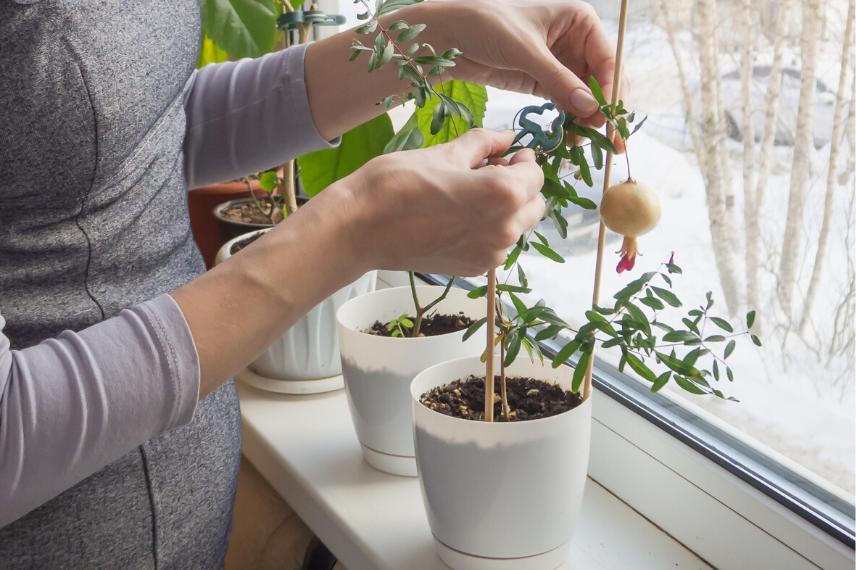 A pomegranate behind a window in winter[/caption>
Repotting
The growth of the pomegranate is slow, but you can repot the pomegranate into a larger container every 3 years. Preferably carry out this operation when the pomegranate has no flowers or fruit, from late winter to spring, outside of frost periods.
- Subscribe!
- Contents
Comments