





























Persicarias: the best groundcovers
Robust, dense, and floriferous, they have everything to please
Contents
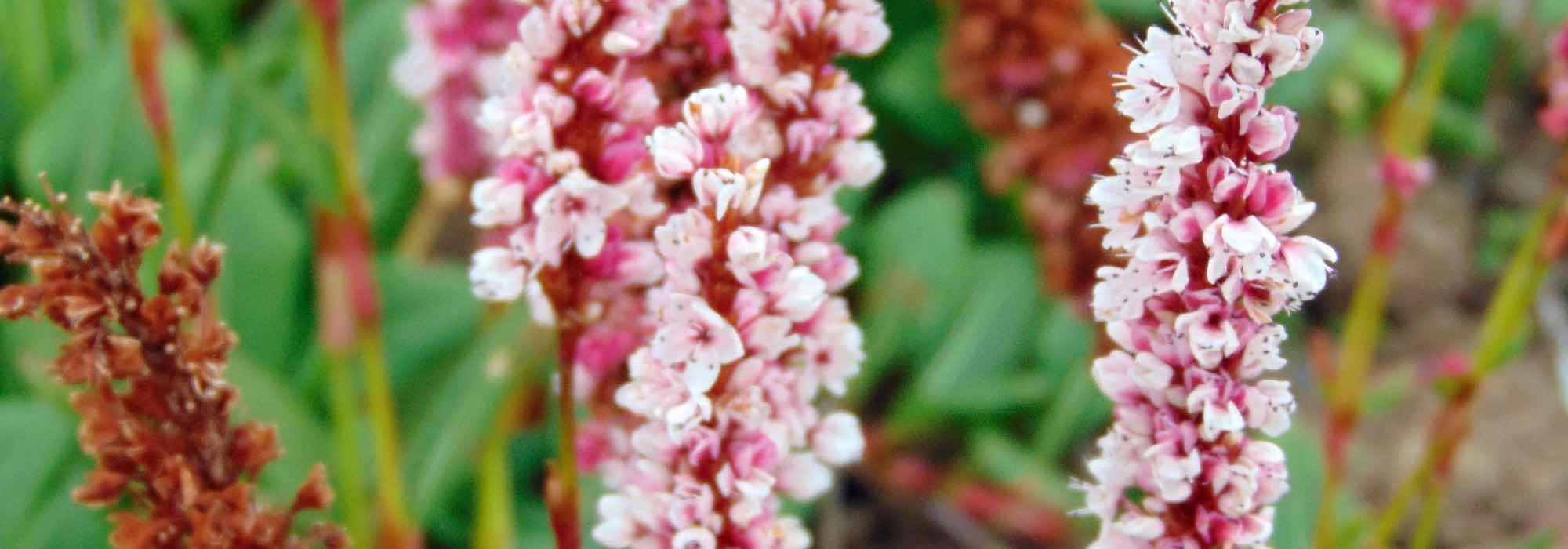
Persicarias, Persicaria or Knotweeds all share one common trait: they thrive in cool soils. Furthermore, there are numerous species and varieties that can be dedicated to different uses. The Persicaria is quite hardy, easy to care for, and robust. It comes alive in summer and autumn with a simple flowering in dancing spikes. It often prefers partial shade, but it adapts to full sun as long as the soil remains cool.
The shortest Persicarias, small specimens ranging from 15 to 40 cm in height, make excellent groundcovers in these conditions where they quickly thrive. In this category, you’ll find the renowned Persicaria affinis, which have proven their worth in terms of density, floribundity, appeal, and charm. Discover other species of Knotweeds that deserve to be known in our selection.

Persicaria affinis 'Darjeeling Red'
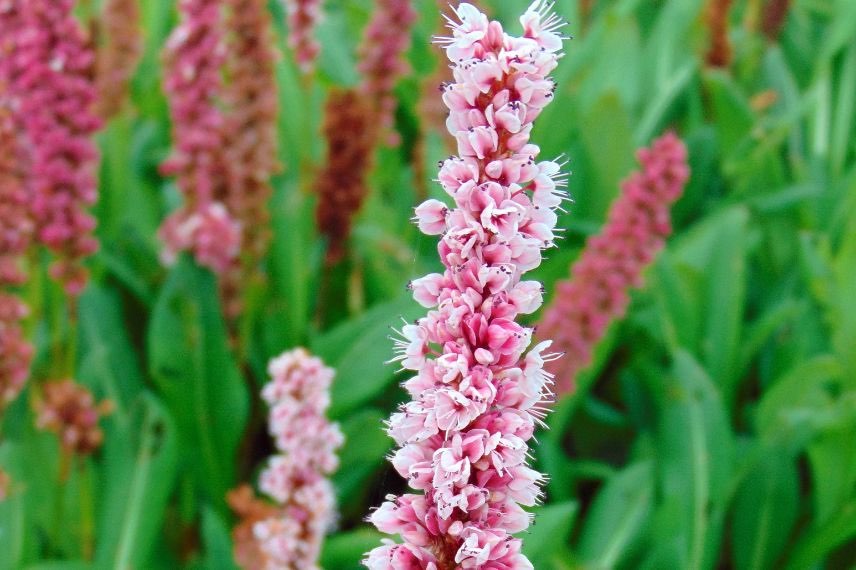
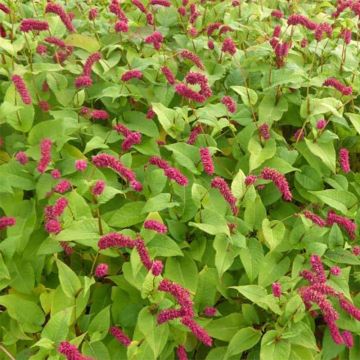
Surely the best-known of the Persicarias, Persicaria affinis ‘Darjeeling Red’ is a vigorous groundcover that offers many advantages. Present all year round with a carpet of lanceolate dark green glossy leaves, it flowers in summer and early autumn with cylindrical spikes measuring 5 to 6 cm. It begins flowering in July with pale pink blooms that deepen over the months to a garnet red by October. The leaves turn red in autumn and take on a copper hue in winter. It grows to a height of 25 cm and a width of 40 cm in a dense and tightly packed manner.
Plant it in a cool rockery with small groundcover plants like Saxifraga umbrosa ‘Clarence Elliott’ or other easy-cultivating cultivars. Also consider Hardy Geraniums, such as Hardy Geranium ‘Bob’s Blunder’ with bronze foliage.
Persicaria affinis ‘Darjeeling Red’
Persicaria affinis 'Superba'
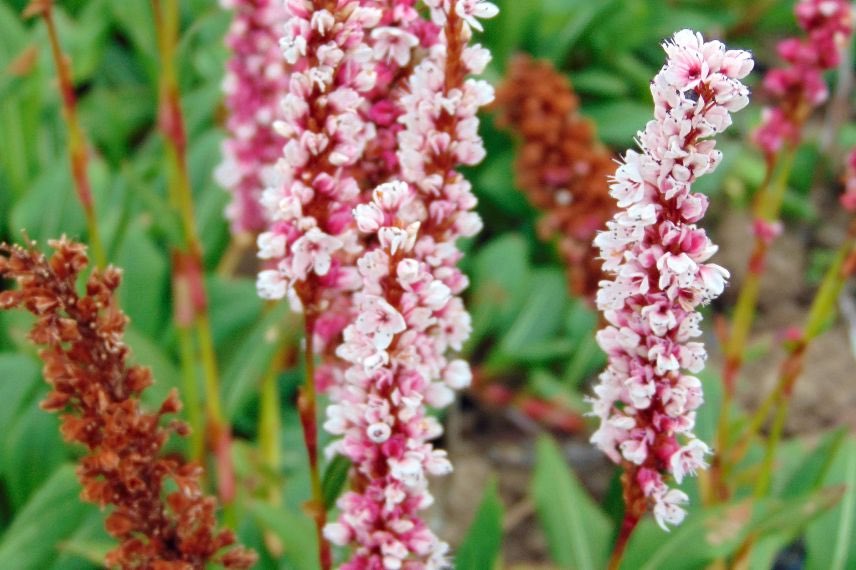
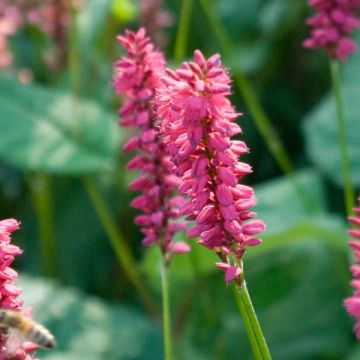
The Persicaria affinis ‘Superba’, a cultivar closely related to other Persicaria affinis, delights with pale pink to carmine pink flowering. Reaching a height of 20 cm in flower, it spreads well due to its sucker behaviour, forming a clump 40 to 50 cm wide at ripeness. It offers the same type of bicolour contrast at the end of the season as ‘Darjeeling Red’.
Plant it in any type of soil as long as it remains moist, alongside Heucheras like the Heuchera ‘Amethyst Mist’, which highlights the pink spikes of the Persicaria with its purple-violet foliage. Add Tiarellas in partial shade, or even a Tellima grandiflora with its green-cream bells.
Persicaria affinis ‘Superba’
Discover other Persicaria
View all →
Available in 1 sizes
Available in 3 sizes

Available in 2 sizes
Available in 2 sizes
Available in 1 sizes
Available in 1 sizes
Available in 1 sizes
Available in 1 sizes
Available in 1 sizes
Available in 2 sizes
Persicaria affinis 'Donald Lowndes'
Another beautiful variety very well suited as a groundcover for cool soil, the Persicaria affinis ‘Donald Lowndes’ features spike-like flowering in a very pale pink, a shade reminiscent of cherry blossoms, just like its numerous small flowers. It also reddens as it fades. It reaches a height of 25 cm and spreads well, densely and suckering like other cultivars of Persicaria affinis.
Plant it at the edge with some ferns like Hart’s tongue ferns and this perennial with grass-like foliage, Ophiopogon.
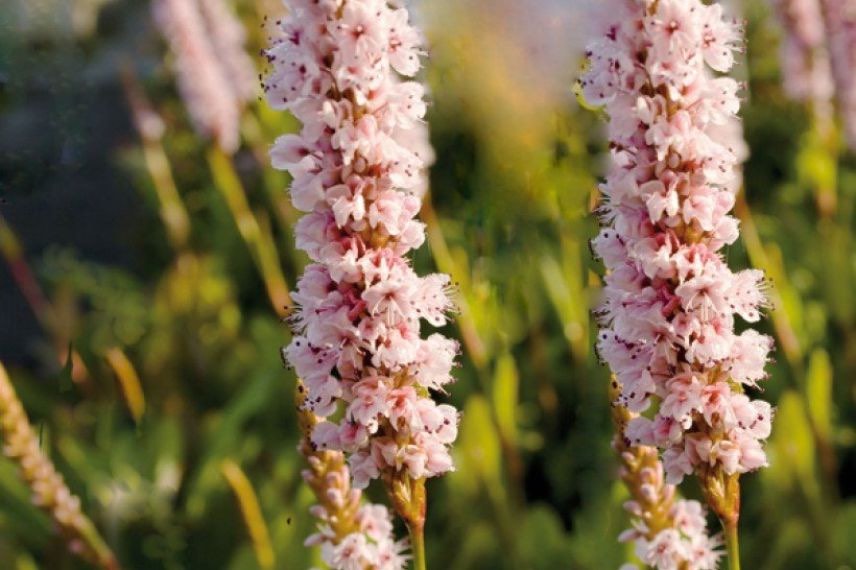
Persicaria affinis ‘Donald Lowndes’
Persicaria affinis 'Kabouter'
Last cultivar in our series of Himalayan Knotweeds, ‘Kabouter’ is particularly floriferous and highly decorative. Its flowering spikes come alive with a wide gradient of colours: from almost white to purplish red, passing through fuchsia pink. It stands 30 cm tall.
Use it in masses at the front of a border sprinkled with spring bulbs before it takes over with its summer flowering.
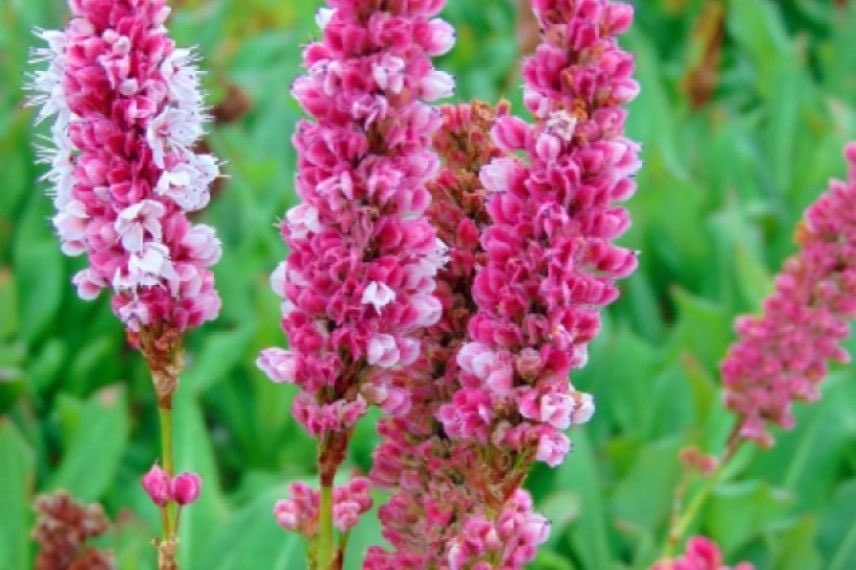
Persicaria affinis ‘Kabouter’
Persicaria amplexicaulis 'Inverleith'
In the category of Persicaria amplexicaulis, here is a small cultivar, Persicaria amplexicaulis ‘Inverleith’, reaching 40 cm in height. It spreads to 50 cm wide. Its broad, lanceolate leaves are dark green and vibrant, often taking on a purplish hue in autumn. The leaves measure 6 to 8 cm long. The reddish stems bear short spikes from July to September, red in bud, and mauve-pink to raspberry red upon opening. Deciduous or semi-evergreen, it spreads quite quickly.
In borders or beds, plant it with other robust plants that are not afraid of being overshadowed, such as Asters or Echinaceas that flower in summer and autumn.
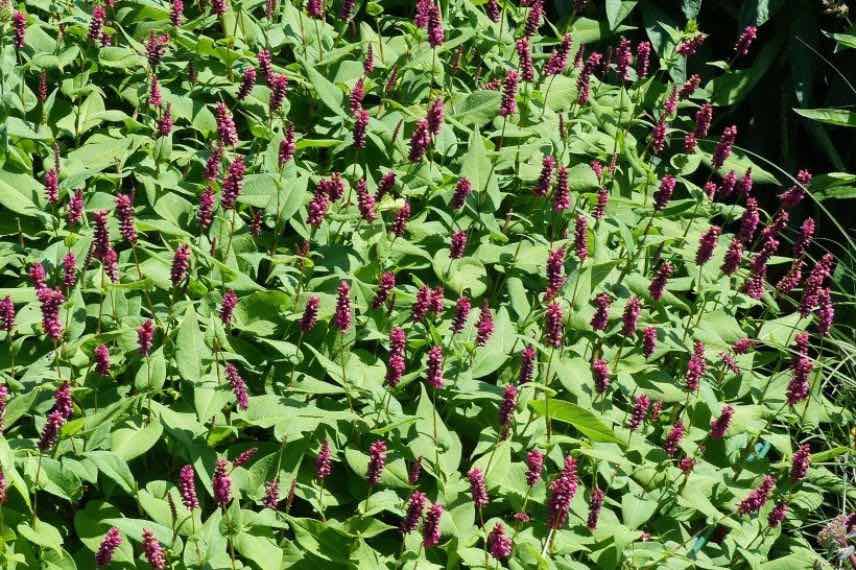
Persicaria amplexicaulis ‘Inverleith’
Persicaria amplexicaulis 'JS Delgado Macho'
Another stem-clasping knotweed, Persicaria amplexicaulis ‘JS Delgado Macho’ also has a compact upright habit, spreading well in width. It displays an intense carmine red colour in fairly large spikes measuring 10 cm long. The 15 cm long leaves, bright green, turn purplish in autumn.
Floriferous and colourful, pair it with Sanguisorbas, Dahlias, and pinkish grasses like Chinese fountain grasses.
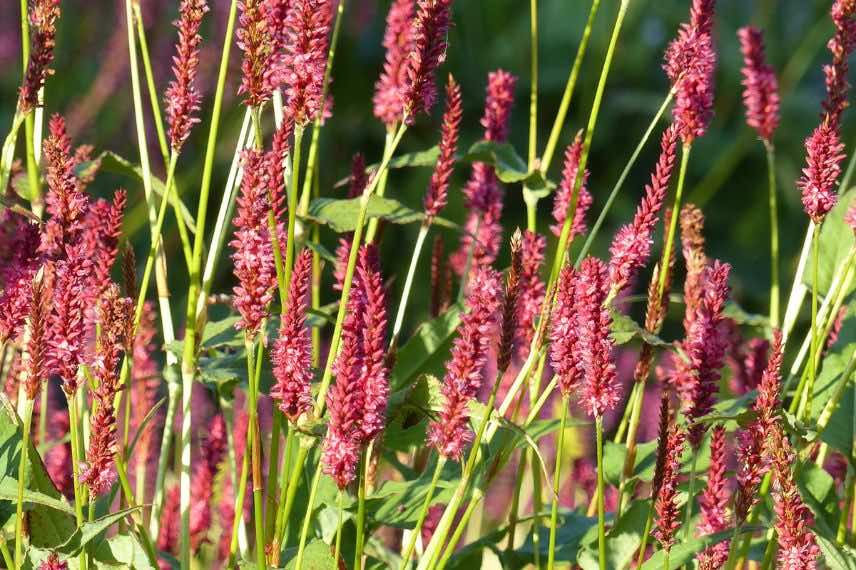
Persicaria amplexicaulis ‘JS Delgado Macho’
Persicaria amplexicaulis 'Pink Elephant'
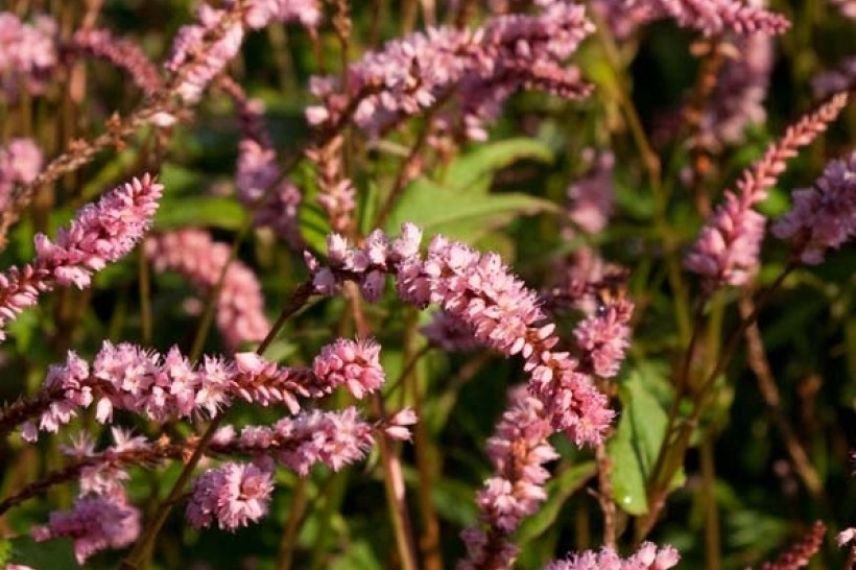
The Persicaria amplexicaulis ‘Pink Elephant’ has a quirky and charming way of lying down and lifting its spikes, somewhat like Lysimachia clethroides and perhaps reminiscent of an elephant’s trunk. Pink elephant, indeed, candy-floss pink. Its small size for a Persicaria amplexicaulis, measuring 40 cm in all directions, and its ground-hugging habit make it ideal for creating borders or pathways as a groundcover. Its lanceolate leaves measure 10 to 15 cm long, are medium green, and take on a reddish hue in autumn. The plant is semi-evergreen. It continuously produces spikes of small, tightly packed flowers 7 to 10 cm long from June to November. The flower stems are stout and very dense.
Its simplicity and minimalism make it suitable for both wild and contemporary gardens. Feel free to plant it in a cottage garden with romantic-coloured flowers like Phlox.
Persicaria amplexicaulis ‘Pink Elephant’
Persicaria vacciniifolia
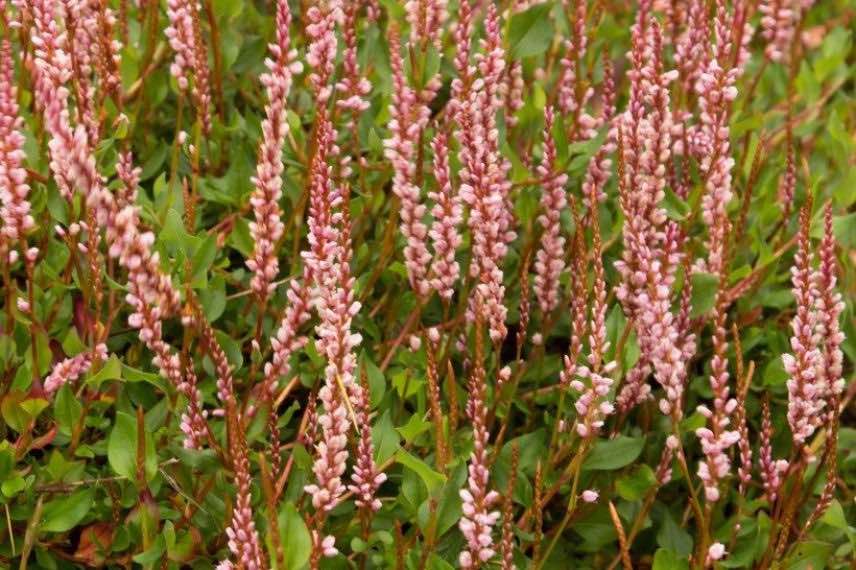
The Persicaria vacciniifolia, also known as Blueberry-leaved Knotweed, features small leaves measuring 1 to 2 cm, elliptical in shape, with a bright green hue that shines under the sun. They change from red to brown in autumn. The stems are reddish. Running in habit, the plant spreads up to 50 cm. With a height of 20 cm, it is topped from July to September by fine spikes measuring 3 to 7 cm in length, composed of tightly packed small flowers. Red in bud, they open to a soft pink.
In partial shade, in woodland or at the edge of a cool border, give it a lovely spot with its natural appearance and very fine spikes. Pair it with a Saxifraga stolonifera Cuscutiformis that enjoys the same conditions.
Persicaria vacciniifolia
Persicaria runcinata 'Needham's Form'
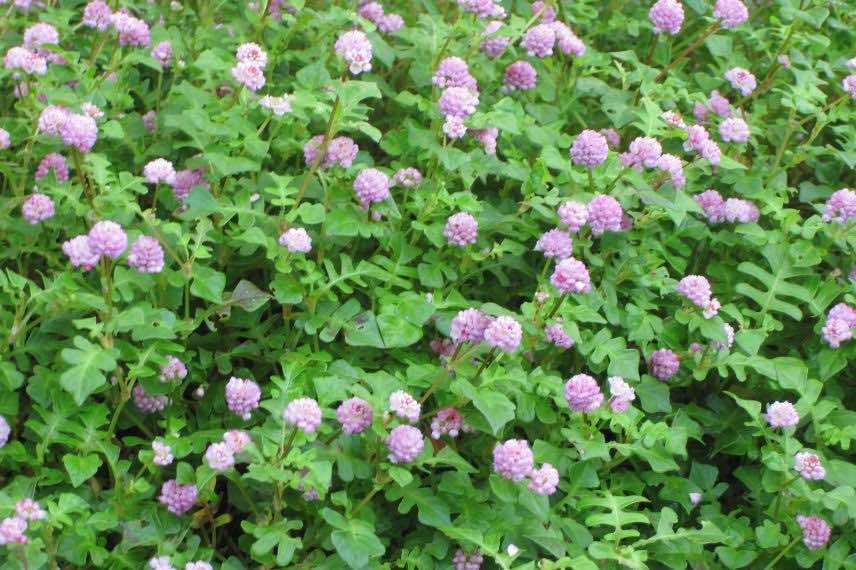
If you are looking for a low-suckering groundcover, Persicaria runcinata ‘Needham’s Form’ is the perfect choice. It is never invasive. At a height of 15 cm, it forms a carpet of 1 m² in 5 to 6 years. Its tiny flowers are globular, in 1 cm spheres, bright pink, and its remarkable leaves are cut to the midrib into rounded lobes, resembling an oak leaf. They are light green, measuring 1 to 3 cm long, and semi-evergreen. In mild winters, they are almost evergreen. The plant blooms profusely from July to November.
It tolerates all exposures in cool to moist, rich soil. Plant alongside the lovely curiosity that is Spigelia marilandica.
Persicaria runcinata ‘Needham’s form’
Aconogonon tortuosum var. glabrifolium or Persicaria 'Kahil'
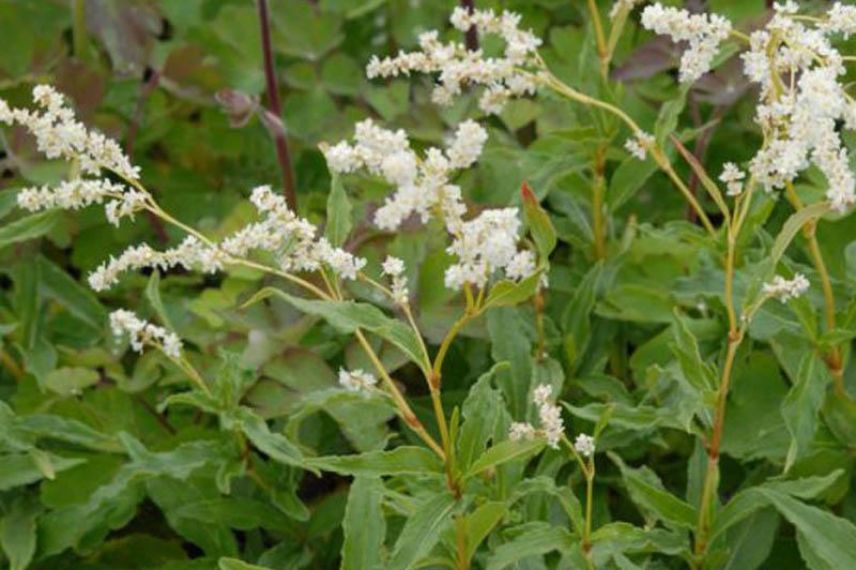
With a wild appearance, the Aconogonon tortuosum var. glabrifolium or Persicaria ‘Kahil’ grows vigorously. Fast-growing, it is ideal for a natural or spontaneous garden when you need to fill a space with minimal maintenance.
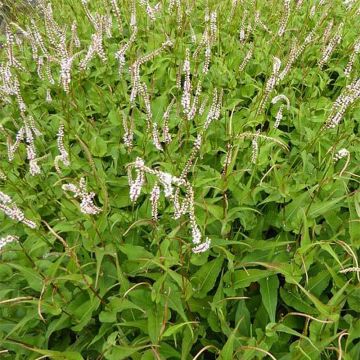
It forms a good groundcover with shiny foliage that is green and then rust-brown in winter. In summer, a multitude of short spikes, about 5 cm long, with tightly clustered white flowers appear from June and continue until September, exuding a honey-like fragrance. Spreading and deciduous, it reaches a height of only 30 to 50 cm. The lanceolate leaves are glossy green, rough, and fairly thick.
Install its accommodating and robust character in a wild setting at the base of trees and bushes, as it tolerates root competition. Add some hardy geraniums and comfreys.
Aconogonon tortuosum var. glabrifolium or Persicaria ‘Kahil’
Persicaria tenuicaulis
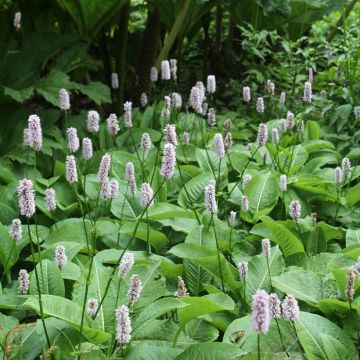
Unique in its kind, the Persicaria tenuicaulis forms a very dense, tufted stump, on which beautiful small elongated leaves of dark green with a wine-red underside develop. Early to flower, it adorns itself in May and June with fine spikes of pure white flowers embellished with small intense black stamens, borne on red floral stems. It reaches a height of 15 cm and spreads to 20 cm.
At the edge of woodlands, pair it with small white flowers of Lily of the Valley or blue flowering plants such as Brunneras or Corydalis.
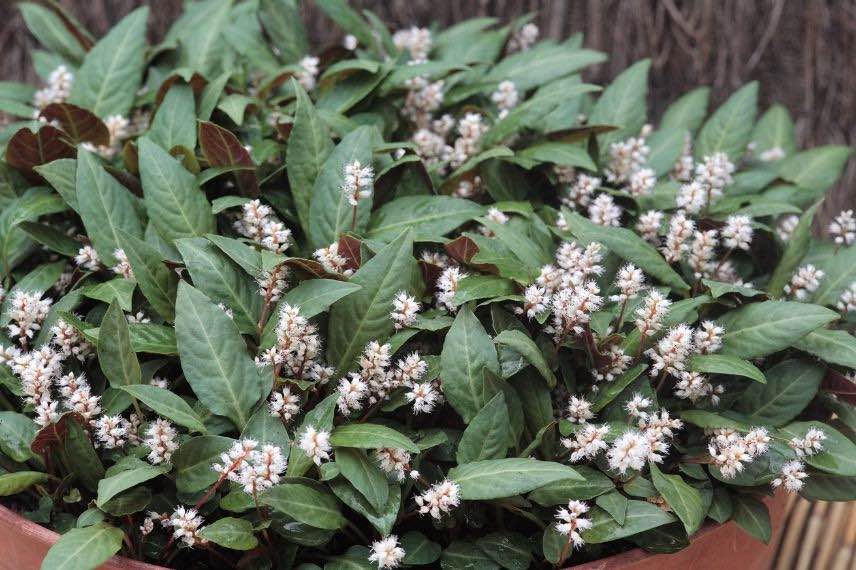
Persicaria tenuicaulis
- Subscribe!
- Contents
Comments