






























Pairing Hibiscus
6 ideas for garden or pot combinations
Contents
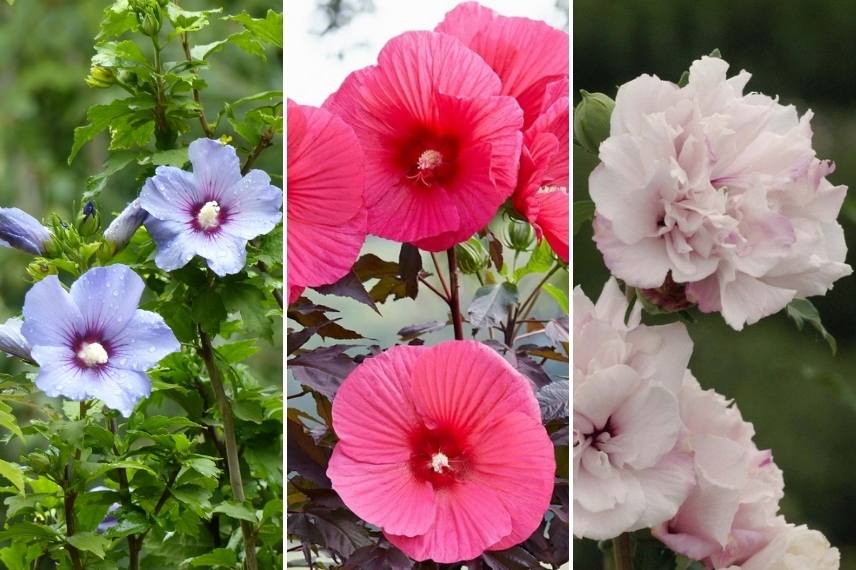
Hibiscus are highly valued bushes known for their long summer and autumn flowering, exemplified by the essential Hibiscus syriacus. Their exotic and ephemeral flowers renew abundantly each day, providing a daily spectacle. Depending on the cultivar, they come in shades of white, soft or bright pink, lavender blue or deep violet, and even rich red. They are more or less hardy depending on the variety, and all prefer fresh, even moist, well-drained soil. While hibiscus is stunning when planted alone, it also thrives in a pot, near a pond, in a flowerbed, or as part of a hedge.
Discover our 6 ideas for pairing hibiscus in the garden or on a terrace.

In pots on the terrace or balcony
With its flowers that renew daily, hibiscus beautifies the terrace or balcony during the lovely season. Its pot cultivation also allows for some less hardy varieties to be sheltered during winter. Moreover, the base of this beautiful bush tends to become bare, revealing its trunk and the substrate of the pot. Therefore, a lovely small plant will be placed at its base to dress up this empty space. These low plants, often groundcover, will protect the soil from the scorching rays of the sun and thus limit water evaporation.
Among the annuals, Pelargonium, known as balcony geranium, will be highly appreciated for its long, fragrant summer flowering. The trumpet-shaped flowers of Dipladenias, Petunias, or Calibrachoas will remind one of the larger flowers of hibiscus and will cascade down the pot. One can also sow seeds of Diascia ‘Apricot Queen’, whose salmon-coloured flowers will create a beautiful colour contrast with the mauve of Hibiscus ‘French Cabaret Purple’.
On the side of perennials, one might choose to install a Campanula ‘Karl Foerster’ with large lavender-blue flowers or a hardy geranium ‘Rozanne’ and an Iberis sempervirens for its small panicles of white flowers.
→ Find our advice sheet: Growing a hibiscus in a pot
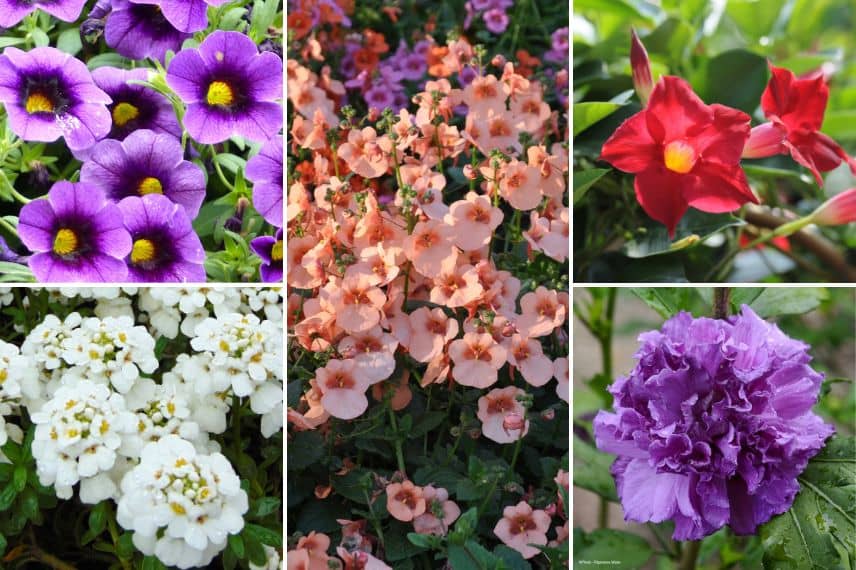
Calibrachoa Superbells ‘Grape Punch’, Iberis, Diascia barberae Apricot Queen, Dipladenia and Hibiscus ‘French Cabaret Purple’
In a hedge
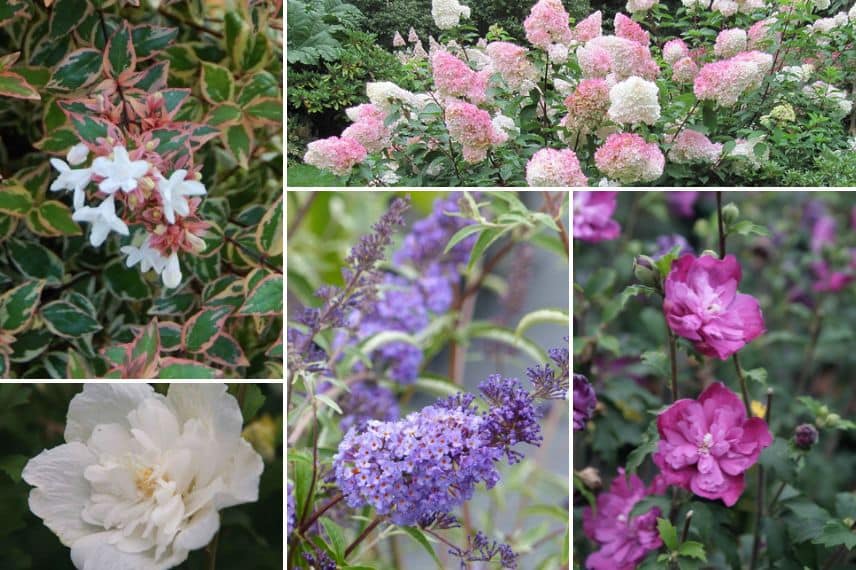
With their dense silhouette, Hibiscus are perfect for creating a lovely free-standing hedge of medium height, rarely exceeding 2 m. Notably, the varieties of Hibiscus syriacus can withstand frosts down to -23° C once they are well established. They can even be paired together, such as Hibiscus syriacus ‘Pink Chiffon’ with its soft pink double flowers, alongside the violet-pink of the cultivar ‘Purple Ruffles’ and the white of ‘White Chiffon’.
To diversify your hedge, also plant other flowering bushes such as buddleia for its graceful arching branches. An Abelia grandiflora ‘Tricolor Charm’ will be interesting for its long summer flowering and variegated, semi-evergreen leaves. The Hydrangea paniculata ‘Fraise Melba’ will add a touch of unpredictability with its panicles of flowers changing from white to dark pink. If you prefer brightness, opt for a Hydrangea ‘Strong Annabelle’ for its huge white ball-shaped flowers. Easy to grow, a St. John’s Wort ‘Hidcote’ will bring a touch of sunshine with its golden yellow flowers. For a hedge that remains beautiful even in winter, add a Cornus sanguinea for its beautiful bright red stems when it sheds its leaves in the cold.
Discover other Hibiscus
View all →
Available in 2 sizes
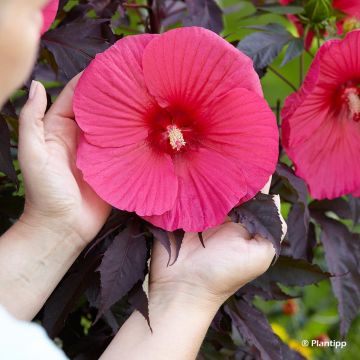
Available in 3 sizes
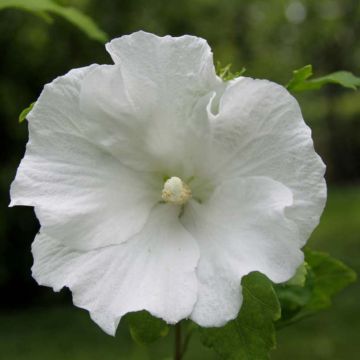
Available in 1 sizes
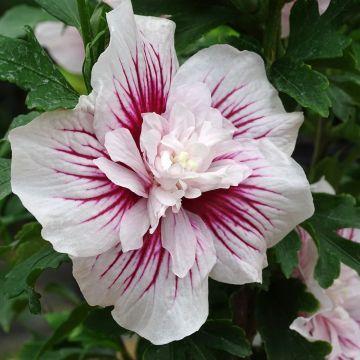
Available in 1 sizes
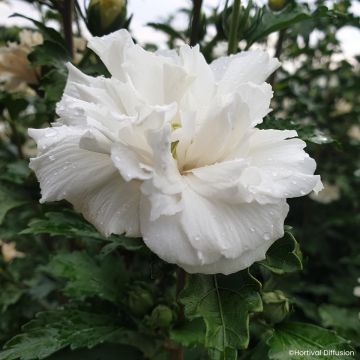
Available in 1 sizes
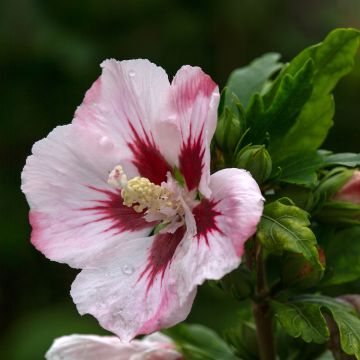
Available in 2 sizes
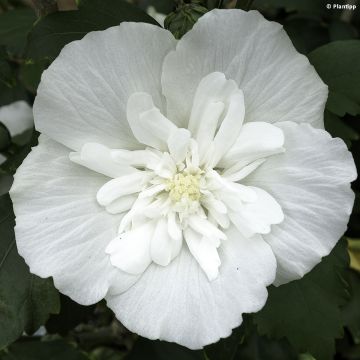
Available in 1 sizes
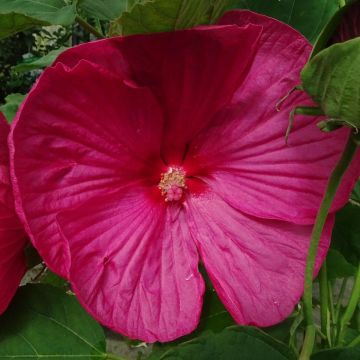
Available in 1 sizes
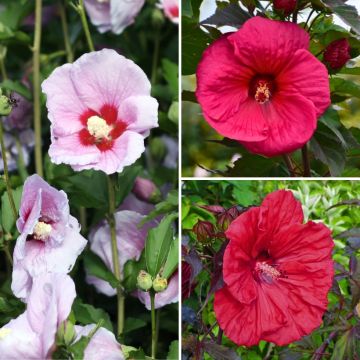
Available in 0 sizes
Available in 3 sizes
By the edge of a water feature
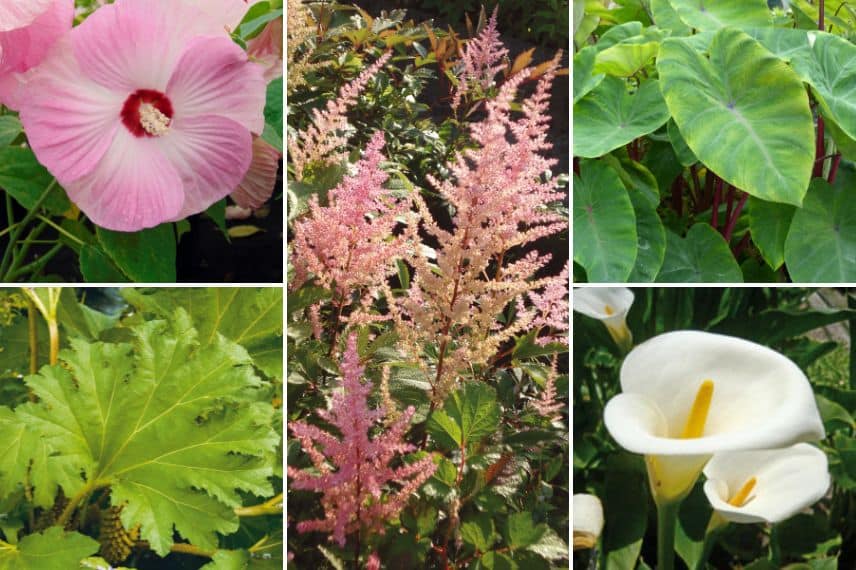
Some hibiscus prefer moist, even waterlogged soil for the common Rose mallow. As its name suggests, this plant will thrive when planted on the banks of a shore or pond. Its exotic appearance will beautifully complement the flowers of a white arum or the vibrant flowering of Cannas. Also, consider adding some perennials with lush foliage such as that of a Gunnera, a Rodgersia, a Fatsia, or a Colocasia. Also plant bulbs of Iris pseudacorus or ‘versicolor’, candelabra primroses, and an Astilbe for its light, airy flowers. For a perfect scene, place water lilies at the heart of the pond, an Acorus gramineus for its grass-like appearance, a flowering Butomus, and a water clover.
Read also
How to choose a hibiscus?In a tropical garden
With its exotic-looking flowers, hibiscus will blend beautifully into a tropical and humid setting. Among the various varieties, opt for a cultivar with large, vibrant flowers, such as Hibiscus moscheutos ‘Red Wine’. We will play with warm tones, mixing yellow, orange, red, or purple, paired with lush green or chocolate foliage. Thus, we will install a Canna ‘Red King Humbert’ for its very similar colours. We will add some summer-flowering bulbs like a collarette dahlia ‘Pooh’, crocosmias, a kniphofia for its unique flowers, cosmos ‘Chocolate’ for their surprising cocoa scent, and an arum ‘Captain Trinity’ with its yellow-orange hues.
An exotic garden would not be complete without lush vegetation and surprising foliage like that of the Japanese aralia and colocasia. A gunnera and a Tetrapanax papyrifera ‘Rex’ will attract attention with their enormous, disproportionate leaves, while a banana plant will give an impression of exoticism. Not to forget the tree fern and the New Zealand flax for their originality.
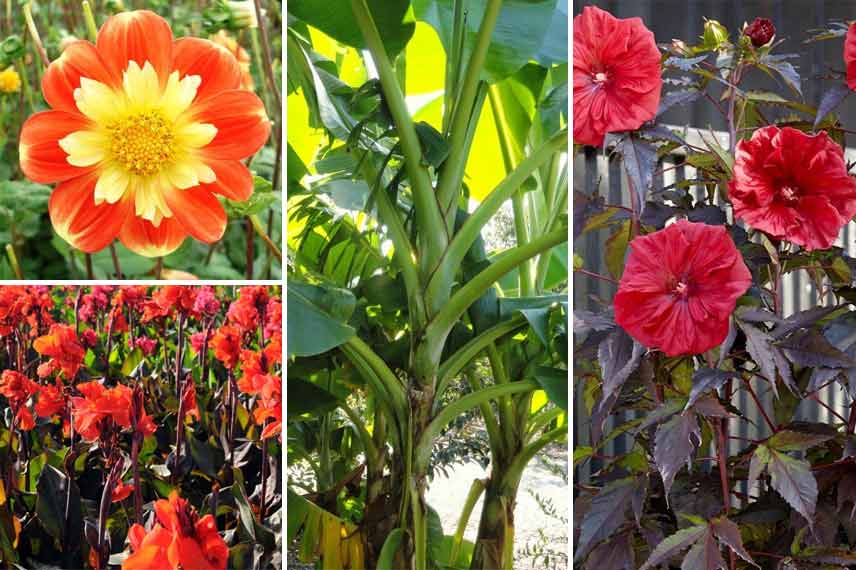
Collarette dahlia Pooh, Canna Red King Humbert, Musa sikkimensis, Hibiscus moscheutos Red Wine
In a romantic garden
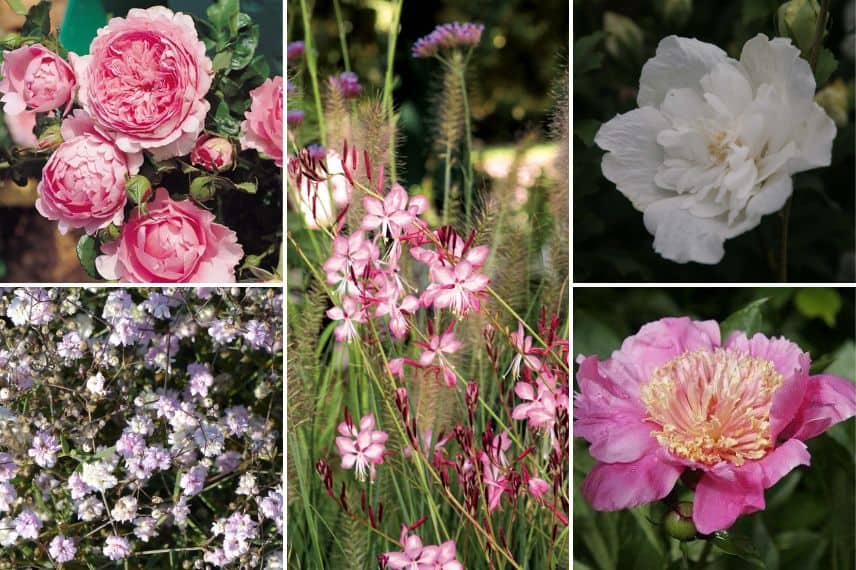
Some varieties of hibiscus feature soft blooms, perfect for a romantic garden, in shades of pink and white. This tender pink can be found in the semi-double, crumpled flowers of the Hibiscus syriacus ‘Pink Chiffon’. It pairs beautifully with the charming Generosa rose ‘Chantal Mérieux’, which has a carmine-tinged pink, or a ‘Roseraie de l’Haÿ’ rose for the sweet fragrance of its purple-pink flowers. In a border, you could plant a lovely foxglove or a lupin ‘La Chatelaine rose’, a white delphinium, a peony, and Iris germanica. The double flowers of a hollyhock ‘Spring Celebrities White’ will echo those of the hibiscus. Sprinkle a touch of lightness by adding a Gypsophila ‘Rosenschleier’, a Gaura, and columbines for their airy blooms. Sweet peas, climbing roses, and clematis will take over an arch, pergola, or trellis at the back of the border or on the terrace.
In a marriage of blue and white
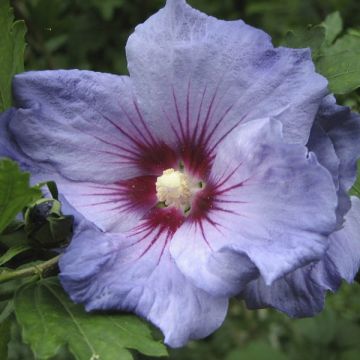
In a garden, the combination of white and blue creates a sense of calm and serenity. Some varieties of hibiscus will naturally find their place in this azure setting. For instance, at the back of the border, one can place a Hibiscus syriacus ‘Oiseau Bleu’ for its long blue flowering or in a double version with ‘Blue Chiffon’. They can simply be associated with each other, but also with the white flowers of Hibiscus ‘White Chiffon’ or the mauve ones of Hibiscus ‘French Cabaret Purple’.
Next to them, one can place a large Ceanothus, a lilac (notably Syringa persica ‘Laciniata’) and a Buddleia davidii ‘Nanho White’ for its beautiful, slightly arching white panicles. They will be accompanied in the middle of the border by the long floral spikes of foxgloves, lupins, delphiniums and the round flowers of ornamental garlic.
At the front of the border, one can alternate white and blue by planting Phlox paniculata, Gauras, campanulas, astrances, hardy geraniums, not forgetting the beautiful iris. And why not add some annuals? Cosmos, Anthemis and Cleomes will bring lightness to the scene. To enhance it all, add an aster for its autumn flowering, as well as some grasses like the fluffy tufts of Pennisetum ‘Hameln’.
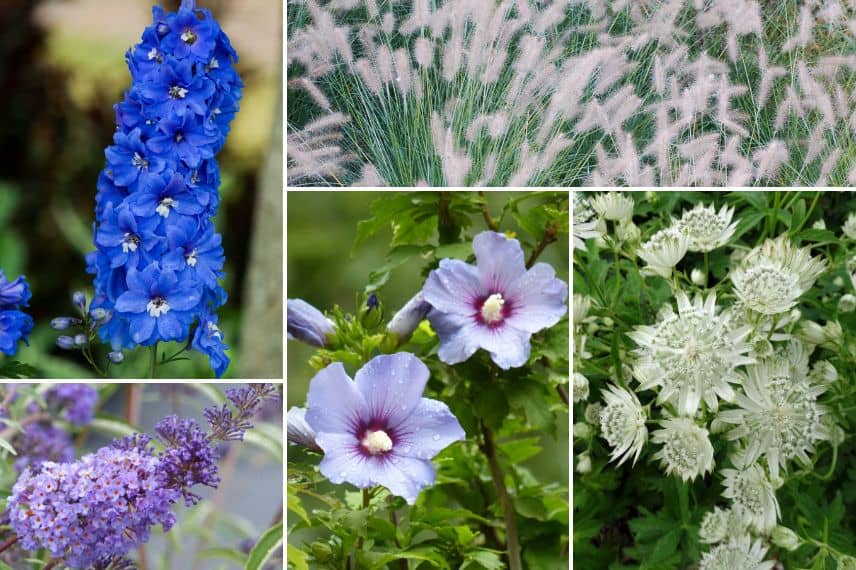
Delphinium Pacific ‘Blue Bird’, Buddleia davidii ‘Nanho White’, Pennisetum ‘Hameln’, Hibiscus syriacus ‘Oiseau Bleu’ and Astrantia major ‘Super Star’
For further reading
- Discover all our varieties of Hibiscus
- To find out more, browse our sheet on Hibiscus, Althaeas: planting, growing and maintaining
- Subscribe!
- Contents
Comments