





























Medicinal plants in a forest garden
for a true natural pharmacy at your fingertips
Contents
In an era of environmental awareness, where sustainability and permaculture are thriving, the concept of the forest garden is gaining traction. Imagine a garden that, just like a forest, flourishes in harmony with nature, requires minimal maintenance, and offers an abundance of resources. A clever blend of melliferous, edible, fruit-bearing, and even medicinal plants. Fascinating, isn’t it? Discover which medicinal plants to incorporate into your forest garden to create a true natural pharmacy at your fingertips.
What is a forest garden?
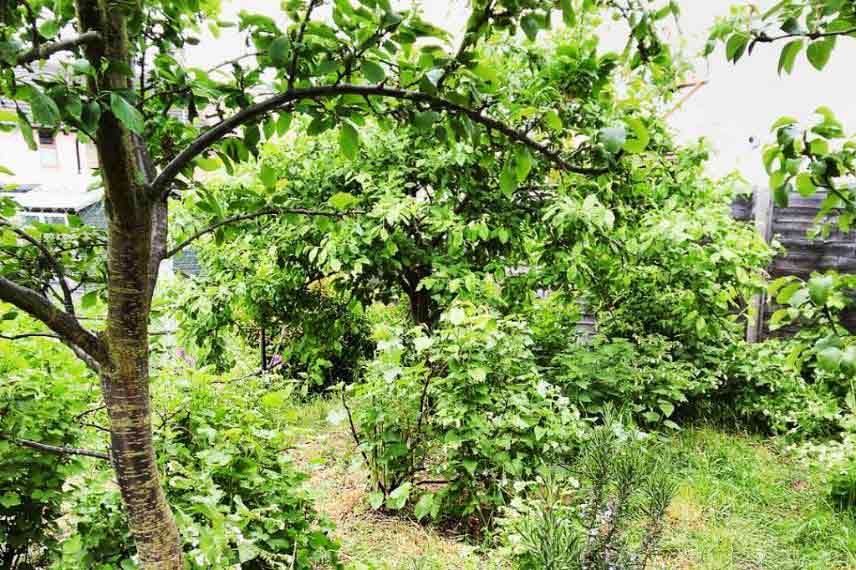
The forest garden is a gardening method inspired by the principles of permaculture and agroforestry. The idea is to create a productive, diverse, and self-sustaining ecosystem that mimics the natural layering of plants in forests, including trees, bushes, herbaceous plants, climbing plants, and groundcover plants. All of this is set within a (often very large) garden. The goal is to establish a system where each plant has its place and role, providing a diverse harvest.
Why planting medicinal plants there?
Integrating medicinal plants into your forest garden offers numerous benefits. Not only do they increase the biodiversity of your garden, but they also provide a source of natural remedies to help treat everyday ailments. For example, you can make an infusion of mint leaves for their digestive properties or use nettle leaves in salads, which are known to be rich in iron. These plants are often used in herbal medicine.
Moreover, some medicinal plants also act as natural repellents against certain parasitic pests, contributing to the overall health of your garden. Finally, they promote pollination by attracting beneficial insects that will pollinate other plants.
Comfrey
Comfrey is a groundcover of the undergrowth that grows easily between bushes, where few plants thrive and requires no maintenance! The Common comfrey (Symphytum officinale) has traditionally been used in ointments or balms to aid in wound healing, relieve inflammation, and alleviate joint pain.
It is also known as an “accumulator” plant, as its decomposing leaves release nutrients into the soil that the plant has absorbed during its growth (potassium, phosphorus, calcium, and many others). In fact, you can make a comfrey manure that will serve as a potassium-rich fertiliser. It is also a melliferous plant due to its spring flowering.
→ To learn more, read our guide on comfrey: planting, sowing, and uses.
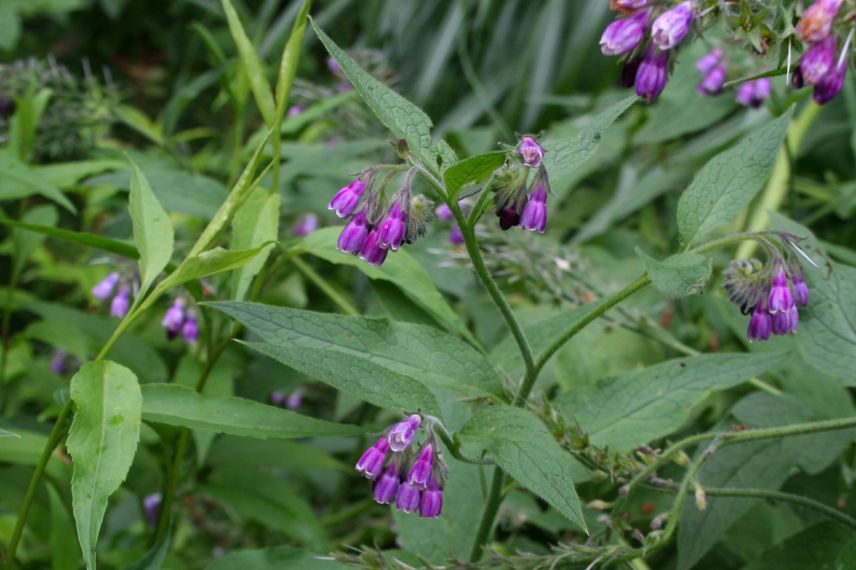
Common comfrey
Angelica archangelica
With its ample foliage and floral spikes, angelica emits a subtle aromatic scent, both aniseed and musky, which attracts bees and other pollinators. Known as “the herb of angels,” it is entirely edible, from the roots to the petioles, including its young stems with a minty flavour often enjoyed candied. Angelica has been known for centuries for its therapeutic properties, particularly in decoction or infusion to aid digestion.
It is a biennial plant that thrives in the dappled shade of woodlands and prefers rich, moist soils.
→ To learn more, read our guide on angelica: sowing, planting, and care.
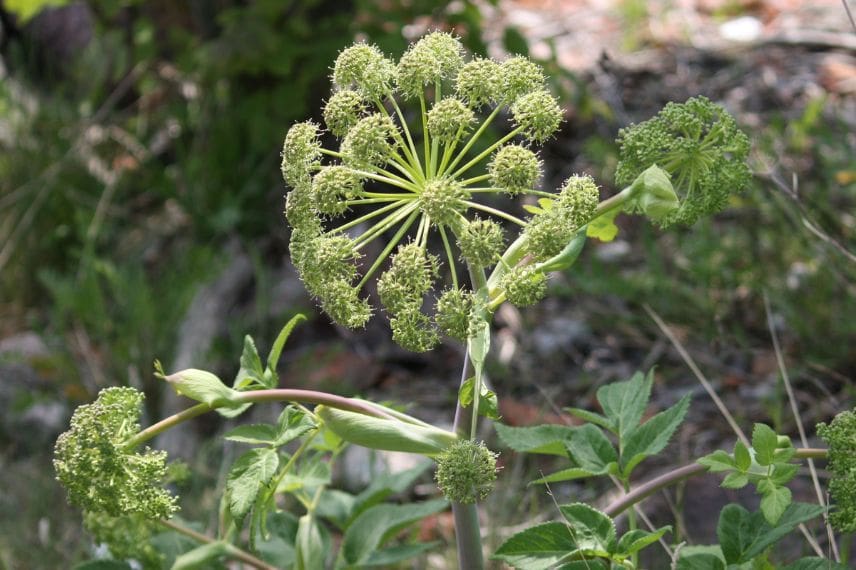
Angelica officinalis
Mint
Mint is an excellent groundcover plant, enjoying both sun and partial shade. Very easy to grow, it can thrive without much attention, but it has a tendency to spread quickly and will need to be controlled.
Ingrid’s tip: I plant it in a large pot, which is buried, to contain it.
Its fresh flavour is highly valued in cooking, but it is also well-known for its digestive properties. Whether used in cooking or as an infusion, it can help relieve digestive issues such as bloating and cramps.
→ To learn more, read our guide on mint: planting, growing, propagating.
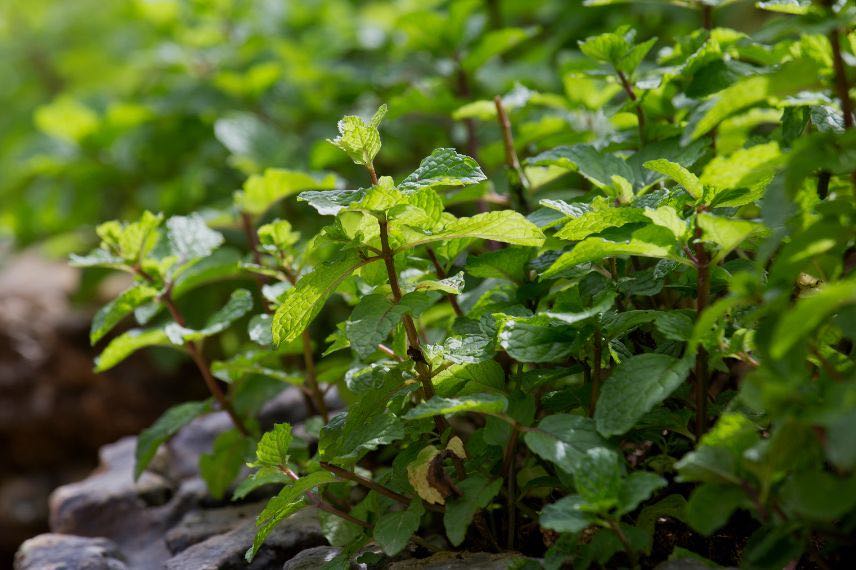
Mint
Sage
The common sage (Salvia officinalis) is a perennial plant valued for its slightly spicy flavour in cooking, as well as for its medicinal properties known since antiquity. It is said to have antiseptic and anti-inflammatory properties, which may help relieve sore throats and aid digestion.
This perennial enjoys full sun or partial shade and forms beautiful bushes with fluffy grey-green foliage and purple flowers that attract numerous pollinators, contributing to the biodiversity of your forest garden.
→ To learn more, read our guide on sages, Salvia: planting, pruning, and maintenance.
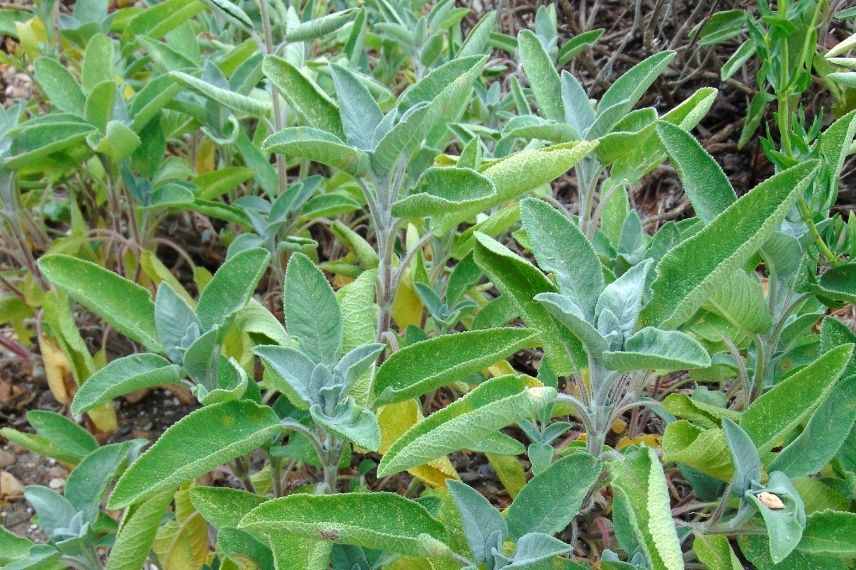
Salvia officinalis
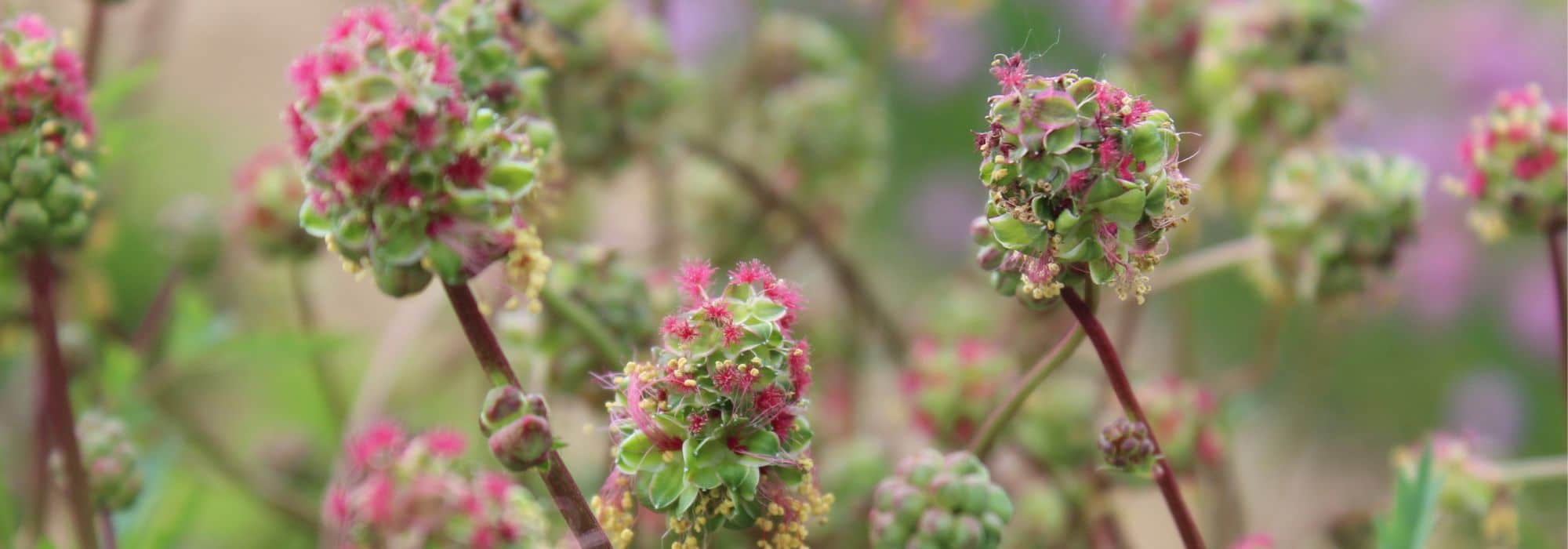
The Little burnet
Little burnet
The Little Burnet (Sanguisorba minor) is a lovely perennial found in meadows and clearings, making it a natural choice for a woodland garden.
In the kitchen, the young leaves of Little Burnet are valued for their light cucumber and nutty flavour, particularly for enhancing salads, soups, and sauces. Medically, Little Burnet was once used for its astringent and haemostatic properties, meaning it was believed to stop minor bleeding and treat digestive issues.
→ To learn more, read our guide on burnet or sanguisorba: planting, cultivation, and maintenance.
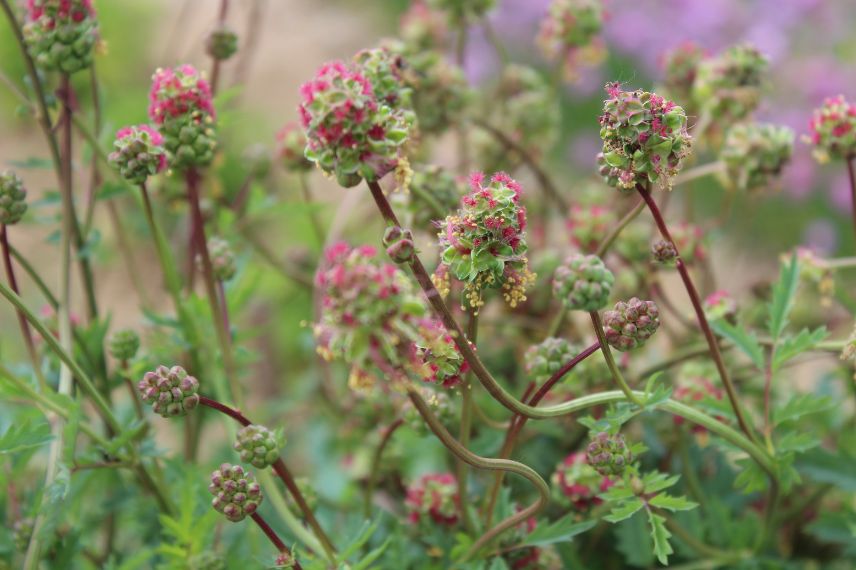
Sanguisorba minor
St John's Wort
St John’s Wort
With its bright yellow flowers, St John’s Wort (Hypericum perforatum) is a medicinal and herbal plant, particularly used in homeopathy for its soothing and relaxing properties. It is said to have the ability to relieve anxiety, sleep disorders, and menopause symptoms.
Moreover, St John’s Wort attracts pollinators, thus contributing to biodiversity. It is also valued for its drought resistance, making it particularly suitable for garden-forest environments that can sometimes be dry.
→ To learn more, read our guide on Hypericum, St John’s Wort: planting, pruning, and maintenance.
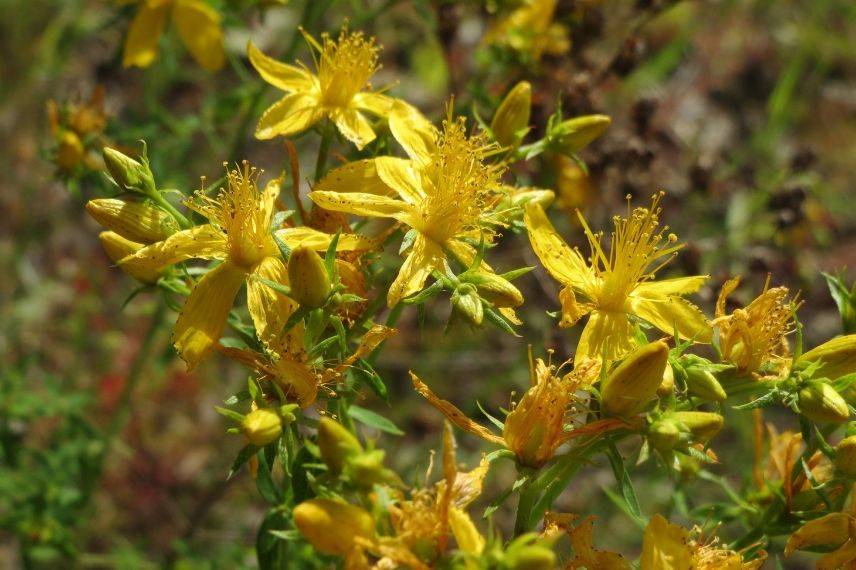
Hypericum perforatum
White Mullein
Mullein (Verbascum thapsus) is a biennial plant that stands out for its tall stature and clusters of yellow flowers that appear in the second year, much to the delight of pollinating insects. This plant, also known as molène, thrives in full sun or light partial shade, making it suitable for planting at the edge of a woodland garden or beneath light canopies of trees.
Medicinally, the Mullein is said to have expectorant, antitussive, and soothing properties. Its leaves and flowers are often used in infusions to help soothe sore throats and coughs.
→ To learn more, read our gudie on Mullein: planting, growing, and maintaining.
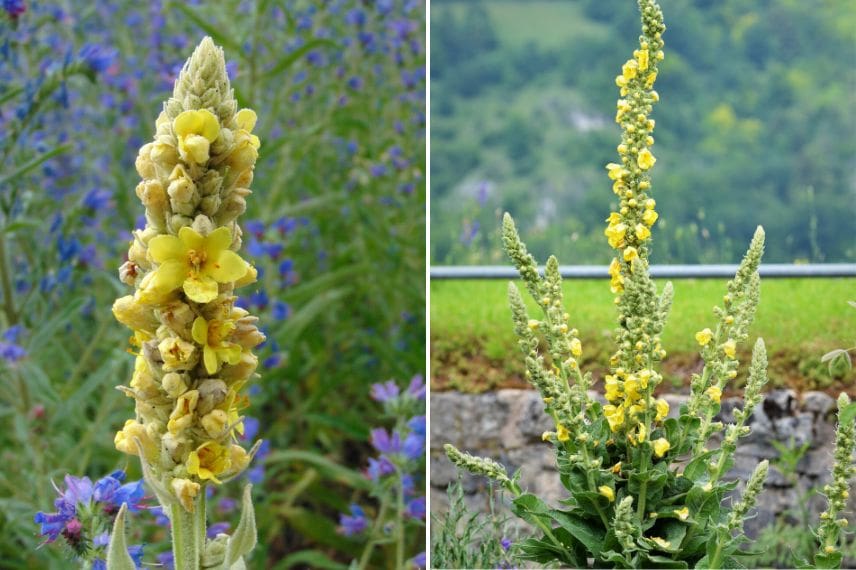
Verbascum thapsus
Nettle
Nettle (Urtica dioica), often disliked for its stinging nature, is nonetheless an incredibly useful plant for both the gardener and the garden ecosystem. Medicinally, nettle is said to be rich in vitamins and minerals. It is also believed to have anti-inflammatory and diuretic properties, as well as benefits for joint pain. In the kitchen, young nettle leaves can season dishes, salads, soups, pestos, and herbal teas.
In the garden, nettle is a nitrogen-rich plant that can be used to enrich the soil in the form of nettle manure or as mulch. Its flowering also attracts pollinators. It prefers rich, moist soil and can thrive in both full sun and partial shade. Its resilient nature and ability to improve soil make it ideal for a forest garden. However, be cautious of its invasive nature. Reserve a spot for it in the garden, a little out of the way.
→ To learn more, read our article on nettle: a plant with many benefits
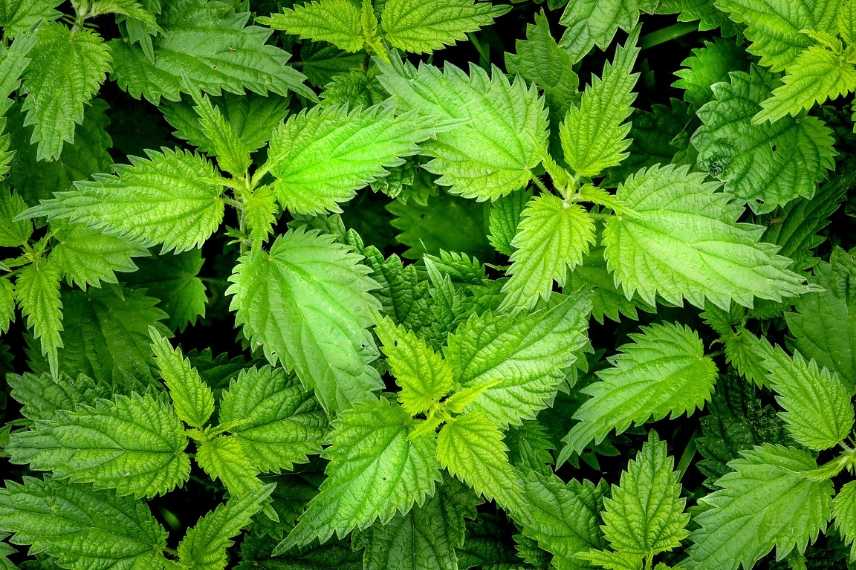
Urtica dioica
Lemon balm
Lemon balm is a semi-evergreen perennial, highly melliferous, that thrives in both sun and partial shade in edible forests. Culinary and aromatic, its slightly lemony flavour enhances dishes, salads, and desserts, as well as beverages like teas and cocktails.
Medically, lemon balm is renowned for its purported calming and antiviral properties. Infusions of lemon balm may help relieve stress and anxiety, improve sleep, and address minor digestive issues.
→ To learn more, read our guide on lemon balm: sowing, planting, growing.
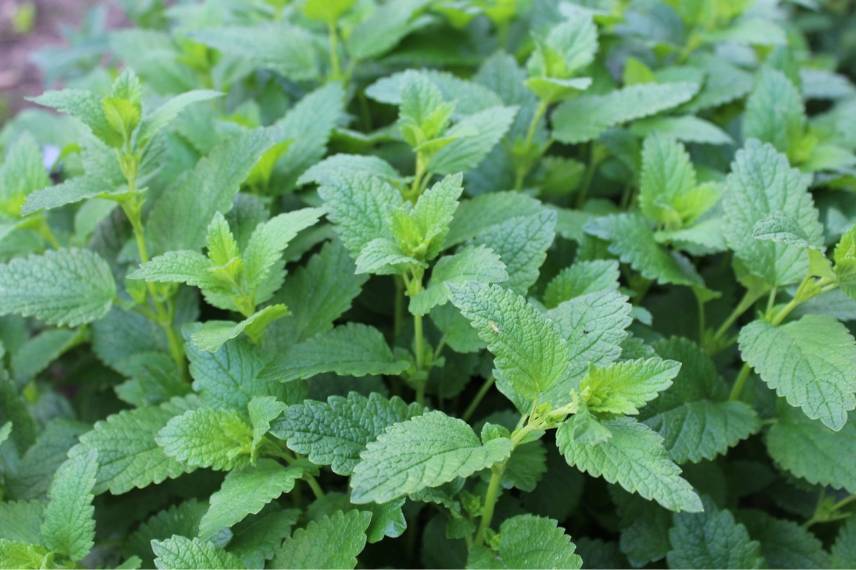
Lemon balm
And many more!
There are many other varieties of medicinal plants that you can install in your forest garden, such as dandelions, valerian, wormwood, marshmallow, dead nettle, yarrow, celandine, or even nasturtium.
Be sure to consider your region, climate, soil type, and exposure when choosing suitable varieties. Also, take into account the variety to select a plant that is usable in phytotherapy and not just decorative!
And if you have any other ideas, feel free to share them in the comments!
Warning
It is important to note that some plants may interact with certain medications, so it is advisable to consult a healthcare professional before using them.
- Subscribe!
- Contents
Comments