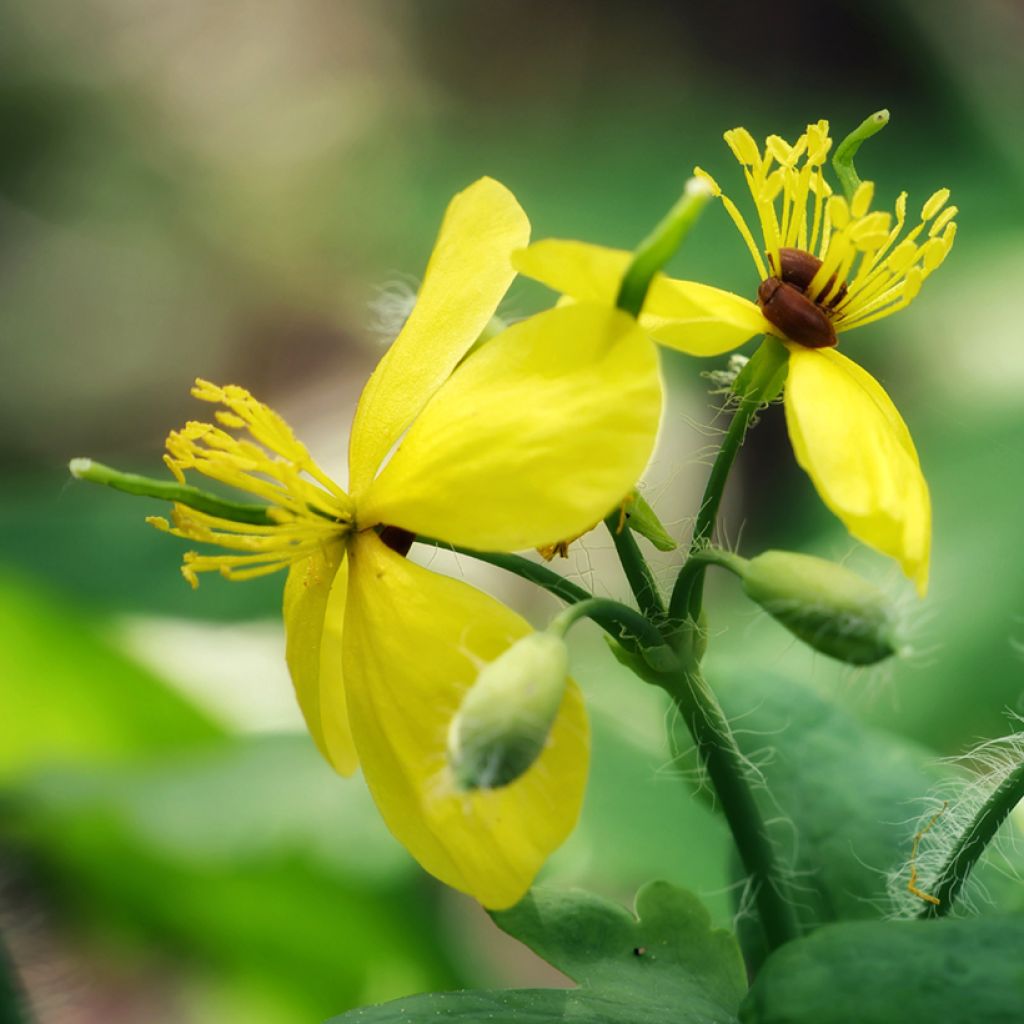
Chelidonium majus
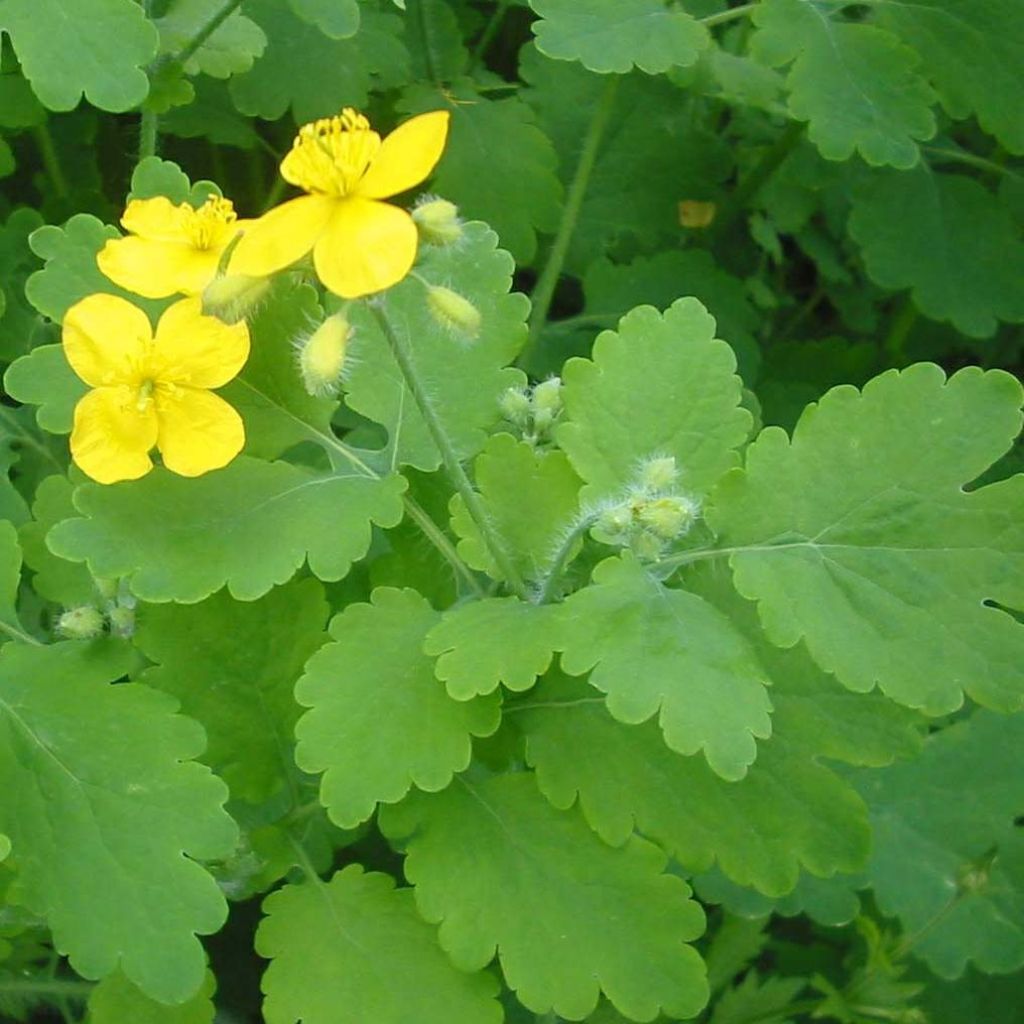
Chelidonium majus
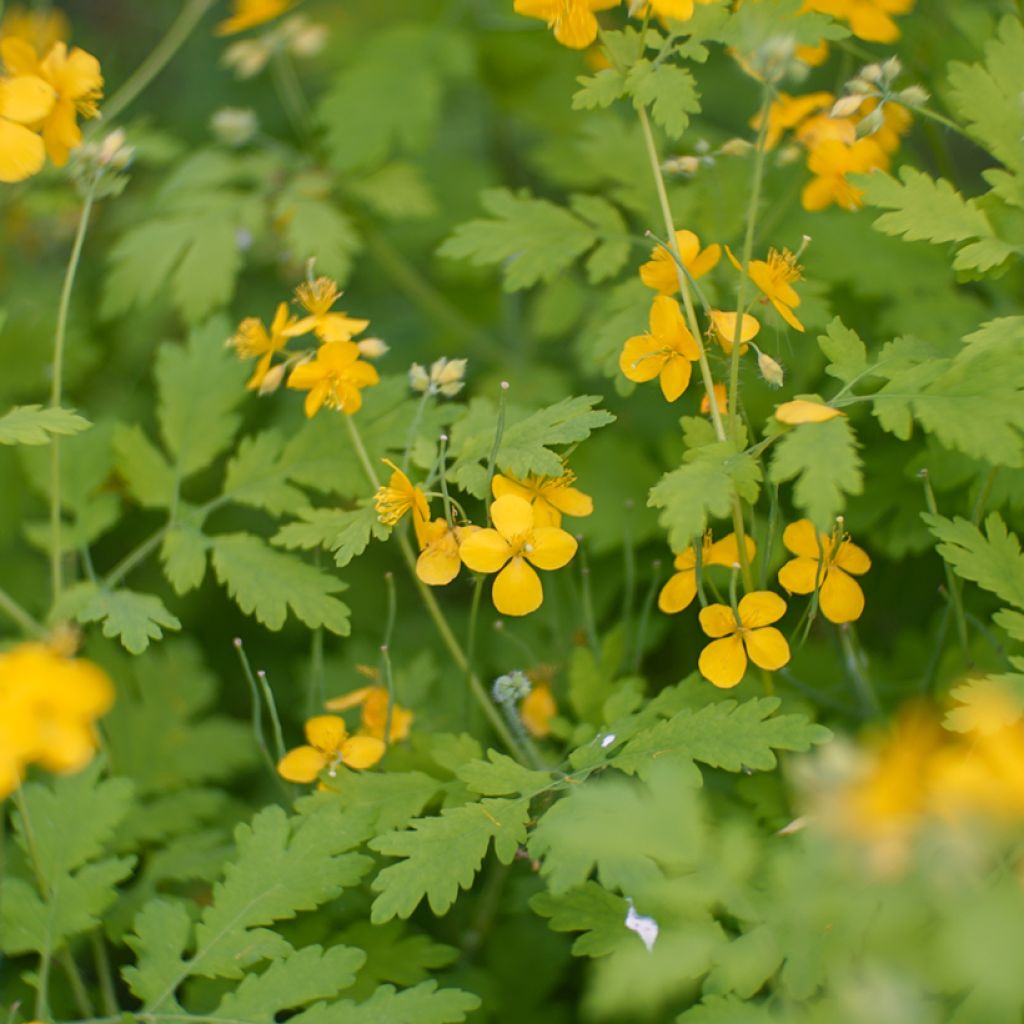
Chelidonium majus
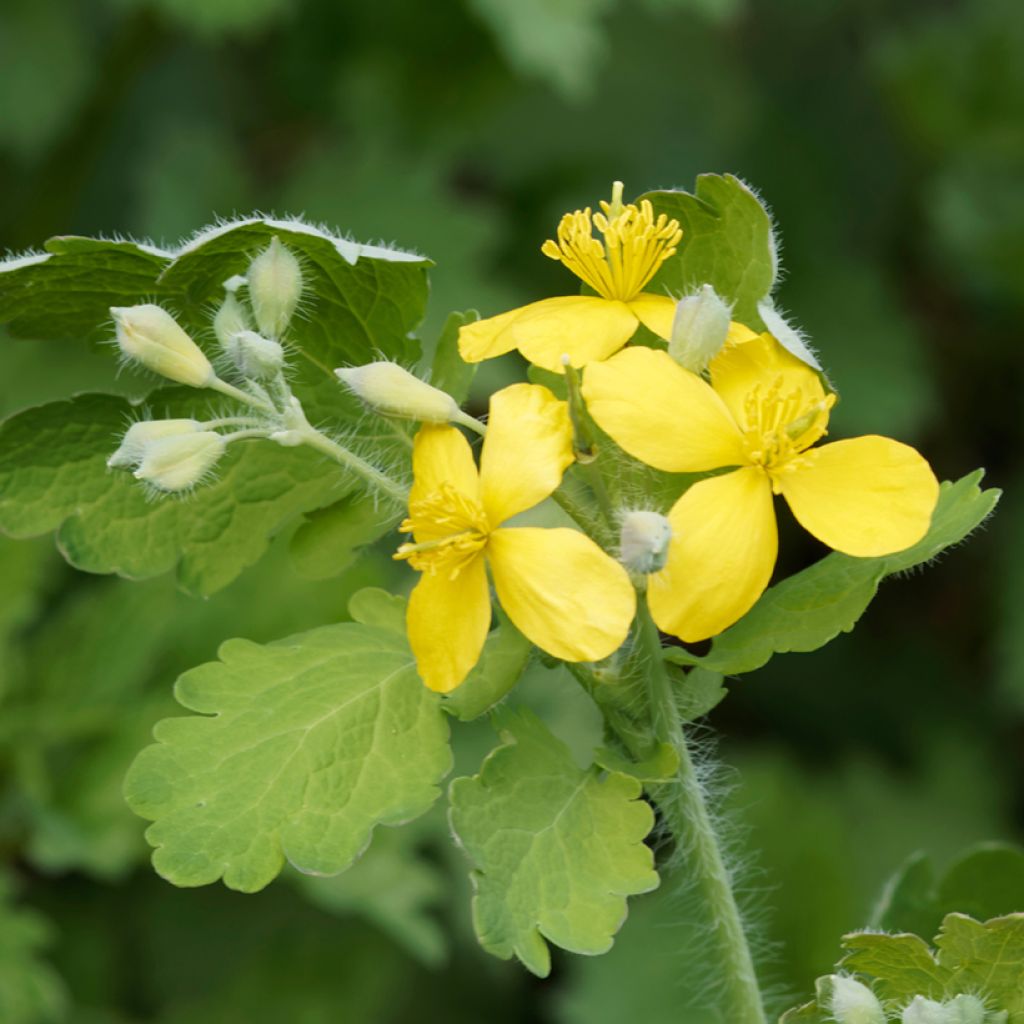
Chelidonium majus
Chelidonium majus
Chelidonium majus
Chelidonium majus
Chelidonium majus
Chelidonium majus
Chelidonium majus
Chelidonium majus
Chelidonium majus
Chelidonium majus
Greater Celandine, Tetterwort
The young plant has taken well.
Martine M., 26/11/2022
Back-to-school special offer!
Get €10 off for every €50 you spend! And get up to €40 off on a single order.
How does it work?
1. Shop your favourites
Add your favourite plants to your basket. For every €50 you spend (excluding delivery charges, store credit and the plastic-free option), you’ll receive a €10 voucher.
€50 spent = €10 voucher
€100 spent = €20 voucher
€150 spent = €30 voucher
€200 spent = €40 voucher
2. Place your order
Once your basket reaches one of the spending thresholds, place your order. You can even choose your delivery date!
3. Receive your voucher
As soon as your order has been shipped, you’ll receive an email containing your personal voucher code and its value.
4. Use it on your next order
Your voucher is valid for 90 days from the date you receive it. It can be used once only, on a new order worth at least the value of the voucher, excluding delivery charges.
Please note: Vouchers can be combined with other offers, but cannot be split or refunded.
Why not try an alternative variety in stock?
View all →
Available in 0 sizes
Available in 0 sizes
Available in 1 sizes
Available in 1 sizes
Available in 1 sizes

Available in 1 sizes
Available in 1 sizes
Available in 1 sizes
Available in 1 sizes
Available in 1 sizes
This plant carries a 12 months recovery warranty
More information
We guarantee the quality of our plants for a full growing cycle, and will replace at our expense any plant that fails to recover under normal climatic and planting conditions.

Does this plant fit my garden?
Set up your Plantfit profile →
Description
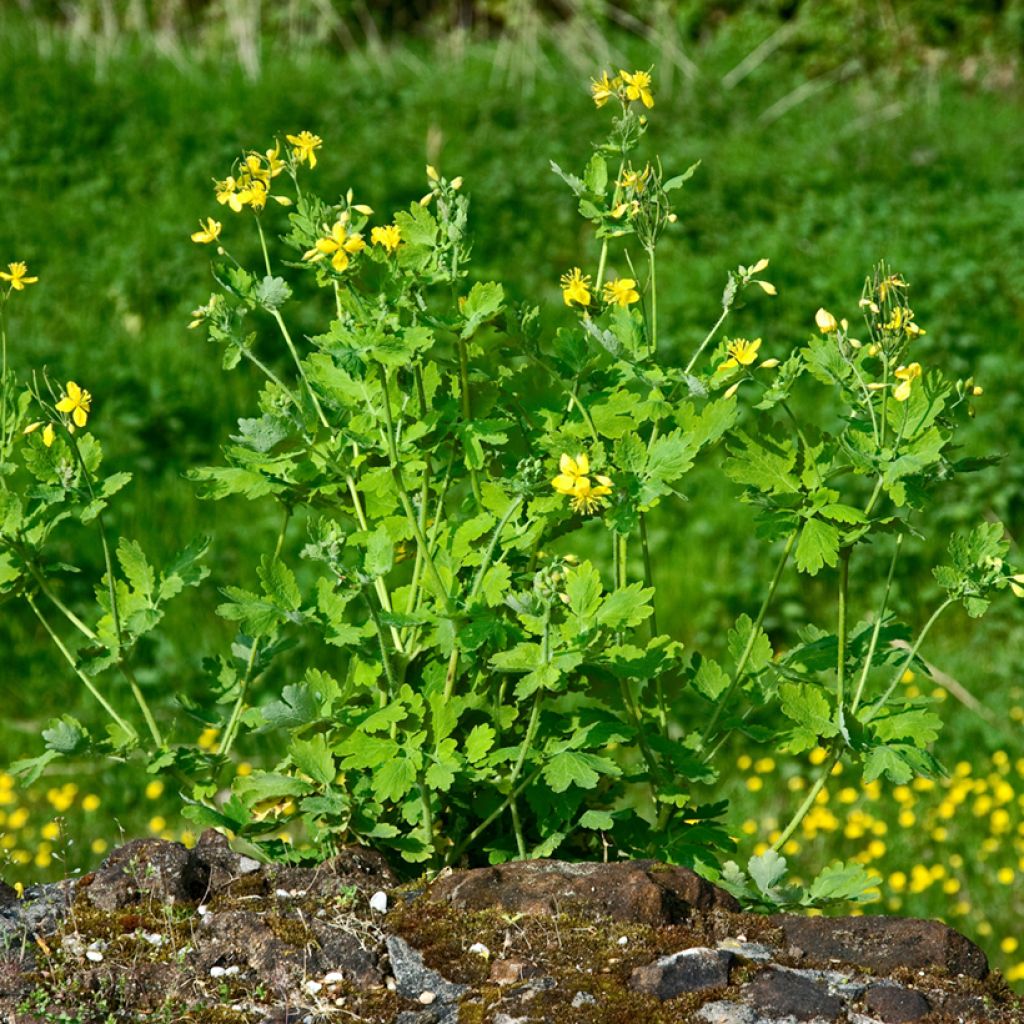
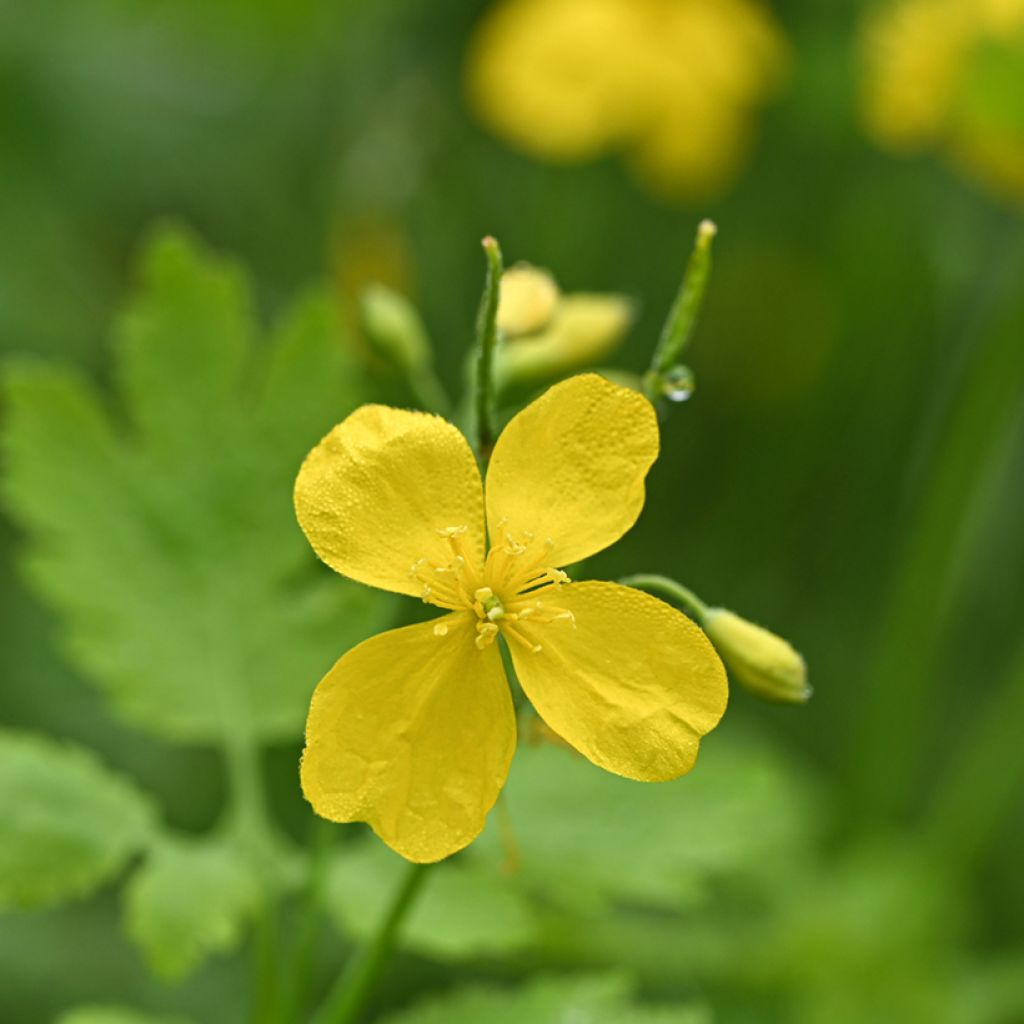
Greater Celandine, in Latin Chelidonium majus, also known as tetterwort, wartwort or wart weed, is not a plant that can be found in garden centres, but rather a "weed" that thrives in uncultivated and shady areas, preferably in nitrogen-rich and very alkaline soils. This wild species, very hardy and robust, and which self-seeds freely, forms a clump of deeply cut and lobed leaves of beautiful bluish-green colour and bears umbels of small yellow flowers in spring and summer. It has been considered for centuries as a witch's plant, associated with black magic, and known for its medicinal properties : the malodorous, orange-yellow latex contained in its stems and leaves was used to remove warts.
Chelidonium majus has many vernacular names depending on the region, which are allusions to its appearance or alleged virtues: Greater Celandine, large celandine, devil's herb, witch's milk or demon's milk, goat's herb, swallow's herb, Saint-Clair's herb...It is a perennial herbaceous plant of the Papaveraceae family with a thick underground rhizome. It is common on the Eurasian continent. It is a very hardy plant that grows in limestone and nitrogen-rich soils, from moist to very dry in summer.
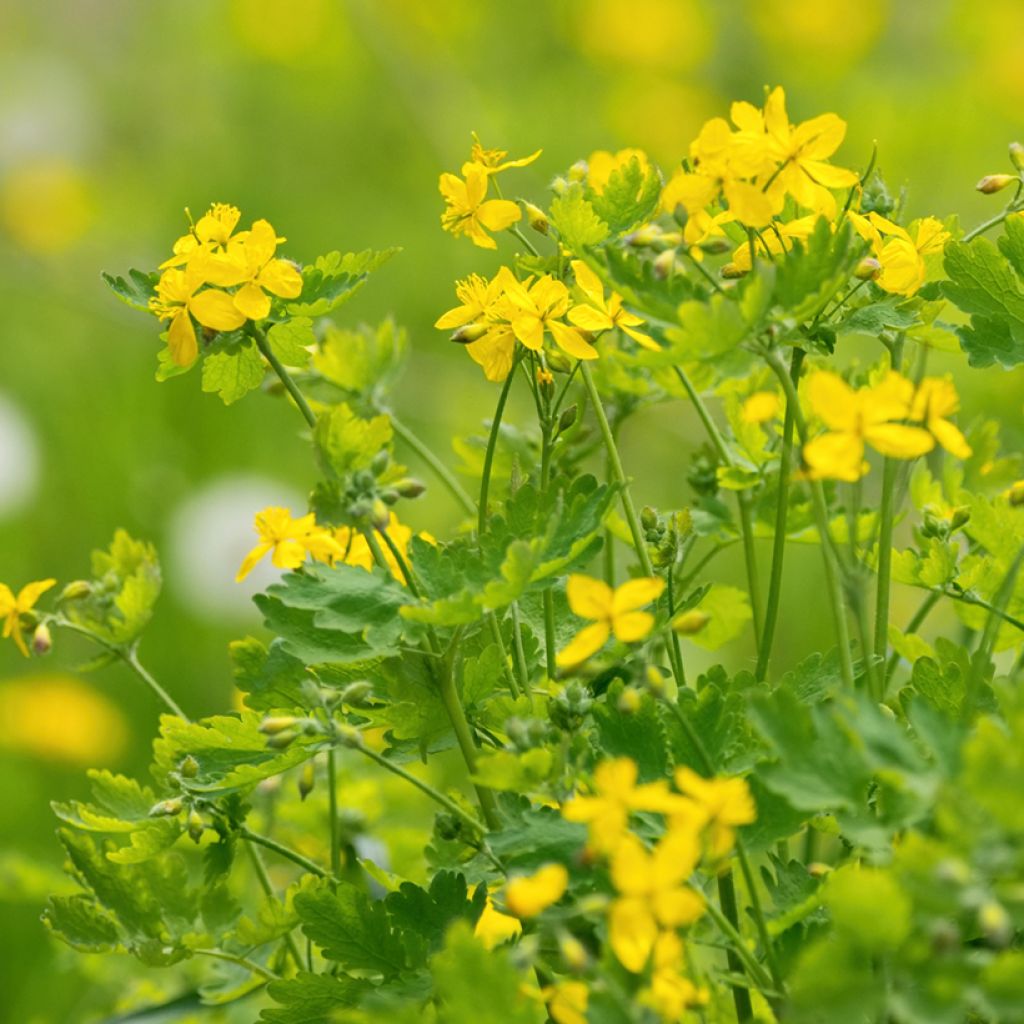
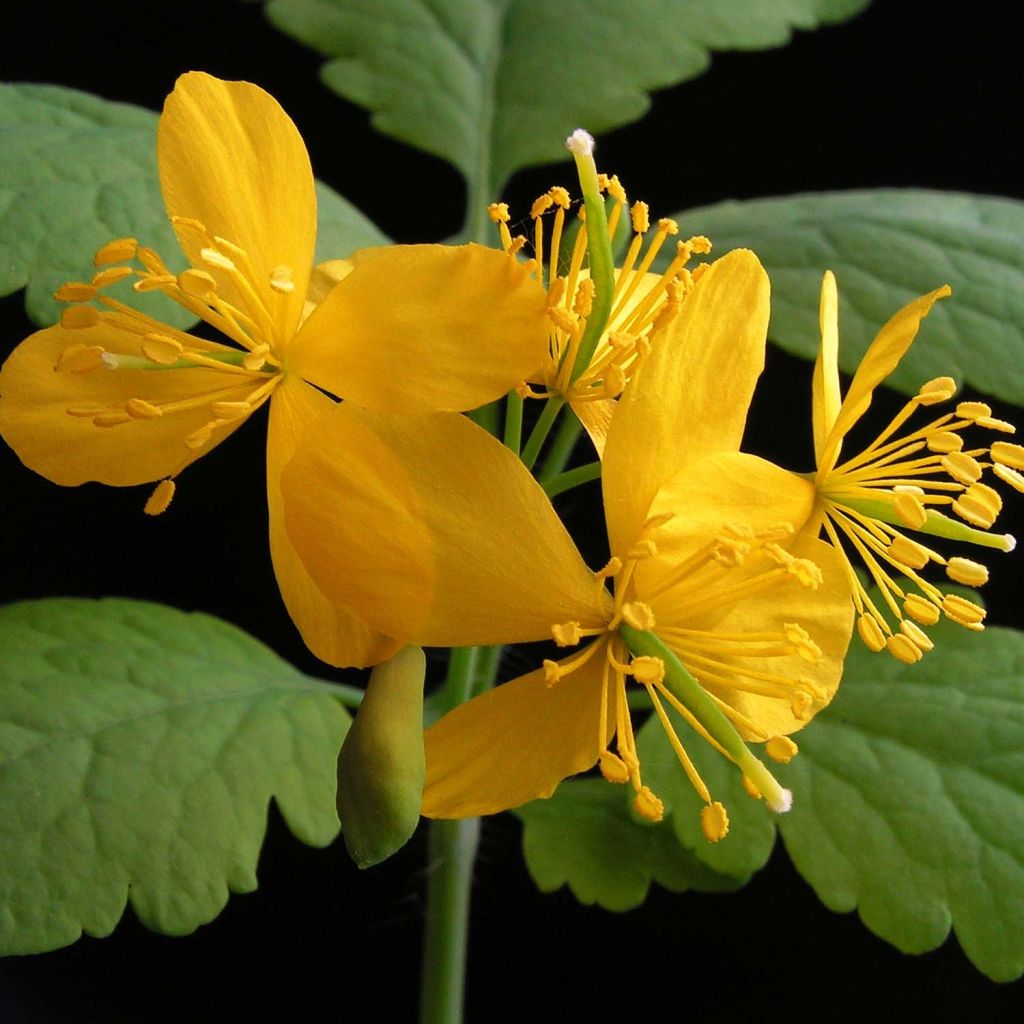
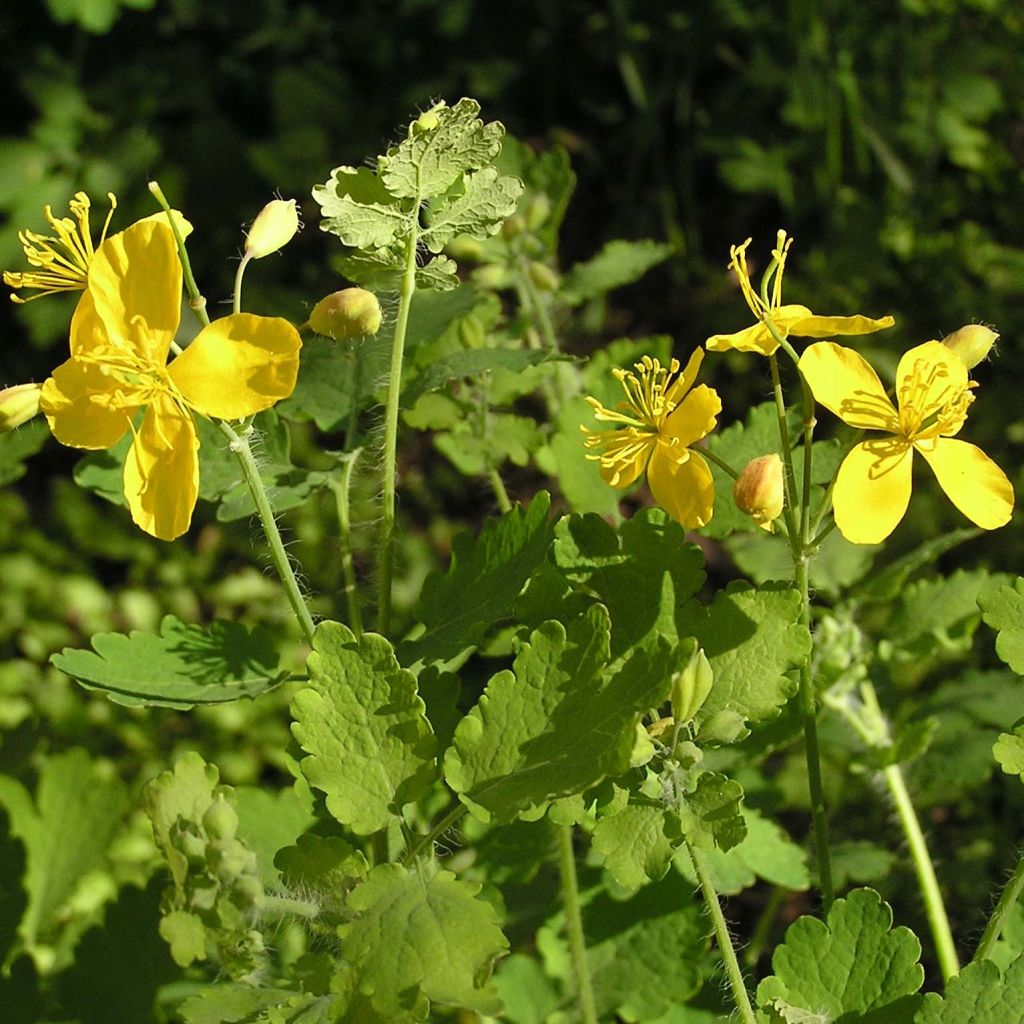
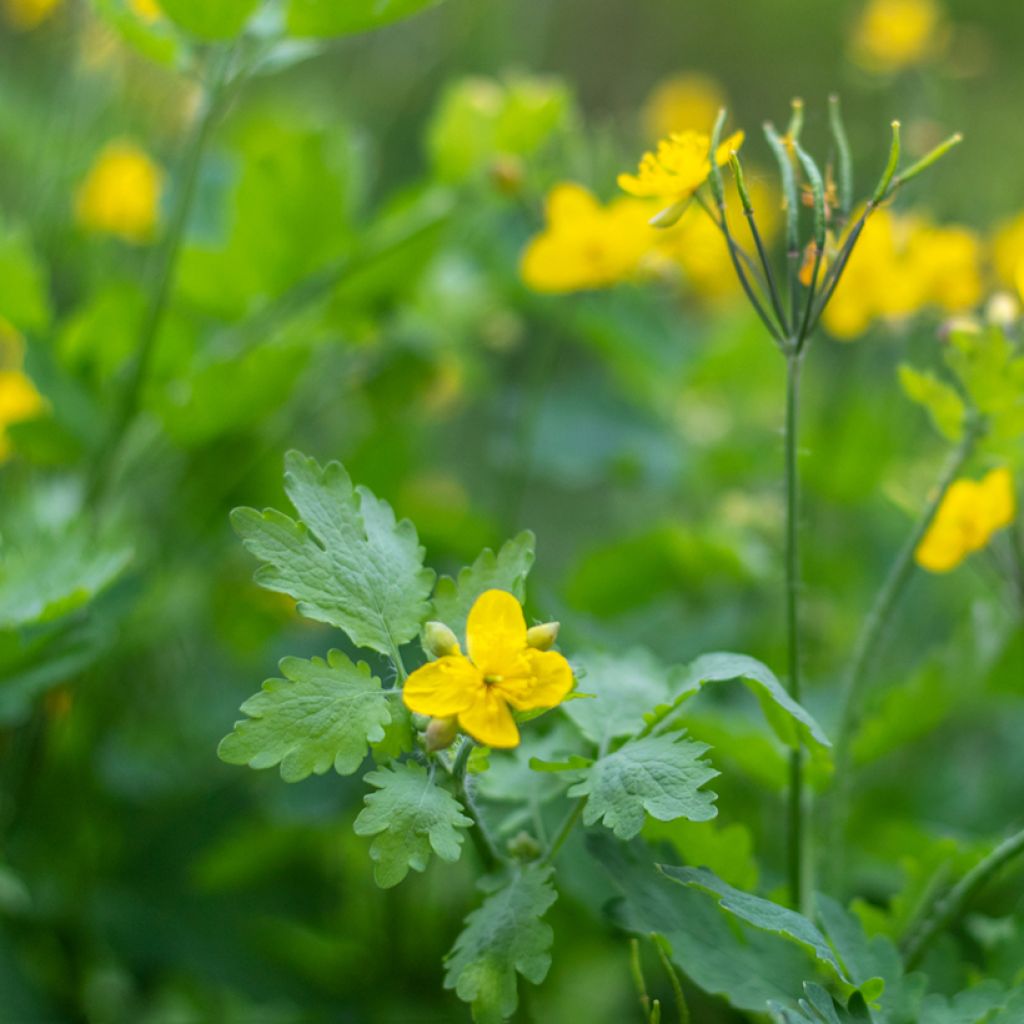
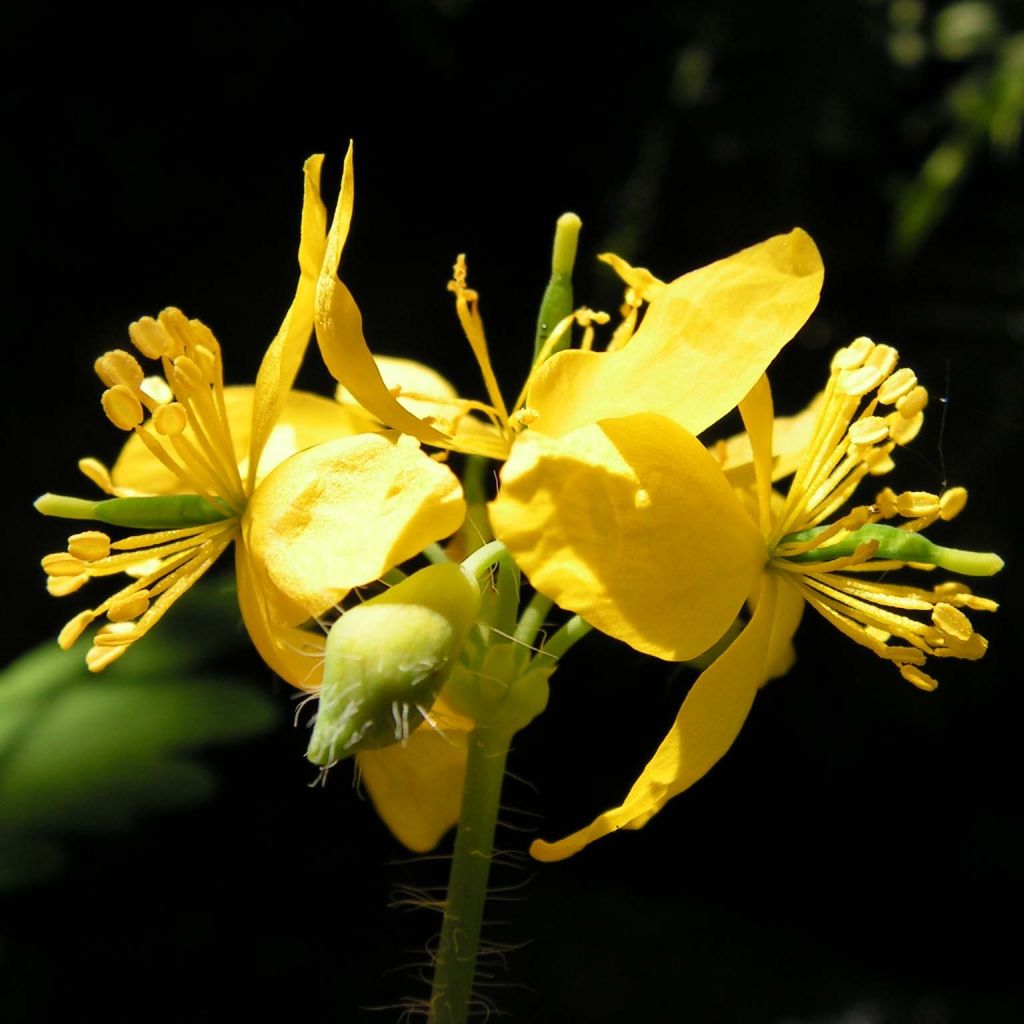
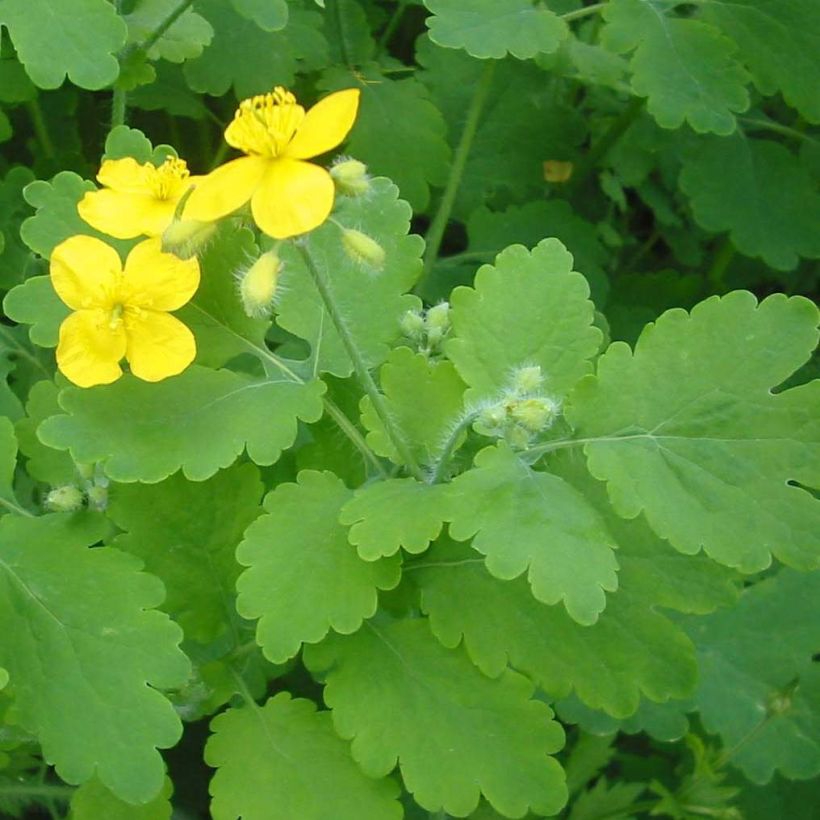
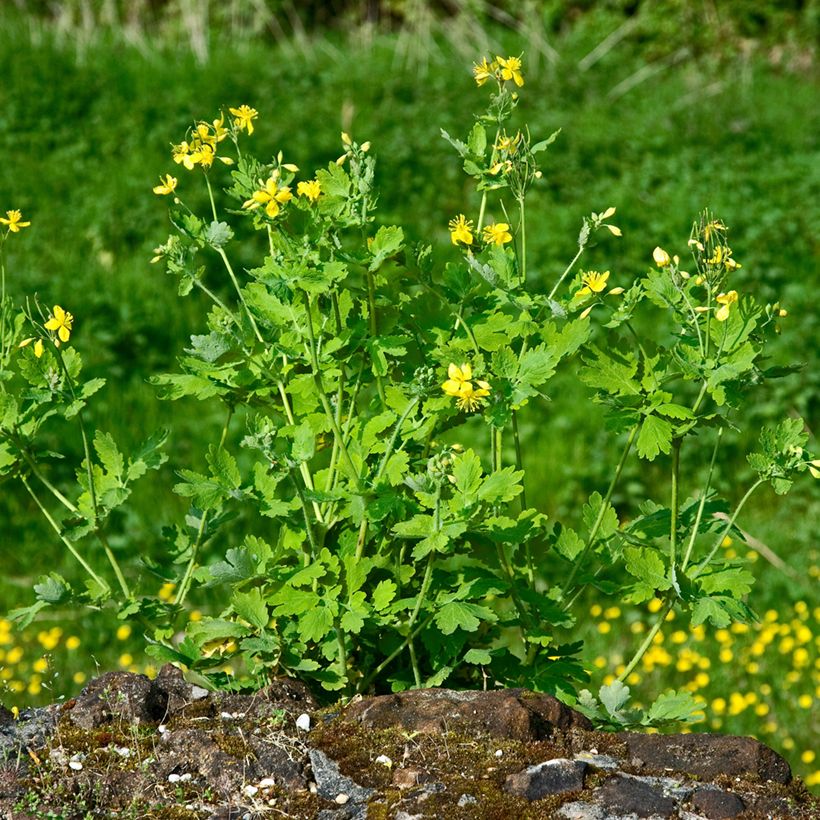
Celandine starts growing in spring and its above-ground part disappears in winter, except in mild climates where it persists all year round. Depending on the environmental conditions, wart weed forms a clump of basal rosette leaves from which flowering stems emerge from spring to summer and even autumn depending on the climate, reaching a height of 60 to 90 cm (24 to 35in). The small flowers are arranged in a loose cluster called an umbelliform cyme. They have 4 bright yellow petals and measure about 2 cm (1in) in diameter. The stems are hollow, cylindrical, brittle, and slightly hairy. They bear leaves divided into 5 to 7 ovate segments, strongly incised and lobed, crenate or dentate at the edges. They are soft and slightly glaucous. When broken, the stems and leaves release a yellow-orange sap containing latex, which has a very distinctive, somewhat unpleasant odour. After pollination by insects, the flowers give way to small pods that open when dry to release small black seeds. Ants then scatter them all over the garden. The sap of celandine is toxic, containing about thirty alkaloids that are responsible for its wart-removing action. This latex also destroys calluses and corns on the feet after several applications. Caution: the use of plants should always be done under medical supervision.
Once established in the garden celandine naturalises very easily, since ants take care of "sowing" it everywhere. It is a pretty "weed" that is extremely accommodating and very easy to grow. Use it to fill in the wilder areas of the garden, along with periwinkles, violets, money plants, ornamental strawberries (Pink Panda, Waldsteinia ternata), or forget-me-nots.

Chelidonium majus in pictures
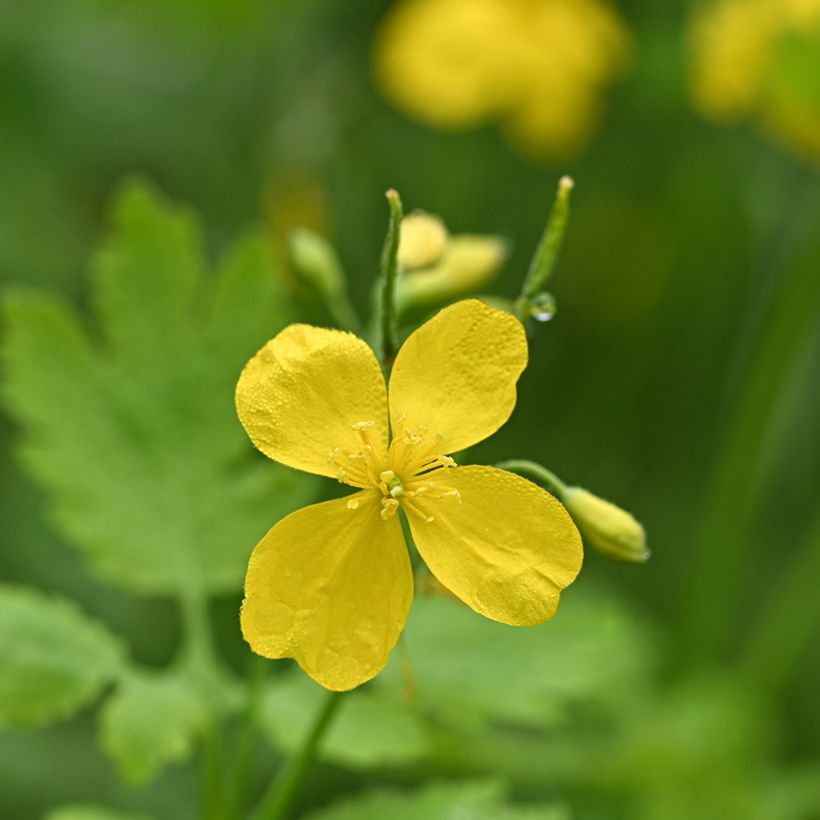
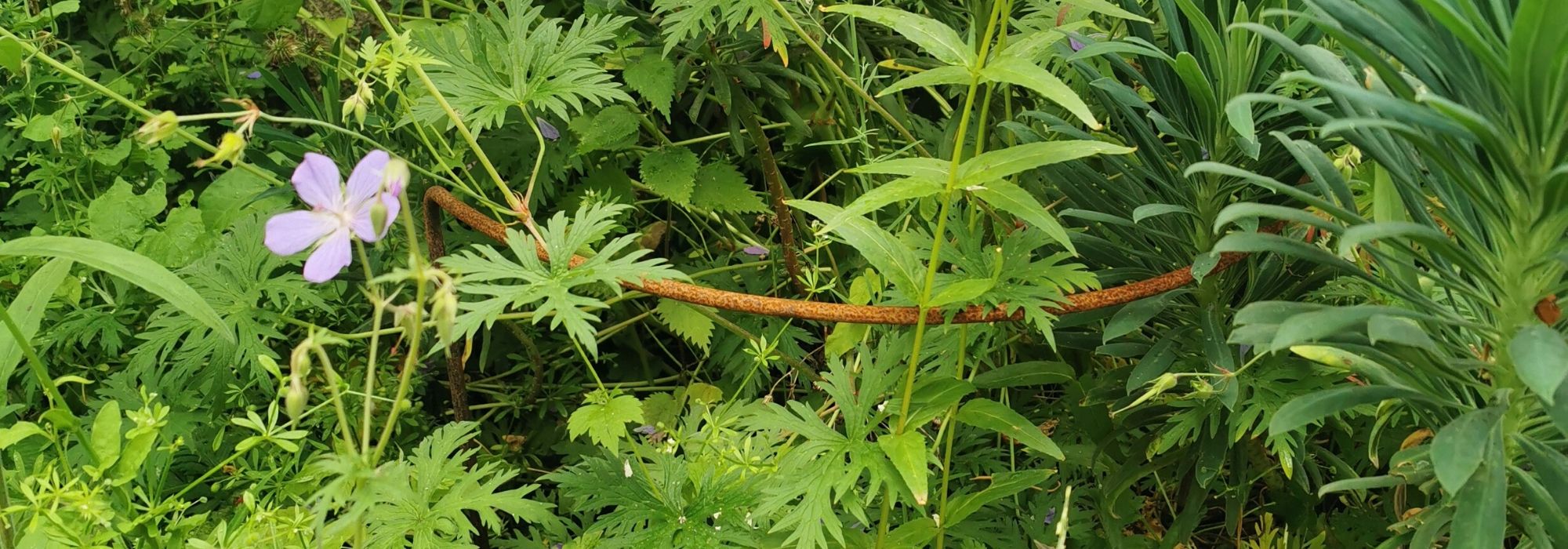
Flowering
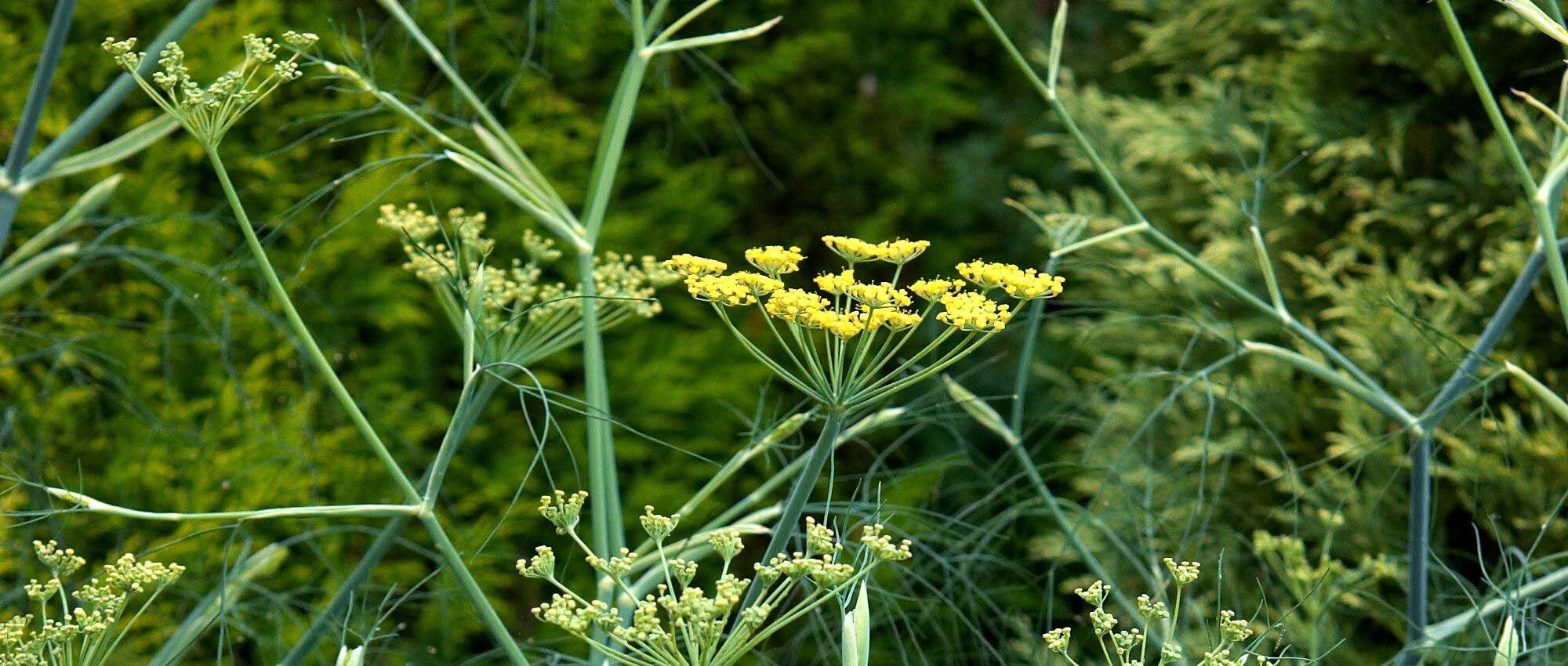
Foliage
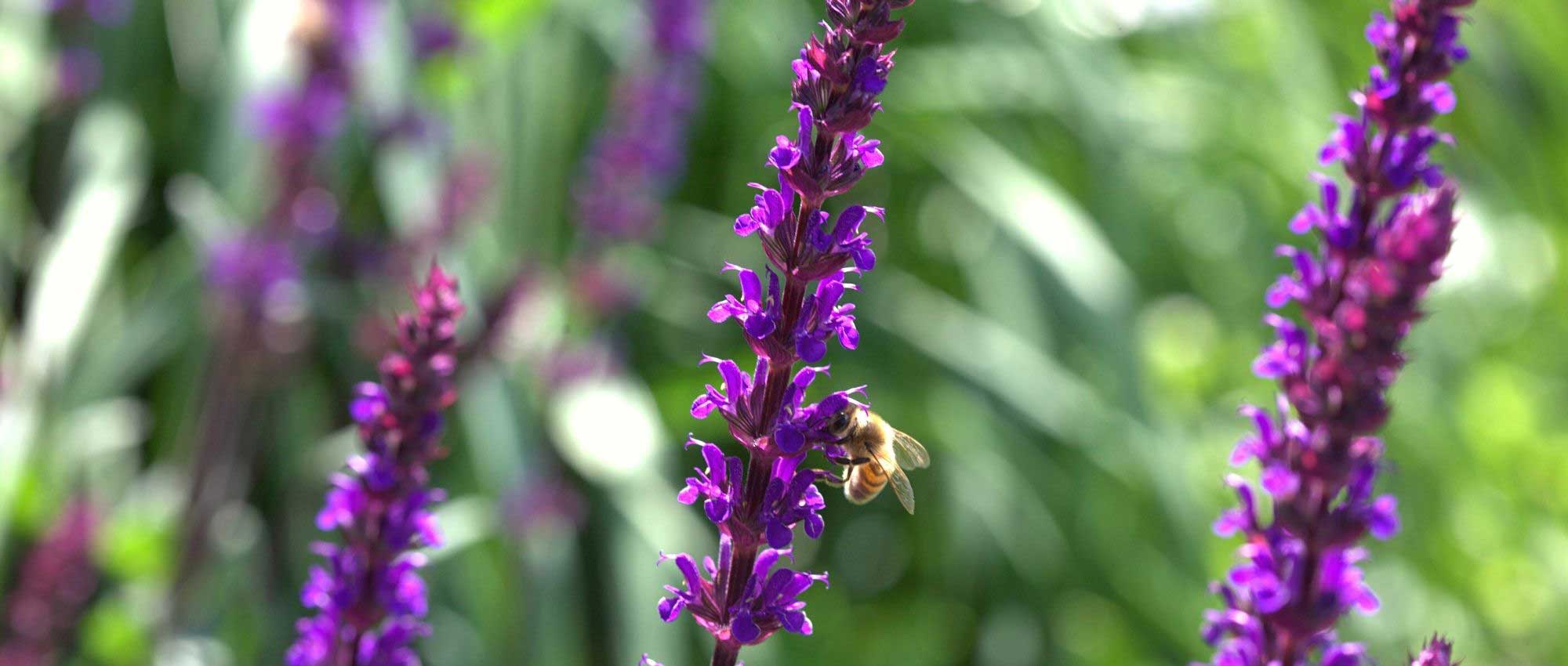
Plant habit
Botanical data
Chelidonium
majus
Papaveraceae
Greater Celandine, Tetterwort
Western Europe
Planting and care
Celandine is a very hardy and undemanding native plant, easy to grow. However it does prefer fairly light, alkaline to very alkaline and nitrogen-rich soil. It will thrive in full sun (in cooler areas) or in partial shade (in hotter regions). Once well established it requires no care or watering, even during summer in the driest regions. It self-seeds abundantly, but the young plants are easy to remove from the soil. Its sap is toxic and can be an irritant to the skin: it is advisable to handle the plant with gloves. In case of contact with the skin, wash your hands thoroughly with soap and hot water.
Planting period
Intended location
Care
Planting & care advice
-
-
-
-
-
-
-
-
-
, onOrder confirmed
Reply from on Promesse de fleurs
Recently viewed products
Haven't found what you were looking for?
Hardiness is the lowest winter temperature a plant can endure without suffering serious damage or even dying. However, hardiness is affected by location (a sheltered area, such as a patio), protection (winter cover) and soil type (hardiness is improved by well-drained soil).
In temperate climates, pruning of spring-flowering shrubs (forsythia, spireas, etc.) should be done just after flowering.
Pruning of summer-flowering shrubs (Indian Lilac, Perovskia, etc.) can be done in winter or spring.
In cold regions as well as with frost-sensitive plants, avoid pruning too early when severe frosts may still occur.
The harvesting period indicated on our website applies to countries and regions in USDA zone 8 (France, England, Ireland, the Netherlands).
In colder areas (Scandinavia, Poland, Austria...) fruit and vegetable harvests are likely to be delayed by 3-4 weeks.
In warmer areas (Italy, Spain, Greece, etc.), harvesting will probably take place earlier, depending on weather conditions.
The sowing periods indicated on our website apply to countries and regions within USDA Zone 8 (France, UK, Ireland, Netherlands).
In colder areas (Scandinavia, Poland, Austria...), delay any outdoor sowing by 3-4 weeks, or sow under glass.
In warmer climes (Italy, Spain, Greece, etc.), bring outdoor sowing forward by a few weeks.
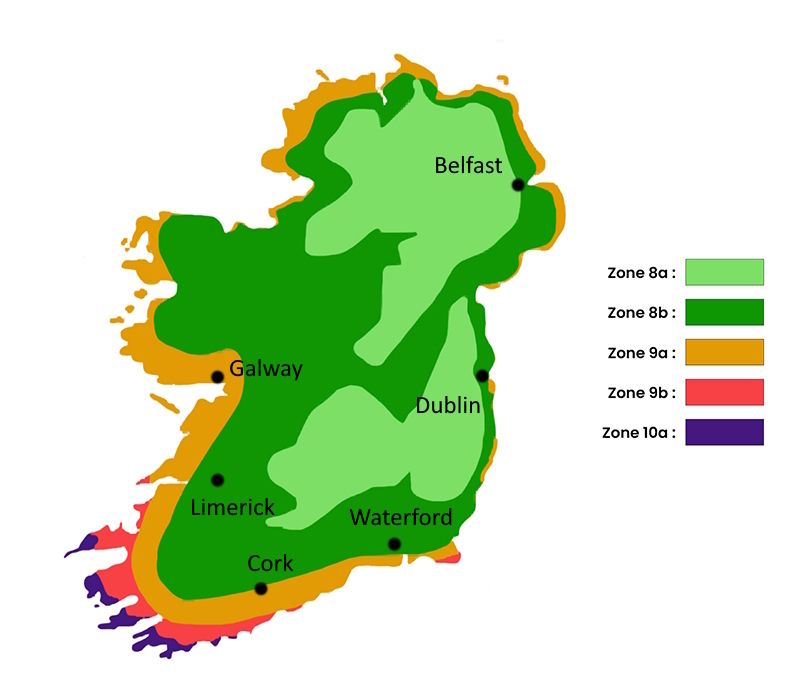
The planting period indicated on our website applies to regions in USDA Zone 9a (East Coast and Midlands: Dublin, Wexford, Waterford, Kilkenny, Portlaoise). It will vary depending on where you live:
- On the west coast and in the north-west (Galway, Limerick, Sligo, Donegal, Westport), delay planting by 1 to 2 weeks in spring and bring it forward by 1 to 2 weeks in autumn compared to the dates given, preferably choosing periods without strong winds.
- In the inland hills and plateaus (Wicklow Mountains, Macgillycuddy’s Reeks, Connemara, Killarney), it is best to plant in spring (April–May) or autumn (September–October), avoiding periods of waterlogged soil in winter and strong winds, which pose the main risk to newly planted trees in these areas.
The flowering period indicated on our website applies to regions in USDA Zone 9a, such as the East Coast and Midlands, including Dublin, Wexford, Waterford, Kilkenny and Portlaoise.
This will vary depending on where you live:
- On the west coast and in the northwest (Galway, Limerick, Sligo, Donegal and Westport), it will be delayed by one to two weeks compared to the given dates, due to stronger Atlantic winds and less spring sunshine.
- In the inland hills and plateaus (the Wicklow Mountains, the Macgillycuddy's Reeks, Connemara and Killarney), flowering will be delayed by two to three weeks. Flowering mainly occurs between May and July, with the limiting factors being less frost and more of the excessive humidity, strong winds and lack of sunshine that are characteristic of these areas.
Shipping country and language
Your country of residence may be:
Your country of residence is:
For a better user experience on our website, you can select:
Your shipping country:
-
 Austria
-
 Belgium
-
 Bosnia & Herzegovina
-
 Bulgaria
-
 Croatia
-
 Cyprus
-
 Czechia
-
 Denmark
-
 Estonia
-
 Finland
-
 France
-
 Germany
-
 Greece
-
 Hungary
-
 Iceland
-
 Ireland
-
 Italy
Italy
-
 Latvia
-
 Liechtenstein
-
 Lithuania
-
 Luxembourg
-
 Malta
Malta
-
 Netherlands
-
 Poland
-
 Portugal
-
 Romania
-
 Serbia
-
 Slovakia
-
 Slovenia
-
 Spain
Spain
-
 Sweden
-
 Switzerland
Language:
-
French
-
 English
-
Spanish
-
Italian
-
German
-
Portuguese
-
Dutch
-
Finnish
My Account
Hello
My wish lists
My cart
Log in / Register
Existing customer?
This form is protected by reCAPTCHA - the Google Privacy Policy and Terms of Service apply.
New customer?
Create an account to track your orders, access our customer service and, if you wish, make the most of our upcoming offers.